ELECTRICAL ENGINEERING
Princeton’s electrical engineering program, started in 1889 as one of the first in the United States, remains at the forefront of the field, with research aimed at improving human health, communications, environmental protection, energy production, and life in developing regions. Specific areas of research include the basic physics of semiconductors; electronic and optical devices; the design of computers; and algorithms and structures for information and biological technologies.

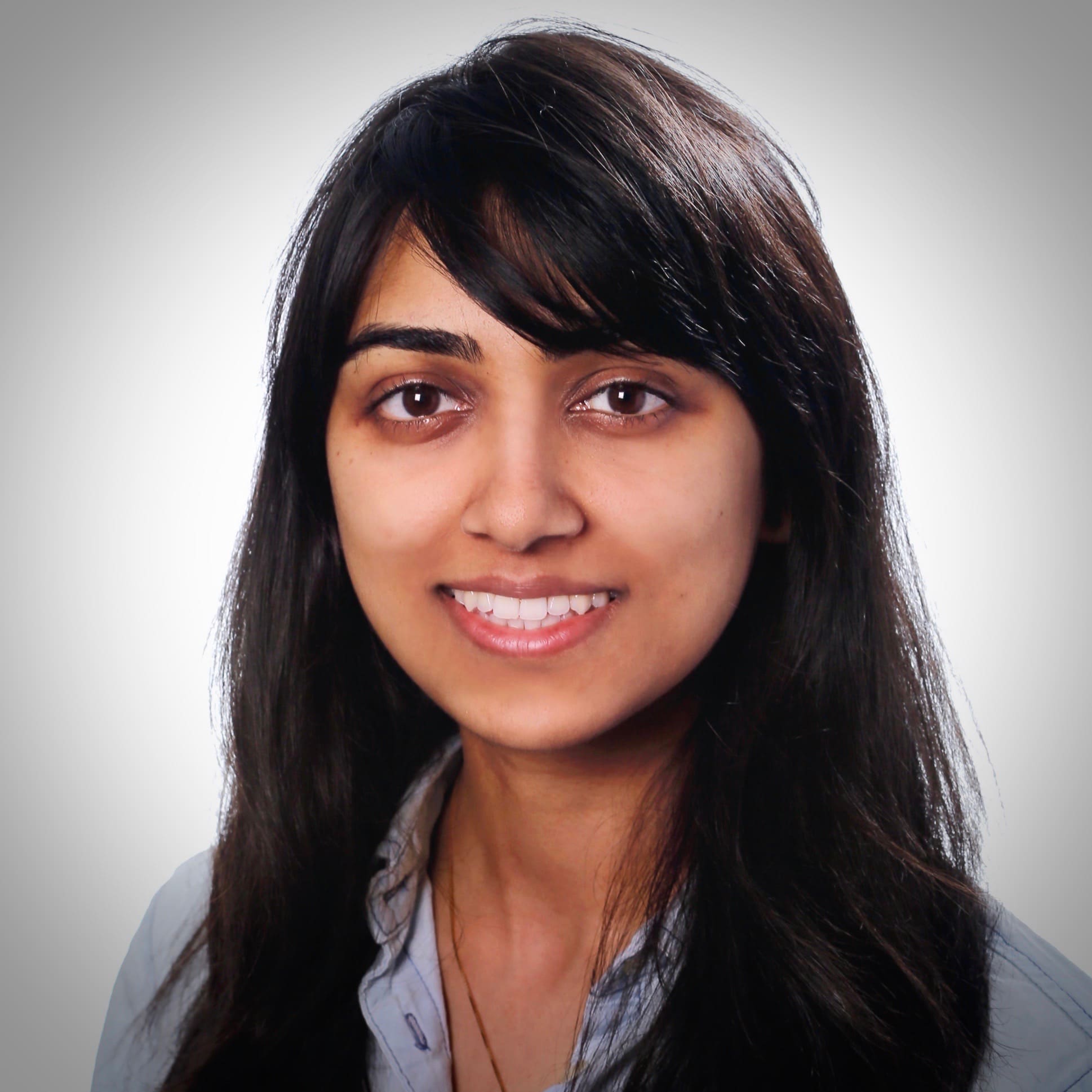
KATHERINE SONG
UNDERGRADUATE
INDEPENDENT RESEARCH
Working in Professor Sigurd Wagner’s lab with funding from Universal Display Corporation, Song worked on thin-film transistors that include a hybrid insulator to combine the performance of inorganic materials with the flexibility of organic materials. She also worked with Wagner and Assistant Professor Naveen Verma on large-area, amorphous silicon-based circuits for a structural health-monitoring system. Their system combines nanoscale integrated circuits, which offer computational efficiency and power, with large-area electronics, which provide scalability and mechanical flexibility.
ADDITIONAL STUDIES
Earned certificates in materials science and applications in computing.
INTERNSHIPS
Palo Alto Research Center, working on organic and silicon nanowire solar cells.
EXTRACURRICULAR
Co-president of the Princeton chapter of the Materials Research Society; vice president of Tau Beta Pi; co-president of the Princeton Science in Society journal; vice president and design team co-captain of the Princeton chapter of the International Association of Hydrogen Energy; fellow of the Writing Center; and a residential college peer tutor.

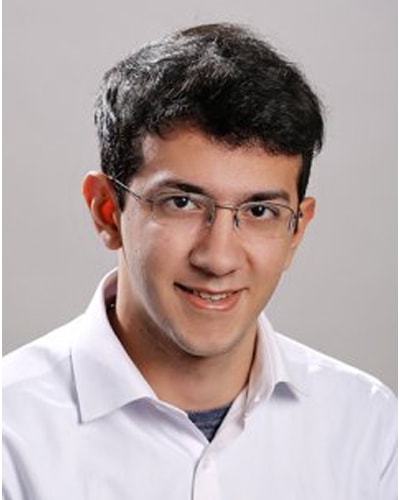
CHRISTOPHER TRALIE
UNDERGRADUATE
ACADEMICS
Computer graphics, digital signal processing, and robotics. For his independent work, Tralie developed a method to recognize and classify objects from LIDAR (an optical version of RADAR) data. He is starting with LIDAR scans of the city of Ottawa collected by Google.
WHY
“I decided to work with Professor Tom Funkhouser (computer science) after taking his computer graphics course. I had such an amazing experience in that class and was so enthralled with the material that I knew I had to pursue this area further. I attended SIGGRAPH, the premier computer graphics conference, as a student volunteer in Los Angeles, and I am taking a graduate course on computer graphics.”
EXTRACURRICULAR
“Mainly tutoring math; I have a passion for teaching and I hope to become a professor. I’ve been doing one-on-one tutoring through the residential colleges for three years, and recently was part of a start-up study hall tutoring program in the residential colleges. I’m also a BSE peer adviser.”

NICOLE RAFIDI
UNDERGRADUATE
INDEPENDENT RESEARCH
Working on the Photonic Neuron Project led by Professor Paul Prucnal. The project seeks to enable ultrafast computing by using nonlinear optical devices to imitate neurons. These neurons perform computation on laser pulses that encode information.
ADDITIONAL STUDIES
Earned certificates in neuroscience, robotics, applications in computing, and engineering biology.
WHY
“It’s a nice marriage of my interests in electrical engineering and neuroscience.”
EXTRACURRICULAR
Marching band, including serving as president and previously as leader of the drum section.

TRACY TSAI
GRADUATE STUDENT
BEFORE PRINCETON
Rice University
RESEARCH
Working with Assistant Professor Gerard Wysocki to develop high-resolution trace gas sensors based on quantum cascade lasers. Specific projects have included: creating a laser system that tunes over a wide wavelength region to capture the signature signals of many molecules, and developing a fast-scanning system that quickly examines many wavelengths to achieve sensitive gas detection in turbulent air. Most recently, she conducted a field test of one of her sensors in England to detect greenhouse gas molecules in the atmosphere.
HONORS
National Science Foundation graduate research fellow.
INTERNSHIP
Rutherford Appleton Laboratory in Oxford, England.
EXTRACURRICULAR
President of the student council of the National Science Foundation-sponsored Mid-Infrared Technologies for Health and the Environment (MIRTHE) research center. Outreach efforts on behalf of the Graduate Women in Science and Engineering organization.
FOR FUN
Kayaking and building miniature snowmen.

PIERRE BOUZI
GRADUATE STUDENT
BEFORE PRINCETON
After growing up in Jacmel, Haiti, Bouzi came to New York City in 2001 and earned an associate degree in computer science and then bachelor and master’s degrees in electrical engineering at City College of New York.
RESEARCH
Working with Professor Claire Gmachl on the design of quantum cascade lasers for use in detecting and quantifying trace levels of gas. The work is part of Mid-Infrared Technologies for Health and the Environment (MIRTHE), a major National Science Foundation-funded research consortium based at Princeton.
WHY
“I chose this field of study because of its wide range of applications—the huge impact this type of research can have on the environment, health care, and security systems. I see myself working in a government lab or private industry down the road, pursuing similar research, whether identifying greenhouse gases released in the atmosphere or analyzing breath for pathological traits.”
INTERNSHIPS
Spent two summers at Corning Incorporated.
EXTRACURRICULAR
Participating in MIRTHE outreach events to spur excitement in research among young students.

YIHONG WU
GRADUATE STUDENT
BEFORE PRINCETON
Tsinghua University
RESEARCH
Information theory, signal processing, mathematical statistics, and approximation theory. “My Ph.D. thesis is at the interface of information theory and modern signal processing. It provides a new theoretical framework that resolves the fundamental limits of joint data acquisition and compression, a key technique to alleviate the data deluge that is prevalent today.”
HONORS
Wallace Memorial Fellowship from the School of Engineering and Applied Science, and research presentations at numerous international conferences.
INTERNSHIP
Research associate intern in the Information Theory Research Group of the Information and Quantum Systems Lab at HP Labs in Palo Alto, California.
FOR FUN
Running, reading, and film.