Web Stories
Video: Engineering a difference
Posted July 6, 2009; 03:14 p.m.
To view the multimedia features on this page, you will need to download the latest version of Flash Player and/or enable JavaScript.
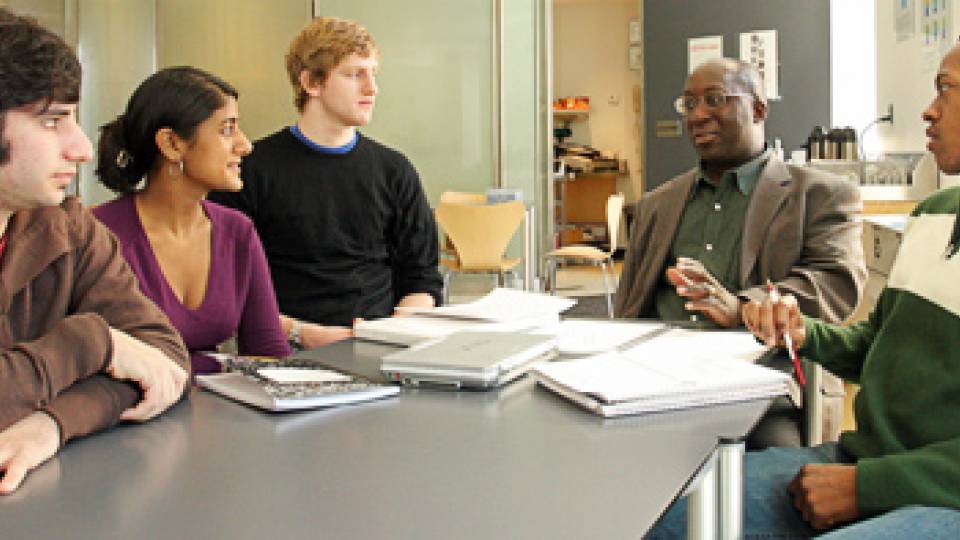
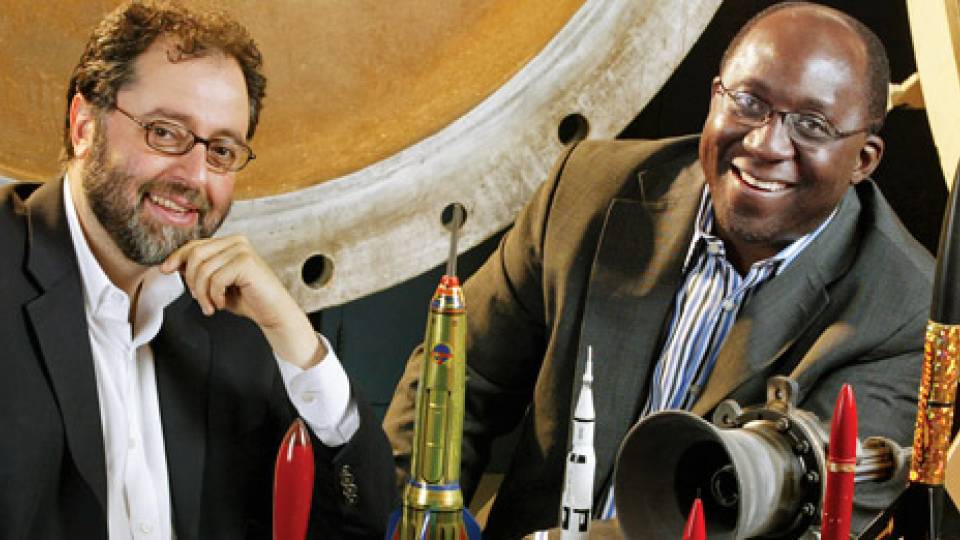
Engineering professor Winston (Wolé) Soboyejo discusses his camel solar refrigerator project, which may improve vaccine delivery in remote areas of Kenya and Ethiopia. Read more.
Video Closed Captions
(drums)
Wole Soboyejo:
So the idea of the solar refrigerator came from a
Wole Soboyejo:
discussion I had with a group at the Mpala clinic,
Wole Soboyejo:
which is a community-based clinic in Kenya that focuses on
Wole Soboyejo:
doing community medicine vaccinations for people in
Wole Soboyejo:
Laikipia District -- a place where there really isn't much.
Wole Soboyejo:
And if you could put this into context, it's a place that's
Wole Soboyejo:
about the size of Wales, where kids would not get vaccinated
Wole Soboyejo:
unless they had these camels that take vaccines to very remote
Wole Soboyejo:
places that you couldn't access by Land Rover.
Wole Soboyejo:
The clinic is one of hope.
Wole Soboyejo:
It's a clinic that provides services to about 312,000
Wole Soboyejo:
people. In the absence of that clinic,
Wole Soboyejo:
the kids would not be vaccinated, and basically access
Wole Soboyejo:
to community-based medicine would be absent.
Wole Soboyejo:
Right now, there are daily vaccine losses during the missions.
Wole Soboyejo:
So once they open up the
Wole Soboyejo:
vaccines they have an ice pack and they lose the rest of the
Wole Soboyejo:
materials unless they are able to maintain the temperatures.
Wole Soboyejo:
So consequently we're talking about a poor country with
Wole Soboyejo:
limited resources where there are these daily losses of vaccines
Wole Soboyejo:
in the absence of solar-powered cooling.
Wole Soboyejo:
So, my design goals were fairly simple.
Wole Soboyejo:
So these are seven-day missions in which the community medical
Wole Soboyejo:
people go out first on Land Rover and then on camels with
Wole Soboyejo:
these camel groups.
Wole Soboyejo:
And I wanted to have a system where the energy that you could store
Wole Soboyejo:
in the batteries and the energy that you could replenish
Wole Soboyejo:
through daily exposure to the sun would guarantee that the
Wole Soboyejo:
refrigerators would always have power.
Wole Soboyejo:
When we started the project, we thought about various concepts.
Wole Soboyejo:
Ultimately, we came up with a very simple idea of just an
Wole Soboyejo:
inclined structure that allows you to orient the solar panels
Wole Soboyejo:
with respect to the sun and hence optimize the solar
Wole Soboyejo:
collection. Now we are in the process of
Wole Soboyejo:
making that in bamboo, which we think will be the
Wole Soboyejo:
optimum in terms of weight, aesthetics and the ability of
Wole Soboyejo:
the local people to maintain this.
Wole Soboyejo:
A key component of this though was testing them out at the
Wole Soboyejo:
Bronx Zoo. Working with camels actually
Wole Soboyejo:
presents interesting challenges.
Wole Soboyejo:
There was a story I heard of -- the head of the group at the
Wole Soboyejo:
Bronx Zoo, I guess, one day upset one of the camels and the
Wole Soboyejo:
camel decided to pick him up by his head.
Wole Soboyejo:
So this kind of thing means you have got to be careful.
Wole Soboyejo:
You have got to recognize that these animals have real feelings.
Wole Soboyejo:
And you have to design systems that integrate with them.
Wole Soboyejo:
You know the camel has got a funny shape.
Wole Soboyejo:
It's got a torso. You have to figure how to fit around that.
Wole Soboyejo:
It's got a hump. And although we thought we had
Wole Soboyejo:
measured the hump, we found out that different camels have
Wole Soboyejo:
different hump sizes. You have to integrate along
Wole Soboyejo:
different torsos. And so the real ingenuity
Wole Soboyejo:
actually happened once we put the design concept into contact
Wole Soboyejo:
with the camels at the Bronx Zoo. So our goal, really,
Wole Soboyejo:
beyond the implementation in one model for Mpala, would really
Wole Soboyejo:
be to diffuse these across, not just based on aid but with an
Wole Soboyejo:
approach that empowers the local people, in Africa,
Wole Soboyejo:
in the Middle East, in places where people are not
Wole Soboyejo:
necessarily able to afford health care to use the
Wole Soboyejo:
production of these as a way of sustaining the livelihood of
Wole Soboyejo:
people in those communities.
Wole Soboyejo:
You know, I think our role in universities such as Princeton
Wole Soboyejo:
is to embrace the grand challenges of our time.
Wole Soboyejo:
We, I think, should be leaders in this rather than just
Wole Soboyejo:
following the whims of projects that don't make an impact in the world.
(music)