Multimedia: Featured
Video: Looking Forward (excerpt)
Posted October 21, 2009; 07:11 p.m.
To view the multimedia features on this page, you will need to download the latest version of Flash Player and/or enable JavaScript.
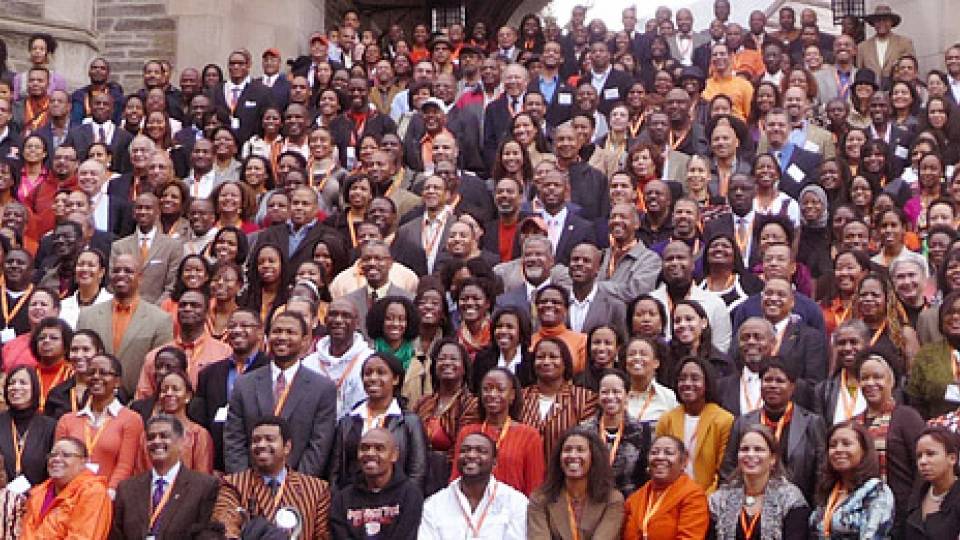
Attendees at the "Coming Back and Moving Forward" black alumni conference Oct. 22-24 will have a chance to view the full documentary, "Looking Forward," by Melvin McCray '74. Read more.
Video Closed Captions
(music)
Narrator:
Carl Fields became the first African American administrator
Narrator:
at a predominantly white university rising to the
Narrator:
position of assistant dean of the college.
Narrator:
He served Princeton in many capacities from 1964 to 1972
Narrator:
and was an advocate for underrepresented students and
Narrator:
staff. Fields created the Family Sponsor program that paired
Narrator:
black undergraduates with black families in the town of
Narrator:
Princeton. In 2002, the Third World Center
Narrator:
got a new name, the Carl A. Fields Center for Equality & Cultural Understanding,
Narrator:
in honor of his enormous contributions to Princeton.
Narrator:
In September of 2009, a new facility was opened at 58 Prospect Ave.
Narrator:
It will house the operations of the Carl Fields Center and Community House.
Debbie Scott Williams:
Princeton has changed me for the better,
Debbie Scott Williams:
to make me see that there are possibilities everywhere --
Debbie Scott Williams:
if you are willing to look for those,
Debbie Scott Williams:
if you're willing to work for those.
Janice Johnston:
Staying connected is a very important thing, and that has
Janice Johnston:
benefited me both professionally, spiritually,
Janice Johnston:
personally. Um, I think that's the biggest
Janice Johnston:
life lesson I take away from here is to stay connected.
Bathabile Mthombeni:
I loved being at Princeton.
Bathabile Mthombeni:
It was an opportunity for me to explore.
Bathabile Mthombeni:
It was an opportunity for me to learn how to face challenges
Bathabile Mthombeni:
and to make an argument and to stand behind it.
Bathabile Mthombeni:
It was an opportunity for me to learn how to be brave about
Bathabile Mthombeni:
standing against the tide of convention.
Ken Bruce:
I became more comfortable with taking responsibility for things
Ken Bruce:
that happened around me and to me.
Monica Dweck:
In my field, which is a very "male" field, which is a very
Monica Dweck:
"white" field, for me to be a woman of color
Monica Dweck:
at the time that I was entering medicine was unusual.
Monica Dweck:
To be a women of color to enter the specialty that I have
Monica Dweck:
chosen, I think Princeton has helped with all of that.
Reid Whitlock:
I've gotten self-confidence.
Reid Whitlock:
I've been willing to stand up for what I felt was the point of
Reid Whitlock:
view that maybe wasn't being articulated but needed to be heard.
Tara Harper:
Not all white people are the
Tara Harper:
devil. I learned that. Um,
Tara Harper:
there are actually good white people in the world.
Brian Johnson:
That's what the true test here is. It's not learning some
Brian Johnson:
chemistry, or it's not learning journalism, or it's not
Brian Johnson:
learning, you know, how to play the game.
Brian Johnson:
It's learning how to stand up to the pressure of an
Brian Johnson:
institution, or the pressure of a culture,
Brian Johnson:
or the pressure of, you know, history and still
Brian Johnson:
finding a place for yourself in that without compromising yourself.
Kim Goodwin:
I didn't come from an economic
Kim Goodwin:
background where I knew anything about Wall Street,
Kim Goodwin:
and it just wasn't the norm, you know, for our family.
Kim Goodwin:
So, I wouldn't be doing this for a living,
Kim Goodwin:
running global equities for a $500 billion firm,
Kim Goodwin:
if I hadn't been protesting "Dollar-Bill Bowen,"
Kim Goodwin:
you know, outside Nassau Hall every day with my buddies.
Celeste Brickler Hart:
The friendships I made were
Celeste Brickler Hart:
very important to me and kind of sustained me through everything else.