Did You Know?
- In the US, the average grocery store's produce travels nearly 1,500 miles between the farm where it was grown and your refrigerator.
- About 40% of our fruit is processed overseas.
- Even though broccoli is likely grown within 20 miles of the average American's house, the broccoli we buy at the supermarket travels an average 1,800 miles to get there.
- 9% of our red meat comes from foreign countries, including locations as far away as Australia and New Zealand.
- According to the USDA, the US has lost over five million farms since 1935.
- Only 3.5 cents of each dollar (spent on food) actually goes to the farmer.
The facts above are quoted directly from http://www.sustainabletable.org/issues/buylocal/
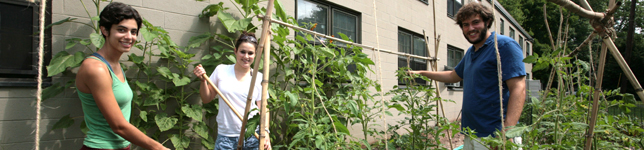
Agriculture continues to be a leading source of negative environmental impact. Overuse of pesticides, herbicides and fertilizer is compounded by soil leaching to create chemical runoff that contaminates water bodies. In addition, the petroleum from which conventional agriculture chemicals are based also transports the average meal an estimated 1,500 miles. Our dependence on fuel for food production contributes to pollution, loss of biodiversity and climate change. Eating foods that are sprayed with chemicals, harvested before natural ripeness and transported thousands of miles affects ecological, social and economic systems in ways that are not immediately evident or well understood by the majority of the population. The Garden Project does not seek to fulfill the gastronomic needs of the campus at large, although it regularly provides Forbes with herbs and salad bar vegetables and inspires special dinners, study breaks and student events. Rather, the Garden Project offers the opportunity for students to learn about the diversity of local crops and crop varieties and to cultivate an appreciation for the time, effort and resources needed to produce what we eat.