|
Web Exclusives: Bonus Stories October
23, 2002:
Misunderstanding
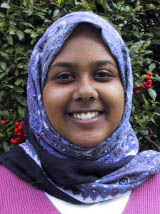
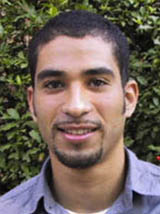
Islam Introduction: A year has passed since the terrorist attacks on the World Trade Center, the Pentagon, and the plane that crashed in Pennsylvania, and PAW's staff writer Kathryn Federici Greenwood caught up with two Muslim students, senior Raquiba Huq and sophomore Abdullah Kandil, to explore their perspective on life in America and on Princeton's campus since September 11, 2001. Huq, whose parents came to the U.S. from Bangladesh and now live in Plainsboro, New Jersey, is president of the Muslim Students Association. She is majoring in the Woodrow Wilson School with a certificate in Near Eastern Studies. Kandil, the vice president of the Muslim Students Association, was born in Boston to Egyptian parents, who have just moved from Washington, D.C., back to Cairo.
KFG: What were your first reactions when you learned of the attacks on 9/11? Abdullah: I couldn't believe it. It didn't hit me until the next day when it was still in the news. I was really disappointed that some Arabs were behind this. I told everyone I talked to that the attackers don't represent us and that they don't represent Islam, and that they are outcasts. I tried as much as I could to distance myself from them and their actions. Raquiba: I was in England for a semester abroad. It was very weird being in a different country at that time. — Luckily we were in a group of 12 so we had each other. But it was still very weird. We couldn't even call America for a while. We couldn't give blood like everyone else. For a while there were signs in at Victoria Rail Station in London that said, "No flights to America." It was hard being away. It was a double blow for us as Muslim Americans because on one hand we were worrying about our country and our friends back home, but also whether anyone in this time of intense mourning and grief would take any actions against our families or mosques. KFG: Did anything happen to your family? Raquiba: No. Abdullah: Our mosque in D.C. was vandalized and there were a couple hate crimes during that period. And some of my Arab friends at George Washington University [in Washington, D.C.] were attacked by other people. KFG: Have you noticed any change in student interest about Islam and the Arab world? Raquiba: I think interest in learning more about the region has grown. Enrollment has gone up in classes being offered this year on "State, Society, and the Challenge of Democracy in the Middle East," "The Roots of Bin Ladenism," and "Introduction to the Middle East." Even the Arabic department has seen an increase in students. Usually there are eight to 10 kids in Arabic 101 and this year 40 students showed up the first day. KFG: How about over conversations at dinner — have your friends been more inquisitive about your religion and culture? Abdullah: I have five roommates and they're all asking me questions about Islam and what Islam thinks about this or that. KFG: Do you ever feel frustrated with Americans' lack of understanding about the history and culture of the Muslim world? Abdullah: Well yeah, whenever you have ignorance and people react based on ignorance, it's always frustrating. But at Princeton I haven't faced any biased people. Raquiba: It's kind of hard when you talk to people who have these opinions about what's going on in the Middle East but who don't know historical facts such as that America supported Iraq in the 1980-88 war, or that the U.S. gave aid to freedom fighters in Afghanistan before. It's a bit frustrating because in order to make an educated opinion of what's going on today you should know about what went on in the past. I know it's asking a lot for everyone in America to know all that, but I think definitely now there's more heightened interest in these issues. KFG: What are your parents hearing in Cairo regarding sentiment toward America? Abdullah: I know there is anti-American sentiment now everywhere in the world, except America, because of Iraq. Raquiba: I can't speak for any country in the region because I don't really know, but I'm sure it's there. I think sometimes that sentiment is misinterpreted here though. People in the government and newspapers will say people in Arab countries are jealous of what we have and resent our freedom and wealth. But I don't think it's that superficial. It's not that they don't want us to have natural resources and goods and services but that they feel these resources are unfairly distributed and manipulated beyond their control. KFG: Do you read news produced in Egypt? Abdullah: I don't, but my parents do. When they were here they had satellite and they would watch Egyptian channels, Al Jazeera. I don't, because I was here on campus. Over there during the war on terrorism in Afghanistan, Al Jazeera would go into the places that had been bombed and then show the brutality of some of these bombs. And they interview the families of the innocent people killed. KFG: What can a place like Princeton do to help build better relations with the Arab and Muslim worlds? What will help open up lines of communications and understanding? Abdullah: During 9/11 Princeton had a memorial service and they had a Jewish rabbi and a Christian minister, but they didn't have an Islamic imam. And I thought if you really want to unite the people then they should have made an effort to find some representative of Islam. And [the university should] incorporate us into their services and have more conferences so people can be educated. Because people aren't well educated about Islam. They have a lot of biases, and if Princeton educates the people here, at least the people here on campus, that's already a start. These people are going to go on and be politicians and teachers, and if they understand us then that's the best thing Princeton can do. KFG: So do you think there's not enough of this educating going on now? Abdullah: No. There was an Islamic conference last weekend, which was really good, but I think everyone that showed up there was a professor. None of them were students. Raquiba: Princeton's had a few similar conferences. There are two coming up this fall in religion and politics. So there have been conferences, and that's a step. Getting the students to come — I don't know if that's something that Princeton can do. It has to come from the students. And it's important to offer classes that it offers now. Maybe Princeton could offer more on the cultural and religious side as opposed to just the political issues affecting Muslim people. To understand more about the people and their way of life, you need more cultural and religion classes. At present there's "Intro to Islam" and two higher level ones that not many people take advantage of, called "Intro to Islamic Law" and "Readings in the Qur'an." Also, I think we only have one Muslim faculty member. KFG: Has anything about the Muslim Students Association changed since 9/11? Raquiba: This year we're having a lot more observers come. More people are interested in being in our discussion groups — Muslims and non-Muslims. We are trying to get more speakers to come. KFG: Is there anything else students could do to increase understanding between Muslim community and West? Abdullah: A good way to introduce Americans to our culture is to actually have some Arabs on campus. I think there are only like five or six undergrads in all of Princeton that are Arab. I know my brother at MIT has at least 10 friends who are Arab. So Princeton could do a lot on that side. Raquiba: It might be the case that a lot of Arabs don't apply because they realize there aren't many here. Abdullah: No I don't think that's the case. Raquiba: Princeton should actively work on getting more Arab students to apply and come to. KFG: But as it's become tougher for foreigners to get student visas, that will discourage Arab students from applying. Abdullah: You don't have to get foreign Arabs, you can get Arab-Americans.
|
||