

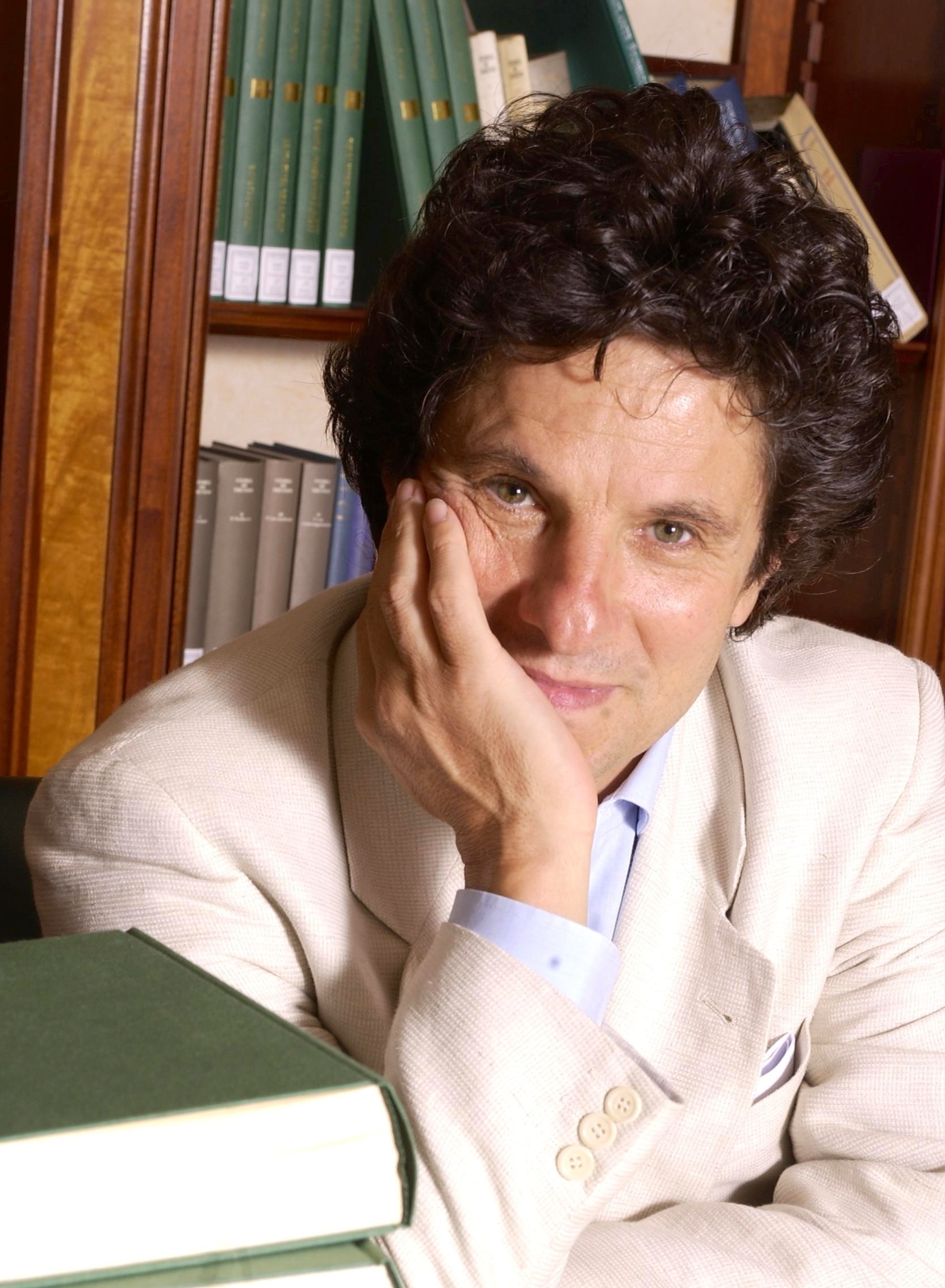
Maurizio Viroli is Professor Emeritus of Politics at Princeton University, Professor of Government at the University of Texas (Austin) and Professor of Political Communication at the University of Italian Switzerland (Lugano).
He has served as an advisor on cultural activities to the President of the Italian Republic during the presidency of Carlo Azeglio Ciampi (1999-2006), and has worked for the President of the Camera dei Deputati during the presidency of Luciano Violante (1996-2001). He has served as the coordinator of the National Committee for the Improvement of the Republican Culture within the Ministry of Home Affairs. He has been consultant of ANCI (National Association of Italian Municipalities). On May 30, 2001, he was appointed Ufficiale dell'Ordine al Merito of the Italian Republic.
He holds a degree in Philosophy from the University of Bologna and a PhD in Political and Social Sciences from the European University Institute of Firenze. He has taught and conducted research at the universities of Cambridge (Clare Hall), Georgetown (Washington, D.C.), the United Arab Emirates, Trento, Campobasso, Ferrara, the Institute for Advanced Study of Princeton, the Scuola Normale Superiore of Pisa, the European University Institute of Firenze (Jean Monnet Fellow), the Collegio of Milano and the Scuola Superiore di Amministrazione dell’Interno. He has promoted and directed several projects on civic education in Italian schools. In particular, he has founded and is now the Director of a Master’s program in Civic Education established at Asti by Ethica Association.
His main fields of research are political theory and the history of political thought, classical republicanism and neo-republicanism, with a special expertise on Niccolò Machiavelli and Jean Jacques Rousseau, republican iconography, the relationship between religion and politics, patriotism, constitutionalism, classical rhetoric, political communication, citizenship, and civic education
Among his publications, Jean Jacques Rousseau and the "Well-Ordered Society", Cambridge University Press, 1988; From Politics to Reason of State. The Acquisition and Transformation of the Language of Politics (1250-1600), Cambridge University Press, 1992; For Love of Country: An Essay on Patriotism and Nationalism, Oxford University Press, 1995; Machiavelli, Oxford University Press, 1998; Niccolò’s Smile, Farrar Straus and Giroux, 1998; Republicanism, Farrar Straus and Giroux, 1999; The Idea of the Republic, with Norberto Bobbio, Polity Press, 2003; How to read Machiavelli, Granta, 2008; Machiavelli’s God, Princeton University Press, 2010; The Liberty of the Servants, Princeton University Press, 2011; As if God Existed. Religion and Liberty in the History of Italy, Princeton University press, 2012; Redeeming the "Prince". The Meaning of Machiavelli’s Masterpiece, Princeton University Press, 2013. With Gisela Bock and Quentin Skinner he is the editor of Machiavelli and Republicanism, Cambridge University Press, 1990. He has edited and written the Introduction of Niccolò Machiavelli, The Prince, translation by Peter Bondanella, Oxford University Press, 2005.
2013
Redeeming The Prince: The Meaning of Machiavelli’s Masterpiece, Princeton, Princeton University Press. Italian translation, La redenzione dell’Italia. Saggio sul «Principe» di Machiavelli, Roma-Bari, Laterza, 2013.
Il sorriso di Niccolò. Storia di Machiavelli, new and revised edition, Roma-Bari, Laterza.
Scegliere il principe. I consigli di Machiavelli al cittadino elettore, Roma-Bari, Laterza.
2012
L’Intransigente, Roma-Bari, Laterza.
Le parole del cittadino, Roma-Bari, Laterza.
2010
La libertà dei servi, Roma-Bari, Laterza (paperback edition: 2012). English translation, The liberty of servants: Berlusconi’s Italy, translated by Antony Shugaar, with a new preface by the author, Princeton, Princeton University Press, 2011.
Lo scrittore di ricami, Reggio Emilia, Diabasis.
2009
Come se Dio ci fosse. Religione e libertà nella storia d’Italia, Torino, Einaudi. English translation, As If God Existed: Religion and Liberty in the History of Italy, translated by Alberto Nones, Princeton, Princeton University Press, 2012.
2008
How to read Machiavelli, Cambridge, Granta. Italian translation, Machiavelli filosofo della libertà, translated by Silvia Righini, Roma, Castelvecchi, 2013.
L’Italia dei doveri, Milano, Rizzoli.
2005
Il Dio di Machiavelli e il problema morale dell’Italia, Roma-Bari, Laterza. English translation, Machiavelli’s God, translated by Antony Shugaar, Princeton, Princeton University Press, 2010.
2001
With Norberto Bobbio, Dialogo intorno alla repubblica, Roma-Bari, Laterza (paperback edition: 2003). Spanish translation, Diálogo en torno a la república, translated by Rosa Ruis Gatell, Barcelona, Tusquets, 2002. Portuguese translation, Diálogo em Torno da República, translated by Daniela Beccaccia Versiani, Rio de Janeiro, Campus Editora, 2002 (paperback edition with different title: Direitos e Deveres na República: os Grandes Temas da Política e da Cidadania, Rio de Janeiro, Elsevier, 2007). English translation, The Idea of the Republic, translated by Allan Cameron, with a new introduction by the author, Cambridge, Polity, 2003. French translation, Dialogue autour de la république, translated by Guillaume Lagrée, Presses Universitaires de Rennes, 2006. Chinese translation, 共和的理念 (Gong he de li nian), translated by Yang Li Feng, Chang chun, Jilin Publishing Group LLC, 2009.
1999
Repubblicanesimo, Roma-Bari, Laterza. English translation, Republicanism, translated by Anthony Shugaar, New York, Farrar Straus and Giroux, 2002. German translation, Die Idee der Republikanischen Freiheit, translated by Friederike Hausmann, Zurich, Pendo, 2002. Bulgarian translation, Републиканизъм (Republikanizŭm), Sofia, Ciela, 2005. Korean translation, 공화주의 (Konghwajuŭi), translated by Kyŏng-hŭi Kim and Tong-gyu Kim, Kyŏnggi-do Goyang-si, In’gan Sarang, 2006. Catalan translation, Republicanisme, translated by Gabriel Genescà Dueñas, Barcelona, Angle, 2007. French translation, Républicanisme, translated by Christopher Hamel, Paris, Bord de l’eau, 2011. Arabic translation, ال ف كر ال جمهوري (al-Fikr al-jumhūrī), translated by Izz al-Dīn Anāyah, Abū aby, Hayat Abū aby lil-thaqāfah wa-al-turāth (Kalimah), 2011.
1998
Machiavelli, Oxford, Oxford University Press.
Il sorriso di Niccolò. Storia di Machiavelli, Roma-Bari, Laterza (paperback edition: 2000; also republished by Milano, Edizioni de Il Giornale, 2007; and by Milano, Edizioni de Il Sole 24 Ore, 2010). English translation, Niccolò’s Smile. A Biography of Machiavelli, translated by Antony Shugaar, New York, Farrar Straus and Giroux, 2000 (paperback edition: 2002). Spanish translation, La sonrisa de Maquiavelo, translated by Atilio Pentimalli, Barcelona, Tusquets, 2000 (republished in 2002; also published by Barcelona, Folio, 2004). German translation, Das Lächeln des Niccolò: Machiavelli und seine Zeit, translated by Friederike Hausmann, Zurich-Munich, Pendo, 2000 (also published by Darmstadt, Wissenschaftliche Buchgesellschaft, 2000; and by Reinbek bei Hamburg, Rowohlt, 2001). Portuguese translation, O sorriso de Nicolau. História de Maquiavel, translated by Valéria Pereira de Silva, São Paulo (Brazil), Estação Liberdade, 2002. Dutch translation, De glimlach van Niccolo: een biografie van Machiavelli, translated by Mieke Geuzebroek and Pietha de Voogd, Amsterdam, Mets & Schilt, 2002 (also published by Roeselare, Roularta Books, 2003). Swedish translation, Niccolòs leende: historien om Machiavellli, translated by Paul Enoksson, Paul, Stockholm, Atlantis, 2004. Polish translation, Uśmiech Machiavellego, translated by Krzysztof Żaboklicki, Warszawa, Wydawnictwo W.A.B., 2006. Japanese translation, マキァヴェッリの生涯 : その微笑の謎 (Makiaverri no shōgai : Sono bishō no nazo), translated by Yoshimi Takeda, Tokyo, Hakusuisha, 2007. Chinese translation, 尼科洛的微笑 : 马基雅维里传, translated by Duan Bao Liang, Shanghai Translation Publishing House, Shanghai, 2008. Arabic translation, Projectemirati.
1995
For Love of Country: An Essay on Patriotism and Nationalism, Oxford, Oxford University Press (paperback edition: 1997). Italian translation, Per Amore della Patria. Patriottismo e nazionalismo nella storia, Roma-Bari, Laterza, 1995 (paperback edition with a new Introduction: 2001). Spanish translation, Por amor a la patria: un ensayo sobre el patriotismo y el nacionalismo, translated by Patrick Alfaya MacSchane, Madrid, Acento Editorial, 1997. Turkish translation, Vatan Aşkı: Yurtseverlik ve Milliyetçilik Üzerine Bir Deneme, translated by Abdullah Yılmaz, Istambul, Ayrıntı Yayınları, 1997. Japanese translation, パトリオティズムとナショナリズム : 自由を守る祖国愛, (Patoriotizumu to nashonarizumu : Jiyū o mamoru sokokuai), translated by Rui Satō and Makiko Satō, Tokyo, Nihon Keizai Hyōronsha, 2007.
1992
From Politics to Reason of State. The Acquisition and Transformation of the Language of Politics (1250-1600), Cambridge, Cambridge University Press. Italian translation, Dalla politica alla ragion di stato, Roma, Donzelli, 1994. Spanish translation, De la política a la razón de estado: la adquisición y transformación del lenguaje político (1250-1600), translated by Sandra Chaparro Martinez, prefaces by Sandra Chaparro Martinez and Rafael del Águila, Madrid, Akal, 2009.
1988
La théorie de la société bien ordonnée chez Jean-Jacques Rousseau, Berlin-New York, De Gruyter. English Translation, Jean Jacques Rousseau and the “Well-Ordered Society”, translated by Derek Hanson, Cambridge, Cambridge University Press, 1988. Italian translation, Jean-Jacques Rousseau e la teoria della società bene ordinata, Bologna, Il Mulino, 1993.
1987
L’etica laica di Erminio Juvalta, Milano, Franco Angeli.