
In graduate school I studied the Buddhist traditions of China and Japan, classical Japanese literature, literary criticism of the Edo period, and modern fiction. Research for my doctoral dissertation took me to Osaka University, where I began analyzing Edo-period commentary on The Tale of Genji. I completed my doctorate in East Asian Languages and Literatures at Yale University in 1998. Since then I have taught Japanese language, literature, and film at Amherst College, Columbia University, and Princeton University.
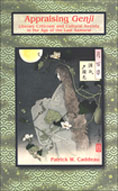
My first book, Appraising Genji: Literary Criticism and Cultural Anxiety in the Age of the Last Samurai, examines the reception of Genji among scholars, poets, translators, and politicians over the course of the last thousand years. I incorporate a broad range of works from various periods and genres—including scholarly commentaries, diaries, critical treatises, newspaper accounts, cinematic adaptations, and modern stage productions—to give readers a sense of how Genji's place in Japanese culture evolved over time.
In writing Appraising Genji I sought to bridge a gap between scholarship on premodern literary criticism and modern theories of fiction in Japan. Continued research and reading have led me to explore intellectual history, nativism and nationalism, theories of the novel, poetic criticism, and the worlds of print culture and commercial publishing in premodern Japan.
More recently, my interest in cultural concepts of time and sustainability has led to a new book project, The Beauty of Limits. This study begins with a historical puzzle: why did Japan retain circular systems of resource use through a century of rapid modernization, while Europe abandoned comparable practices during the same period, even though Western scientists recognized Japanese methods as superior? The answer lies not in cultural essence or economic necessity, but in a pluralistic temporal framework that allowed practices grounded in natural cycles, renewal, and limitation to remain coherent and valuable even as Japan adopted many institutions of modern industrial growth. Over time, this framework integrated material practices, aesthetic philosophy, and indigenous conceptions of time into a worldview in which working within limits felt like refinement rather than restriction, producing what I call the "beauty of limits."
The project uses this historical analysis to address contemporary concerns. Sustainability efforts today often fail not because we lack knowledge or viable models, but because our dominant worldview equates limits with failure rather than form. The Beauty of Limits redirects attention toward distributed agency, unglamorous daily practice, and the recognition that meaningful action already exists at the scale of maintenance, sufficiency, and participation in living systems. The question is not how to become Japanese, but what conditions allow limit-wisdom to take root in any cultural context. I explore some of these ideas in a First-Year Seminar (FRS 192) at Princeton.
Teaching, in turn, lets me explore and discuss literature, drama, and film with students in ways that continually inspire and refine my academic work.