

History & Mission
The High Meadows Environmental Institute (HMEI) at Princeton University advances understanding of the Earth as a complex system influenced by human activities, and informs solutions to local and global challenges by conducting groundbreaking research across disciplines and by preparing future leaders in diverse fields to impact a world increasingly shaped by climate change. Founded in 1994 as the Princeton Environmental Institute, HMEI was renamed in 2020 in recognition of a transformative gift from the High Meadows Foundation, a philanthropic organization co-founded by Judy and Carl Ferenbach III, a member of the Class of 1964, in support of environmental research and educational initiatives through HMEI.
HMEI functions as a vibrant central resource for faculty, postdocs, students, alumni, and others with an interest in environmental topics and research. More than 140 members of the Princeton faculty, representing 30 academic disciplines, are active with HMEI and contribute to the teaching of scientific, technical, policy, and human dimensions of environmental issues.
HMEI serves as a center for environmental education, ideas, and dialogue through robust undergraduate and graduate teaching and certificate programs, research centers and initiatives, and public events addressing a range of environmental topics.
Get Involved
Research
HMEI is the administrative home for sponsored research projects funded by government, industry and foundation enterprises and includes several long-term centers such as the Carbon Mitigation Initiative (CMI), the Center for BioComplexity and the newly established Integrated GroundWater Modeling Center.
Through the Grand Challenges program, HMEI encourages innovations in interdisciplinary faculty research and teaching to address urgent and complex environmental issues including climate and energy, urban resilience and sustainability, and water and the environment.
Education
UNDERGRADUATE PROGRAMS
The Program in Environmental Studies (ENV) offers a vibrant, multidisciplinary forum for engaging the scientific, political, humanistic and technological dimensions of the greatest environmental challenges facing the world today. Students majoring in any discipline wishing to demonstrate proficiency in environmental studies may pursue a Minor in Environmental Studies.
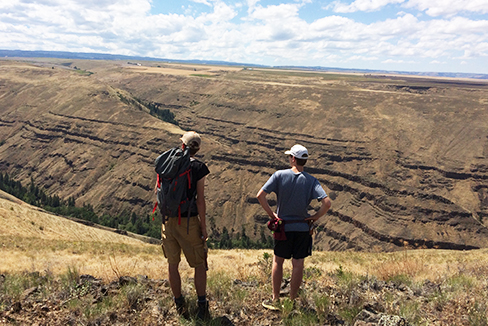
HMEI makes available a wide range of environmentally focused internships in the summer months. These fully-funded fellowships are mentored by Princeton faculty and other qualified hosts and provide participating students exposure to cutting-edge research on environmental challenges in climate science, biodiversity, environmental policy, energy technology, water resource management and sustainable development.
Additionally, HMEI provides support for field research connected to independent work in the junior and senior years. The ENV program and related opportunities are open to all students regardless of academic major.

GRADUATE PROGRAMS
HMEI provides support for graduate research and hosts fellowship programs that encourage Ph.D. candidates to broaden their perspective on environmental problems. These opportunities include the HMEI-STEP Graduate Fellowship Program for students who wish to explore the public policy dimension of their graduate research; and the Princeton Energy and Climate Scholars (PECS) program. Funding for graduate research is made available annually by competitive application, including the Mary and Randall Hack ’69 Graduate Award for Water and the Environment. A Graduate Certificate in Environmental Studies was recently introduced.
Events
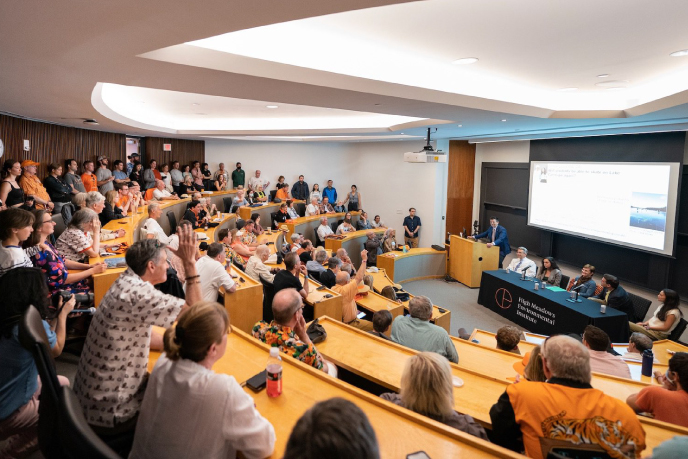
HMEI hosts seminars, lectures and conferences throughout the academic year on a broad range of environmental topics. Most events are open to the public and draw an audience that includes members of the University and Princeton-area communities along with visitors and professional colleagues from peer institutions and collaborating partners in academic, industry, government and the non-profit sectors. Upcoming events are listed on our event calendar and distributed through our email list (see the bottom of the page to subscribe). Videos of many of our past events are available online.
LECTURE SERIES
HMEI presents the following regular lecture series, both of which are open to the public.
The HMEI Faculty Seminar Series is a venue for senior faculty to discuss their research in the context of environmental science and current events. Each semester features four faculty seminars on topics that include: sea-level rise; climate change; carbon sequestration; green technology; renewable energy and sustainability; biodiversity; infectious diseases and global health; urban infrastructure; environmental history and humanities; environmental chemistry; and ocean biogeochemistry.
The Taplin Environmental Lecture Series was established in 1997 by Frank Taplin, a 1937 Princeton graduate and philanthropist for environmental causes and the arts, to bring accomplished scholars and environmental leaders from industry, government, NGOs and the private sector to Princeton University. Speakers engage the public on numerous pressing environmental issues and topics, including: the environmental humanities; climate science and policy; economics and sustainability; environmental ethics; federal land-use policy; and the role of science, technology, and industry in environmental mitigation.
HMEI EVENT SPONSORSHIP
HMEI sponsors seminars, colloquia, lecture series, and speaker events related to environmental topics such as: the environmental humanities; religion and ecology; climate science and policy; energy; infectious disease and global health; sustainable development; water scarcity; and environmental justice. Sponsored series currently include the Distinguished Lecture Series on China and the Environment, the Environmental Humanities and Social Transformation Colloquium, and the GEO/AOS/HMEI Climate Seminar Series, among others. Contact Executive Director Katharine Hackett to inquire about sponsorship.
Our Name
Click here for a special page about our change to the High Meadows Environmental Institute!
Employment Opportunities
For open positions within HMEI, check our Employment Opportunities page.
Contact
You may contact us by using the form on our Contact Us page.