|
Web
Exclusives:Meet
the Profs February
13, 2002:
When first asked to be president of NFI, a nonprofit organization whose goal is to encourage a society-wide reversal of the father absence trend by stimulating grass roots change, he said "no." But he soon realized that "You can always make a buck, but you can't always make a difference." A psychology major at Princeton who earned an MBA at Wharton, Warren has worked for IBM, Pepsi, and most recently Goldman, Sachs in Philadelphia. Fatherlessness has been increasing, notes Warren. In 1960, less than 8 million children were living in families where the father was absent. Today that number is 24 million. NFI works with all kinds of fathers, those incarcerated, in the military, divorced and never-married fathers without custody, and even married dads who just want to become better parents. Data has been around for years that warned of the perils of fatherless households. But "people didn't want to talk about it," says Warren. For example, in the mid 1960s Daniel Patrick Moynihan pointed out that one quarter of black kids and a much smaller portion of white kids were born out of wedlock, and if that trend were to continue, there would be negative social and economic impact for the black community, says Warren. "He was attacked for that position." People suggested that sort of analysis was racist, says Warren. But "that trend did accelerate." And today, seven out of 10 black kids are born to a single mother. As a proportion of the population, out of wedlock births is a bigger problem in the black community, says Warren. Still, in 2000, 65 percent of all those births were to white women. Divorce is another avenue to fatherlessness for children, he says. "Kids crave structure and nurturing and divorce makes it difficult to deliver both." The NFI, based in Gaithersburg, Maryland, promotes awareness through public service announcements; provides curricula, brochures, and training to community-based fatherhood programs; and fosters collaboration between religious organizations, business, and government. Other types of organizations, such as crisis pregnancy centers and Boys and Girls clubs have added father-education programs to their range of services. For dads in prison, the NFI offers a peer-led program. The vast majority of men in prison grew up with out fathers around, says Warren. "They never learned about being a dad because they didn't have one at home," he adds. The NFI's program gives them an opportunity to talk about their own issues of rejection and neglect, which most men find difficult to talk about, says Warren. He should know. "There's still pain," he says, even three years after his father's death. Growing up in Toledo, Ohio, he and his three siblings "kind of knew where he was," says Warren, but there was no real contact outside of special occasions. His dad became a minister and eventually remarried and was a great father to his new kids, says Warren. At his father's funeral, Warren listened to lots of people talk about what a great person his dad was. "I'm getting madder and madder. What had me raging was one man who had been incarcerated talked about how my dad had helped him. And I'm thinking, I did well in school. ... Did I have to go to prison to meet my father? I felt incredibly hurt because he wasn't there." But Warren realized that "if I was going to move forward, I was going to have to forgive my father." For me, he says, "that was the real lesson." Some parents respond to their fathers' rejection by becoming highly involved in their children's lives. "That's the route I took," says Warren, who is married to Yvette M. Lopez-Warren '85, a family physician in Abington, Pennsylvania, and has two boys, Jamin, 19, and Justin, 16. But there's another path, he says: to pretend that fatherlessness doesn't hurt kids and abandon your own children. Addressing fatherlessness, he says, "is the way to get at
the root of a lot of our social ills," such as drug abuse and
out of wedlock births. Says Warren, "We've got to turn the
hearts of men to their kids," not just their wallets. By Katherine Federici Greenwood You can reach Katherine at federici@greenwood
Home Current
Issue
Web Exclusives: Headlines - PawPlus - Features Tooke's Take - Varsity Typewriter - Inky Dinky Do Raising Kate - On the Campus - Comparative Life - More... PAW Online Archives - Print Archives - Advertising Info - Reader Services Search the Site - Contact PAW Princeton University - Alumni Links - Alumni Council - Your Class Secretary |

 Tonight
one out of every three children in the U.S. will go to sleep in
a home in which their father doesn't live. Those kids are significantly
more likely to experience poverty, commit violent crimes, be suspended
from school or drop out, and become victims of child abuse or neglect.
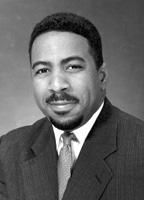
Roland Warren '83 is trying to change those ugly statistics. The
president of the National Fatherhood Initiative since last July,
Warren well understands what it means to grow up without a dad because
his own father left his mother when he was a youngster.
Tonight
one out of every three children in the U.S. will go to sleep in
a home in which their father doesn't live. Those kids are significantly
more likely to experience poverty, commit violent crimes, be suspended
from school or drop out, and become victims of child abuse or neglect.
Roland Warren '83 is trying to change those ugly statistics. The
president of the National Fatherhood Initiative since last July,
Warren well understands what it means to grow up without a dad because
his own father left his mother when he was a youngster.
