| [ home ] |
| [ research ] |
| [ teaching ] |
| [ datasets ] |
| [ cv ] |
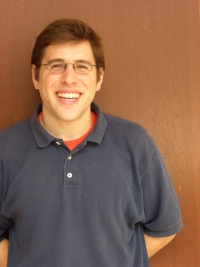
|
Alexander Stewart 1886 Professor of Sociology Princeton University, on sabbatical 2026-27 Visiting Scientist, Bristol Myers Squibb, 2026-27 |
Matthew Salganik is the Alexander Stewart 1886 Professor of Sociology at Princeton University. He is also affiliated with several of Princeton's interdisciplinary research centers including the Princeton AI Lab, Princeton Precision Health, and Center for Information Technology Policy. He is the author of the award-winning book Bit by Bit: Social Research in the Digital Age, which has been translated into 5 languages. He is on sabbatical during the 2026-27 academic year.
Salganik's research has been published in journals such as Science, Nature, PNAS, Sociological Methodology, and Journal of the American Statistical Association. His papers have won the Outstanding Article Award from the Mathematical Sociology Section of the American Sociological Association (twice) and the Outstanding Statistical Application Award from the American Statistical Association. He has received the Leo Goodman Mid-Career Award, the William Ogburn Mid-Career Award, and the Outstanding Recent Alumni Award from the Graduate School of Arts & Sciences at Columbia University. He has also received a Commendation for Outstanding Teaching from Princeton's School of Engineering & Applied Science. A former Fulbright fellow, Salganik's research has been funded by grants from the National Science Foundation, National Institutes of Health, Joint United Nations Programme on HIV/AIDS (UNAIDS), Russell Sage Foundation, Alfred P. Sloan Foundation, Facebook, and Google. Popular accounts of his work have appeared in the New York Times, Wall Street Journal, Economist, and New Yorker. During sabbaticals from Princeton, he has been a Visiting Professor at Cornell Tech, a Senior Researcher at Microsoft Research, a Member at the Institute for Advanced Study, and a Professor-in-Residence at the New York Times. During his sabbatical for the 2026-27 academic year, he will be a Visiting Scientist at Bristol Myers Squibb.
Updates from Matt:
- I'm on sabbatical for the 2026-27 academic year. During my sabbatical I will be a Visiting Scientist based in the Informatics & Predictive Science group at Bristol Myers Squibb. My research will likely have a substantive focus on neurodegenerative diseases, such as Alzheimer's, and a methodological focus on AI. I'm very excited for this new opportunity. (September 2026)
- Our working paper, "Births are difficult to predict even with rich survey and full-population register data", co-authored with a large group led by Lisa Sivak and Gert Stulp has been posted. It describes the results from the Predicting Fertility Data Challenge. Feedback welcome. (September 2026)
- Our paper, "A reporting checklist for large language models in behavioural science", co-authored with a large group led by Stefan Feuerriegel was published in Nature Human Behaviour. I hope this paper will help improve and accelerate the use of LLMs in social science research. (July 2026)
- My working paper, "Language models for life course prediction", co-authored with Varun Satish, Flavio Hafner, Sayash Kapoor, Malte Lüken, Lydia Liu, Tiffany Liu, Juan Carlos Perdomo, Keyon Vafa, and Mark Verhagen, has been submitted for peer review. The paper describes our work using LLMs during the Predicting Fertility Data Challenge. If you are interested, please email me for a copy. (July 2026)
- My working paper, "More Data, Modest Gains: Assessing Limits of Prediction in Multi-domain Population-Scale Social Data", co-authored with Emily Cantrell, Hanzhang Ren, Sayash Kapoor, Arvind Narayanan, and Mark Verhagen, has been submitted for peer review. The paper describes studying the impact of more data (cases and features) on predictive accuracy in the Predicting Fertility Data Challenge. If you are interested, please email me for a copy. (July 2026)
- Here's a wonderful feature story describing the trajectory of our research on predicting life outcomes, including our newest work using LLMs: "The Book of Life: Moving from a Sociology of Variables to a Sociology of Events" from the Princeton AI Lab Blog. (February 2026)
- I'm happy to serve on the Advisory Committee for The Longitudinal Expert AI Panel. The goal of this 3-year project is to publicly track and evaluate expert predictions about AI, especially its impact on science, the economy, and society. You can read more about the project and its early findings in this article from the Economist and this working paper. (November 2025)
- I've been promoted to the Alexander Stewart 1886 Professor of Sociology. I'm grateful for this honor, and it would not have been possible without the help of many mentors, colleagues, students, friends, and family. (July 2025)
- My working paper, "The Book of Life approach: Enabling richness and scale for life course research", co-authored with Mark Verhagen, Benedikt Stroebl, Tiffany Liu, and Lydia Liu has been posted on arXiv. We've also released the open-source Book of Life Toolkit. Feedback welcome. (July 2025)
- We are happy to share an open-source benchmark for GPUs in a secure computing environment. No private data are required, and it is relatively easy to run. Feel free to use and improve. This work was a wonderful collaboration with our colleagues from the Netherlands eScience Center. (April 2025)
- I am happy to become a core faculty member at Princeton Precision Health. You can learn more about this new initiative in this article about Princeton Precision Health. (March 2025)
- My paper, "The origins of unpredictability in life outcome prediction tasks", co-authored with Ian Lundberg, Rachel Brown-Weinstock, Susan Clampet-Lundquist, Sarah Pachman, Tim Nelson, Vicki Yang, and Kathy Edin was published in PNAS. Also, Mario Small wrote an excellent commentary that captures our paper's essence and places it in a larger context. I hope our paper will help build intuition about predictability of life outcomes and serve as a framework for future empirical work. (July 2024)
- My paper, "REFORMS: Consensus-based Recommendations for Machine-learning-based Science", co-authored with a large group led by Sayash Kapoor and Arvind Narayanan was published in Science Advances. I hope this paper will help improve and accelerate the use of machine learning in scientific research. (May 2024)
- I'm happy to share our recommendations to the US Department of Commerce (NTIA-240216-0052) on "Dual Use Foundation Artificial Intelligence Models with Widely Available Model Weights". Thank you to all my colleagues on the IAS AI Policy and Governance Working Group. (March 2024)
- Call for nominations for the first-ever Princeton AI Policy Precepts in Washington, DC. This is a non-partisan, free program on concepts, opportunities & risks around AI. The program is for policymakers from Congressional offices & Federal agencies. The instructors will be Arvind Narayanan, Mihir Kshirsagar, and me. Please nominate by March 29. (March 2024)
- This spring I'm co-teaching Limits to Prediction. The graduate seminar, which is cross-listed between the Departments of Sociology and Computer Science, is co-taught with Arvind Narayanan and focuses on one question: with enough data and the right algorithms does everything become predictable? (January 2024)
- My working paper, "Validating survey-based estimates of adult mortality with high-quality vital statistics: Evidence from 27 cities", co-authored with Dennis Feehan has been posted on SocArXiv. Feedback welcome. (January 2024)
- Come do a postdoc with Arvind Narayanan and me. We are searching for a joint postdoc interested in machine learning in social settings. Topics include but are not limited to: identifying and measuring limits to predictability; distribution shift; strengthening reproducibility, reliability, and robustness; ethical impacts. The postdoc will be part of the Center for Information Technology Policy and may involve participation in Princeton's new AI initiative. Apply by Dec 1 for full consideration. (November 2023)
- My working paper, "The origins of unpredictability in life trajectory prediction tasks", co-authored with Ian Lundberg, Rachel Brown-Weinstock, Susan Clampet-Lundquist, Sarah Pachman, Timothy J. Nelson, Vicki Yang, and Kathy Edin has been posted on arXiv. Feedback welcome. This paper builds on my previous work on the Fragile Families Challenge. (November 2023)
- My working paper, "REFORMS: Reporting Standards for Machine Learning Based Science", co-authored with Sayash Kapoor, Arvind Narayanan, and many others has been posted on arXiv. This thread by Sayash summarizes the paper and why we wrote it. Feedback welcome. (August 2023)
- I've joined the Institute for Advanced Study AI Policy and Governance Working Group. You can read our regulatory comment on AI accountability submitted to the US National Telecommunications and Information Administration. (June 2023)
- My commentary "Predicting the future of society" was published in Nature Human Behaviour. It discusses an interesting mass collaboration by the Forecasting Collaborative. (February 2023)
- I'm honored to be selected to spend next academic year as a Member at the Institute for Advanced Study in the School of Social Science. During my sabbatical, I'll be continuing my research at the intersection of social science and data science, most specifically trying to measure and understand the predictability of social systems. I'm looking forward to meeting my new colleagues. (May 2022)
- After 3 years as the Director of the Center for Information Technology Policy, I'm delighted to pass the baton to Arvind Narayanan and Prateek Mittal. CITP works to understand and improve the relationship between technology and society. It is a joint initiative of Princeton's School of Engineering and Applied Science and School of Public and International Affairs. I'm grateful to the CITP community for a wonderful 3 years. (May 2022)
- I'm honored to receive the 2022 Book Award from the American Association for Public Opinion Research (AAPOR) for Bit by Bit. The award "seeks to recognize influential books that have stimulated theoretical and scientific research in public opinion; and/or influenced our understanding or application of survey research methodology. Eligibility for the award includes any book in the field that is at least three years old (to allow time for books to be read and reviewed)." (April 2022)
- I'm honored to receive the William Ogburn Mid-Career Award from the American Sociological Association Section on Communication, Information Technologies, and Media Sociology. The award "recognizes a sustained body of research by a scholar who has provided an outstanding contribution to the advancement of knowledge in the areas relevant to the section." (August 2021)
- Bit by Bit: Social Research in the Digital Age will be published in Turkish by Istanbul Bilgi University Press. If you would like to help get Bit by Bit published in another language, let me know. (July 2021)
- The 2021 Summer Institutes in Computational Social Science are now complete. In addition to SICSS-Princeton, we had 20 partner locations led by members of the SICSS community: SICSS-Beijing, SICSS-Bologna, SICSS-Chicago, SICSS-FGV/DAPP Brazil, SICSS-HSE, SICSS-Helsinki, SICSS-Hong Kong, SICSS-Howard/Mathematica, SICSS-Istanbul, SICSS-Law, SICSS-Lisbon, SICSS-London, SICSS-UCLA, SICSS-Montreal, SICSS-Oxford, SICSS-Rutgers, SICSS-Stellenbosch, SICSS-Taiwan, SICSS-Tokyo, and SICSS-Zurich. Thank you to all our local organizers and our partners at SSRC. (July 2021)
- My paper, "Integrating explanation and prediction in computational social science", co-authored with Jake Hofman, Duncan Watts, Susan Athey, Filiz Garip, Thomas Griffiths, Jon Kleinberg, Helen Margetts, Sendhil Mullainathan, Simine Vazire, Alessandro Vespignani, and Tal Yarkoni was published in Nature. (June 2021)
- I am honored to receive a commendation for outstanding teaching from Princeton's School of Engineering and Applied Science for my course Limits to Prediction. This graduate seminar was co-taught with Arvind Narayanan and was cross-listed by the departments of Computer Science and Sociology. (February 2021)
- This fall I'm teaching a new graduate seminar: Limits to Prediction. This course is co-taught with Arvind Narayanan. (September 2020)
- My paper, "Computational social science: Obstacles and opportunities", co-authored with David Lazer, Alex Pentland, Duncan Watts, Sinan Aral, Susan Athey, Noshir Contractor, Deen Freelon, Sandra Gonzalez-Bailon, Gary King, Helen Margetts, Alondra Nelson, Markus Strohmaier, Alessandro Vespignani, and Claudia Wagner was published in Science. (August 2020)
- An interview with me about the Fragile Families Challenge has been published in Harvard Data Science Review. Thank you to Lauren Maffeo and Cynthia Rudin for conducting the interview. (August 2020)
- Sara McLanahan and I guest edited the Special Collection of Socius on the Fragile Families Challenge. The Special Collection includes an introduction, 12 papers by participants describing their approaches to the Challenge, 3 papers by our group that will be helpful to researchers creating other mass collaborations, and 1 comment. The entire Special Collection is available open access. (May 2020)
- The Italian translation of Bit by Bit has been published: Bit By Bit: La ricerca sociale nell'era digitale. Flaminio Squazzoni had a wonderful interview about the book with Il Mulino. If you would like to help get Bit by Bit published in another language, let me know. (May 2020)
- My paper, "Measuring the predictability of life outcomes with a scientific mass collaboration", co-authored with 111 colleagues, was published in the Proceedings of the National Academy of Sciences. Filiz Garip wrote a thoughtful comment on the paper ("What failure to predict life outcomes can teach us"), and Princeton summarized the results in a news story ("Multi-year datasets suggest projecting outcomes of people’s lives with AI isn’t so simple"). (April 2020)
- I am happy to share some of what I did while I was Professor-in-Residence at the New York Times. This project involved auditing the machine learning system that the Times uses for comment moderation. Joint work with Robin Lee. (April 2020)
- Because of COVID-19, the 2020 Summer Institutes in Computational Social Science have become virtual events: SICSS-Duke, SICSS-Bay Area, SICSS-Istanbul, SICSS-Maastricht, SICSS-Montreal, SICSS-Rutgers, SICSS-Stellenbosch, SICSS-Tucson, and SICSS-Los Angeles. Other locations have postponed until 2021. (April 2020)
- The Korean translation of Bit by Bit has been published: 비트 바이 비트 디지털 시대의 사회조사방법론. If you would like to help get Bit by Bit published in another language, let me know. (March 2020)
- I will be the Interim Director of the Center for Information Technology Policy for the 2019-2020 academic year. The Center's research, teaching, and service focuses on understanding and improving the relationship between digital technology and society. (July 2019)
- The Princeton website had a nice story about the 2019 Summer Institutes in Computational Social Science. (July 2019)
- I am honored to receive the 2019 Outstanding Recent Alumni Award from the Graduate School of Arts & Sciences at Columbia University, and I'm grateful to everyone at Columbia---especially my advisor Duncan Watts---for making it such a wonderful place to go to graduate school. The award "honors individuals who have graduated within the past fifteen years and have excelled in the early stages of their careers." (May 2019)
- Bit by Bit: Social Research in the Digital Age has been awarded a PROSE Award from the Association of American Publishers. (February 2019)
- The 2019 Summer Institute in Computational Social Science will be at Princeton in 2019. Apply by February 20, 2019. In addition to the event at Princeton, there will be a number of partner locations run by alumni of the 2017 and 2018 programs, which will be hosted in Bamberg, Germany (University of Bamberg), Boston, MA (MIT), Cape Town, South Africa (University of Cape Town), Chicago, IL (Northwestern University), Istanbul, Turkey (Kadir Has University), Monterrey, Mexico (Universidad Autónoma de Nuevo León), Oxford, United Kingdom (Oxford University), New York, NY (Hunter College-CUNY), Research Triangle Park, NC (RTI International), and Zürich, Switzerland (ETH Zürich). (January 2019)
- Bit by Bit: Social Research in the Digital Age will be published in Italian by il Mulino. If you would like to help get Bit by Bit published in another language, let me know. (January 2019)
- Bit by Bit: Social Research in the Digital Age will be published in Korean by East-Asia Publishing Company. If you would like to help get Bit by Bit published in another language, let me know. (November 2018)
- During the 2018-19 academic year, I will be a Professor-in-Residence at the New York Times. (September 2018)
- Chris Bail and I have open-sourced all the teaching materials from the Summer Institute in Computational Social Science (videos of lectures, slides, code, and group activities). (August 2018)
- I've joined the Board of Directors of Mathematica Policy Research. (August 2018)
- My paper, "Generalizing the network scale-up method: A new estimator for the size of hidden populations", co-authored with Dennis Feehan, has been awarded the Outstanding Article Award from the Mathematical Sociology Section of the American Sociological Association. Also, congratulations to co-winners Joscha Legewie and Merlin Schaeffer for their paper on contested boundaries. (June 2018)
- The 2018 Summer Institute in Computational Social Science will have seven partner locations that are organized by alumni from the 2017 program: Hunter College, New York University, Northwestern University, University of Cape Town, University of Colorado, University of Helsinki, University of Washington. (May 2018)
- While we've been working on the Fragile Families Challenge, Alix Spiegel, a science reporter from NPR, has been tagging along. Now you can hear more of the story behind the Challenge on this episode of her podcast Invisibilia. (April 2018)
- Bit by Bit: Social Research in the Digital Age will be published in Chinese by CITIC Press and Japanese by Yuhikaku Publishing. If you would like to help get Bit by Bit published in another language, let me know. (March 2018)
- I'll be giving a book talk at the Institute for Public Knowledge at NYU on Wednesday, Feb 21 from 6-8pm. The discussants will be Beth Noveck and Duncan Watts. (February 2018)
- Bit by Bit was reviewed in Science by David Lazer (open access version). (January 2018)
- I'm happy to announce the 2018 Summer Institute in Computational Social Science, which I'm organizing with Chris Bail. SICSS 2018 will be June 18 - 30 at Duke University, and is for grad students, post-docs & assistant professors from many fields. A generous grant from the Russell Sage Foundation covers costs for participants. Application deadline is February 19. (January 2018)
- All teaching materials from the 2017 Summer Institute in Computational Social Science are available open source, including videos of lectures, slides, and code. (January 2018)
- I gave a talk at TEDxPrincetonU titled Beyond Big Data. (December 2017)
- Bit by Bit: Social Research in the Digital Age is now published. You can purchase a copy from Amazon, Barnes and Noble, IndieBound, or Princeton University Press. You can also read it online. (November 2017)
- The Fragile Families Challenge was featured in an article on the Princeton University homepage: Fragile Families Challenge uses 'big data' to answer big questions. (November 2017)
- I am happy to announce the Fragile Families Challenge, a scientific mass collaboration combining predictive modeling, causal inference, and in-depth interviews to improve the lives of disadvantaged kids in the US. Please participate. (March 2017)
- I am happy to announce the Russell Sage Foundation has provided a grant to support the Fragile Families Challenge. (March 2017)
- My paper, "The network survival method for estimating adult mortality: Evidence from a survey experiment in Rwanda", co-authored with Dennis Feehan and Mary Mahy, is now in press at Demography. We have also released replication materials. (March 2017)
- I am happy to announce that with Chris Bail, I am starting the Summer Institute in Computational Social Science, which will be funded by the Russell Sage Foundation. The purpose of the Summer Institute is to introduce graduate students and beginning faculty in the social and data sciences (broadly conceived) to computational social science. This year the Summer Institute will be held at Princeton University from June 18 to July 1, and it is free to participants. Applications are due February 24. (January 2017)
- Here are slides from my workshop on open and reproducible research. (January 2017)
- My new book, Bit by Bit: Social Research in the Digital Age, and the Open Review Toolkit were featured in an article on the Princeton University homepage: Salganik explores the future of social science research and academic publishing. (November 2016)
- I'm happy to announce the first release of the Open Review Toolkit, a suite of open source software that enables authors and publishers to convert book manuscripts into Open Review websites. (November 2016)
- An improved version of my working paper, "The network survival method for estimating adult mortality: Evidence from a survey experiment in Rwanda", co-authored with Dennis Feehan and Mary Mahy, has just been posted to the arXiv. We made major improvements in the exposition and added much more descriptive information about our procedures and results. (November 2016)
- My paper, "Generalizing the network scale-up method: A new estimator for the size of hidden populations", co-authored with Dennis Feehan, has just been published in Sociological Methodology. Replication materials are available. (September 2016)
- This fall I am teaching a graduate seminar on computational social science. (September 2016)
- I am sad to be ending a wonderful year at Cornell Tech, and I am excited to be returning to Princeton. (September 2016)
- I've received a grant from the Alfred P. Sloan Foundation to support the Open Review Toolkit. (August 2016)
- My book is going into Open Review soon, see Bit by Bit: Social Research in the Digital Age. (July 2016)
- My working paper, "The network survival method for estimating adult mortality: Evidence from a survey experiment in Rwanda", co-authored with Dennis Feehan and Mary Mahy has just been posted to the arXiv. (March 2016)
- My paper, "Quantity versus quality: A survey experiment to improve the network scale-up method", co-authored with Dennis Feehan, Aline Umubyeyi, Mary Mahy, and Wolfgang Hladik, has just been published open access in the American Journal of Epidemiology. Replication data and code are available. I hope that survey experiments with blending will become a common design in future studies. (March 2016)
- Slides from my workshop on open and reproducible research are now available. (February 2016)
- My paper, "Strengthening the Reporting of Observational Studies in Epidemiology for respondent-driven sampling studies: "STROBE-RDS" statement", co-authored with many wonderful people, has just been published open access in the Journal of Clinical Epidemiology. I hope that it will help improve the design, analysis, and reporting of studies using respondent-driven sampling. (November 2015)
- I've received a Facebook Faculty Research Grant to support my work on computational social science and social networks. (October 2015)
- An improved version of my working paper, "Generalizing the Network Scale-Up Method: A New Estimator for the Size of Hidden Populations", co-authored with Dennis Feehan, has just been posted to the arXiv. We made major improvements in the exposition and the framework for sensitivity analysis. (October 2015)
- I will be on leave during the 2015-16 academic year during which time I will be at Cornell Tech. (September 2015)
- I have been awarded the Leo Goodman Mid-Career Award from the Methodology Section of the American Sociological Association. The award "recognizes contributions to sociological methodology or innovative uses of sociological methodology made by a scholar who is no more than 15 years past the date of the Ph.D." (August 2015)
- Congratulations to Dennis Feehan for successfully defending his dissertation: "Network Reporting Methods". (August 2015)
- My research about wiki surveys was featured in an article on the Princeton University homepage: Which is better: A) interviews or B) surveys? Choose C. (August 2015)
- My paper, "Wiki surveys: Open and quantifiable social data collection", co-authored with Karen Levy, has been published in PLoS ONE. You can download replication data and code from the OPR data archive. And, you can make your own wiki survey at www.allourideas.org. (May 2015)
- My paper, "Diagnostics for respondent-driven sampling", co-authored with Krista Gile and Lisa Johnston, has appeared in Journal of the Royal Statistical Society, Series A. Ethical issues prevented us from releasing the data, but replication code is available. (May 2015)
- I'm teaching two classes this spring: Social Networks (undergraduate) and Advanced Data Analysis for the Social Sciences (graduate). (February 2015)
- Slides from my workshop on open and reproducible research are now available. (January 2015)
- My research about wiki surveys was featured in an article in MIT Technology Review: Inspired by Wikipedia, Social Scientists Create a Revolution in Online Surveys. (October 2014)
- An improved version of my working paper, "Wiki surveys: Open and quantifiable social data collection", co-authored with Karen Levy, has just been posted to the arXiv. (October 2014)
- An improved version of my working paper, "Generalizing the Network Scale-Up Method: A New Estimator for the Size of Hidden Populations", co-authored with Dennis Feehan, has just been posted to the arXiv. (September 2014)
- I am sad to be ending a wonderful year at Microsoft Research, New York, and I am excited to be returning to Princeton. (August 2014)
- My working paper, "Generalizing the Network Scale-Up Method: A New Estimator for the Size of Hidden Populations", co-authored with Dennis Feehan, has just been posted to the arXiv. (May 2014)
- My paper, "Diagnostics for respondent-driven sampling", co-authored with Krista Gile and Lisa Johnston, is now in press at the Journal of the Royal Statistical Society, Series A. (May 2014)
- My research about the roles of luck and skill in explaining success was featured in a story on National Public Radio. For more information about the underlying research, which was joint work with Peter Dodds and Duncan Watts, please visit this page. (February 2014)
- I will be on leave during the 2013-14 academic year during which time I will be at Microsoft Research New York City. (July 2013)
- I've been promoted: I am now Professor of Sociology at Princeton University. (July 2013)
- My new NIH R01 grant to support research on the network scale-up method has just been funded. (September 2012)
- A pre-print of my paper "Diagnostics for respondent-driven sampling", co-authored with Krista Gile and Lisa Johnston, has just been posted to the arXiv. (September 2012)
- My book Bit by Bit: Social Research in the Digital Age will be published by Princeton University Press. Look for it
in 2014soon. (May 2012) - I've just posted a pre-print of a paper about wiki surveys, co-authored with Karen Levy: "Wiki surveys: Open and quantifiable social data collection". (February 2012)
- My commentary "Respondent-driven sampling in the real world" was just published in Epidemiology. It discusses the study of McCreesh et al. which I thought was interesting. (February 2012)
- Our project using All Our Ideas to help Wikipedia collect and prioritize ideas for fundraising banners has started and ended. In about two weeks more than 1,500 banner ideas were uploaded and more than 100,000 votes were cast. Some analysis and links to the raw data are available on the All Our Ideas blog. (January 2012)
- I've been awarded another Google Faculty Research Award to support All Our Ideas. (December 2011)
- Our paper "Assessing Network Scale-up Estimates for Groups Most at Risk of HIV/AIDS: Evidence From a Multiple-Method Study of Heavy Drug Users in Curitiba, Brazil" has been published in American Journal of Epidemiology. You can download data and code to reproduce and extend these results. Thank you to UNAIDS for enabling us to publish the article Open Access. (November 2011)
- I am on sabbatical for academic year 2011-2012 thanks to a Jonathan Dickinson Bicentennial Preceptorship from Princeton University. (September 2011)
- Our paper "The Game of Contacts: Estimating the Social Visibility of Groups" is now in press at Social Networks. You can download data and code to reproduce and extend these results. (December 2010)
- Another grant from Google has arrived to support All Our Ideas. (December 2010)
- Our paper "Counting Hard-to-Count Populations: The Network Scale-up Method for Public Health" has appeared in Sexually Transmitted Infections. (December 2010)
- Our paper "Assessing respondent-driven sampling" has appeared in Proceedings of the National Academy of Sciences. (April 2010)
- Our paper "How Many People Do You Know?: Efficiently Estimating Personal Network Size" has appeared in Journal of the American Statistical Association. (March 2010)
- My new web-based research project, All Our Ideas, has launched. Using the power of the web, we are creating a data collection tool that combines the quantification of a survey with the openness of an interview. You can read more about the project in this article or at the project blog. Finally, feel free to try it out. (February 2010)
- I've released all the data that were collected during my dissertation "Success and Failure in Cultural Markets" into the Office of Population Research data archive. This should allow others to replicate and, I hope, extend some of the findings. (July 2008)
- The Princeton Weekly Bulletin recently published a nice profile of my research. (June 2008)