Our alumni's careers are dazzling proof the humanities can take you anywhere
Princeton alumni in humanities disciplines learn to think critically and creatively, embrace complexity and navigate uncertainty. These hallmarks of a liberal arts education help them excel wherever their career paths take them.
What can you do with an English major? A philosophy major? A Ph.D. in classics?
A better question: What can’t you do?
Recent Princeton alumni from the University’s 50-plus humanities departments and programs have gone on to a breathtaking array of careers: interventional cardiology, NFL global operations, and a scholarly niche in French fragrance, to name just a few. Others have gone directly to graduate school in their disciplines to become the next generation of curiosity-driven scholars and teachers.
The rigorous education of a Princeton humanist builds finely tuned skills in close reading, close looking, text analysis and problem solving. “Those are foundational tools in the humanist’s kit,” said Rachael DeLue, a professor of art history and director of the Princeton Humanities Initiative — a sweeping new commitment to humanities scholarship to expand its impact on campus, in higher education and in the wider world.
“Beyond that toolkit, the humanities also cultivate skills that stand out in any field,” said DeLue, the Christopher Binyon Sarofim ’86 Professor in American Art: “navigating ambiguity, asking difficult questions well, understanding nuance, considering multiple perspectives simultaneously, thinking creatively and imaginatively, and communicating value.”
Alumni across the humanities disciplines don’t merely find work across a wide berth of opportunity. Their ability to think critically and embrace complexity — the hallmarks of liberal arts education at Princeton — helps them excel wherever their career paths take them.
For example, nearly half of undergraduate alumni from the Classes of 2003 through 2022 who majored in the humanities completed an advanced degree in business, law or medicine, as well as other master’s and doctoral degrees.
And in a single humanities discipline, art and archaeology, the 250 undergraduate alumni from the Classes of 2010-19 are working in fields as varied as sales, medicine, law, business and finance, C-suite and general management, architecture, engineering, and computer software and information technology.
Civic service across the U.S., the cosmos, the pond
In the public sector, Princeton’s humanities alumni are leaving their mark on the country, the region and even the universe.
Jason Wu, an English major from the Class of 2009, works as a U.S. district attorney in Miami. Lucy Partman, who earned her Ph.D. in art and archaeology in 2021, helps the regional economy flourish as a senior project officer for tech innovation for the New Jersey Economic Development Authority. Ethan Magistro, a philosophy major from the Class of 2024, is establishing himself as an international space policy expert.
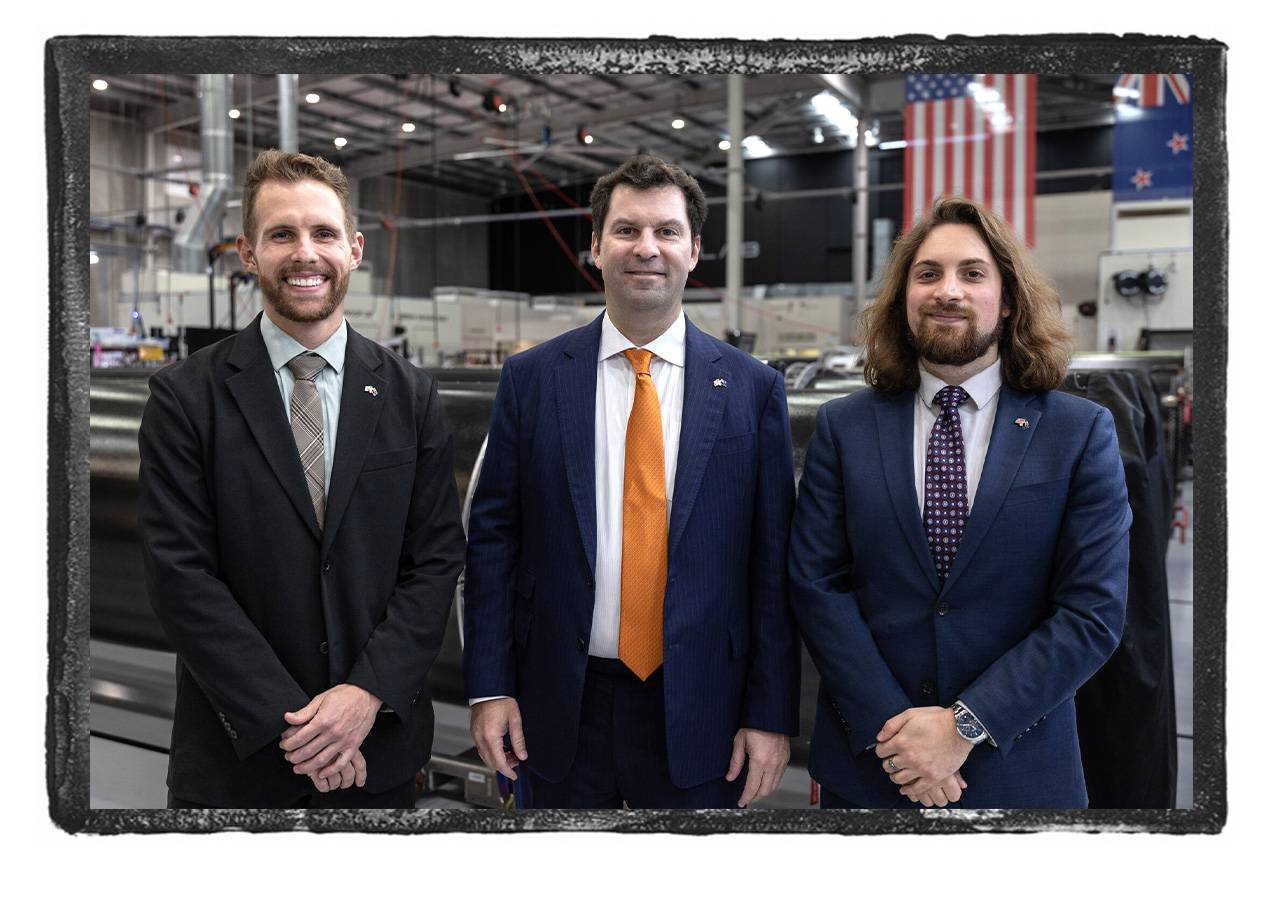
Philosophy major Ethan Magistro (far right) visits the New Zealand manufacturing hub of the U.S. space company Rocket Lab with Kaleb Rogers (left), foreign service officer, U.S. Department of State, and Jared Novelly (center), U.S. Ambassador to New Zealand.
Magistro is now starting his third year in the Scholars in the Nation’s Service Initiative four-year master’s program, which combines two years of academic coursework on campus with two years of two to three separate rotations in the U.S. government.
From his philosopher’s seat, first at the State Department’s Office of Space Affairs in Washington, D.C., and now at the U.S. Embassy in Wellington, New Zealand, Magistro considers the implications of new commercial technologies in space, engaging with other countries while supporting the Artemis Accords that lay out principles governing civil exploration.
He’s there to ask questions the tech experts might overlook: What is the human cost of a new endeavor? What are the downstream benefits for science and technology at large?
“I feel like when I started studying philosophy, I pulled the question lever and never let go,” Magistro said. “Space policy is a field that is constantly generating new questions. It’s the perfect place for someone like me.”
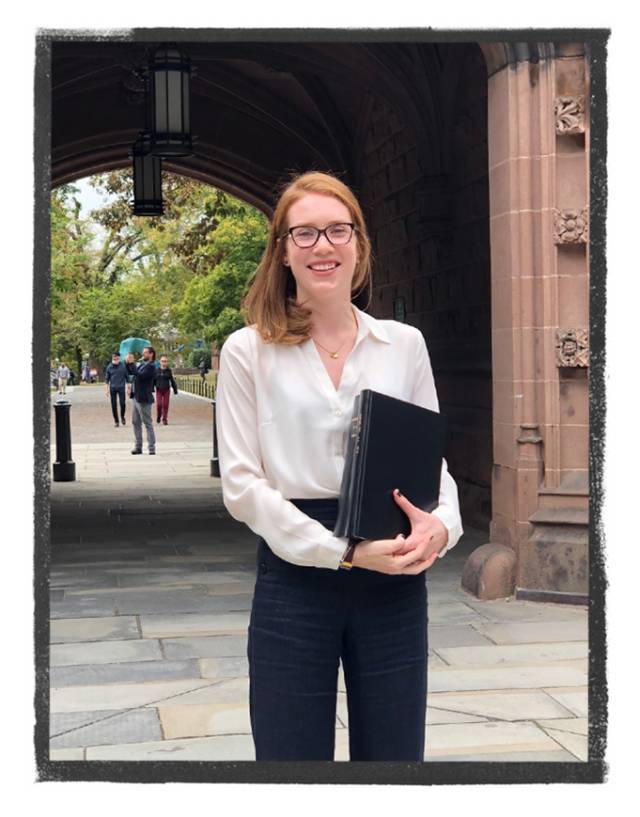
Alicia Ejsmond-Frey, a classics Ph.D., is a senior strategy and policy adviser to His Majesty’s Treasury in London.
Alicia Ejsmond-Frey, who earned her Ph.D. in classics in 2019, is now a senior strategy and policy adviser to His Majesty’s Treasury in London. Her office monitors the banking system and coordinates closely with the Bank of England to support a bank if it fails. During her first year as a graduate student, she met with assistant deans for professional development in Princeton Graduate School’s GradFUTURES program, who helped her identify her long-term goals and arranged a summer internship specifically for Ph.D. candidates in the Cabinet office in London. She had a job offer from the Treasury as soon as she completed her Ph.D.
As a graduate student, Ejsmond-Frey spent five years steeped in ancient texts. “Now I’m responsible for close reading complex documents and summarizing them in a way that ministers in Parliament can understand,” she said.
Parsing labyrinthine regulatory rulebooks and legal statutes is not all that different from translating a passage from Ovid, Ejsmond-Frey said. “You have to understand all the possible meanings of each word, how the words are positioned in relation to each other and what that reveals. My daily work involves many of the skills I learned as a humanist at Princeton.”

Humanist on call: Dr. Stephanie Colello ’13, Slavic languages and literatures
Interventional cardiology fellow, University of Pennsylvania Hospital
“At Princeton, I fulfilled my pre-med requirements, but also took as many humanities courses as I could. In ‘Medicine & Literature,’ the readings included stories by Chekhov, an author and physician, and works by Dostoevsky and Oliver Sacks, among others. These gave me a deeper understanding of suffering, grief, tragedy, perseverance. I went to medical school after Princeton and became a cardiologist, and just finished my fellowship in interventional cardiology at Penn. Recently, we took care of a young man, a construction worker, who came in with a heart attack. There is no time to talk in this kind of emergency, we get the patient on the table and we go. Before we started the procedure, he lost his pulse — he briefly died — we got him back. After we finished the procedure, he saw where we had tossed his construction boots on the floor and started crying; the reality hit him hard. I asked him where he grew up, about his job — in essence, to tell me his story. We stopped the heart attack and fixed the blood flow to his heart that afternoon, and I hope we also started a deeper healing for him during the most traumatic day of his life. In moments like these I’m very grateful I trained in both the ‘soft’ and hard sciences. Reading and learning the stories of others has made me a better doctor and a better person.”
Problem-solving in the “gray areas”
At Princeton, humanities students learn to ask good questions — hard questions — especially when they have no idea where the answer might lead them.
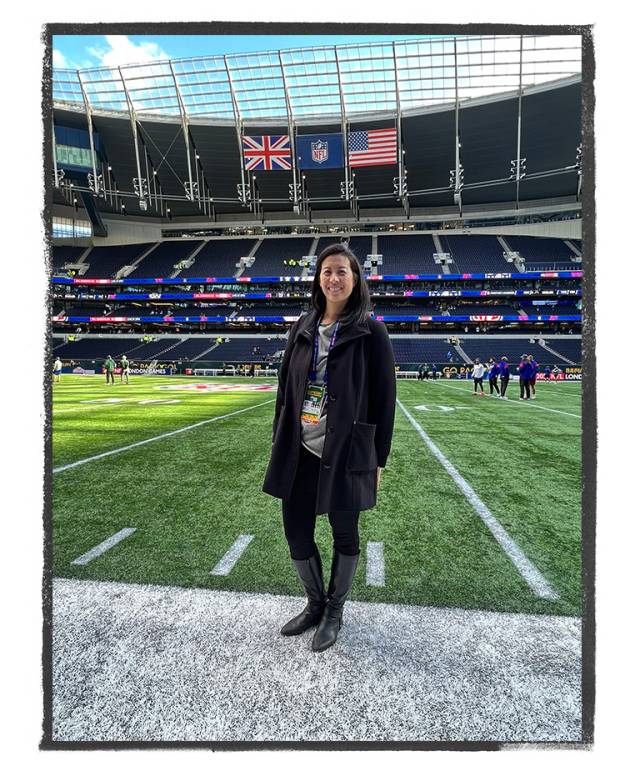
Stephanie Hsiao, an East Asian studies major, is VP of international business operations for the National Football League.
Stephanie Hsiao, a member of the Class of 2005 who majored in East Asian studies, said navigating these “gray areas,” as she calls them, is essential to her work as vice president of international business operations for the National Football League.
“With every text, we were taught: ‘What’s the other side, what are the other perspectives?’” In class and now in her work, she said, “That's where the lightbulb moments happen.”
Hsiao’s senior thesis was an analysis of the rise of sports culture in China, written as the country was preparing to debut on the global stage as host of the 2008 Summer Olympics. She traveled to Beijing with a video camcorder in hand and no game plan for finding people to interview. “I just figured it out on the ground.”
Since then, Hsiao’s career has been built on her agility in uncharted waters — from her first job in marketing at Speedo in Los Angeles (she was a varsity swimmer at Princeton) to the sports marketing firm Octagon in Beijing, to the NFL, an Octagon client that hired her after opening its office in China.
When she stepped into her current role, it was a newly created position. Everything was a gray area. “At every juncture, I just said to myself, ‘Stephanie, you’re a humanist.’ It came down to being OK in a completely nebulous space.”
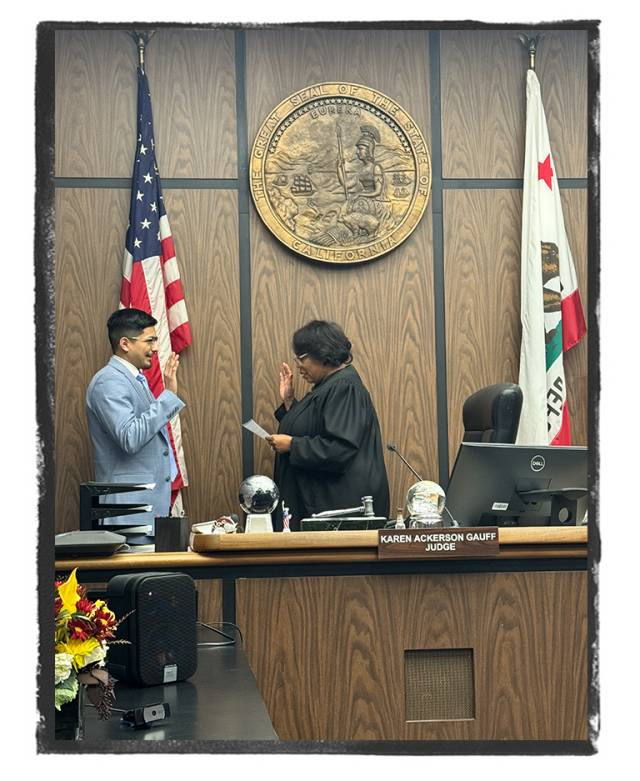
Edgar Preciado, a public defender in California, was a Spanish and Portuguese major.
The same has held true for Edgar Preciado of the Class of 2018, whose early-career trajectory followed a more established path from the humanities to law school to legal practice.
Preciado majored in Spanish and Portuguese and earned his J.D. at the University of Southern California Gould School of Law, followed by clerkships at the Los Angeles County Alternate Public Defender and the Legal Aid Foundation of Los Angeles. He now applies his mastery of the “gray spaces,” along with his appreciation for human complexity, as a public defender in Tulare County, California.
As a student of languages at Princeton, he learned that every phrase, written or spoken, can contain multitudes of meaning, and that humans are on the receiving end — a perspective he now carries into every aspect of his job, from writing briefs to arguing in court. “Nothing is black and white,” Preciado said. “Everything is nuanced.”
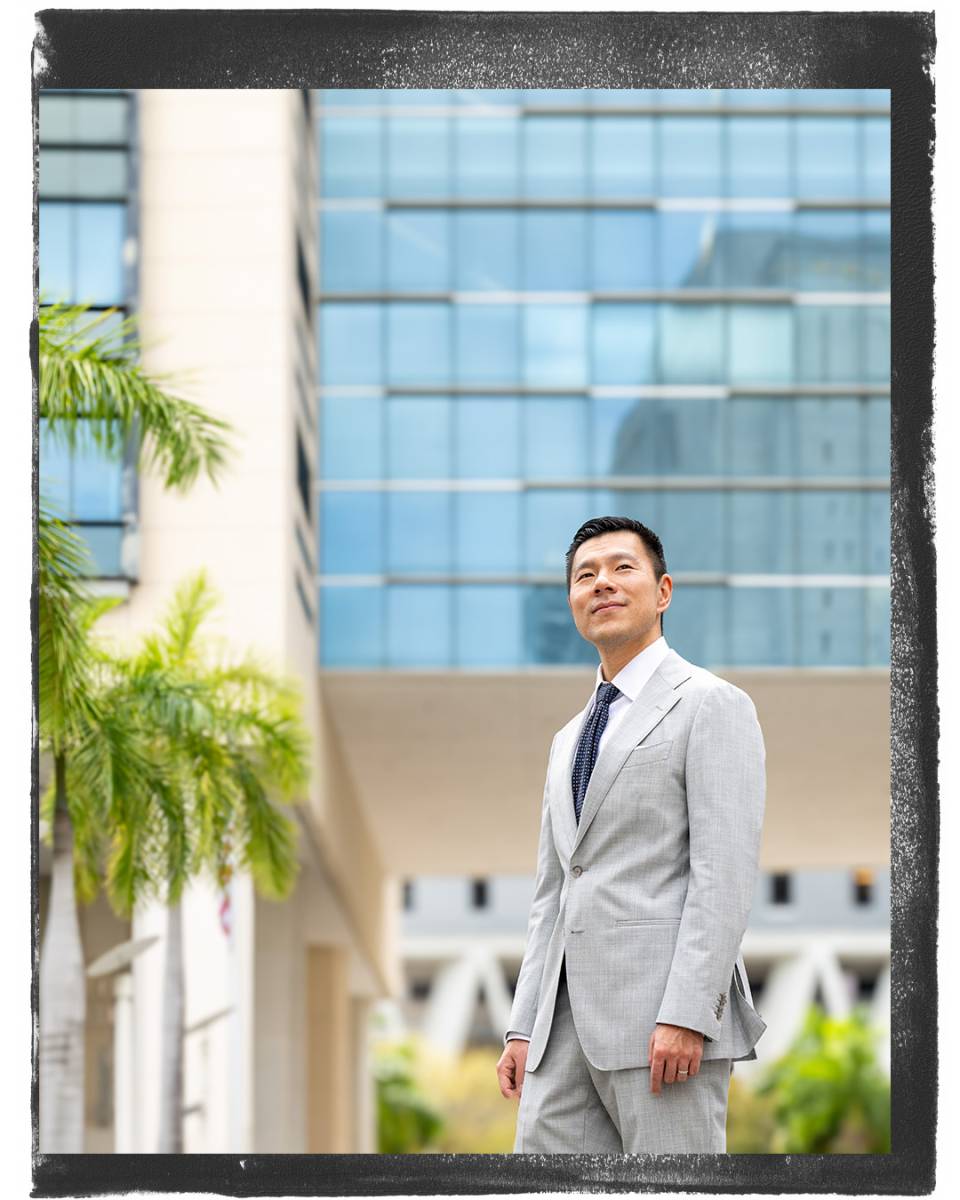
Humanist in court: Jason Wu ’09, English
Assistant U.S. attorney, Miami
“One of the greatest lessons I learned from one of my English professors, Simon Gikandi, was that a novel, a story or a poem is an exercise in the art of the timed release of information. A trial is, too. We are trying to tell a story through individual accounts of witnesses. You can’t tell it chronologically. You have to figure out how to time the release of information in a way that will best engage jurors — people who come from all walks of life. A lot of the skills you get out of the humanities have an enduring value. At some point, AI may supplant certain tasks I do, but at the end of the day, you need a human being who can connect with 12 jurors.”
Locking in to structure solutions
Natalie Berkman, who earned a Ph.D. in French literature in 2018, wields her humanist’s toolkit to help organizations run better.
When she landed in her current role as provost at ISIPCA in Versailles, France’s premier higher education institute for fragrance, cosmetics and flavor sciences, she undertook a “needs analysis” of the entire school.
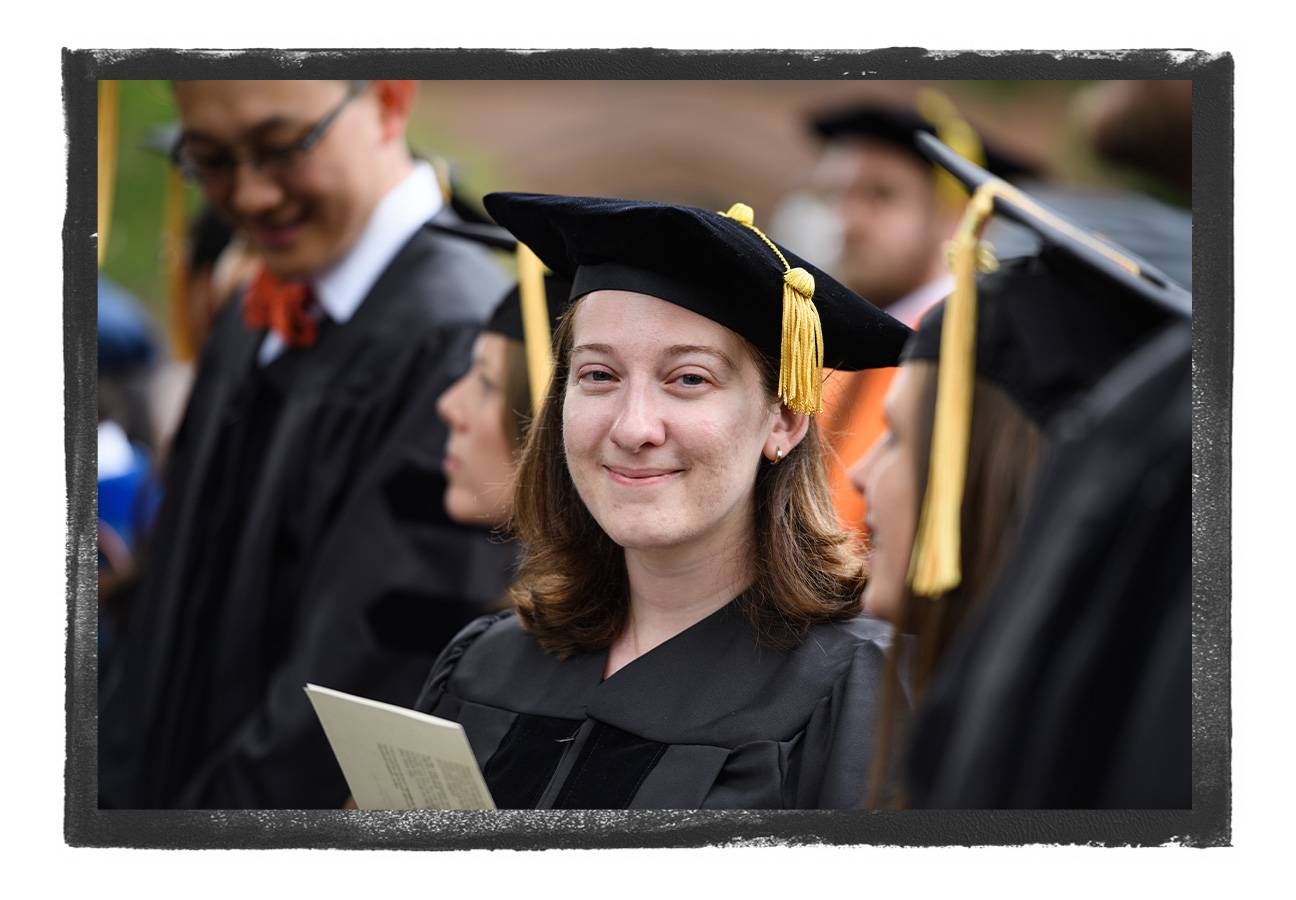
Natalie Berkman, a graduate alumna in French literature, is provost at France’s premier higher education institute for fragrance, cosmetics and flavor sciences.
“I made an action plan that laid out short-term, mid-term and long-term goals, which is exactly what humanities Ph.D.s know how to do,” said Berkman. “A humanities dissertation is a behemoth task; it can take five to seven years. You have to structure it yourself. You have to be resourceful. You have to be innovative. Humanities Ph.D.s are well suited to identifying problems and figuring out how to solve them.”
Berkman had originally planned to pursue a career in academia, but when she received her Ph.D. the job market for tenure-track positions was rough. Her husband had been working in Paris, so when she saw an opening on LinkedIn for an administration role at a small French college for creative media, she followed that fork in the road.
That first diversion set her on a path to leading the instructional design team at the No. 2 business school in France, then a C-suite position at a group of video game and cybersecurity schools throughout France, and then to her current role at ISIPCA.
Berkman is also president of the Association of Princeton Graduate Alumni. You can find her on LinkedIn evangelizing for the value of a rigorous humanities education.
“The longer I work in higher education leadership, the more I realize how much of my job is interpretation, understanding context, explaining to others why something is important that no one thinks is important, communicating value well, reading between the lines, making sense of competing narratives, identifying what's really at stake in a conversation, a conflict or a decision,” she said. “These are all things humanities undergraduates and Ph.D.s spend years learning to do.”

Humanist in tech: Lucy Partman *21, art and archaeology
Senior project officer, Technology Innovation Partnership Team, New Jersey Economic Developmental Authority
“Art historians engage in the practice of close looking: You start with an object, let go of assumptions and spend a lot of time deciphering what is really there. This might lead you toward any number of disciplines — chemistry, sociology, history — that offer different perspectives on the object. As such, we have to be expert learners and connectors across realms. My team at the EDA supports and cultivates New Jersey’s innovation ecosystem. Now, I’m close looking at questions, problems, challenges and processes at organizations, companies and tech startups. We work to connect many stakeholders: entrepreneurs, investors, government, universities. The skills are completely transferable. Too often we think about technology as detached from the human. But ultimately, humans are developing these technologies to address human challenges. Humanists are integral to identifying and creating solutions to these challenges. Graduate school helped me forge this path.”
Princeton’s booster fuel for career trajectories
Princeton offers exceptional support for students as they plot their first steps and next steps after college and grad school. Among them:
- The Center for Career Development helps undergraduate and graduate students explore and prepare for meaningful careers through robust programming that includes one-on-one advising, workshops, employer-led recruiting, network-building and assistance with graduate, law and business school planning.
- The Princeton Graduate School’s nationally recognized GradFUTURES professional development unit provides personalized advising and 150+ programs tailored for graduate students, including interdisciplinary skills training, microcredentials, experiential fellowships and internships, alumni mentoring and other career exploration opportunities.
- The Learning and Education through Service (LENS) initiative ensures that every undergraduate student has the opportunity to secure a paid summer internship in service to humanity.
- The Princeton School of Public and International Affairs Scholars in the Nation’s Service Initiative (SINSI) prepares students to pursue careers in the U.S. government through undergraduate internships along with its innovative four-year master’s program.
- Health Professions Advising provides structured guidance on all health careers, supporting over 100 medical school applicants annually, including 64 humanities majors in just the past five years.
Brandon Joa ’18 engaged with Health Professions Advising as he charted his path from religion major with a minor in humanistic studies to med student. He attended medical school at Thomas Jefferson University in Philadelphia, commissioned into the Navy during medical school through the Navy’s Health Professions Scholarship Program, and recently completed his residency in family medicine as an officer at a U.S. Navy hospital in Southern California.
Joa always knew he wanted to be a doctor. He chose to concentrate in religion “to understand fundamental belief systems,” he said. “What better way to understand culture and how a society is structured?”
A recent Navy medical expedition to provide training and needs assessment to medical professionals on a small island in Micronesia validated his choice. The most influential institution on the island was a Jesuit high school.
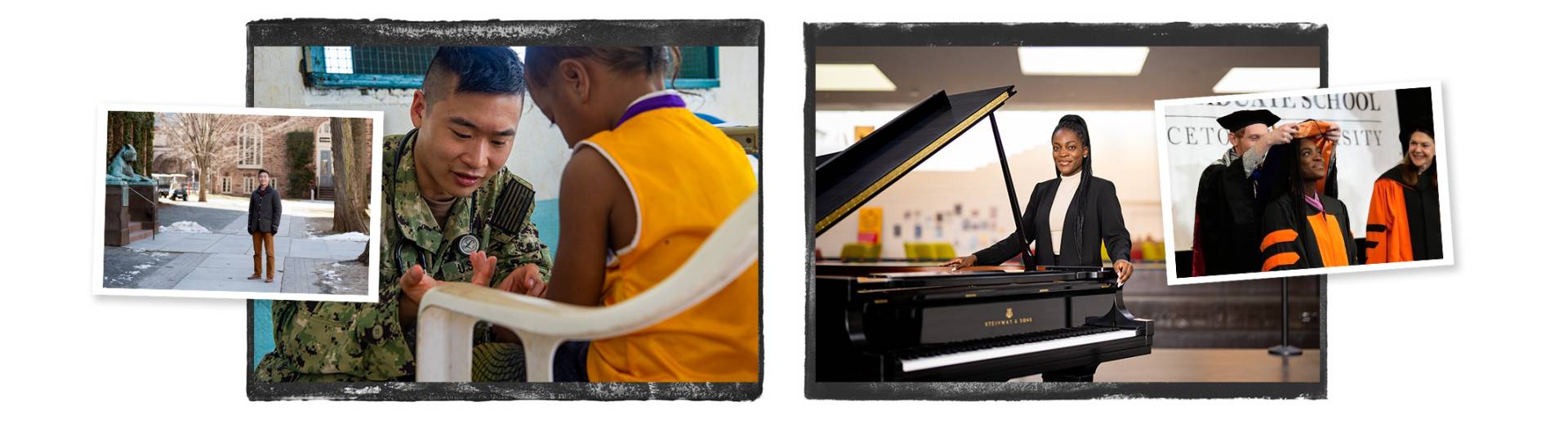
Religion major Brandon Joa (left) recently completed his residency in family medicine as an officer at a U.S. Navy hospital. Genevieve Allotey-Pappoe (right), a graduate alumna in musicology and assistant professor of music at Brown University, regularly hosts leading music industry professionals in her classroom.
Genevieve Allotey-Pappoe earned her Ph.D. in musicology in 2024. At Princeton, she joined the GradFUTURES entrepreneurship cohort — and was the only humanities graduate student among engineers and computer scientists.
For her dissertation on Black music in Spain, Allotey-Pappoe had spent a year abroad interviewing dozens of musicians across genres including jazz and hip-hop, as well as industry professionals. She considered a career in the music industry but instead chose academia.
Now, as an assistant professor of music at Brown University, she is intentionally blurring the lines between the two. Guests in her undergraduate course “The Music Industry” this past spring included an entertainment lawyer, a music editor at Spotify-West Africa, and a former Sony executive who is now a strategic adviser in music tech. One of her students got an internship at Spotify-New York this summer.
“We’re teaching how their academic work in disciplines like ethnomusicology, which is my field, is translatable to industry work,” she said. “GradFUTURES did that for me, and I want to do that for my students.”