New mosaic in the Princeton University Chapel honors Native and Indigenous stories
A new mosaic titled "Presence" adds to the rich tapestry of art that has been thoughtfully woven into the Princeton University Chapel throughout its history.
A colorful stone mosaic honoring Native and Indigenous stories has been installed in the Princeton University Chapel as part of efforts to expand the representations of faiths and belief systems in the communal space where the University community and public are welcome.
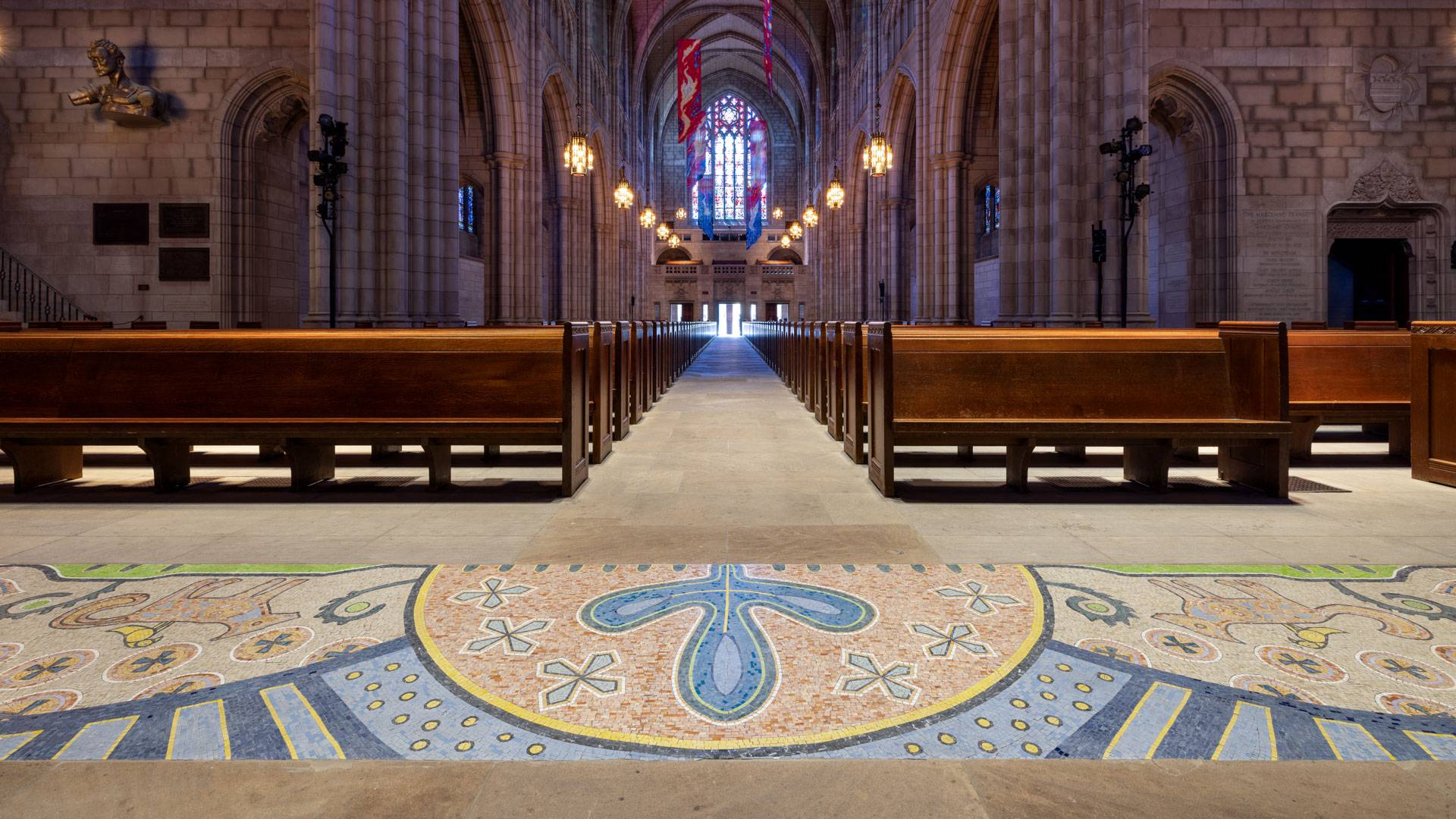
Ahead of the Chapel’s centennial in 2028, the mosaic adds to the rich tapestry of art and imagery that has been thoughtfully woven into the space throughout its history, from the depictions of scholars, scientists and poets in the stained-glass windows to the abstract 25-foot silk paintings that hang from the ceiling.
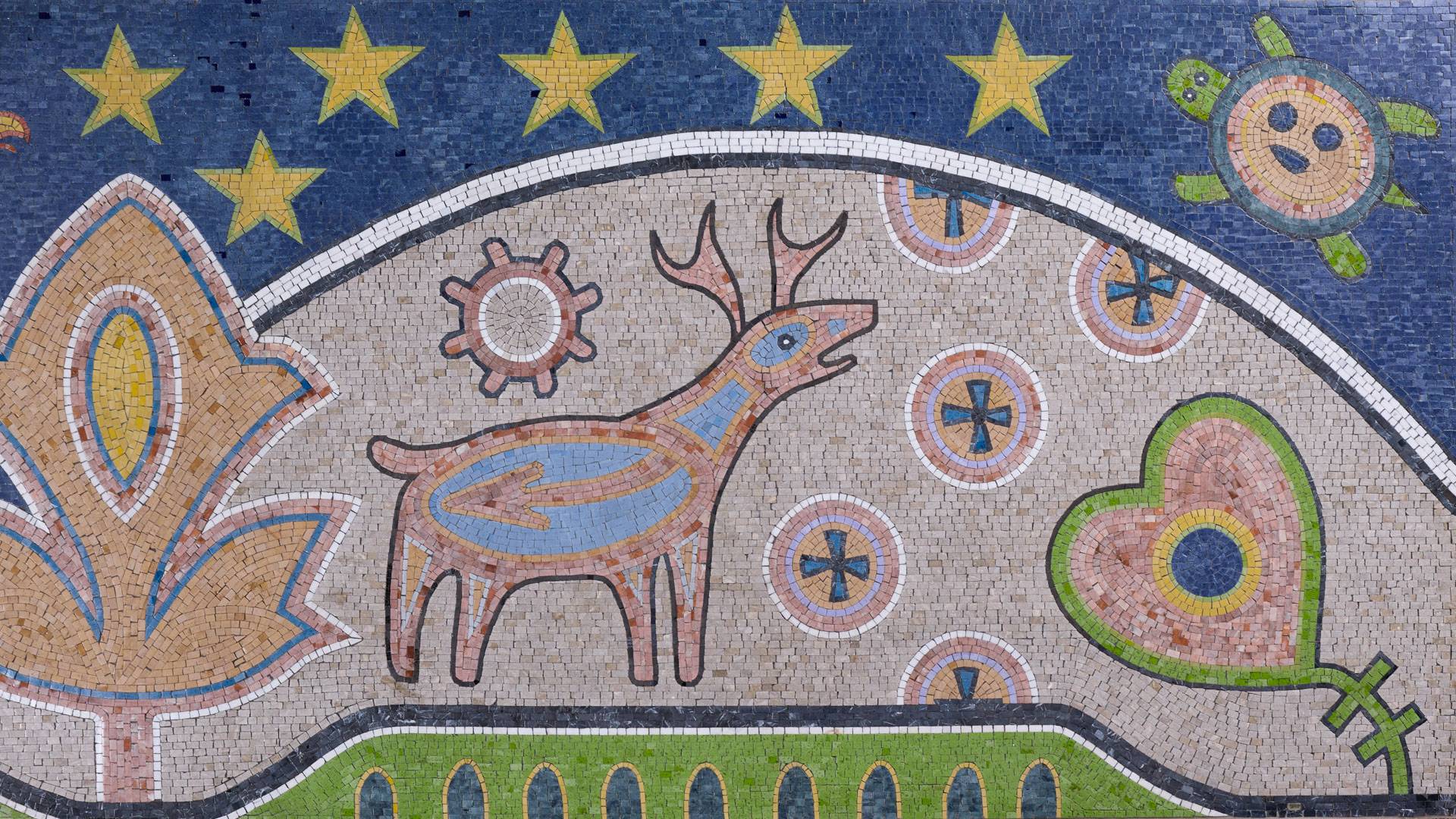
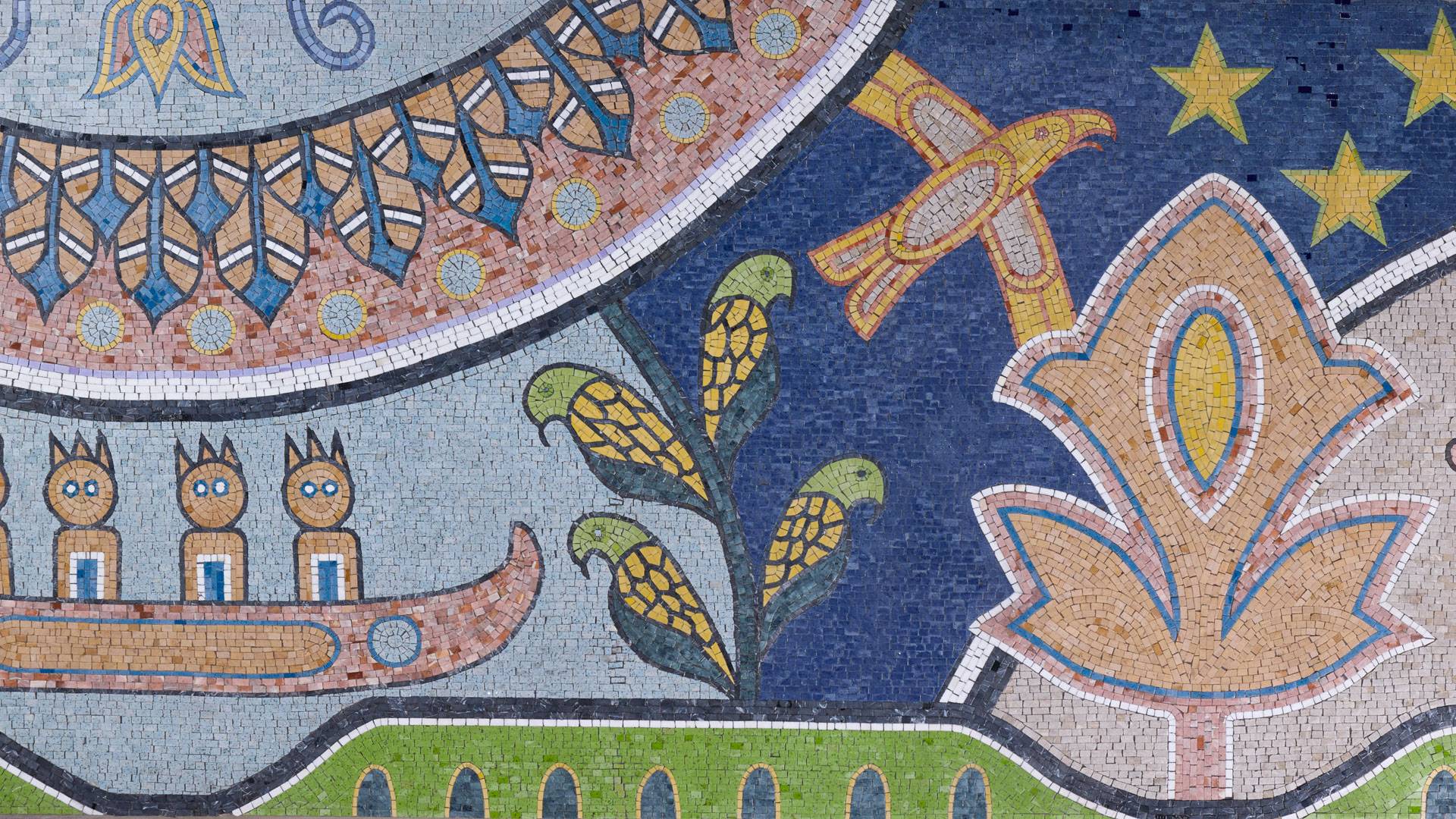
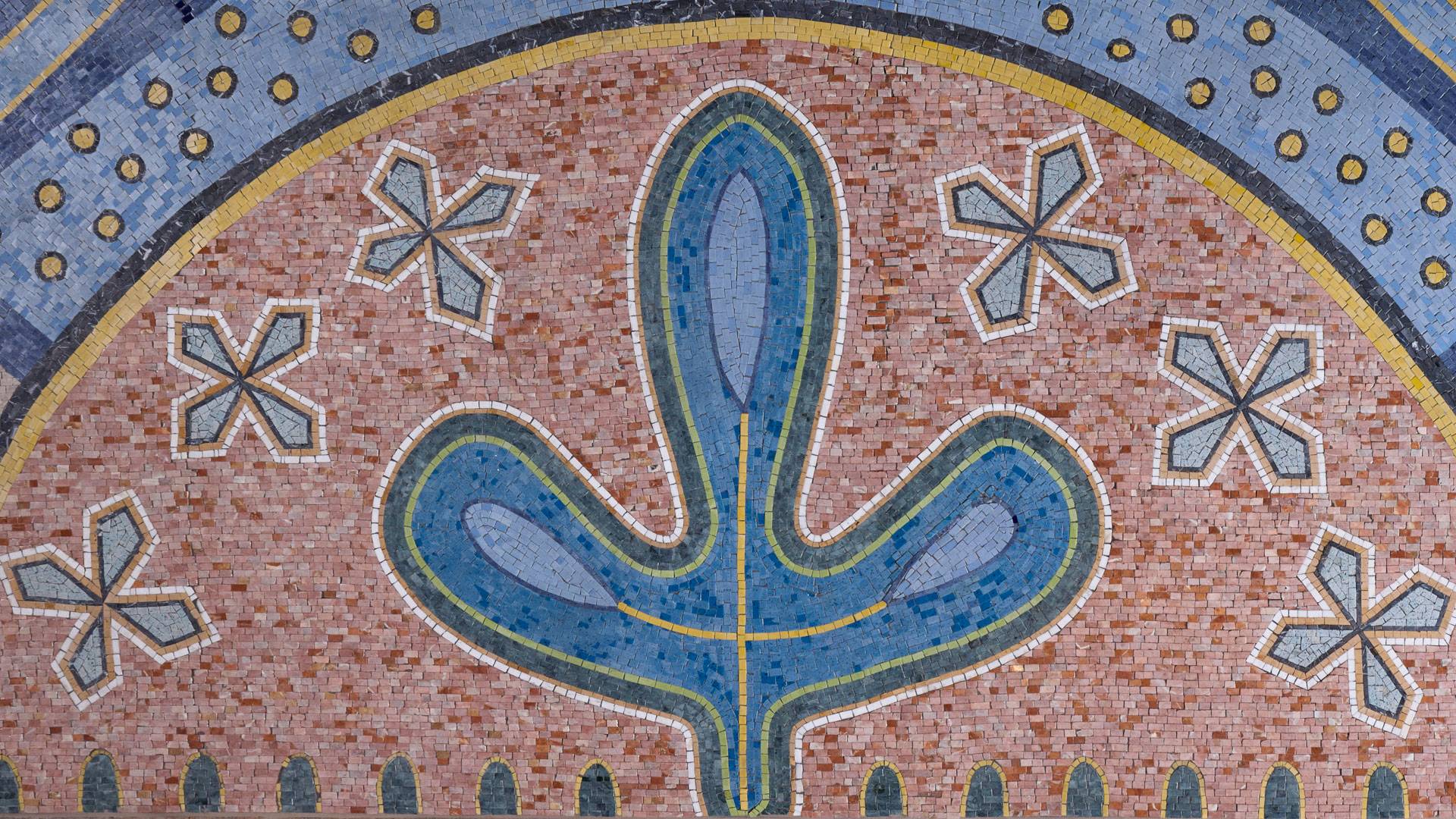
The 50-foot-wide mosaic titled “Presence,” which is integrated into the floor along the first row of pews, was created by the artist Marianne Nicolson (Musgamakw Dzawada’enuxw). The intricate piece features imagery from Native and Indigenous groups across North America, inspired in part by the Lenape and Delaware peoples, and highlights the connection between humans, plants, animals, the sky, the earth and the water.
“To welcome this poignant work into the Chapel — a cornerstone of our University and central to the fabric of our community — is to invite students, alumni, neighbors and visitors to reflect on what we believe and how we celebrate the richness of Princeton,” said Rev. Theresa Thames, dean of Religious Life and of the Chapel. “It is already enriching conversations across campus and expanding my own thinking as a theologian. My hope is that it will continue to move us to ask harder questions and deeply consider our responsibilities to each other.”
Rachael DeLue, the Christopher Binyon Sarofim ’86 Professor in American Art and a member of the Campus Art Steering Committee, said the mosaic helps tell a robust and complex narrative. “The Chapel is a key place in Princeton’s story,” she said. “The mosaic is a way to speak to the communities that have been part of this landscape for centuries.”
A collaborative, creative and community-engaged process
The mosaic was installed in the Chapel this summer after a more than four-year development process organized by the Office of Religious Life in collaboration with the Campus Art Steering Committee, Princeton University Art Museum and Office of Institutional Equity and Diversity.
As part of the creative process, Nicolson collaborated with Princeton’s Native and Indigenous student groups and community members during a residency on campus in 2022. She said she hopes when Indigenous students and visitors see the mosaic, “they will see a part of themselves and feel welcome.”
Nicolson said the mosaic’s design was inspired by the traditions of the Lenape and Delaware peoples, on whose ancestral lands Princeton is located.
“I wanted to ground the work in the earth,” Nicolson said. “I wanted people to consider what lies beneath us. I wanted people to dig down and acknowledge what was here before Princeton was ever here and the land that continues to exist today.”
The mosaic is made up of thousands of painted tiles connected in panels, which Nicolson said aims to reflect Native and Indigenous beadwork.
“I had to consider that I am not from here. Between Indigenous nations, there is always a protocol to recognize who are the true local stewards of the land that you’re working on,” Nicolson said. “I wanted to create a piece that would recognize the collection of different Indigenous peoples who would be coming to Princeton to teach or to learn and … one of the common material forms across Indigenous nations in North America is beadwork.”
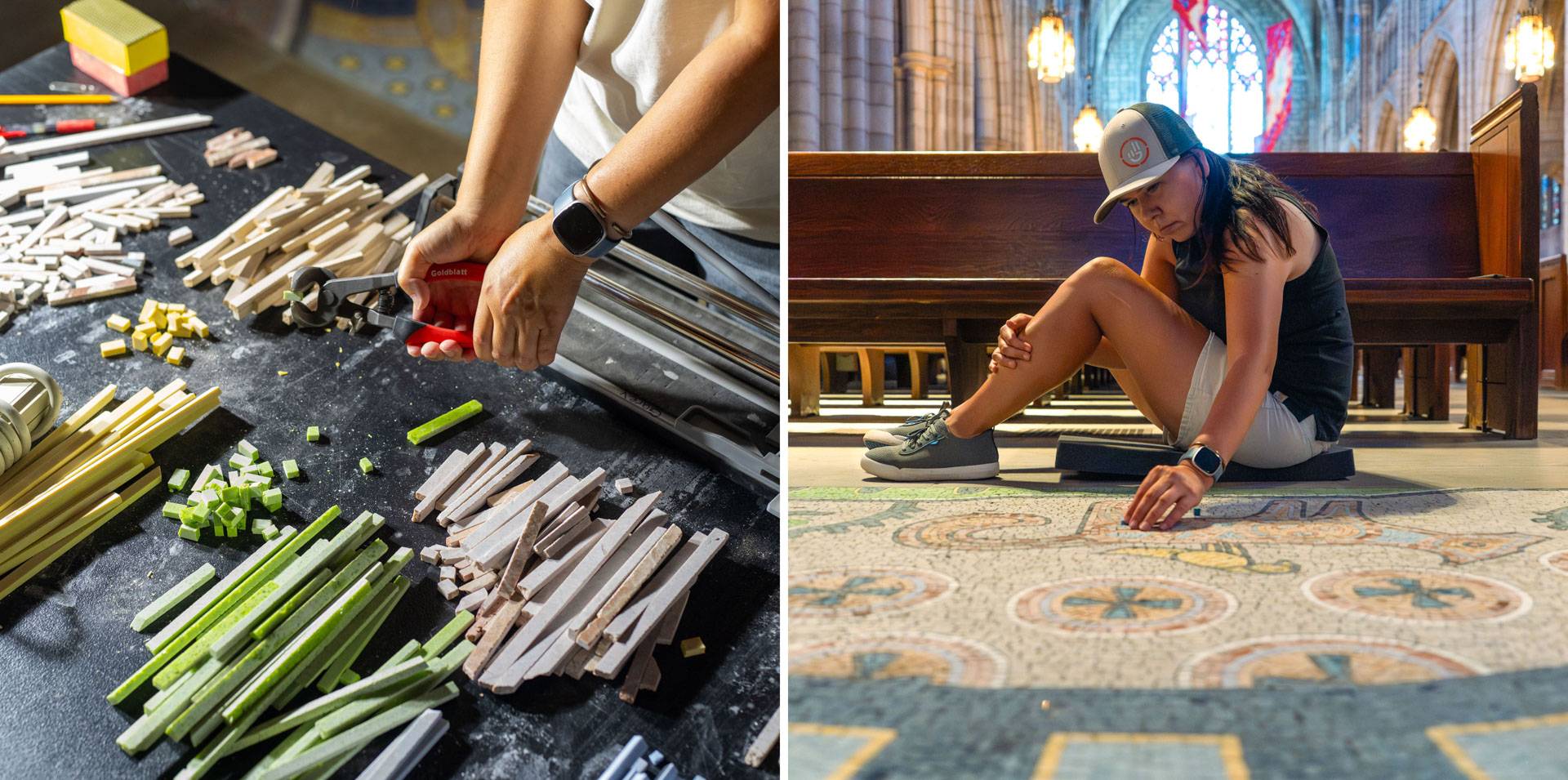
During finishing work on-site in the Chapel this summer, artist Marianne Nicolson (Musgamakw Dzawada’enuxw) trimmed tesserae, or tiny pieces of stone, and then laid them out in the mosaic.
Each mosaic panel features pictograph-styled images of animals, plants, trees and people that reflect the spiritual and historical connections to the land. Nicolson said the work acknowledges Indigenous displacement while expressing the hope of return.
“All of the images in this piece have a specific reference to a being or a plant or a history in this site,” she said. “The relationship of all these things to the land underneath is what I was really attempting to sew together.”
DeLue said Nicolson’s idea to seamlessly embed the mosaic as part of the Chapel floor is particularly noteworthy. “It’s now literally part of the fabric of Princeton University,” said DeLue, director of the Humanities Initiative and professor of art and archaeology and American studies.
She noted that mosaics are a centuries-old medium that have decorated sanctuaries throughout the world. “It’s a wonderful thing for a work of art to reflect the past and also evoke possible futures,” DeLue said.
Since the Chapel opened its doors for the academic year, Thames said the art installation has invited conversations about welcome and community. “People are in awe of the new mosaic,” she said. “It symbolizes the beauty and importance of representation."
The Chapel is the religious and ceremonial center of the University, including the site of the annual Baccalaureate service for graduating seniors and Service of Remembrance during Alumni Day, and is open to members of the public for interfaith services, concerts, individual prayer and meditation.
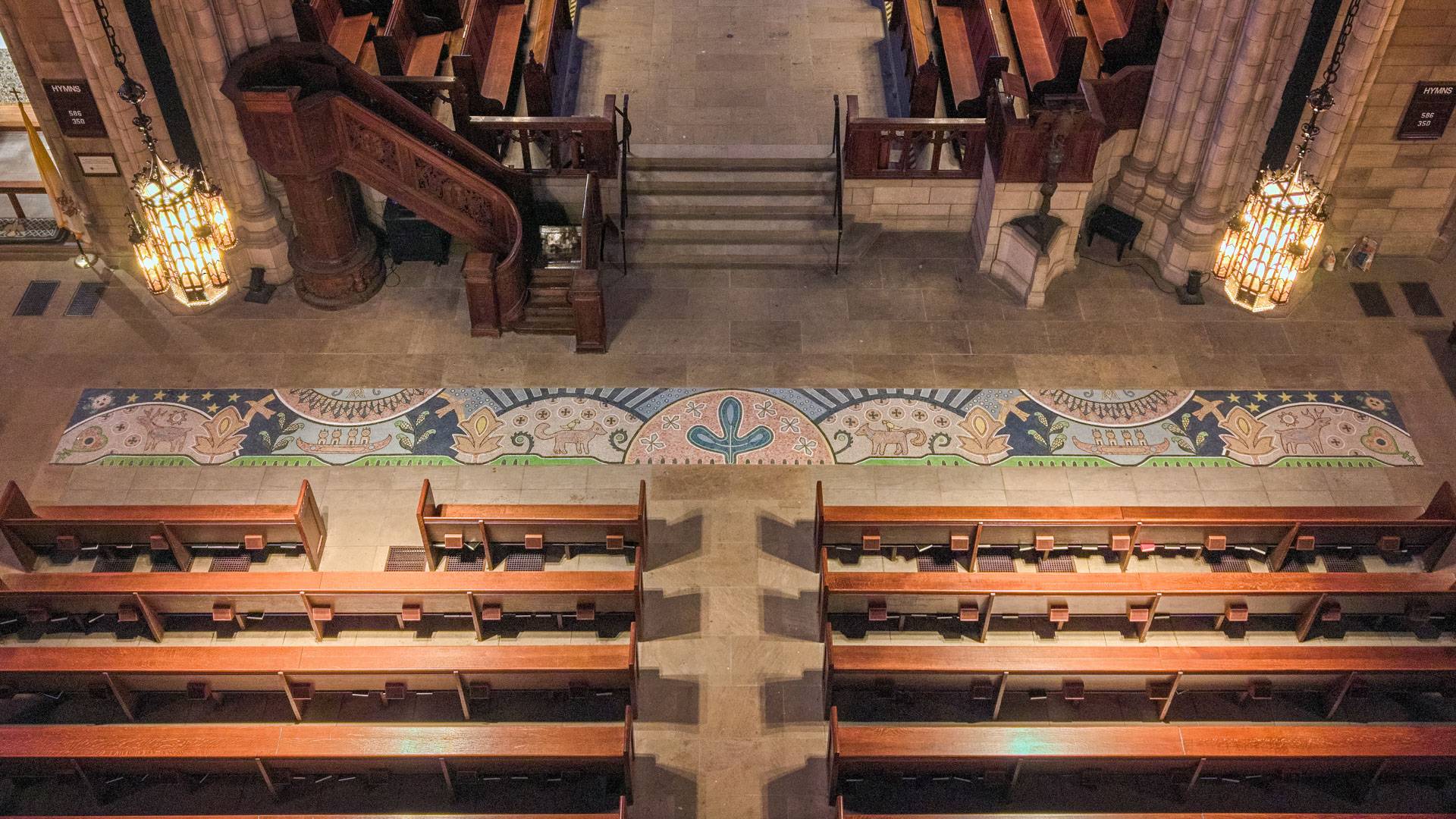
The mosaic, installed in the floor along the front pews of the Chapel, features imagery from Native and Indigenous groups across North America, inspired in part by the Lenape and Delaware peoples. Each panel highlights the connection between humans, plants, animals, the sky, the earth and the water.