Princeton promotes innovative teaching and engaged learning. Our students learn from faculty who teach with creativity, delight and a deep commitment to undergraduate and graduate education. The Office of the Dean of the College is proud to generously support these efforts, alongside other University partners.
Michael Gordin
Dean of the College
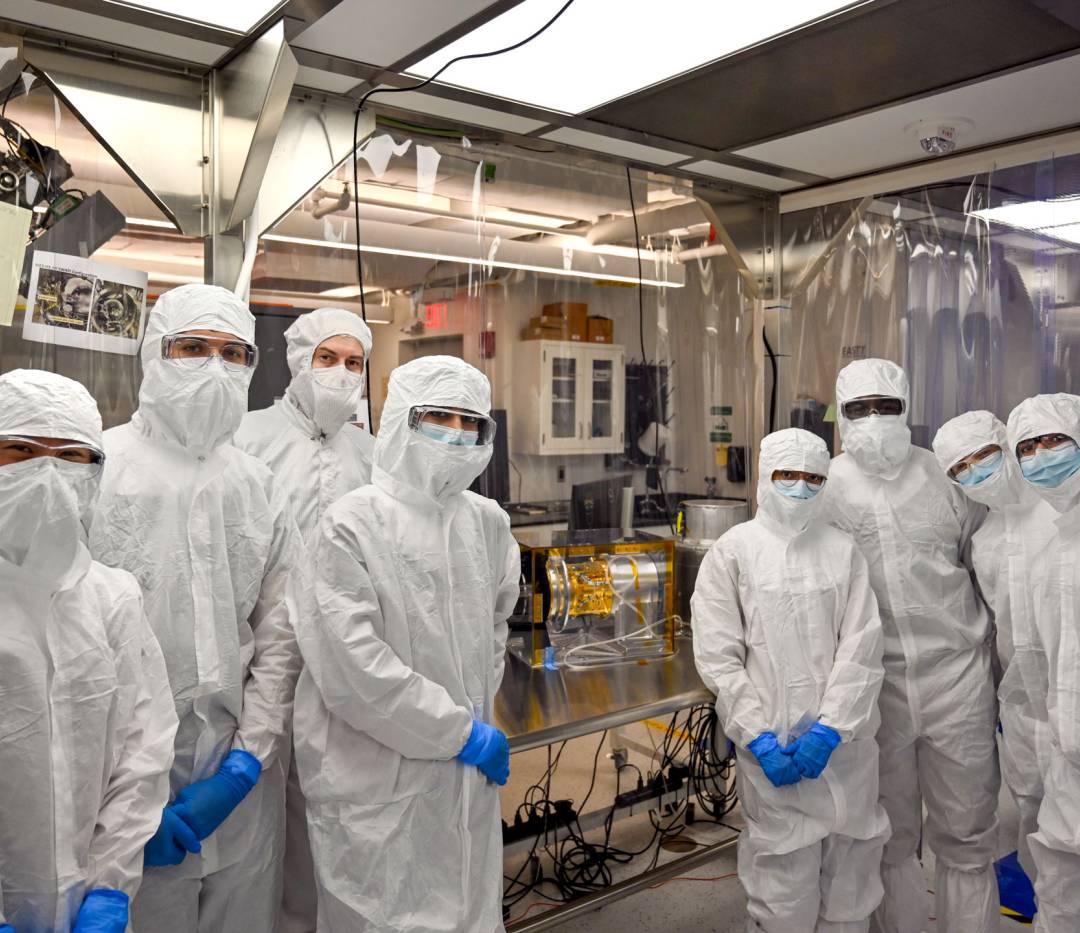
A NASA clean room as a classroom
Students in the yearlong “Space Physics Laboratory” course have the opportunity to “get their hands clean” in a NASA clean room on the Princeton campus, where they build sophisticated instruments alongside NASA scientists and engineers. The class is taught by Princeton astrophysicists David McComas and Jamie Rankin — both leaders of NASA missions and projects.
In the fall, students learn the basics of heliophysics and develop lab and clean room skills. In the spring, they carry out a group project of their own design. In lieu of a final exam, students deliver a critical design review (CDR) — a time-honored NASA make-or-break briefing — for their instrument and its data.
Active discovery in the world of words
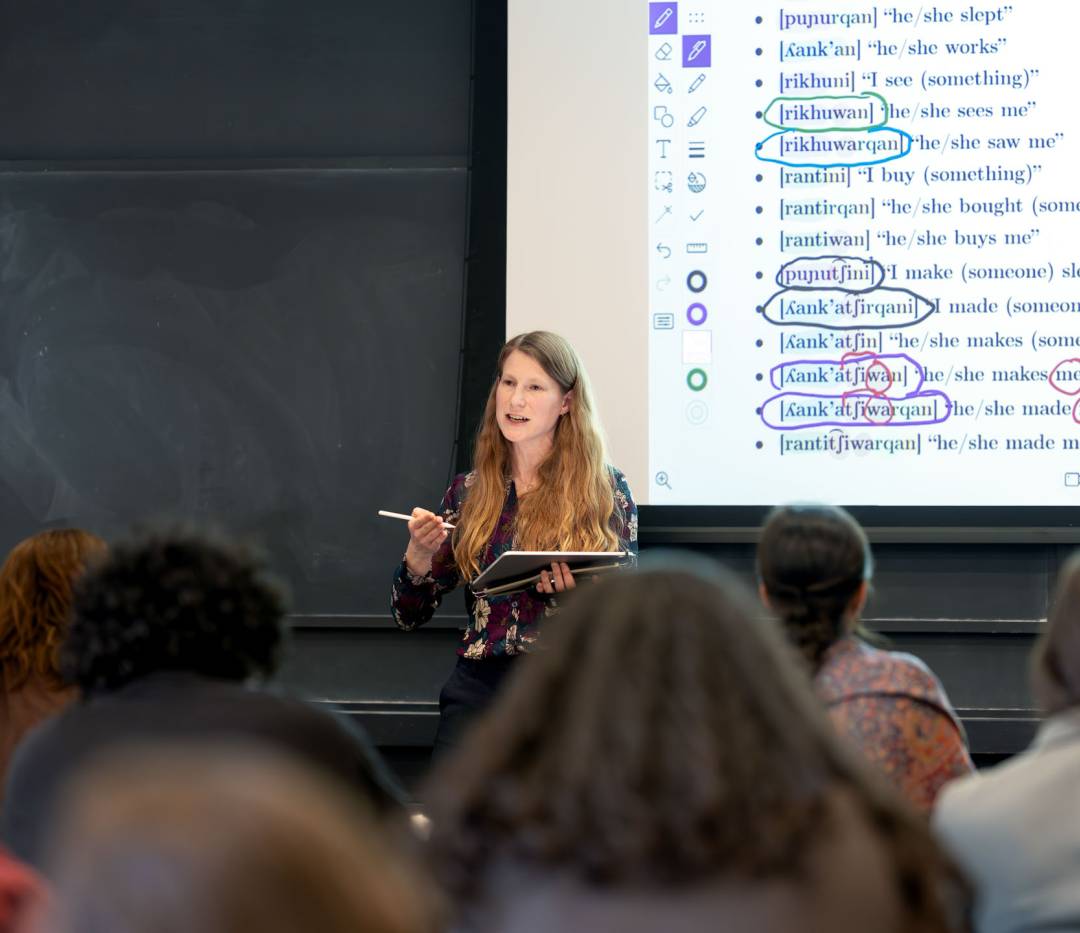
Instead of teaching from a lectern, Laura Kalin — a rising star in the field of linguistics — invites students to become active participants in scholarly discovery in her course “The Structure and Meaning of Words.” As just one example, students working in small teams collaborate to “crack the code” of a set of words from a language they’ve never before encountered.
Linguistics is a high-priority discipline at Princeton, and a new undergraduate major. The department is also home to the study of American Sign Language.
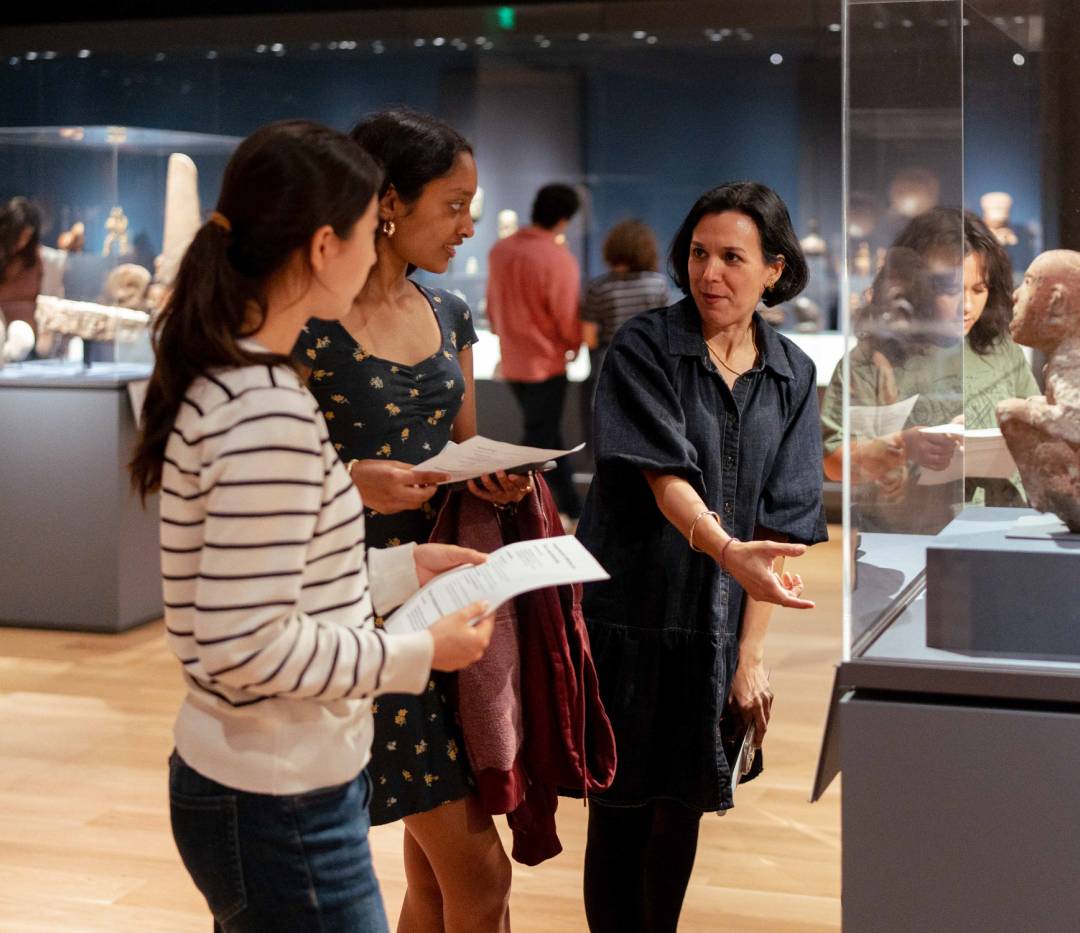
Object lessons with antiquities at our world-class museum and archives
Students in the First-Year Seminar “Translating Mesoamerica,” led by Nadia Cervantes Pérez, a senior lecturer in Spanish and Portuguese, are part of an intimate, dynamic academic journey. The course is limited to 12 students, who immerse themselves in the unparalleled collections of the Princeton University Art Museum and the archive of original Mesoamerican documents in Princeton University Library’s Special Collections.
Students also work with community partners locally and in Mexico City, and build their research findings into a unique digital platform accessible to scholars globally.