Event details
Building an Engineering Discipline for Biology: Model-predictive Design of Genetic Systems for Reprogramming Cellular Functions
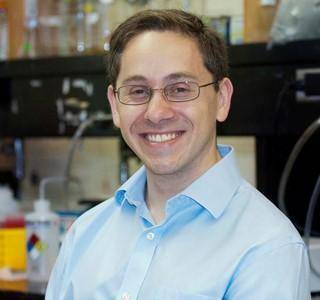
By engineering organisms with new capabilities, Synthetic Biology has the potential to solve several 21st century challenges: preventing and treating infectious disease; generating sustainable energy; producing biorenewable materials; and reversing climate change. Beyond the hype, many challenges need to be overcome for Synthetic Biology to become a mature engineering discipline. It remains challenging to reliably design and optimize high-performance genetic systems for long-term operation in real-world environments, particularly when they contain many interacting components. New models and algorithms – validated by thousands of experiments – are needed to predict, design, control, and optimize genetic system function.
Here, we present new biophysical models of gene expression that enable engineers to rationally design and optimize genetic systems with desired functionalities, using statistical thermodynamics, chemical kinetics, and machine learning to predict how DNA and RNA sequences control transcription initiation rates, translation initiation rates, and mRNA decay rates. By leveraging oligopool synthesis and next-generation sequencing, we experimentally validate our model predictions across thousands of genetic systems. We present a new optimization algorithm that designs very large toolboxes of highly non-repetitive genetic parts, enabling the construction of large genetic systems without triggering genetic instability. Altogether, we show how model-predictive design accelerates the engineering of genetic circuits and metabolic pathways for long-term operation with desired performances, including a 100-part genetic circuit that stably expresses 20 CRISPR sgRNAs, redirecting metabolic fluxes to over-produce a specialty chemical by over 150-fold. The development of these predictive models & design algorithms takes us several steps closer to making Synthetic Biology a mature engineering discipline.
These advanced models and design capabilities are available through our web-based platform at https://salislab.net/software, where over 10000 registered researchers have designed over 800000 synthetic genetic systems for diverse biotech applications.

University programs and activities are open to all eligible participants without regard to identity or other protected characteristics. Sponsorship of an event does not constitute institutional endorsement of external speakers or views presented.
View physical accessibility information for campus buildings and find accessible routes using the Princeton Campus Map app.