Event details
Feedback control: research and teaching
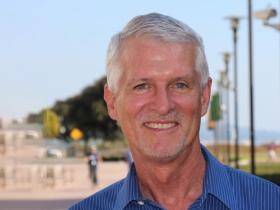
This talk, intended for the general chemical engineering audience, provides an overview and assessment of the research progress in the fields of dynamic operation of chemical processes and process control. The following points are presented:
(i) What new intellectual ideas, concepts, and tools have emerged from this research field during the last 20 years.
(ii) How successfully have the research innovations in problem conceptualization, formulation, and solution been reduced to industrial practice.
The talk starts with a motivational example that can be easily understood by any undergraduate engineering student. Although conceptually simple, the concepts of noisy measurements, unstable processes, Brownian motion, feedback stabilization, controller tuning, and integral control already play central roles in understanding the complex behavior that arises.
Next, we present the central ideas of model predictive control, which has become over the last 20 years the leading advanced control method both in industrial practice as well as a topic in control theory research. We show current research results on a proposed “turnkey” model predictive control design procedure whereby all the controller tuning parameters can be systematically determined from system experimental measurements.
The talk closes with two examples of recent experimental hardware advances that enable a rethinking of the process control laboratory as a vehicle for both teaching and demonstration of new research results in feedback control theory.
Departmental Seminar
Refreshments, 3:30 p.m., A214 E-Quad
Seminar, 4:00 p.m., Elgin Room (A224 E-Quad

University programs and activities are open to all eligible participants without regard to identity or other protected characteristics. Sponsorship of an event does not constitute institutional endorsement of external speakers or views presented.
View physical accessibility information for campus buildings and find accessible routes using the Princeton Campus Map app.