N.J. Legislature marks its 250th anniversary with ceremonial session and ‘return home’ to Princeton’s Nassau Hall
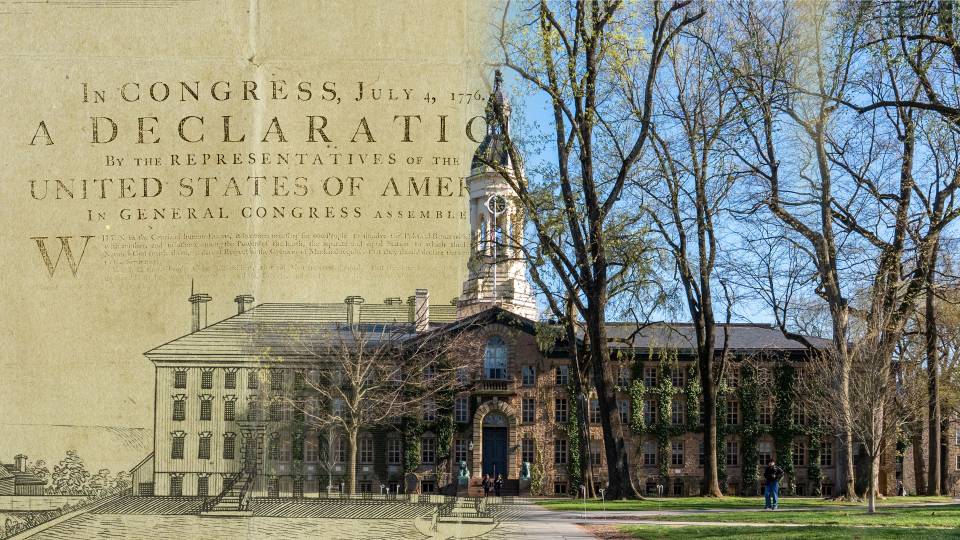
The ceremonial session recognizing the 250th anniversary of the first official meeting of the New Jersey Legislature was held Feb. 5 in the Faculty Room at Nassau Hall. The event also celebrated Princeton's place in the history of American independence in this U.S. Semiquincentennial year.
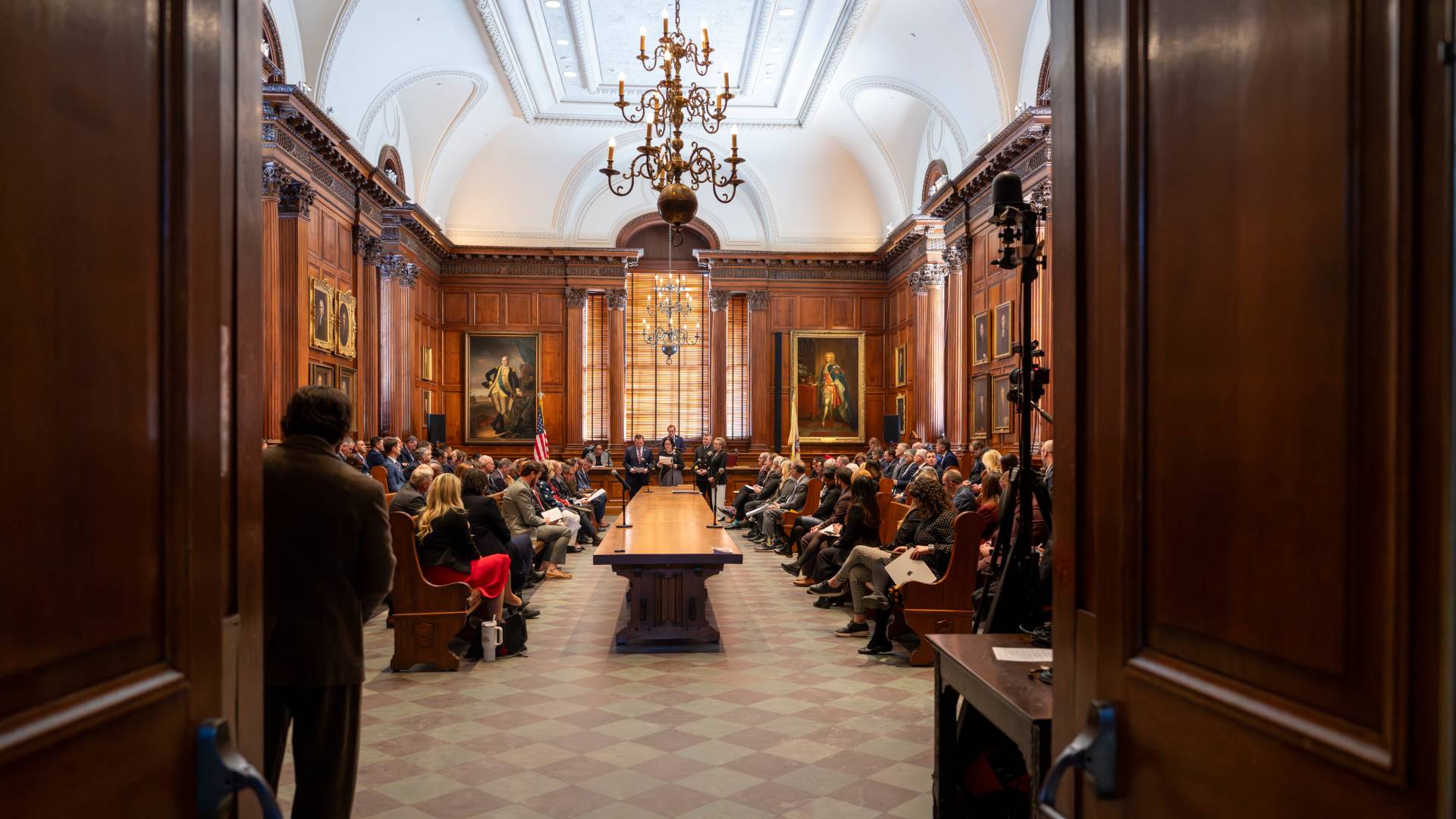
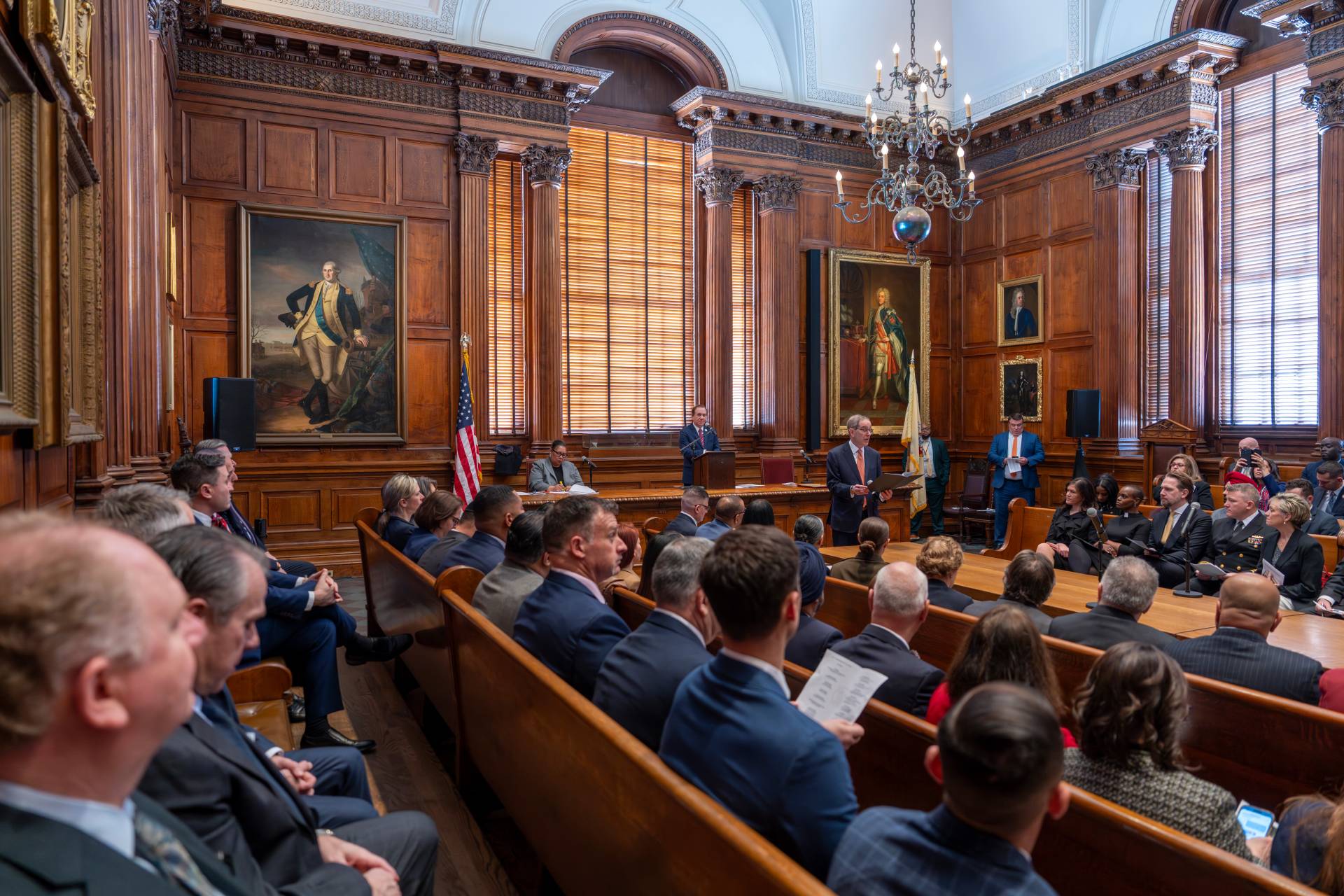
Members of the New Jersey General Assembly and Senate met at Princeton University on Feb. 5 in the Faculty Room of Nassau Hall for a special ceremonial session recognizing the 250th anniversary of the first official meeting of the New Jersey Legislature.
Nassau Hall was the site of the legislature's inaugural meeting on Aug. 27, 1776, where its members elected the state's first governor, William Livingston, and convened on campus through November. The legislature officially moved its chambers to Trenton’s State House when the city became the permanent state capital in 1790.
“Today isn't simply a change in venue for us — it's a return home,” Assembly Speaker Craig J. Coughlin said in his opening remarks: “A return to our beginnings, to the place where our legislature first met in 1776 at the dawn of a new and uncertain democracy.”
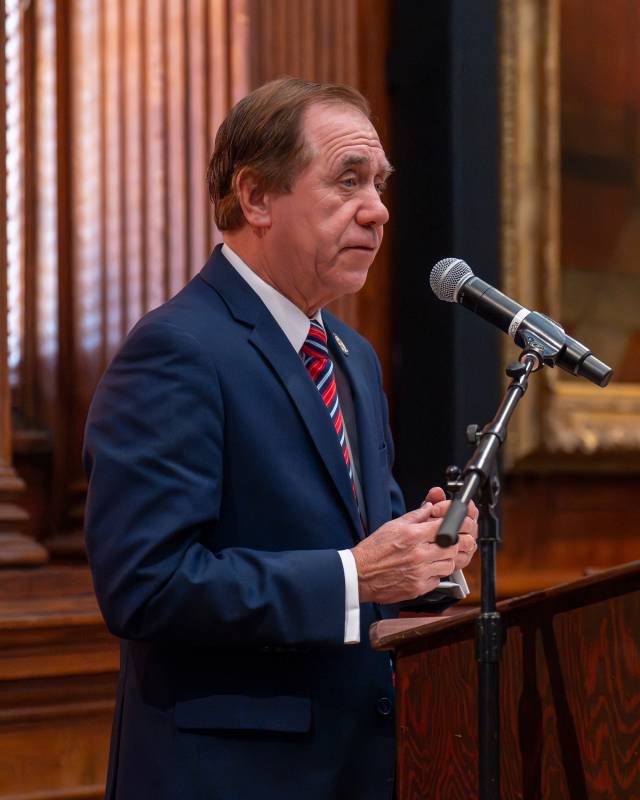
Assembly Speaker Craig J. Coughlin delivered opening remarks at Nassau Hall, the site of the legislature’s inaugural meeting on Aug. 27, 1776.
Today’s state legislators conducted their ceremonial session seated in four banks of benches facing each other in the soaring, wood paneled room, beneath a monumental Charles Willson Peale portrait of George Washington and a portrait of King George II of England.
Afterward, many lawmakers took a moment for celebratory selfies to commemorate the legislature’s return to its first home. The event not only commemorated Princeton’s place in the history of the New Jersey Legislature but also American independence — one of many U.S. Semiquincentennial observances marking the 250th anniversary of the Declaration of Independence on July 4, 1776.
In addition to members and staff of the New Jersey General Assembly and Senate, the ceremony was attended by University administrators, dignitaries and guests including New Jersey Lt. Gov. and Secretary of State Dale Caldwell ’82, British Consul General Oliver Christian, and Princeton Mayor Mark Freda, among others. The commemorative session began with an invocation by the Rev. Theresa S. Thames, the University’s dean of religious life and of the chapel, and the Pledge of Allegiance led by Majority Leader Louis D. Greenwald.
Celebrating a shared history of “resolve and responsibility”
In his opening remarks, Coughlin noted the significance of the legislature’s return to Nassau Hall.
“Princeton has always had an important role in the state of New Jersey. It's the intersection of intellect and public service. And for generations, it has helped cultivate talents and ideas that strengthen our state and our nation, an enduring partnership for which we are deeply grateful,” Coughlin said. “It is with that shared history in mind that we’re being here today is particularly special.”
Coughlin added that the walls of Nassau Hall “have borne witness to moments that shape not just New Jersey, but the nation — from the first meeting of our elected Assembly to the sessions of the Constitutional Congress to leaders debating the future of a country that had yet to prove that it would survive.”
“It was also here that civilian authority came to rest not in a king, but in the people,” said Coughlin. “And it is that same spirit of resolve and responsibility that we gather here today to commemorate.”
In his welcome to the members and staff of the New Jersey General Assembly and Senate, and other guests, Princeton President Christopher L. Eisgruber noted how “Princeton University and the great state of New Jersey have grown together,” expressing his gratitude for their leadership and affirming Princeton’s commitment to “our partnerships and strong relationships with legislators from across this great state.”
Eisgruber, a noted constitutional scholar, also elaborated on the history of Nassau Hall, “where our nation’s constitutional tradition has deep roots.”
The College of New Jersey, as the University was named at its founding, was housed in Nassau Hall, Eisgruber noted. “James Madison, often referred to as the ‘father of the Constitution,’ lived and studied here," he said. “George Washington liberated Nassau Hall from the British during the Battle of Princeton, which is commemorated in this extraordinary Charles Willson Peale painting that hangs in the hall. From June to November 1783, Princeton was the nation’s capital and Nassau Hall, the home of its government.”
In his welcome address, Princeton President Christopher L. Eisgruber noted how “Princeton University and the great state of New Jersey have grown together,” expressing his gratitude for the lawmakers’ leadership and affirming Princeton’s commitment to “our partnerships and strong relationships with legislators from across this great state.”
Introducing RevolutionNJ
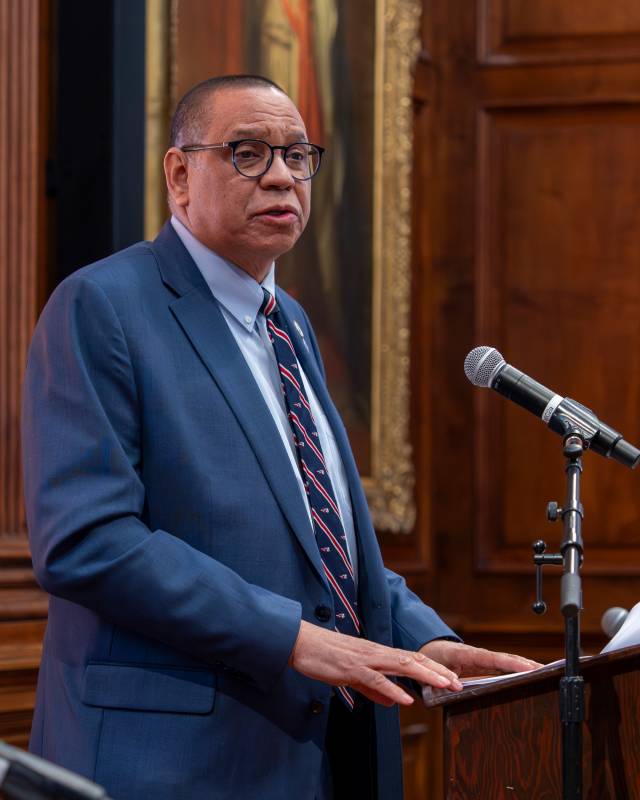
Lt. Gov. Dale Caldwell '82 thanked President Eisgruber for his stewardship and for the University’s deep engagement with the state. He also introduced RevolutionNJ, a state initiative recognizing New Jersey’s place in the 250th anniversary of American independence.
In his remarks, Lt. Gov. Dale Caldwell, a Class of 1982 alumnus, thanked Eisgruber for his stewardship and for the University’s deep engagement with the state. He said it was "very special and kind of surreal" to return to campus for the commemorative session and kickoff of RevolutionNJ, a state initiative recognizing New Jersey's place in the 250th anniversary of American independence.
Joseph Klett, the executive director of the New Jersey State Archives, presented an overview of early state history and highlighted items from the State Archives, including minutes from the legislature's first session in Nassau Hall. Sara Cureton, executive director of the New Jersey Historical Commission, situated New Jersey's history in the national context of America's 250th and shared yearlong plans for RevolutionNJ.
Oliver Christian, His Majesty’s Consul General to New York and His Majesty's Trade Commissioner for North America, spoke next, emphasizing how the U.S. and UK had evolved from adversaries to the strongest of allies based on shared democratic ideals.
“Freedom is a value right at the heart of America, but it's also at the heart of our special relationship — the special relationship between our nations," he said. “It binds us together in a shared history and our common future.”
The General Assembly then voted and unanimously approved a series of eight resolutions, the first of which commemorated the legislature’s special session and the second the 280th anniversary of the University's founding. Among the others were resolutions honoring the New Jersey National Guard; the town of Princeton’s role in the American Revolution, received by Freda; and the “unsung efforts of New Jerseyans” from the era.
With a bang of the gavel, Assemblyman Coughlin then adjourned the session. On behalf of the legislature, Coughlin thanked Nassau Hall and the Princeton community for the warm welcome. "Thanks for having us back," he said. "It's good to be home."
Princeton and America’s 250th
In addition to state and nationwide initiatives celebrating the 250th anniversary of American independence, Princeton University is recognizing its unique role in the history of the Revolution and the nation’s founding with a slate of programs this year.
The Princeton University Library (PUL) will open two Revolution-themed exhibitions:
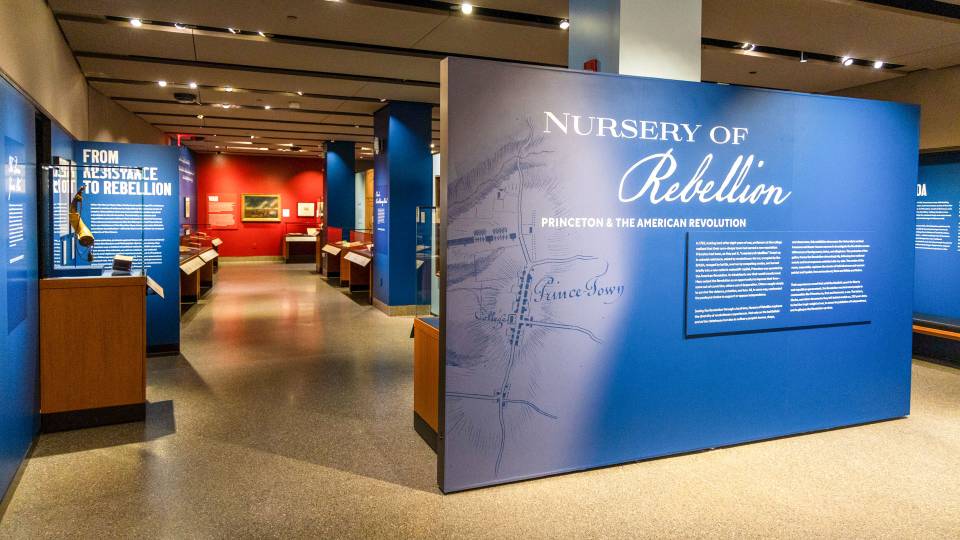
- “Nursery of Rebellion: Princeton and the American Revolution,” opening April 15, features original copies of the Declaration of Independence, the Constitution, and numerous artifacts. The exhibit, curated by Princeton’s Michael Blaakman, associate professor of history, and Gabriel Swift, librarian for early American collections, runs through July 12 in the Milberg Gallery at Firestone Library.
- Later this spring, the Mudd Manuscript Library’s “Real and Remembered: Princetonians Caught Between Study and Revolution” will explore campus and student experiences before, during and after the war. The exhibit is curated by PUL staff April Armstrong, Ashley Augustyniak and Rosalba Varallo Recchia.
On Feb. 17, the Princeton School of Public and International Affairs will host a panel discussion, “America @ 250: Reconstructions,” with faculty experts across the fields of history, law, national security, race and politics exploring “how the nation has repeatedly reinvented itself — and what those moments of transformation can teach us today.”
At Alumni Day on Feb. 21, University Advancement will kick off a monthslong celebration of the 200th anniversary of Princeton’s Alumni Association. Initiated in 1826 by alum and 10th Princeton President John Maclean Jr., the Alumni Association was first led by James Madison, who is considered to be the University’s first graduate alumnus. The 200+-day celebration will run through Orange and Black Day on Oct. 22.
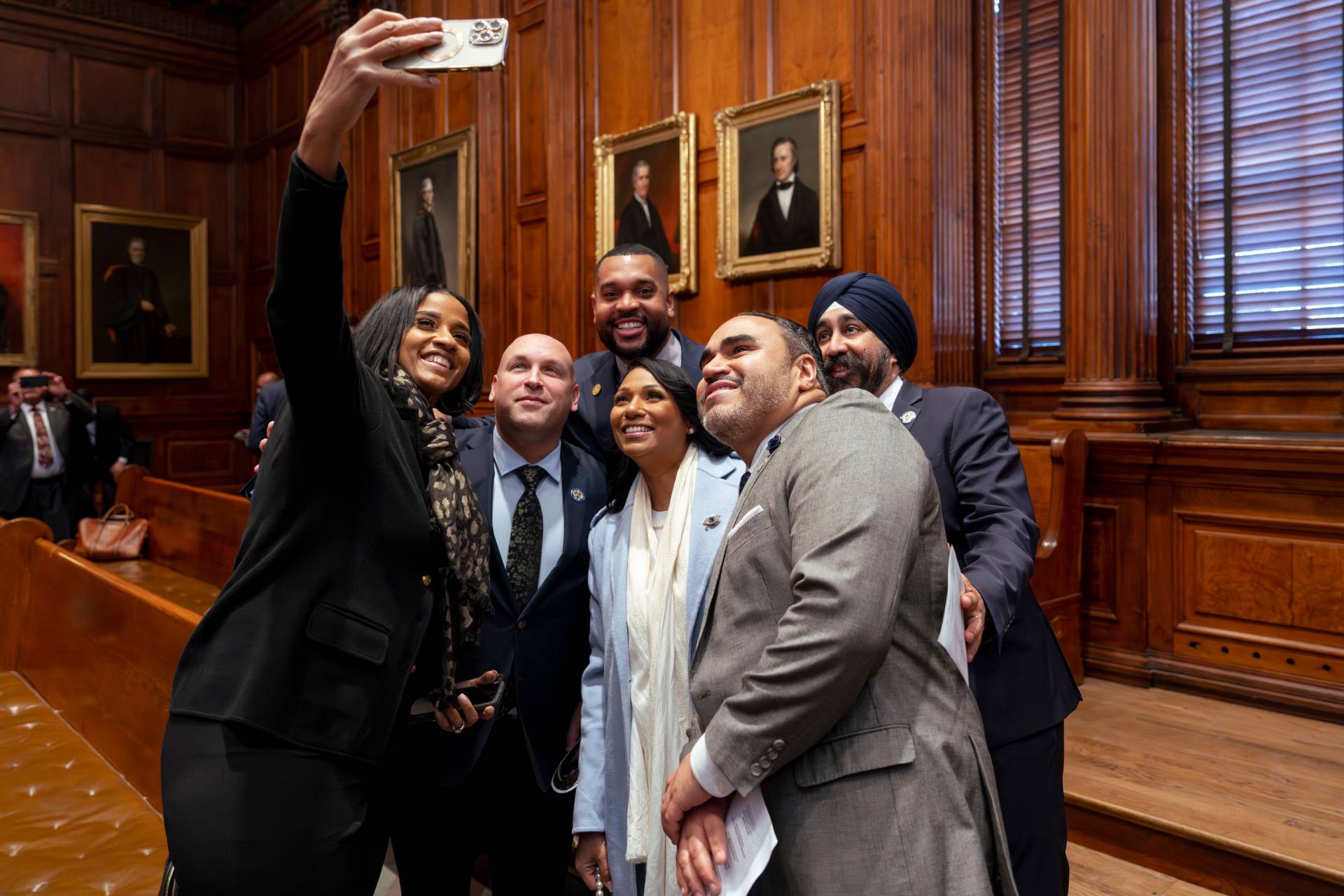
Visitors took celebratory selfies to commemorate the legislature’s return to Nassau Hall.