NJ community college faculty and staff convene at Princeton for Transfer Pathways Institute
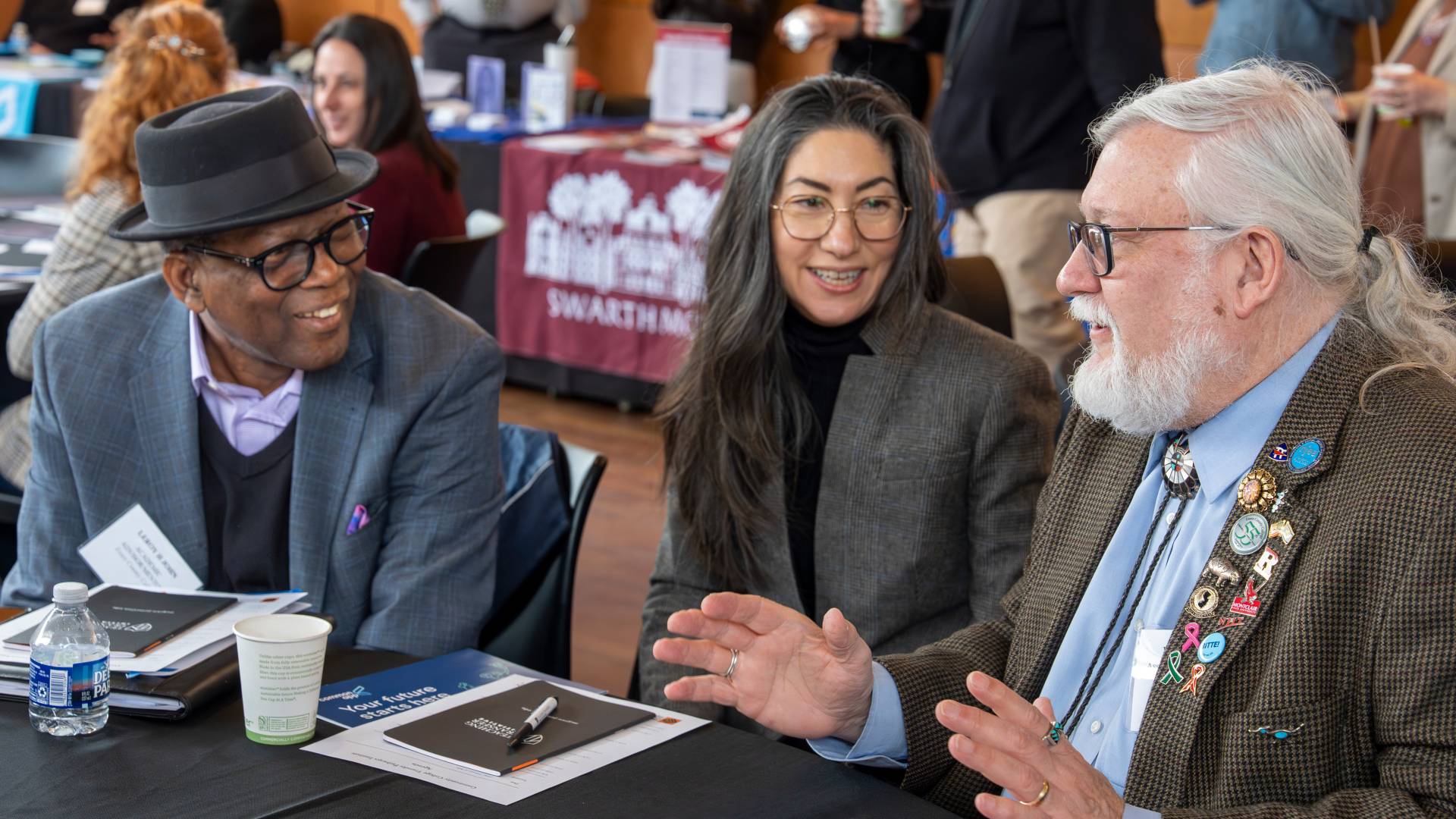
Nearly 90 community college educators and advisers attended the Transfer Pathways Institute hosted by Princeton University. (Left to right) Leroy John, Christine La Para-Williams and Victor Stolberg of Essex County College brainstorm ideas to take back to their campus.
On a recent Friday at Princeton University’s Carl A. Fields Center, community college faculty and staff from across New Jersey gathered to discuss a question central to their work: how can they help more community college students successfully transfer to selective four-year colleges and universities?
The inaugural Community College Transfer Pathways Institute brought together nearly 90 administrators, educators and advisers from 17 community colleges to learn about transfer student opportunities at Princeton and other highly selective schools that provide generous financial aid.
“I appreciate the recognition of the talent and motivation of community college students,” said Victor Stolberg, associate professor and counselor at Essex County College. “It’s wonderful to see how transfer students thrive once they get into these colleges and universities.”
The Feb. 6 conference was led by the Program for Community College Engagement (PCCE), which supports Princeton’s teaching and learning partnerships at New Jersey community colleges, and was co-organized with the Office of the Provost.
“Princeton is committed to supporting educational opportunity and access broadly,” Vice Provost for Academic Affairs Cole Crittenden said.
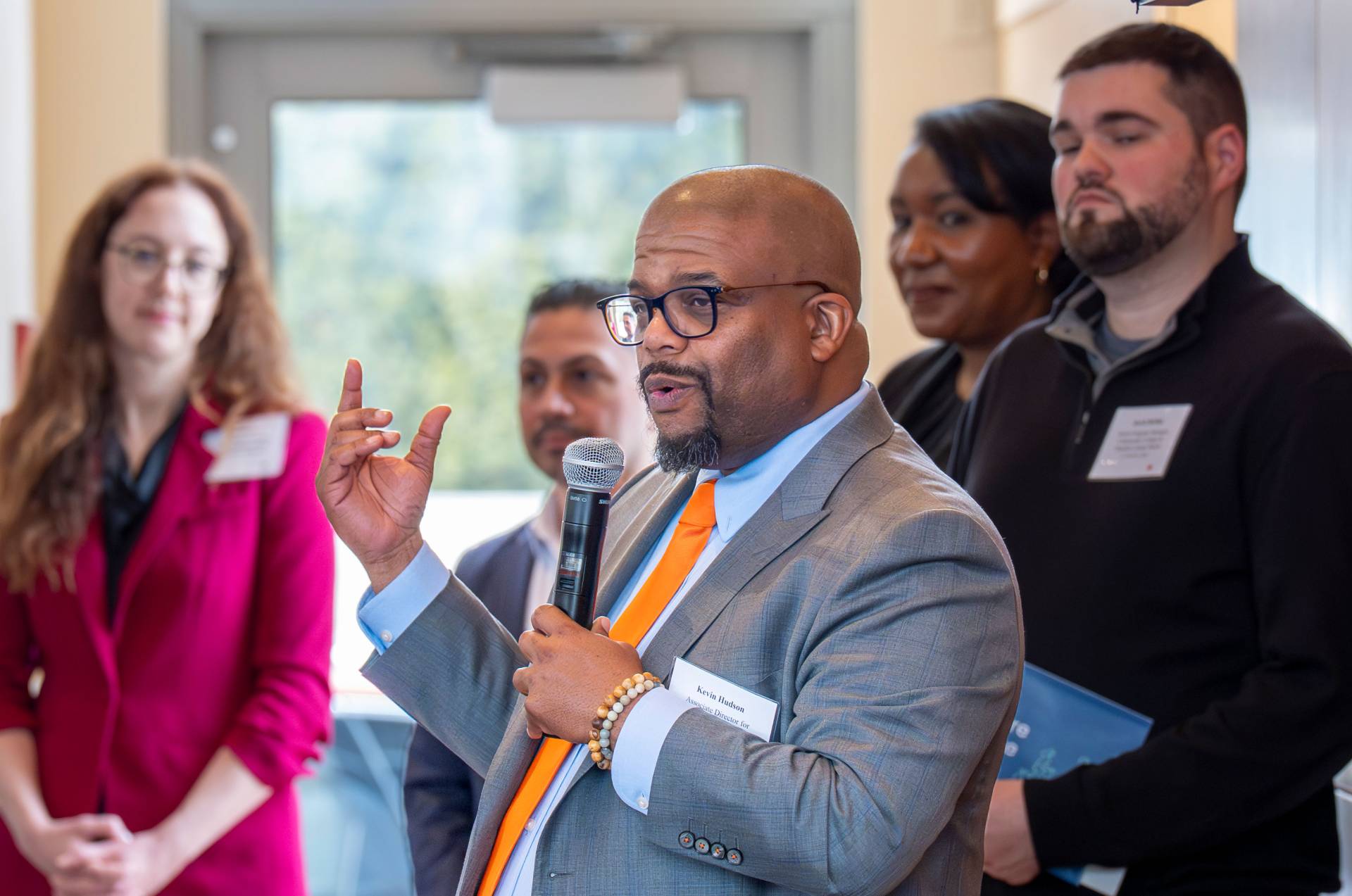
Kevin Hudson, associate director for institutional diversity and college opportunity at Princeton, moderates a discussion on demystifying admissions and financial aid.
Crittenden continued: “The gathering is a great example of the many ways the Program for Community College Engagement is partnering with community colleges to strengthen teaching and advising and to expand transfer pathways to a range of high-quality four-year institutions.”
Sarah Schwarz, director of PCCE, said the goal was to bring together “transfer champions” who serve in various roles at community colleges — from professors and academic deans to career advisers, transfer coordinators and student counselors.
“Their vital work directly supports students on their journeys through higher education,” Schwarz said. “Having all that expertise in one room and being able to think with them, and with our presenters, about how to broaden pathways to and through the college and provide more resources and support for transfer students was truly exciting.”
“Presence matters,” said Princeton co-organizer Kevin Hudson, associate director for institutional diversity and college opportunity. “It is important that students’ most trusted leaders in community colleges see Princeton and our peer institutions as attainable and affordable.”
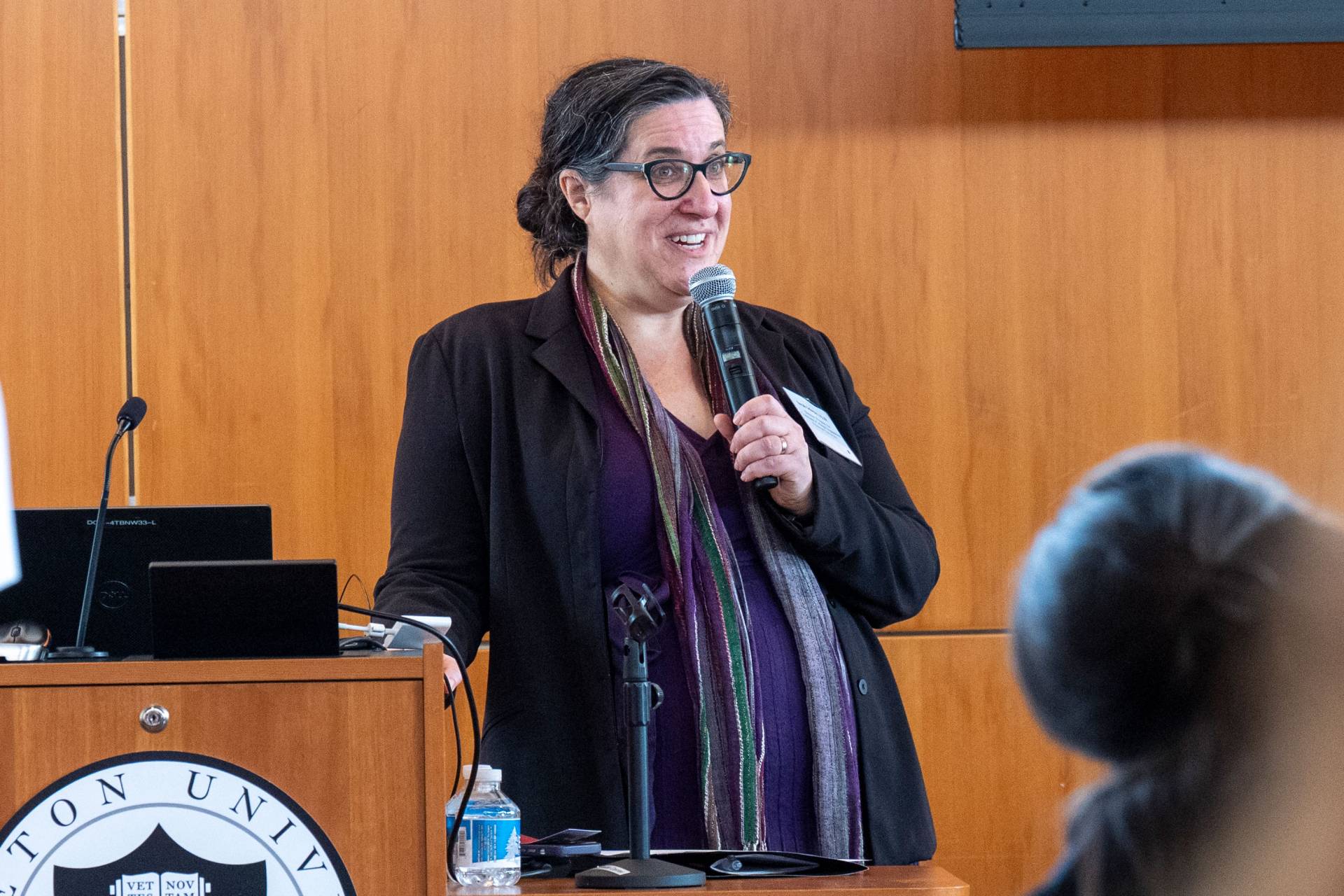
Sarah Schwarz, director of the Program for Community College Engagement, welcomes everyone to the Feb. 6 conference.
Demystifying transfer admission and financial aid
The event included panels on transfer admission and the financial aid process with representatives from Princeton, Lehigh University and Swarthmore College; an update on the American Talent Initiative’s (ATI) strategies for enrolling more talented students from lower- and moderate-income backgrounds at highly selective colleges and universities across the country; and a presentation on the Common App’s new Community College and Transfer Learner Reach program.
“Our goals today are to demonstrate why high graduation rate, low-debt, selective institutions can be a great destination for your wonderful students, to demystify some of the perceived barriers to transferring to those institutions … and to talk about the ways these institutions are ready to welcome your students,” Schwarz told participants.
“To get this cross-section of people together to talk about challenges and discuss solutions is so valuable,” said Mirta Tejada, dean of academic operations and strategic initiatives at Middlesex College. “I appreciate that Princeton is taking on this initiative and recognizing that community college transfer students can really contribute to the community here.”
During the conversation on admission and financial aid, panelists emphasized the affordability of highly selective schools. “Please encourage your students to look beyond the sticker price,” said Yulia Korovikov, associate dean and director of recruitment in Swarthmore's Office of Admissions. She explained that financial aid may cover tuition, housing and food.
Princeton has “one of the most generous financial aid packages in the country,” said Courtney Meldrum, assistant director of financial aid. “We meet 100 percent of demonstrated financial need for undergraduates.”
Cultivating success
Benjamin Fresquez and Kate Hamilton of the Aspen Institute College Excellence Program, an ATI partner, presented research on how transfer mentors, support systems and other resources cultivate success for community college students at selective four-year institutions. They also highlighted student stories, including Princeton senior and Rhodes Scholarship recipient Hadi Kamara, a military veteran and transfer student from Northern Virginia Community College.
To conclude the day, participants broke into small groups to share best practices from their own work, brainstorm how to expand transfer pathways on their campuses, and discuss what ideas they would take back to their students.
“I learned a lot today that I will share with my students,” Stolberg said. “I will tell my students these schools want them on their campuses. There are resources for them. There is a support system for them.”
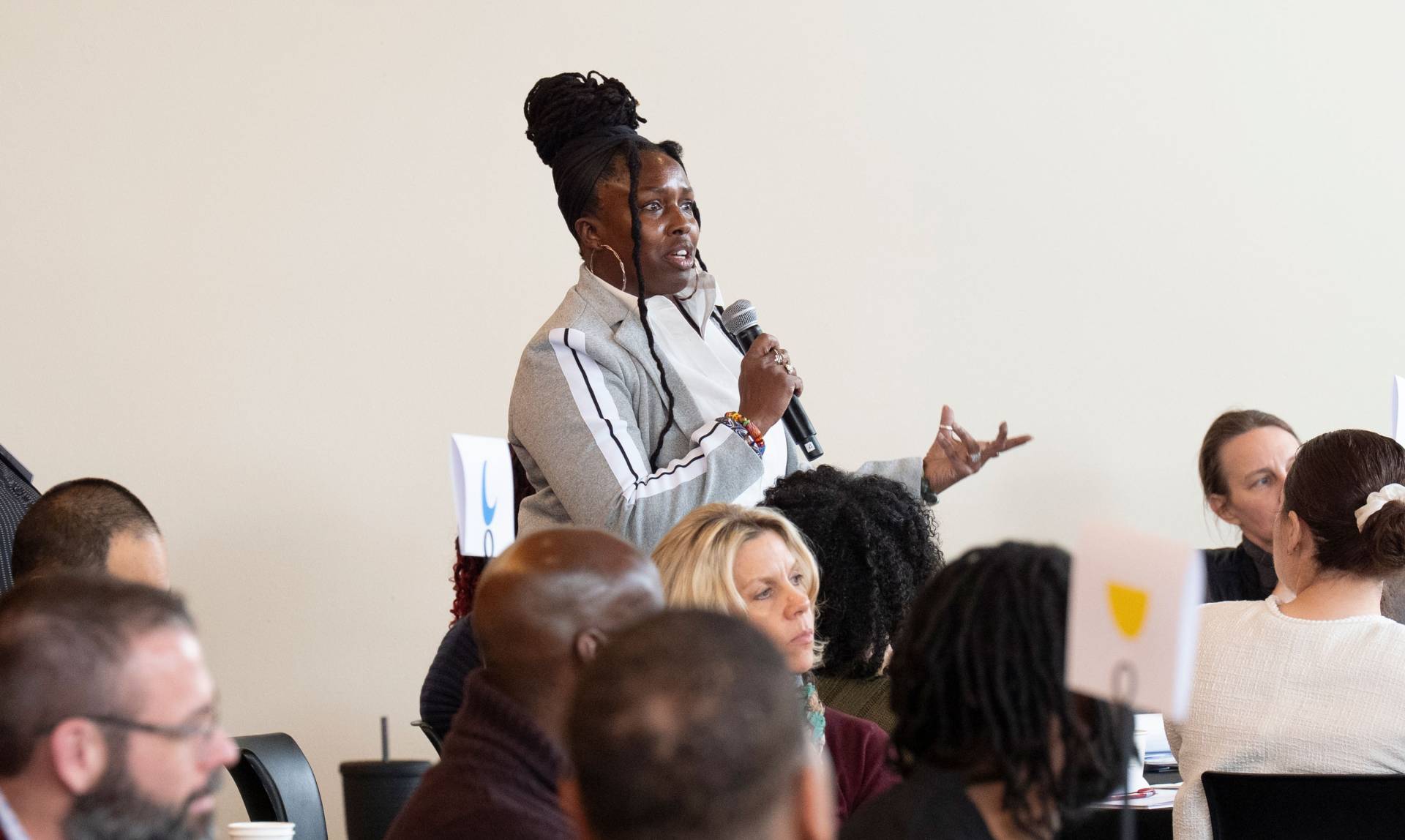
Joyce Maxwell asks a question about transfer student pathways for community college students. Maxwell is an associate professor of English and a Phi Theta Kappa adviser at Union College of Union County, New Jersey.
“These schools are not out of reach”
Tejada said she found the information on affordability most valuable. “Not only is there generous financial aid for lower-income students, but for middle and upper-middle income students at many of these schools,” she said.
Laura Green, assistant dean of enrollment management and student services at Salem Community College, said the Transfer Pathways Institute highlighted opportunities that some community college students — especially nontraditional students — may not have considered.
Nichol Killian, director of advising and academic support centers at Mercer County Community College, agreed.
“I want students to know these schools are not out of reach for them,” she said. “We are preparing students at our community colleges. We have talented students. They do belong at a Princeton, at a Swarthmore, at a Lehigh. I want our students to know the faculty and staff that work at these colleges and universities are so approachable, are so ready to help.”
Princeton reinstated its transfer admission program in fall 2018. The program seeks students from a range of backgrounds and particularly encourages applications from students from lower-income backgrounds, community college students and U.S. military veterans.
Through the Emma Bloomberg Center for Access and Opportunity, the University also leads the Transfer Scholars Institute, which guides a cohort of talented New Jersey community college students through the transfer admission process to public and private four-year institutions across the country.
The Transfer Pathways Institute was the second time that PCCE gathered community college educators and staff for a day of learning on campus, following the April 2025 Humanities Community College Convening in partnership with Princeton’s Humanities Initiative. The group will gather again this spring to discuss how humanities are thriving at community colleges around the state.
PCCE, which is part of the McGraw Center for Teaching and Learning, also oversees Princeton’s Prison Teaching Initiative, Teaching Transfer Initiative, Community College Teaching Fellowships and Community College Faculty Program.


