'A life-changing opportunity': Alumni share how Bridge Year transformed their Princeton experience and continues to shape their lives
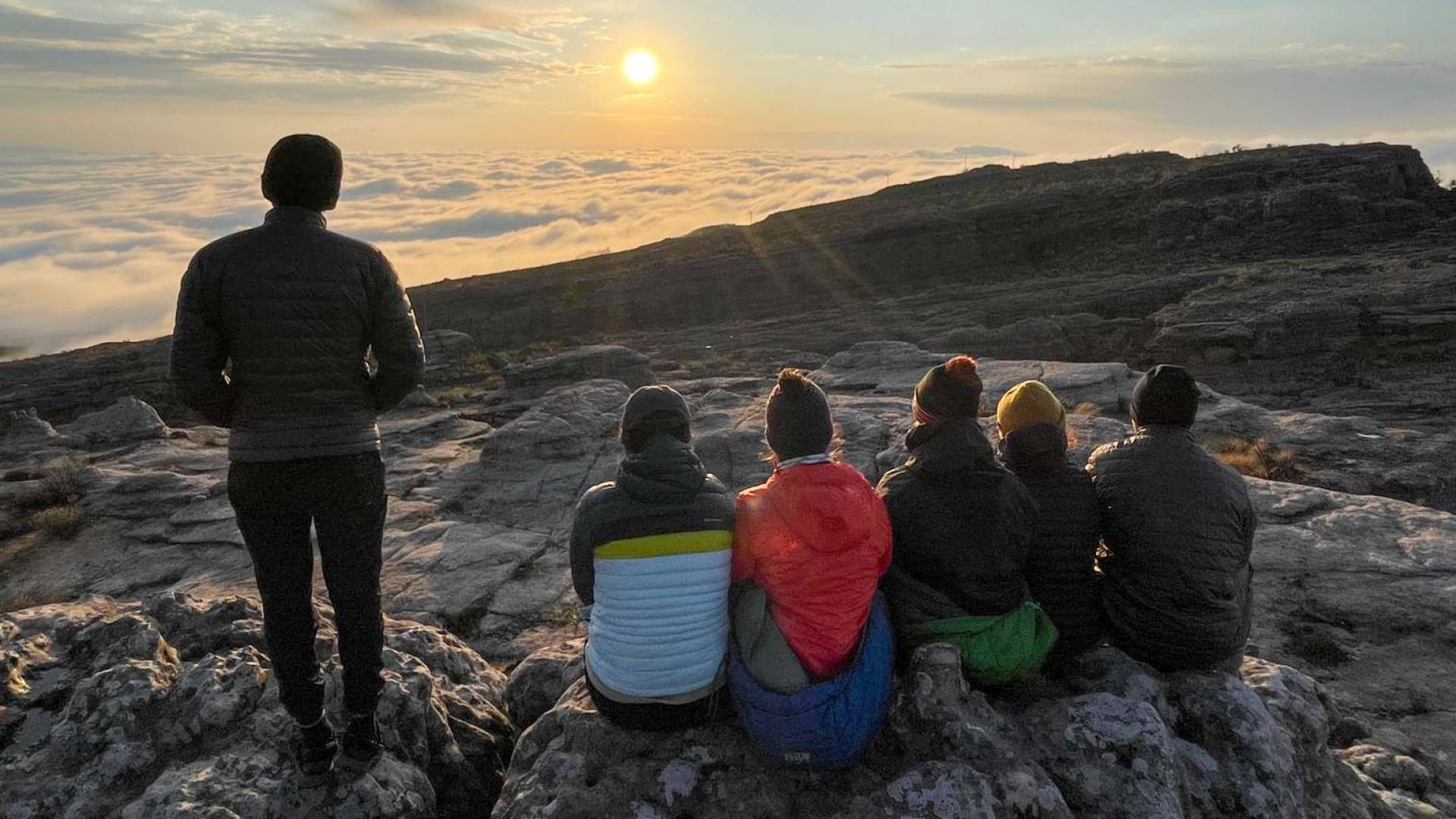
Princeton Novogratz Bridge Year students in Bolivia take in the sunrise over Torotoro National Park.
Dr. Claire Ashmead, Class of 2017, began her Princeton education by spending nine months in China through the University’s Novogratz Bridge Year Program for global learning through community service. The experience was transformative and continues to shape her more than a decade later.
“I don't think I would be the same person today if I had not done Bridge Year,” said Ashmead, an internal medicine resident at the Mayo Clinic who studied history, creative writing, and Chinese language and culture at Princeton.
John Bullock, Class of 2023, feels similarly, saying, “Bridge Year instilled in me a desire to become more of a global citizen and to work in a field in service to others in the world.” Bullock is now a Second Lieutenant in the U.S. Army and will join the Veterinary Corps after graduating from the University of Pennsylvania School of Veterinary Medicine.
Since 2009, more than 370 undergraduates have participated in Bridge Year, which allows incoming students to spend nine months engaged in community-based service-learning experiences in five international locations. The tuition-free program is open to all members of Princeton’s newly admitted class, who may apply to participate before starting their first year on campus.
Ashmead and Bullock are among the many alumni who say Bridge Year had a profound influence on their lives — expanding their worldviews, allowing them to grow and thrive as students and instilling a commitment to service. Through Bridge Year, they discovered new passions, examined new career paths, gained confidence and made lifelong connections.
“Bridge Year is distinct from the classroom, yet our returned students often cite it as a year where some of the deepest learning happens during their University career,” said Matt Lynn, director of the Novogratz Bridge Year Program.
“Bridge Year asks students to live differently: in a new culture, learning a new language and being welcomed into a new community,” Lynn said. He often observes Bridge Year students changing their perspectives and understanding of the world around them.
“I witness them learn humility, curiosity, adaptability and how to build relationships across differences. They learn how to listen, how to reflect and how to contribute thoughtfully to community well-being,” Lynn added.
Below, Princeton alumni share how the Bridge Year Program helped them grow, inspired them to continue to serve others and still informs their lives today.
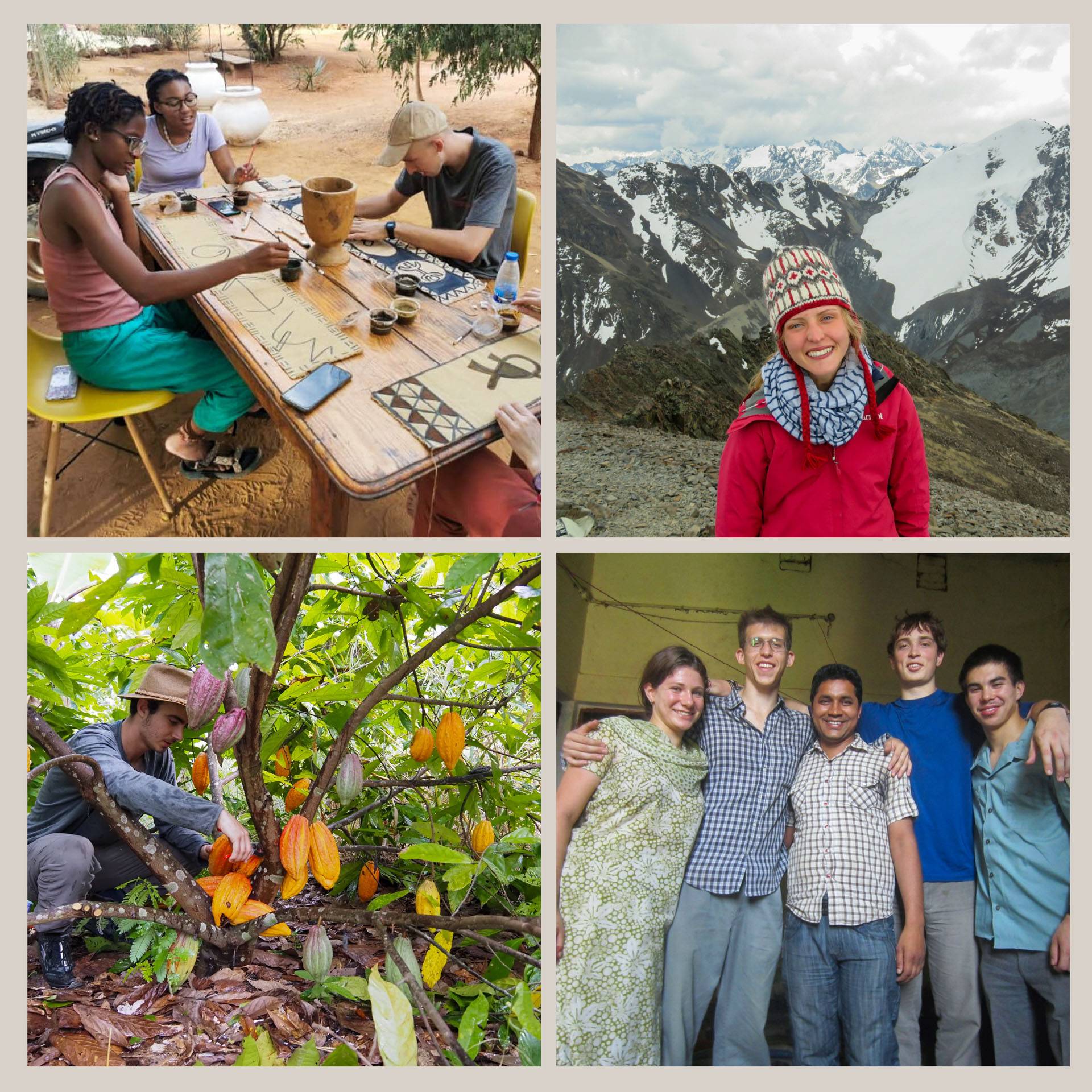
More than 370 undergraduates have participated in Bridge Year, where they spend nine months engaged in community-based service-learning experiences in five international locations.
Discovering new passions and gaining new confidence
“That year in China was a huge growth experience,” Ashmead wrote in an essay about her experience. “I fell in love with Chinese culture. Not only the food and the language, but the people, their hospitality and warm acceptance of my 18-year-old self.”
Ashmead lived in Kunming, doing service work at an environmental nonprofit, living with a Sichuanese homestay family, taking Mandarin classes and participating in cultural workshops and excursions with the five other Princeton students in her Bridge Year cohort.
The experience helped her mature tremendously, gaining independence and confidence to try new things. After Princeton, she studied writing as a Witherspoon Scholar at the University of Edinburgh and then went to medical school at the University of Michigan, returning to China for a Global Health and Disparities training program.
“All the skills that I really developed in Bridge Year — learning how to navigate a totally different environment, becoming a better listener and less quick to judge, being more open minded, thinking critically about a new situation — they are skills that help me in medicine every day,” she said.
Miranda Bolef, Class of 2018, grew up on the central coast of California and Bridge Year in Senegal was her first significant international experience. It sparked her interest in politics, which became her Princeton major.
“I became fascinated by questions of how societies work and function,” she said. After Princeton, she worked in law and policy advocacy positions in Mississippi and earned a double master’s degree in global economic history and global studies, studying at the London School of Economics, Jawaharlal Nehru University and the University of Vienna.
Bolef is now back in Senegal as an on-site director for Where There Be Dragons, Bridge Year’s partner in the country, and observes similar transformations in the Princeton students she works with today.
“Bridge Year is truly a unique opportunity to get to know a new place from scratch and, in the process, students learn so much about themselves,” she said.
Broadening their worldview and instilling a commitment to service
Bridge Year was created in the spirit of the University’s informal motto, “In the Nation’s Service and the Service of Humanity,” and Bridge Year alumni continue to carry that spirit forward.
Bullock said going from his hometown of Frankfort, Kentucky, to Senegal opened a new world. His service project was teaching English at a YMCA in Dakar.
“I spent a lot of time talking with the teachers there and understanding their lives; talking about their thoughts on the world, things they were worried about and things they were looking forward to,” he said. “It was the first time I understood what it meant to travel in a deep and meaningful way. To not be a tourist, but to really connect to a place, a culture and a community.”
Bullock, an ecology and evolutionary biology major, spent the summer after sophomore year studying equine veterinary medicine in France and later traveled to Princeton’s Mpala Research Centre in Kenya for his senior thesis research. “Bridge Year really instilled a desire to see and experience more,” he said.
Emma Coley Fitzgerald, Class of 2020, grew up in Cuyahoga Falls, Ohio, and participated in Bridge Year Bolivia. She received the Pyne Prize, Princeton’s highest undergraduate honor, and was involved with the Pace Center for Civic Engagement and the Office of Religious Life while on campus.
“I had not often been encouraged or forced to think about the particularity of where I was from, its history, its people,” Fitzgerald said in remarks to current Bridge Year students. “The newness of Bolivia was an invitation to learn how to see, to observe how my feelings, reactions, roles, perceptions of others and their perceptions of me changed as I navigated new social contexts; to become curious about how cities and landscapes become what they are, and how communities work to preserve or change them.”
Today, Fitzgerald lives and works at the Simone Weil House in Portland, Oregon, where she recently helped create a zero-interest lending program in partnership with a local credit union. “That spirit of service central to Bridge Year is part of my life every day,” she said.
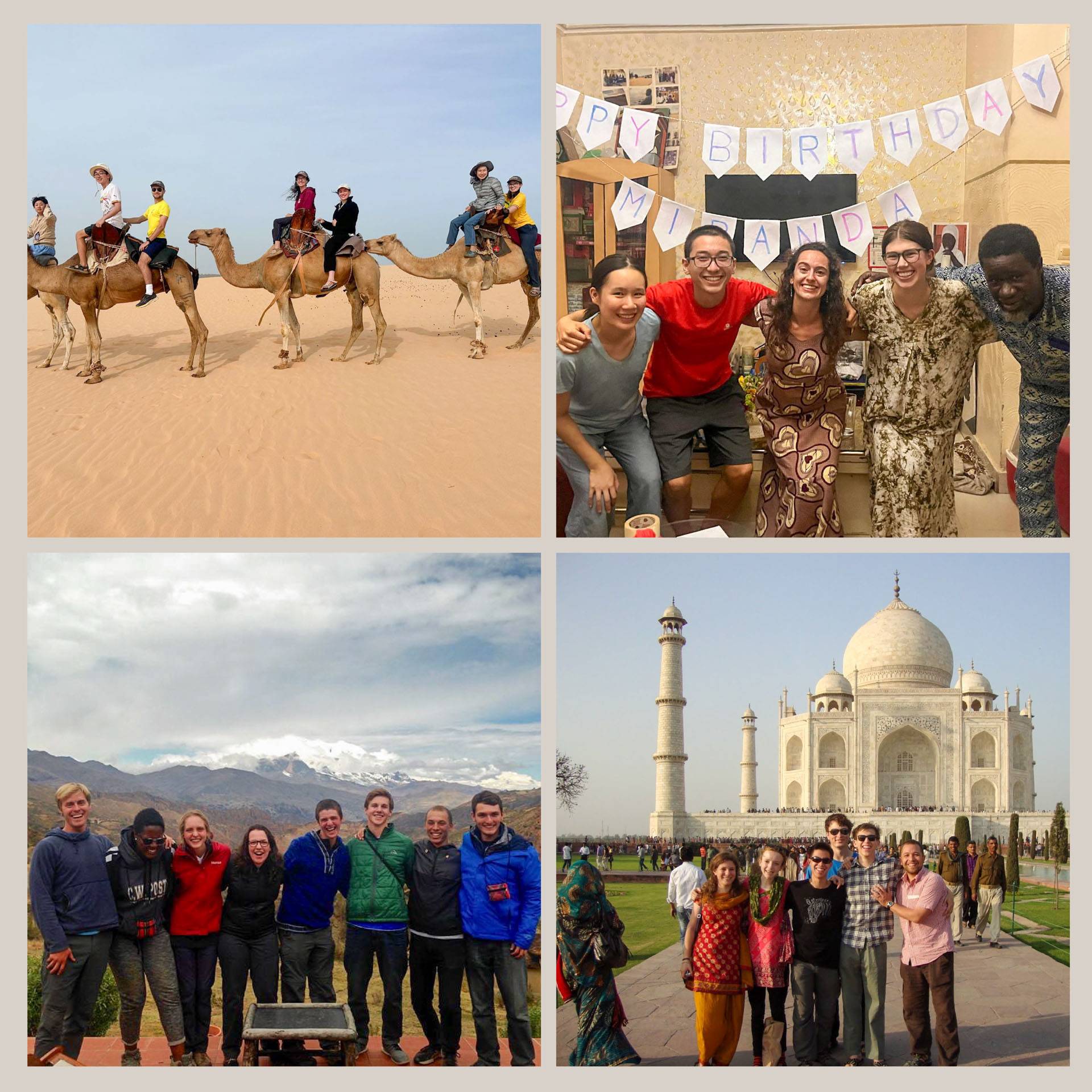
Top left: Bridge Year Senegal students in the Lompoul Desert. Top right: Miranda Bolef (center) participated in Bridge Year Senegal while an undergraduate and is now an on-site director for Where There Be Dragons, Bridge Year’s partner in the country. Bottom left: Emma Coley Fitzgerald (third from left) with her Bridge Year Bolivia cohort. Bottom right: Tyler Rudolph (back, center) visits the Taj Mahal while at Bridge Year's former program site in India.
Preparing them to thrive at Princeton and beyond
Bridge Year alumni said the year abroad focused on service learning better prepared them to excel at Princeton and beyond.
“Spending a year learning outside of a traditional classroom environment allowed me to reflect on what I was most passionate about,” Ashmead said. “I had a wider sense of the possibilities on the horizon, and consequently, I think I was able to really make the most of my time at Princeton.”
Avaneesh Narla, Class of 2017, grew up in Kolkata and Hyderabad, India, and is an assistant professor of integrated sciences at Claremont McKenna College. He participated in Bridge Year’s former location in Peru, where he helped build clean-burning stoves in rural villages and started an afterschool program for local children.
“One of the biggest reasons I applied to Bridge Year was that I wasn’t sure what I wanted to study in college. It was an opportunity for discovery and reflection,” he said.
Bridge Year completely shifted his perspective, Narla said. “Instead of thinking of Princeton as just a step to accomplish my next goal, I started to focus on what really intellectually stimulated me.”
For Narla, that meant studying a broad range of subjects, from philosophy and linguistics to math and physics. A PIIRS Global Seminar in Geneva was followed by a summer research opportunity at CERN, the European organization for nuclear research, which cemented his focus on physics. He earned his Ph.D. in physics from the University of California-San Diego and completed a postdoc at Stanford.
Tyler Rudolph, Class of 2016, didn’t know many people from his rural Colorado high school who had attended Princeton. He said Bridge Year gave him a strong foundation, allowing him to thrive once on campus.
“Bridge Year really challenges and pushes you, but in a way that is intentional and supportive,” said Rudolph, who spent a year at Bridge Year’s former location in India. “I really felt comfortable exploring and trying new things.”
He was in Engineers Without Borders, where he led projects in Sierra Leone, studied Chinese and spent a year studying in Beijing as a Schwarzman Scholar after graduation. An operations research and financial engineering major, Rudolph now works as a vice president at Galvanize Climate, a global investment firm focused on energy innovation.
Fostering lifelong connections
Alumni said one of the most treasured outcomes of Bridge Year are the lifelong connections they made during their time abroad.
Narla grew close to his homestay family and visits them when he returns to Peru for research projects in the Amazon. “I had a homestay brother and many cousins around my age and I really developed close bonds with their whole family.”
Coley said all six students in her Bridge Year Bolivia cohort, as well as their on-site director, attended her recent wedding.
“What Bridge Year gave me that was so invaluable is starting college with a group of people who knew me deeply,” she said.
Rudolph agreed. “The depth of the relationships I have with my Bridge Year peers supported and sustained me through my time at Princeton and in life all these years later,” he said.
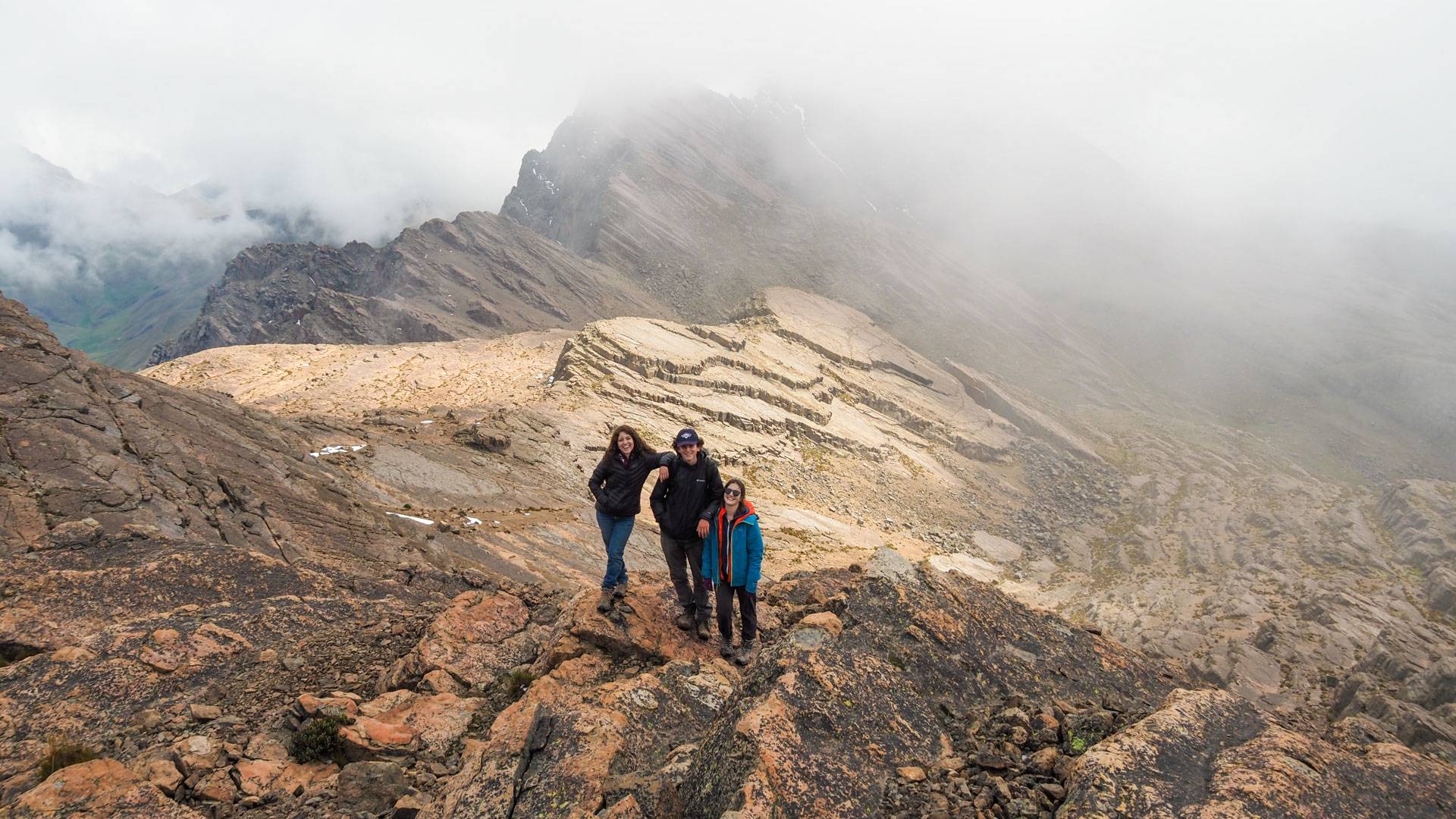
Bridge Year Bolivia students. Bridge Year currently offers tuition-free, service-learning programs for incoming Princeton students in Bolivia, Cambodia, China, Indonesia and Senegal.