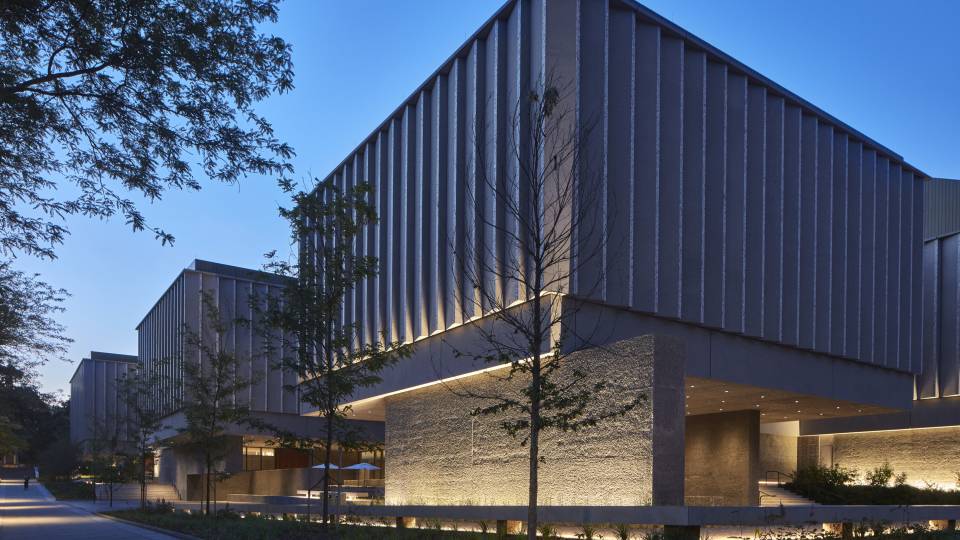
A conservator's work on de Kooning’s ‘Black Friday’ for Princeton reveals new insights and a surprise
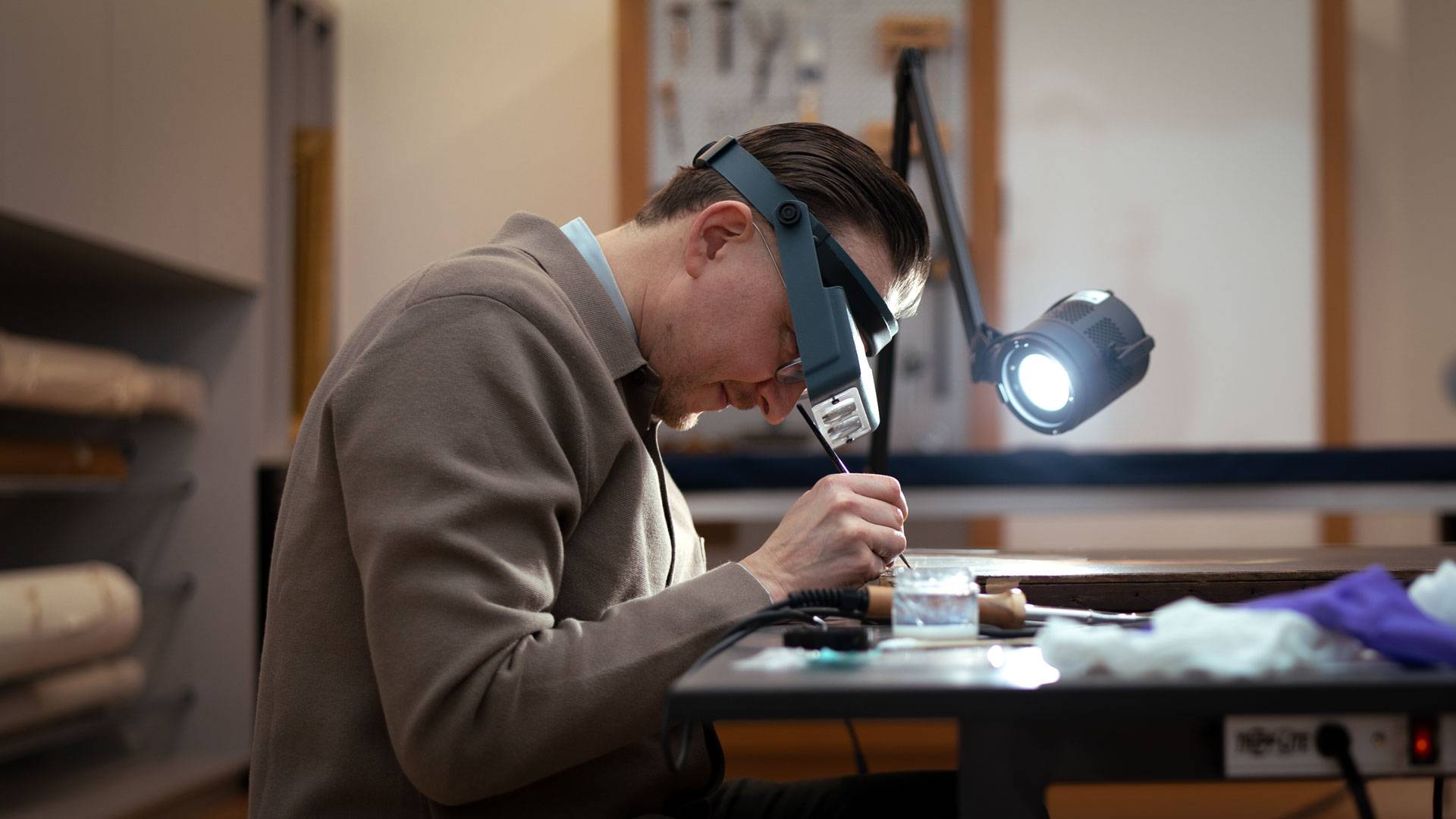
Bart Devolder, chief conservator at the Princeton University Art Museum, at work in one of the museum’s conservation studios.
Willem de Kooning needed some paint.
It was 1948. The artist was working in a studio on Fourth Avenue in Greenwich Village, intensely focused on completing the paintings for his first solo exhibition, held at Charles Egan Gallery in New York. As customary, he was working with a wide range of colors in his paintings, even while continuing to experiment with black and white paint.
In part because he was short on funds, he took a page from his earlier work life as a house painter, interior designer and decorative painter. Behlen Brothers paint store on Christopher Street was a quick 15-minute walk from his studio — where he bought inexpensive retail paints such as black enamel and white house paint.
While only one painting sold, that solo show made a resounding mark on the art world. It would later be considered a seminal turning point in de Kooning’s career, landing the artist front and center in the establishment of what would be called Abstract Expressionism. “Willem de Kooning: The Breakthrough Years, 1945-50,” an exhibition of 18 paintings from this period, is currently on view at the Princeton University Art Museum, through July 26.
But why are those cans of black and white paint important? What might the paint itself — and what de Kooning did with it — tell us about the extraordinary changes happening to the artist’s process? What does it reveal? What does it hide?
As the chief conservator at the Princeton University Art Museum, Bart Devolder asks questions like these every day. Devolder spent six months analyzing and preparing “Black Friday” for the museum’s reopening and important new de Kooning exhibition, which The Guardian said “take[s] audiences intimately into the artist’s creative life.” Of the paintings on display, “Black Friday” is the only one from the museum’s own collections, joining 17 others from private collections and other museums.
To do his work — which, first and foremost, is making sure a painting is in stable condition for exhibition — Devolder has to become a kind of forensic investigator. In this case, the process of examining the materials used by the artist, in order to preserve them for decades to come, also illuminates the artist’s process, he said.
With “Black Friday,” that came with surprises — the biggest being the likelihood that a colorful de Kooning abstract painting was hidden underneath.
Discovering the abstract underneath
The first step in preparing the painting for the Princeton exhibition was to remove it from its frame for routine surface cleaning and dusting. Prior to removing the nails from the frame, they were documented and numbered to make sure they could be reinserted in the same location. The surface grime was carefully removed with handmade cotton swabs and a mild enzymatic solution while paying extra attention to the areas where delicate charcoal was still present.
The abstract painting underneath came to light after that, when Devolder examined the painting with the museum’s new X-radiograph machine — similar to the X-ray machines doctors use to see a broken bone. “This is where it gets super fun,” Devolder said.
He took nine separate X-rays, which were later stitched together as a “puzzle” in order to see the whole painting. A lot of abstract shapes that are not visible in “Black Friday” emerged, including one circle, which Devolder realized should have been smaller and in a slightly different spot to match a similar circle in the painting seen with the naked eye.
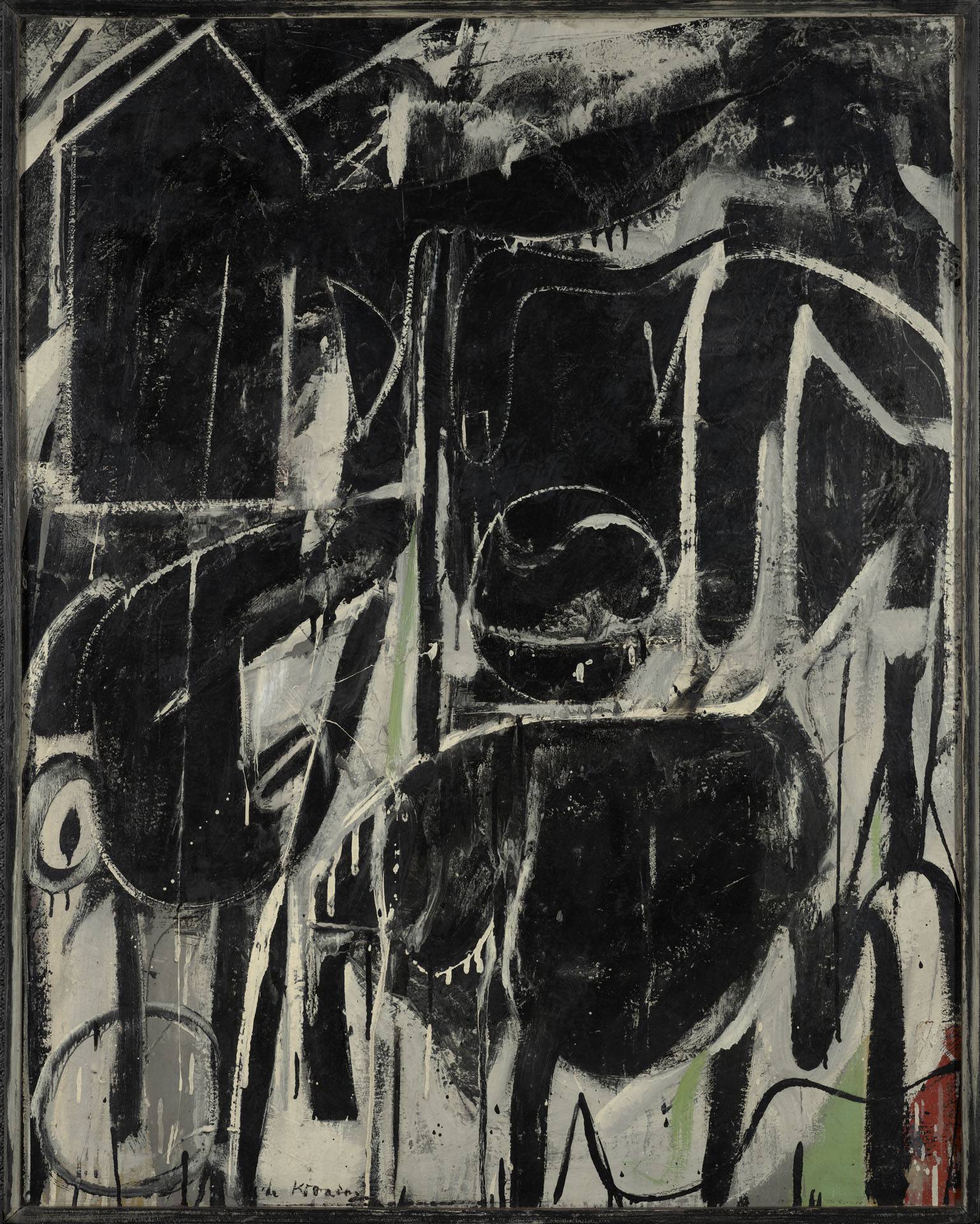
Devolder's six months of meticulous conservation work on "Black Friday" is captured in a remarkable essay in the exhibition catalog, which he co-authored with Jim Coddington, the former Agnes Gund Chief Conservator at the Museum of Modern Art.
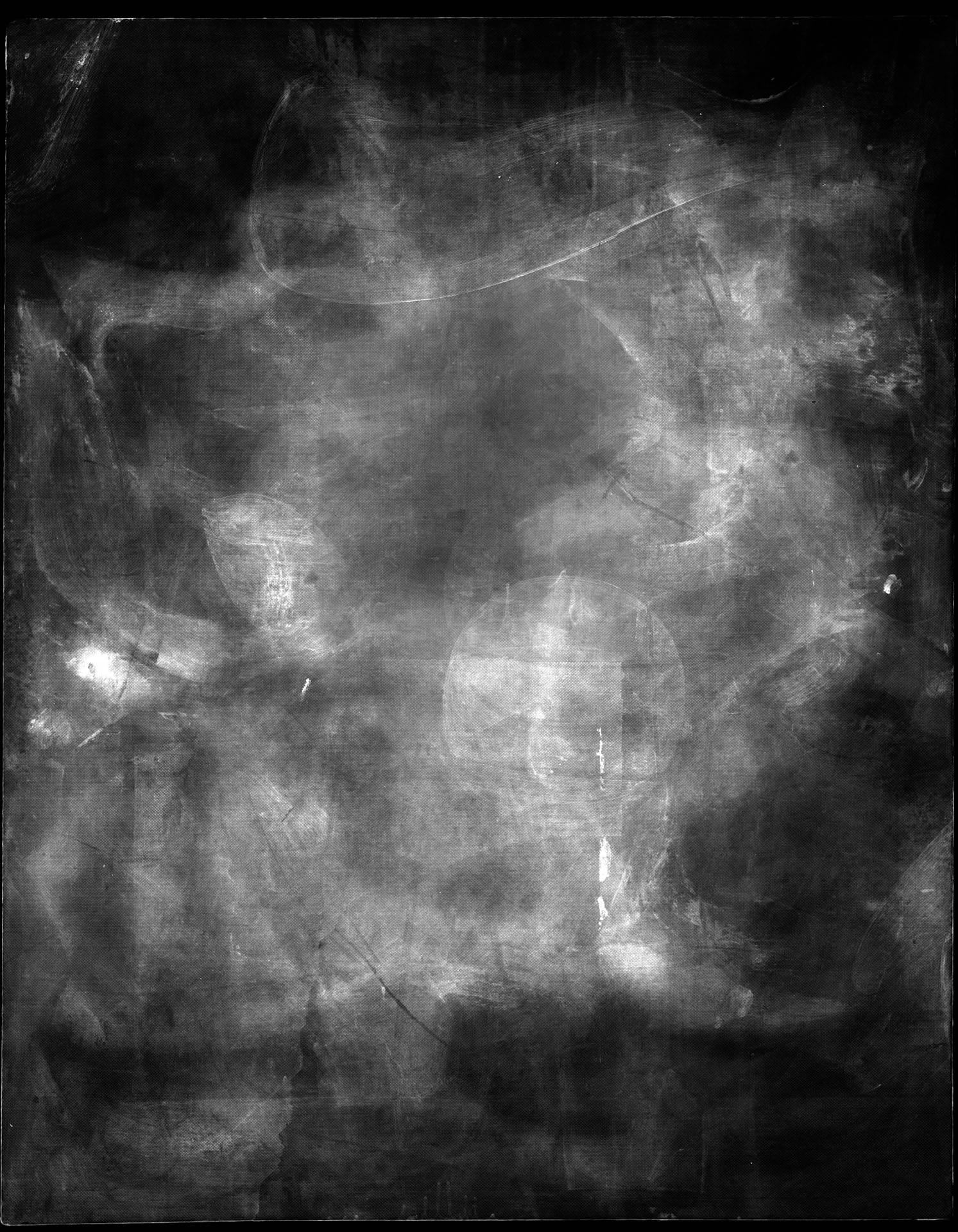
Devolder took nine separate X-rays of "Black Friday" that were later combined. Abstract shapes that are not visible in “Black Friday” emerged.
By angling a raking light along the surface of the painting, he could see the texture of these shapes lying under the surface of “Black Friday,” and by examining the exposed edges of the unframed painting, he could see that these shapes had color.
Devolder had discovered what appears to be another entire painting underneath “Black Friday” with a color palette — including yellows, ochres, blues and pinks — that “aligns perfectly with de Kooning’s earlier abstract compositions from the early ’40s.” De Kooning is known to have either destroyed or over-painted works he wasn't happy with during that timeframe, Devolder said.
“The de Kooning specialists say it’s interesting to see how the artist transformed his color palette and how his shapes changed," Devolder said. "We’re showing that change actually happened in [this] one painting.”
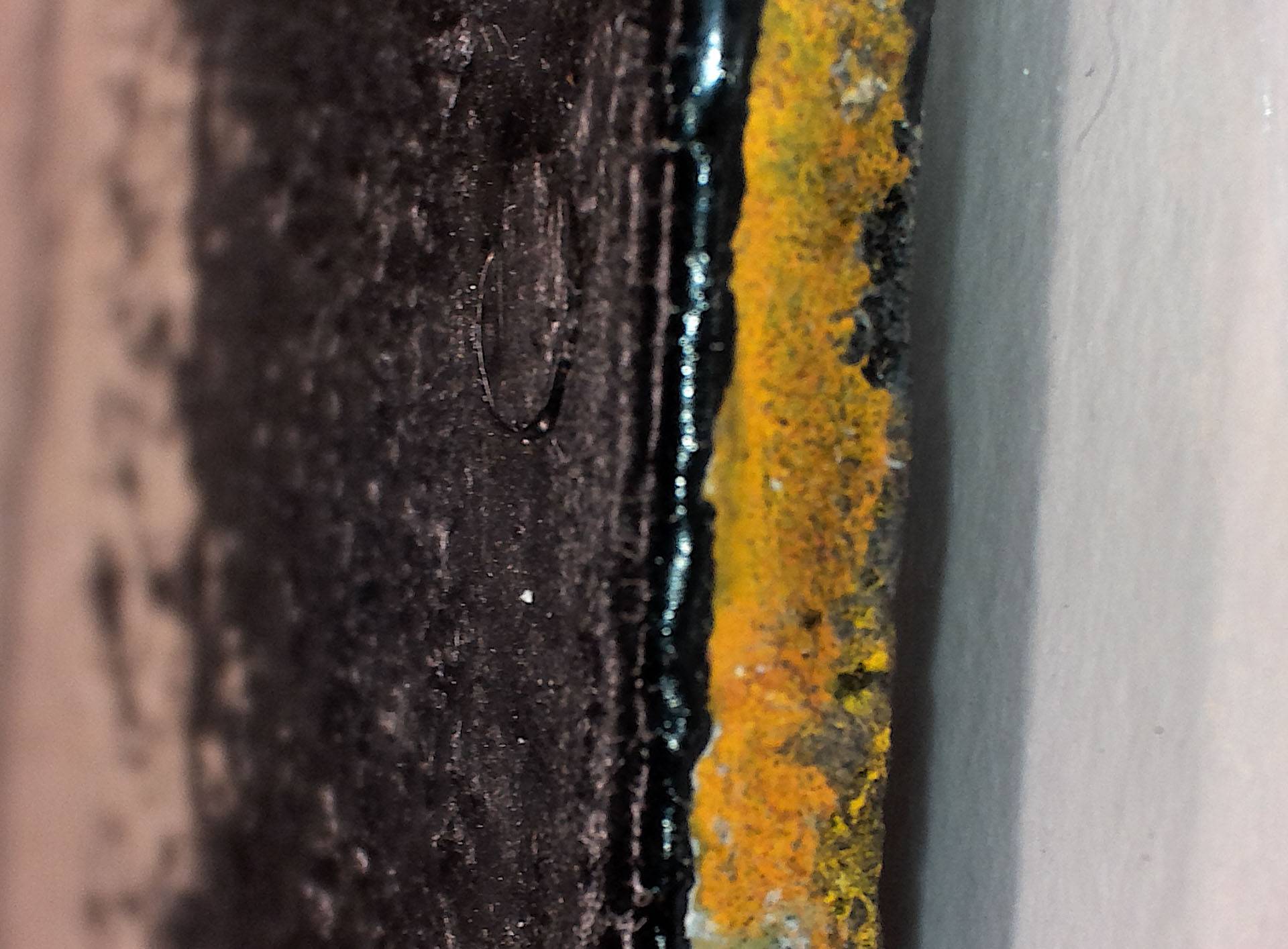
By angling a raking light along the surface of the painting, Devolder could see the texture of the abstract shapes lying under the surface of “Black Friday” that X-radiography had revealed, and by examining the exposed edges of the unframed painting, he could see that these shapes had color.
A turn in the art history limelight
“Technical art history” — research into the materials and processes used to make a work of art — is one aspect of art conservation and “gives a kind of ammo to art historians and curators to plug into the narrative they already have about an artist,” Devolder said. At Princeton, this work also dovetails with the museum’s focus on object-based teaching, which begins with the materials the artist used. Devolder regularly shares his work with Princeton classes.
Typically, this sort of work happens outside the limelight, but the hidden surprise and other details from Devolder’s intense study of “Black Friday” are captured in a fascinating essay in the exhibition catalog, co-written with Jim Coddington, the former Agnes Gund Chief Conservator at the Museum of Modern Art, who has published widely on de Kooning.
“The likelihood of an abstract composition with bright colors underneath ‘Black Friday,’” they write, “can be seen as an illustration of [influential Art News editor Thomas] Hess's observations regarding the genesis of de Kooning's black-and-white paintings: ‘The idea for these paintings started in his high-keyed color abstractions; then ochers gradually dominated; finally the color was drained out…’”
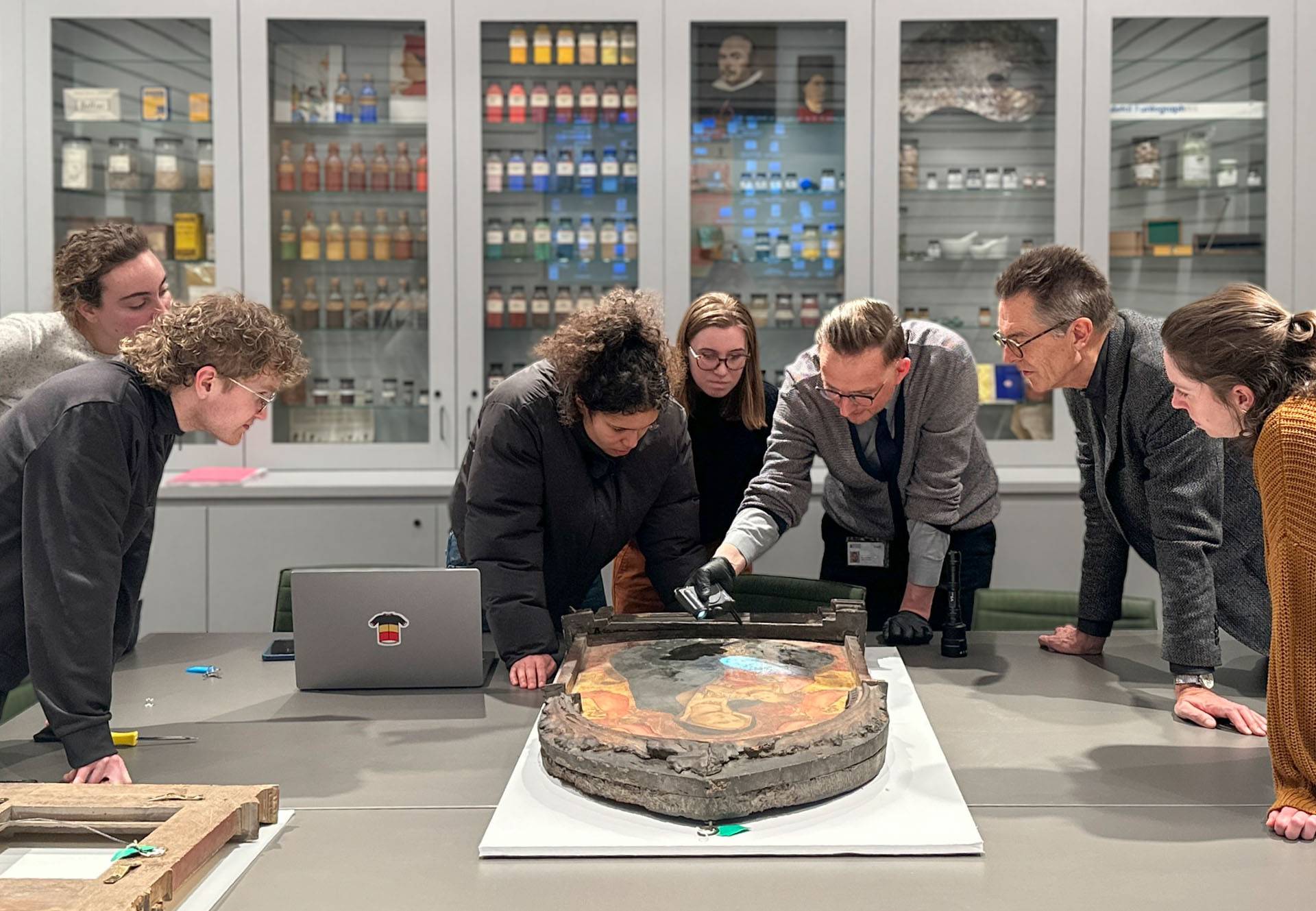
Devolder (center) and students in the class "Early Modern European Art," taught by Frank Zöllner (second from right) examine the surface of the 14th-century painting "Madonna and Child, Four Angels" by Agnolo di Taddeo Gaddi. Zöllner is the Robert Janson-La Palme *76 Visiting Professor at Princeton.
“Publishing the essay is important because we don’t study just for us," Devolder said. "We want others, including art historians, curators and students, to have access to this knowledge.”
Consider the black and white paint itself.
In a 1959 interview about “Black Friday” and other works in his Black and White series, de Kooning said: “I did not have any money, I did not have any particular aesthetic idea or theory, but I could go to a store and buy a gallon of white and a gallon of black and be in business.”
Devolder gets that it was cheap. “But what might this paint allow de Kooning to do that he couldn’t do with oil paint?”
Devolder re-examined every inch of “Black Friday,” both with the naked eye and with his conservator’s microscope.
By following the multiple directions of the drip patterns, cataloging the “intentional” outlining of shapes created with paper and embedded in the paint surface, with white paint, and examining some nearly obscure marbleized areas, Devolder discovered how the retail trade paint — which dries faster than artists’ oils — influenced de Kooning’s process. For example, regular oil paint allows an artist to blend colors wet-in-wet to obtain certain transitions, he said. But when painting two layers on top of each other with the quicker-drying retail trade paints, the solvent of the top layer will partly dilute the layer underneath, creating a marbleization effect.
From Dutch Masters to de Kooning
Devolder admits he knew little about de Kooning when he started this project. “I’m a lot more comfortable in the 15th, 16th and 17th centuries.”
Before joining the museum in 2018, Devolder, who was born and raised in Belgium, was the on-site coordinator and paintings conservator for the restoration of the Ghent Altarpiece in Belgium and remains a member of its international advisory committee. Since 2024 he has been a member of the advisory committee for the restoration of Rembrandt’s monumental “Night Watch” at the Rijksmuseum in Amsterdam.
His findings with “Black Friday” go far beyond the conservator’s work of making a painting “safe and pretty” for exhibition, Devolder said.
“The close study of ‘Black Friday’ confirms its central importance to the artist and the development of his painting practice at a critical moment in his career,” said Coddington, Devolder’s research collaborator. “In ‘Black Friday,’ de Kooning employed materials and techniques that he would use repeatedly throughout the coming decades in his paintings, demonstrating his extraordinary ability to employ them in ever different yet still identifiable ways.”
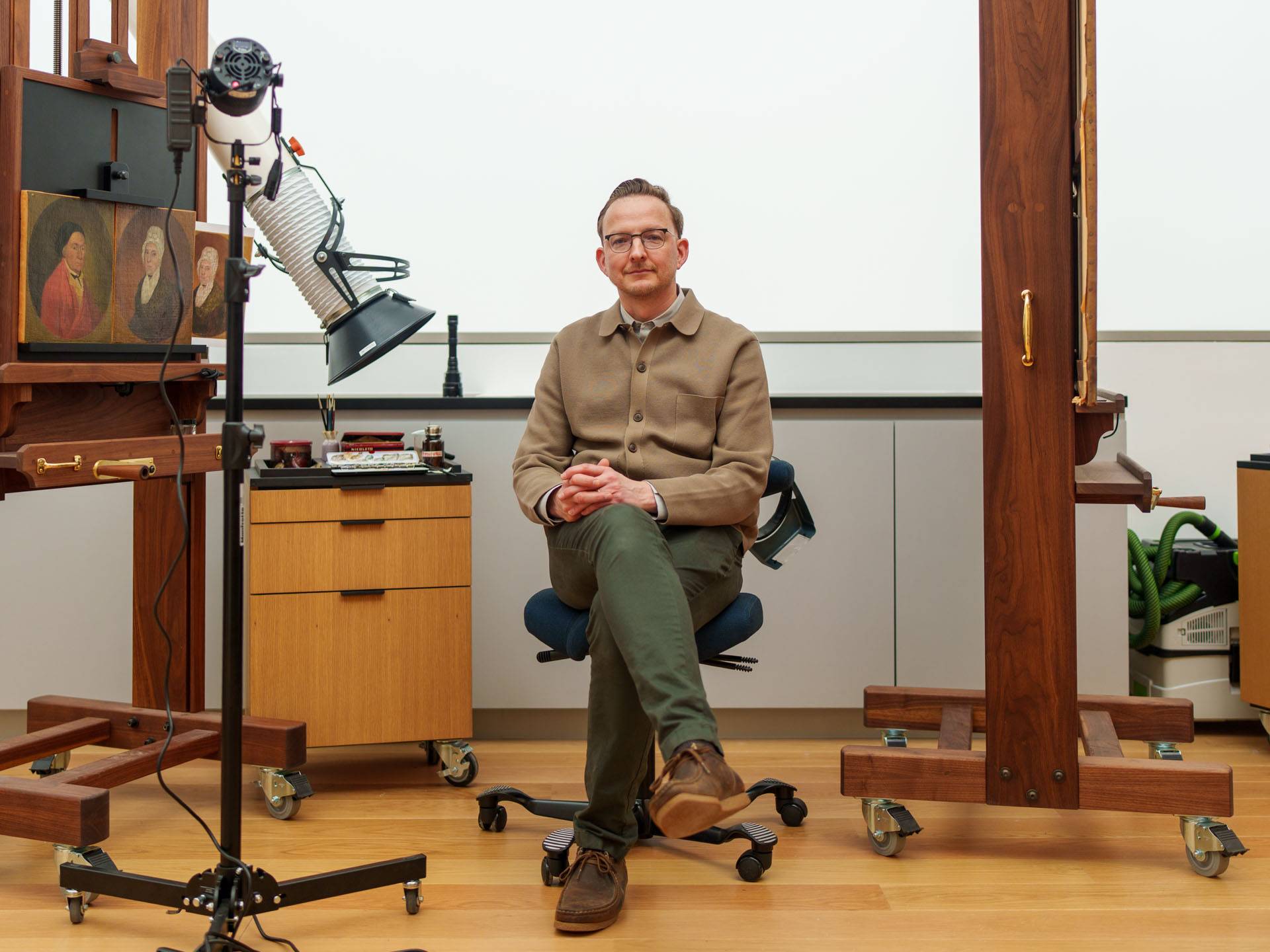
Bart Devolder, pictured in the museum’s state-of-the-art Paul & Heather Haaga Conservation Studios.
Devolder hopes his work will engage museum visitors in new ways by inviting them to focus on the artist’s process instead of the final product — the painting.
“You might dislike de Kooning or any modern art, but if I can get you interested in understanding how a painting is made, it might extend the average four seconds a person spends looking at a painting to 10. That would be a big success for me.”
He said that when he began his conservation work on “Black Friday,” he never would have picked it as his favorite painting in the museum’s collection of modern art. “Now, it is one of my favorite works in the entire museum because of how the different layers of paint illustrate the struggles, experimentations, processes and skills of an artist at a pivotal time in his career to a degree that it is almost a time-lapse video. Furthermore, this newly acquired reference database will make it more enjoyable to look at other paintings by the same artist and/or artists from the same period and place.”
He sees “Willem de Kooning: The Breakthrough Years” as “a once-in-a-lifetime opportunity” for museumgoers to “focus on this short moment in de Kooning’s very long career that started it all for him as one of the best American painters. I want them to look closely at ‘Black Friday’ and observe how it sits with its brothers and sisters on the wall. This is why this is such a great Princeton painting — because it [embodies] the process. We’re so lucky to have this one.”
Visitors can meet a conservator during drop-in hours at the museum’s state-of-the-art Paul & Heather Haaga Conservation Studios during Reunions on Saturday, May 23, 11 a.m.-1 p.m., and on Thursday, June 18, 3-5 p.m. All are welcome. More information online.
Guided tours of the de Kooning exhibition will take place Thursdays, May 7, 14 and 28 and June 4, 11, 18 and 25, 6-7 p.m., and Sundays, May 10, 17 and 31; June 7, 14, 21 and 28; and July 5, 3-4 p.m. Check the museum website for more information.
The exhibition catalog, “Willem de Kooning: The Breakthrough Years: 1945-50,” is available now at the Princeton University Art Museum gift shop, from the online gift shop and by preorder from Princeton University Press.