Incoming class hears call to embrace Princeton’s ‘bold and powerful commitment’ to free expression
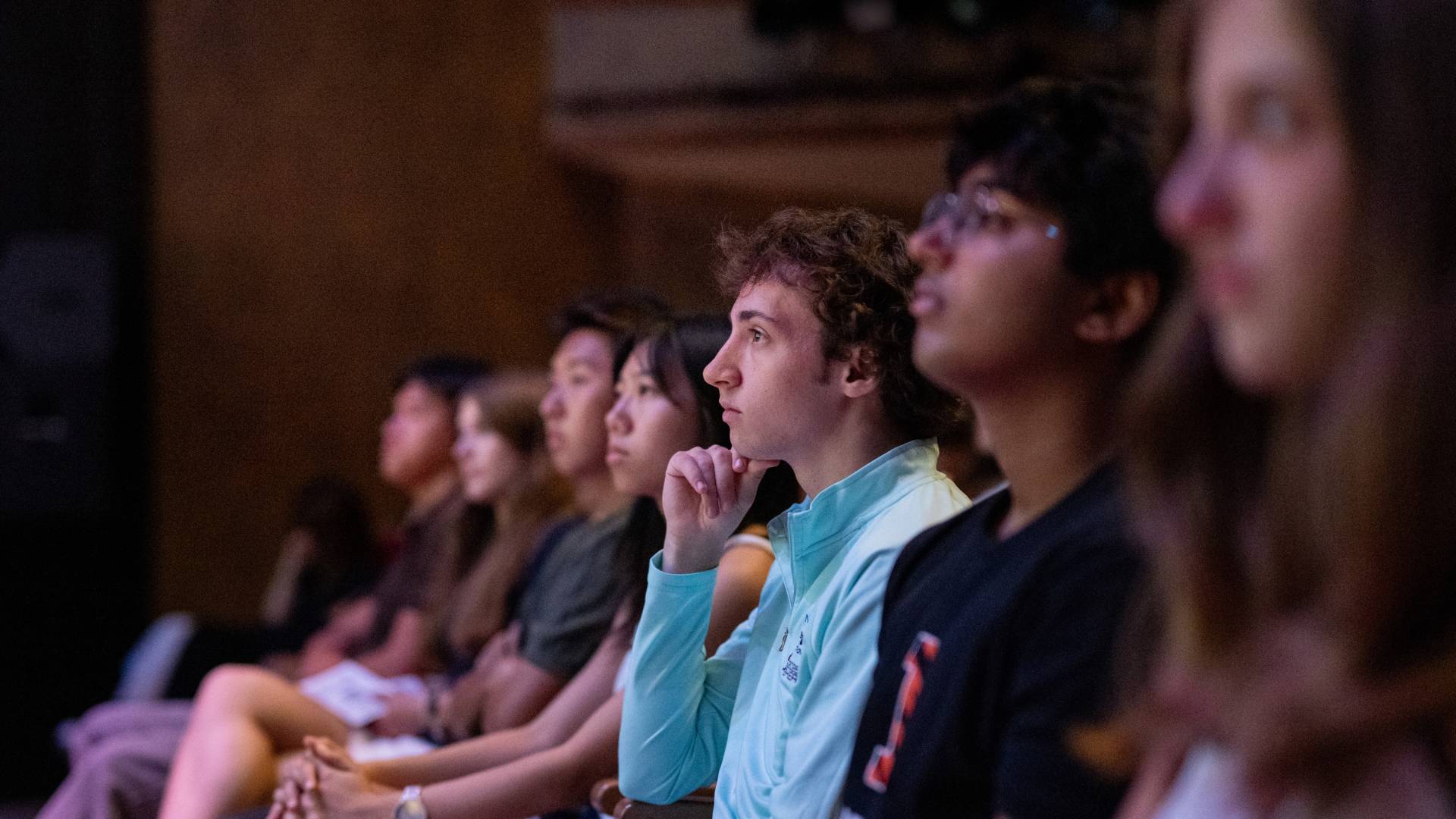
Incoming members of the Class of 2030 and new transfer students packed the Matthews Theatre at McCarter Theatre Center for a discussion about the importance of free expression on campus, an annual event led by President Christopher L. Eisgruber during Orientation week.
President Christopher L. Eisgruber introduced transfer and first-year students to the University’s expansive commitment to academic freedom and free expression during his fifth annual Orientation session on the topic.
At Tuesday’s event, he was joined for a wide-ranging conversation by Summer Lopez *08, co-chief executive officer of PEN America, an organization known as a worldwide champion for free expression. Both shared personal insights about engaging energetically across opposing viewpoints in a deeply polarized society.
“Research and education require not only that we speak, but that we listen to and learn from one another,” Eisgruber told the students. “They require that we respect and benefit from the wide variety of experiences and viewpoints represented on this campus.”
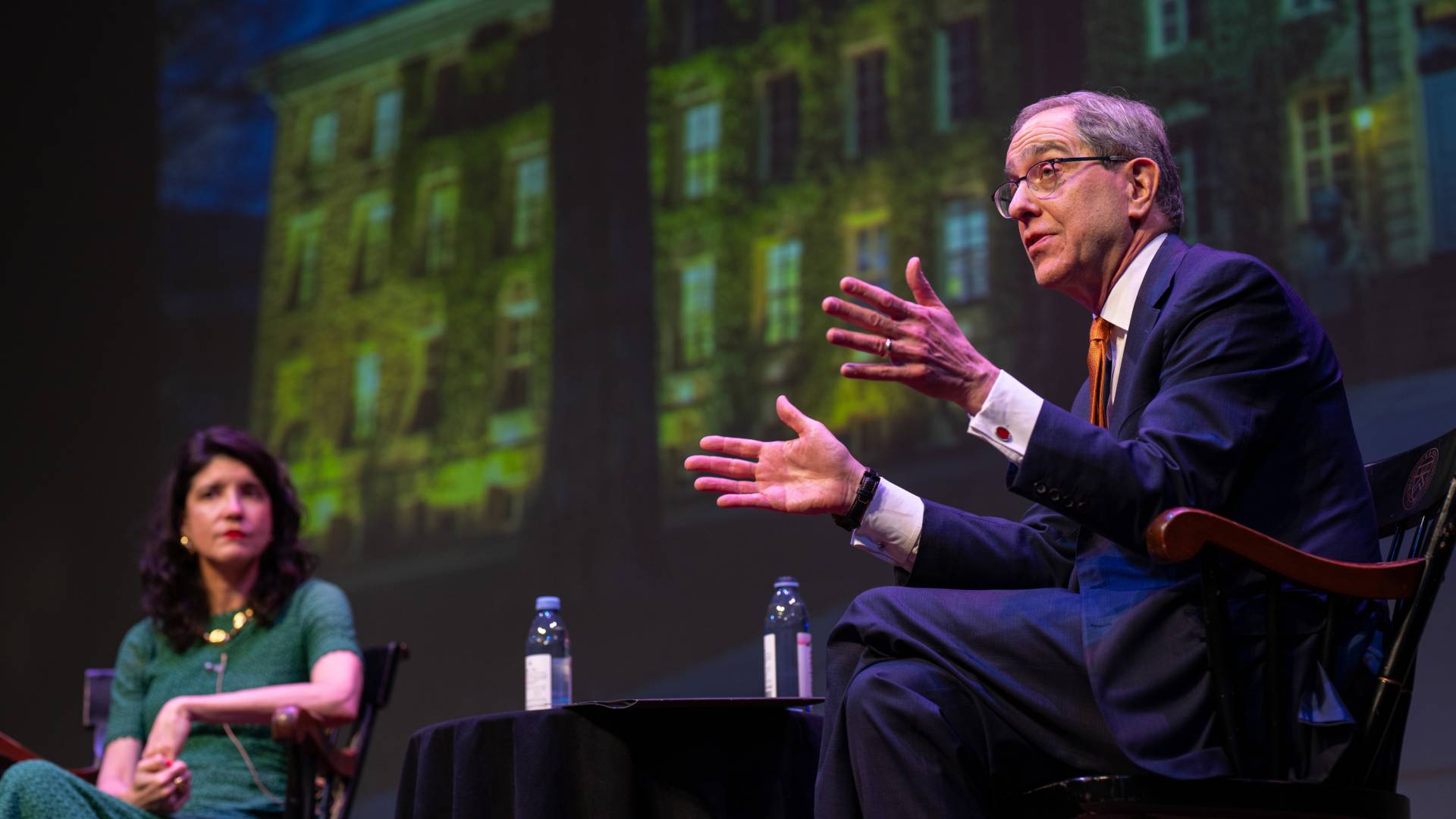
During a wide-ranging conversation with PEN America’s co-chief executive officer Summer Lopez *08 (at left), Eisgruber told the students: “I hope that you will embrace both free speech and inclusivity as vital constituents of your education here and of democratic societies everywhere.”
Toward that end, Eisgruber said he lets two traits — curiosity and respect — guide his every conversation, and he encouraged students to cultivate both.
“The key to being able to engage in discussions where I learn something from people,” he said, is to believe there is something to learn from almost everyone you meet.
“I'll guarantee you: If they’re on this campus, there is something you can learn,” Eisgruber said. “If you can develop that curiosity and, in some sense, meet them where they are, that will help you to have conversations that transcend that polarization.”
“The really important thing about free speech is it lets the conversation continue,” he told the students. “It allows people to object and say, ‘You know, I think that's wrong. I've got reasons for believing something that's different from that.’”
Promoting free speech and inclusivity on campus
How does Princeton create an environment where those conversations can take place?
In his opening remarks to the assembled students, Eisgruber read from the Statement on Freedom of Expression from Princeton’s “Rights, Rules, Responsibilities” — which “guarantees all members of the University community the broadest possible latitude to speak, write, listen, challenge, and learn.”
“That is a bold and powerful commitment,” he told the incoming students. “It means that you have the right to make arguments and statements that are discomforting to others — including to me. It also means that all students should expect that during their time at Princeton they will encounter some arguments and statements that are discomforting to them.”
At Princeton, he said, “We believe that the free exchange of ideas is essential to the pursuit of truth.”
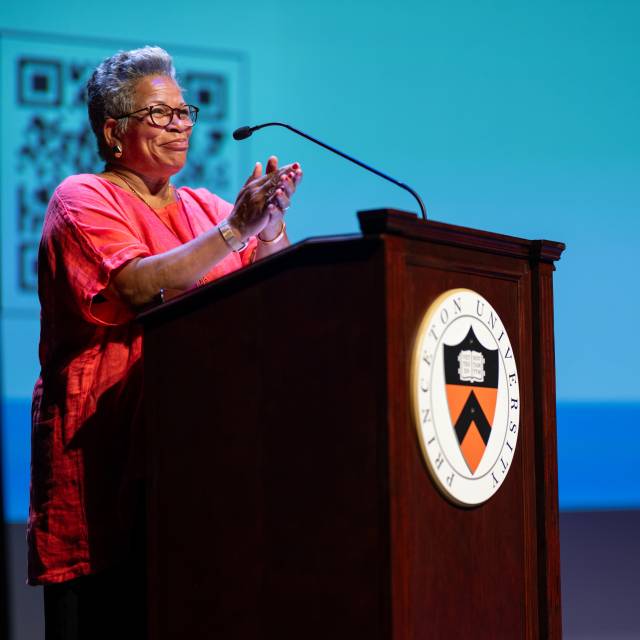
W. Rochelle Calhoun, vice president for campus life, warmly welcomes the new students.
Princeton’s research and teaching mission rests on this bedrock commitment to free expression and insists on the need to adhere to strong free speech protections alongside commitments to student safety and inclusivity.
Since 2022, President Eisgruber has addressed every incoming class on how the University promotes a culture of free speech and inclusivity. His 2025 book “Terms of Respect: How Colleges Get Free Speech Right” shows how universities like Princeton are models of free expression and civil discourse, where community members can speak their minds and engage in respectful dialogue on difficult topics.
At this year’s event at McCarter Theatre Center, W. Rochelle Calhoun, vice president for campus life, warmly welcomed incoming transfer students and members of the Class of 2030 and pointed them toward details about Princeton’s free expression policies on the new student orientation Canvas site and the University’s Academic Freedom and Free Expression website.
‘The foundational right for all human rights’
After Eisgruber’s opening remarks, he introduced Lopez, thanking her “for coming back for this important discussion.”
Like the students in the audience, Eisgruber and Lopez were once new to Princeton themselves — he as a member of Princeton’s Class of 1983, she as a graduate student who earned her MPA with a focus on international development at Princeton’s School of Public and International Affairs (SPIA) in 2008.
Lopez said she arrived on campus “thinking I knew what I wanted to do,” which was public health. But her classroom experiences and the breadth of perspectives of the high-caliber guest speakers at Princeton SPIA shifted her interests to democracy and human rights.
Prior to her tenure as co-CEO, Lopez was PEN America’s chief program officer of free expression, leading the organization’s advocacy, research and programming in defense of free expression in the U.S. and globally. Before joining PEN America in 2017, she worked for the U.S. Agency for International Development (USAID) as a democracy specialist.
Noting her longtime passion, Eisgruber asked her why she, personally, cares about free speech.
Lopez recalled having conversations as a teenager with her mother about “how important it was to defend human speech you vehemently disagreed with. I don't really know where I got all those ideas from, but I have held those principles deeply for a long time.”
“I really do believe that free speech is the foundational right for all of our human rights,” she continued. “You can't have freedom of assembly, you can't have freedom of the press and freedom of religion and the other rights that we hold dear, without this foundational freedom.”
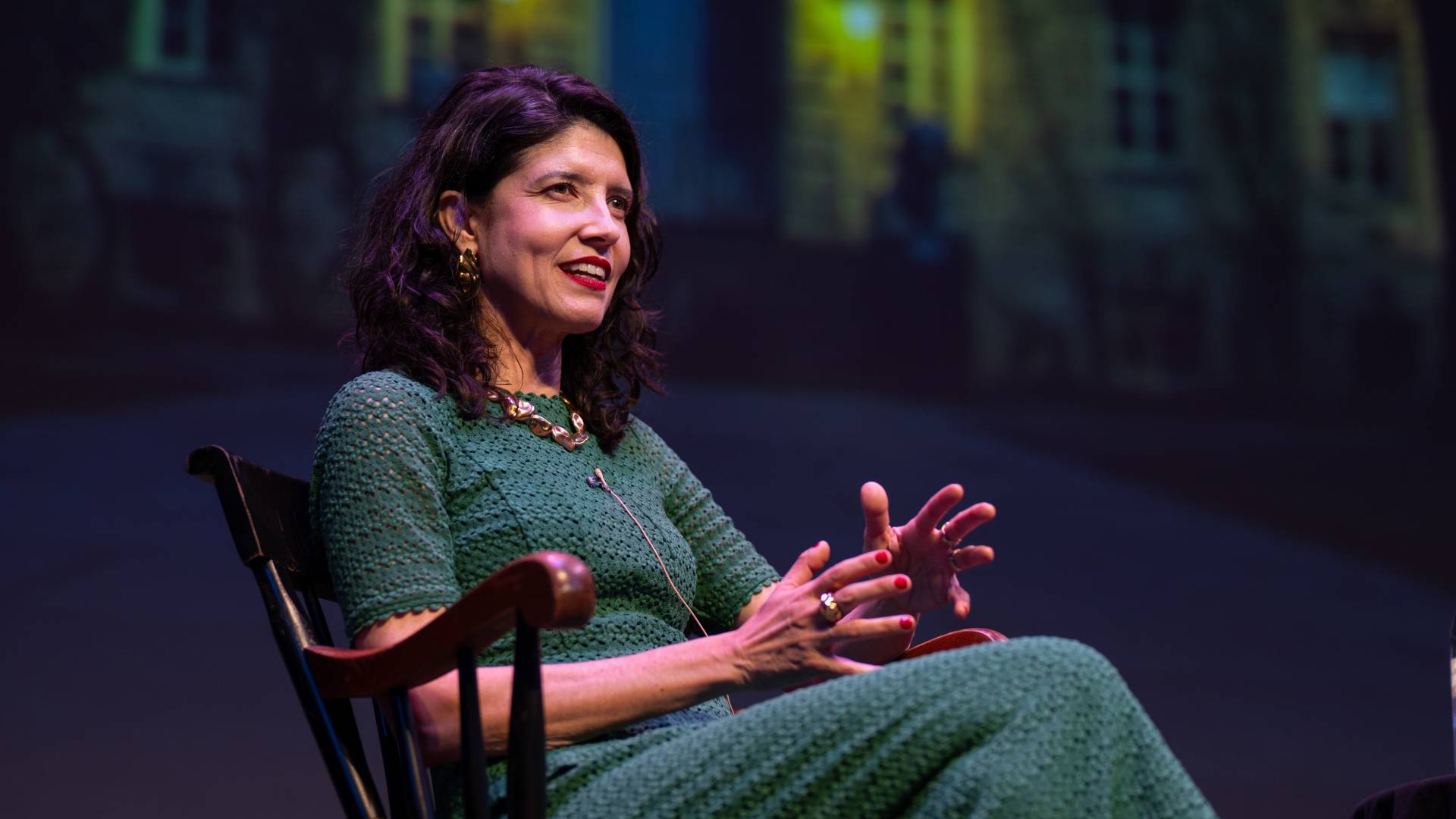
Lopez, who earned her MPA from the Princeton School of Public and International Affairs in 2008, reflected on her career advocating for free speech in the U.S. and globally. “I really do believe that free speech is the foundational right for all human rights,” she said.
The slippery slope of censorship, the difficult work of engagement
Reading from the University’s Statement on Freedom of Expression, which states, “It is not the proper role of the University to attempt to shield individuals from ideas and opinions they find unwelcome, disagreeable, or even deeply offensive,” Eisgruber asked Lopez, “How do you think about the reasons for protecting ‘even deeply offensive’ speech?”
“As soon as you decide that you don’t want to protect deeply offensive speech, you have to decide who is going to determine what is deeply offensive,” Lopez answered.
That can become a slippery slope, she warned. “We don't talk enough about how much of free-speech doctrine is really about the deep distrust of those in power to make those determinations. And I think that's right. I think that’s not power we want to hand to government or, I could say, also to large corporations that control a lot of our public spaces today.”
Eisgruber noted that both the University and democratic society more broadly aspire not only to protect free speech “but also to have constructive conversations with people with whom we disagree.”
“And that’s hard, right? It’s not an easy thing. It’s a hard thing,” he said. He invited Lopez to share any tips she might have about engaging in constructive dialogue “across strongly felt differences.”
“We don’t talk enough about curiosity,” she said, noting that both face-to-face and online, people often line up their talking points solely to convince the other person that their viewpoint is the “right” one.
“When you want to explain to somebody why you believe what you believe about something, you have to understand why they believe what they believe,” she said. Being curious and asking questions that help you understand where the other person is coming from is key, she said.
As a SPIA graduate student, Lopez had her lightbulb moment in a course about the values that inform conservative and liberal policy perspectives. It opened her eyes to the merit of seeking common ground “to get to a more constructive conversation,” she said.
“That openness and willingness to engage and be curious and ask questions and create space for that is something that you get to practice in college,” she told the audience.
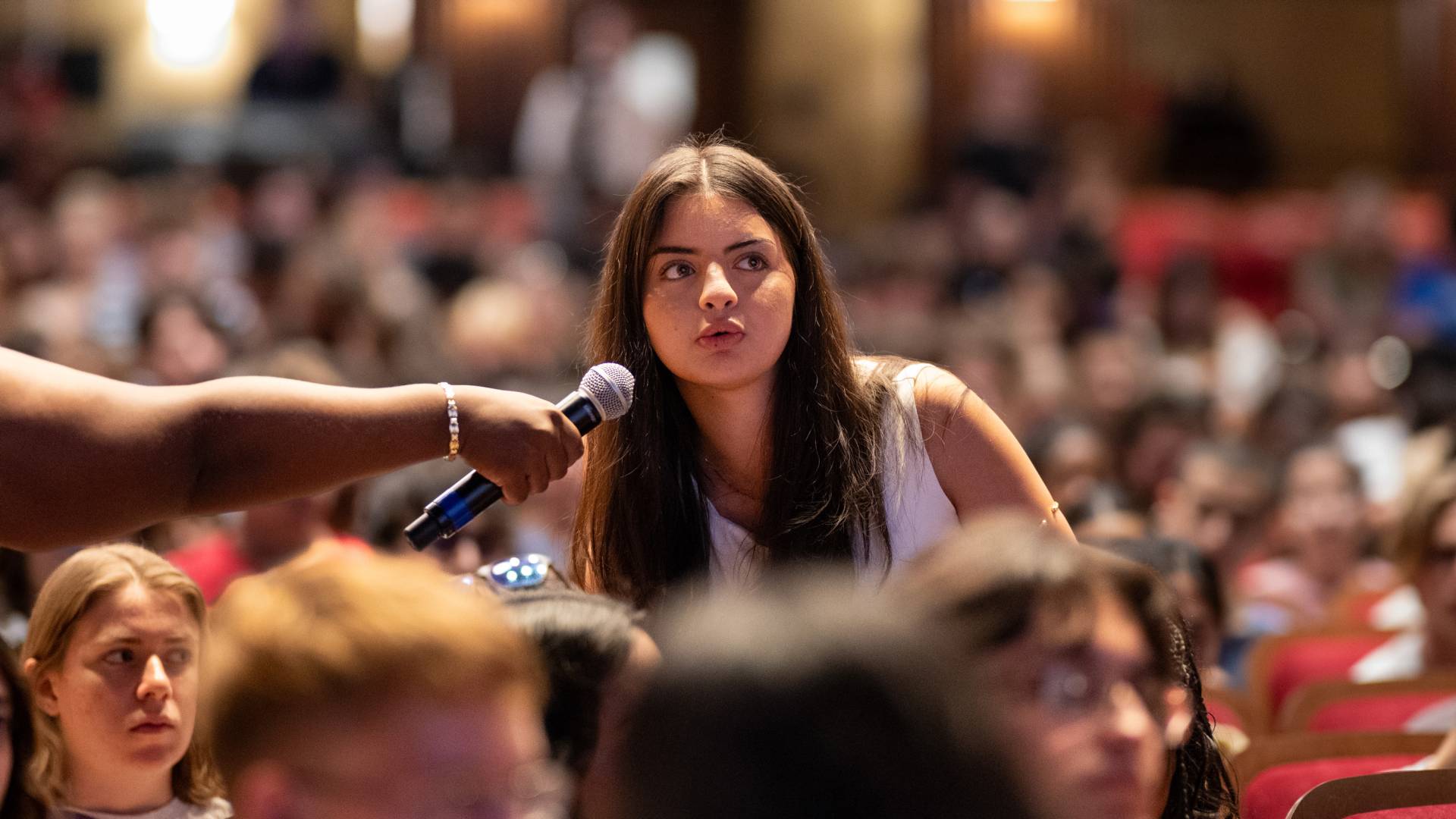
During the Q&A, Arleen Cardenas, a member of the Class of 2030, asked about how the University creates a safe environment to “ensure that students can exercise their ability to express their beliefs without feeling that they are in danger.”
‘Creating the circumstances for constructive discussion’
To wrap up their hour together, Eisgruber and Lopez took questions from students.
Arleen Cardenas, from Los Angeles, asked how the University, amidst the polarization of the country, creates a safe environment to “ensure that students can exercise their ability to express their beliefs without feeling that they are in danger?”
Eisgruber spoke first to physical safety — noting that while the University does not restrict free speech, it enforces “time, place and manner” rules to ensure safety and prevent disruption of University activities.
More broadly, he said, a university’s job “is really creating the circumstances for constructive discussion, and I think that’s the most important thing that universities do … equip you with the skills and the settings where you can have those conversations that allow you to talk about difficult things.”
Another student asked, “In the age of artificial intelligence and very widely accessible technology, how can we maintain honesty within our dialogue as misinformation is increasingly spread under the umbrella of free speech?”
Lopez said the technology raises novel questions and concerns, including “the harassment that happens online that silences people and chills speech.” But the prevalence of AI has also spurred “hunger for authenticity and for things that are not AI-generated,” she said.
“I still believe that AI cannot replace human creativity and human ingenuity,” she said. “Each one of us can have ideas that nobody has had before. That is still distinct from what AI can do.” She told the students this lends even more value to “the conversations you have person to person.”
Eisgruber added a coda, noting that “from my standpoint, one of the obligations of liberal arts education, and it's a communal obligation, it's a shared obligation of faculty and students, as we approach this world, is to develop the capacities that allow us simultaneously to benefit from what artificial intelligence makes possible, but at the same time to have the discernment to recognize the human and the benefits of the human perspective. …
“Part of what education should enable me to do is to distinguish opinion from knowledge, authenticity from inauthenticity,” he said. “The new challenges are simultaneously, I would say, daunting and exciting.”
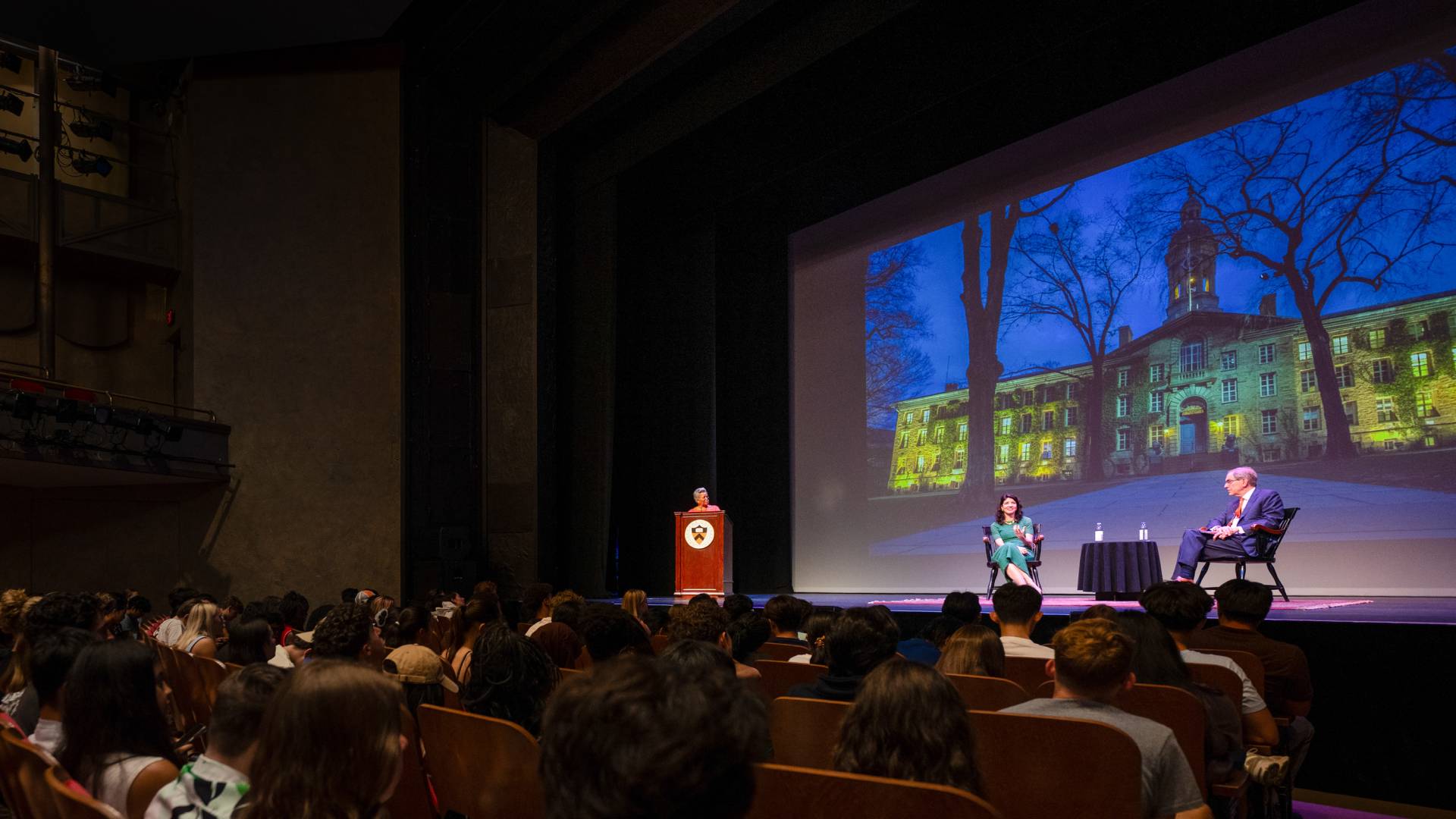
Since 2022, President Eisgruber has addressed every incoming class on how the University promotes a culture of free speech and inclusivity.