‘Reader, Come Home’ by Maryanne Wolf is this year's Princeton Pre-read
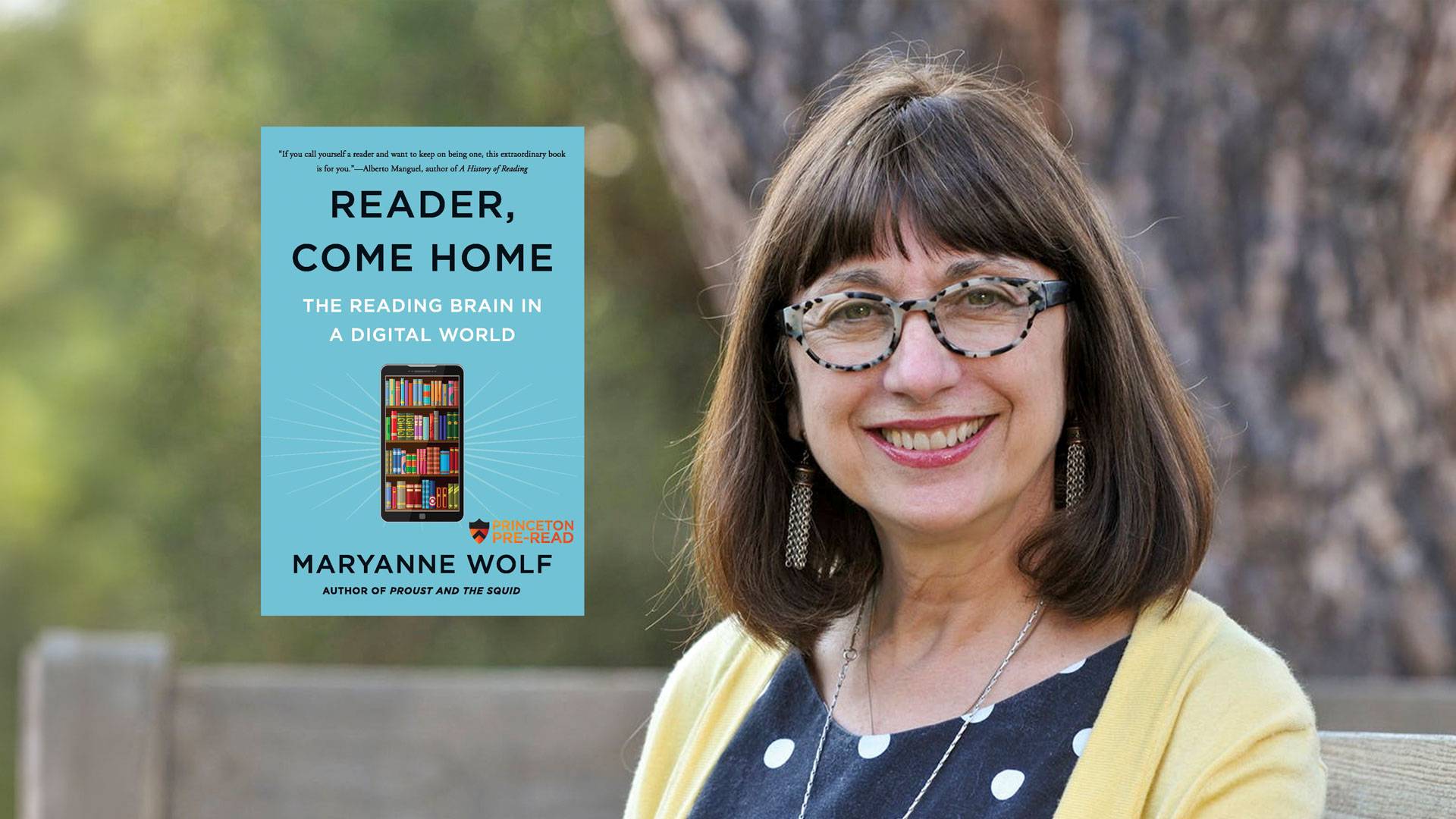
Maryanne Wolf's book "Reader, Come Home: The Reading Brain in a Digital World" has been selected as this year's Princeton Pre-read.
The importance of deep reading and critical thinking as our brains adapt to digital distractions and information overload is the subject of this year’s Princeton Pre-read book, “Reader, Come Home: The Reading Brain in a Digital World” by Maryanne Wolf. The Pre-read is a Princeton tradition started by President Christopher L. Eisgruber, who introduces first-year students to intellectual life on campus by selecting a book to read and discuss together.
“I chose ‘Reader, Come Home’ as this year’s Pre-read because it addresses a question of vital importance to every entering student: Why should we continue to read long, challenging books when artificial intelligence agents can quickly summarize them for us?” Eisgruber writes in his foreword to the special Pre-read edition of the book.
“Deep, immersive reading is at the heart of a Princeton education,” Eisgruber writes, adding that “today, more than ever, that activity depends upon conscious and energetic commitment. We are most likely to read books fully and well only if we understand why they offer us something distinctive, valuable, and irreplaceable.”
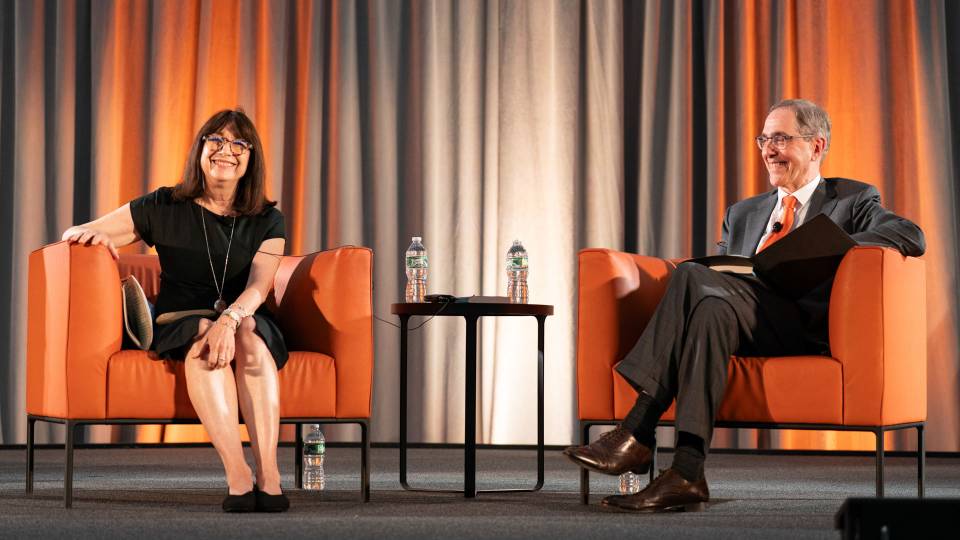
Incoming students in the Class of 2030 received copies of the book this summer and will discuss its themes with Eisgruber and Wolf at the Pre-read Assembly during Orientation. Students will also participate in small group conversations this fall in the residential colleges to further explore issues raised by the book.
Wolf is a leading authority on dyslexia and a global advocate for children and literacy. She is professor-in-residence at UCLA’s School of Education & Information Studies. Wolf has authored numerous publications and scientific studies related to literacy, including the book “Proust and the Squid: The Story and Science of the Reading Brain,” and she has been recognized for her work by the International Dyslexia Association, among other accolades. She is the former John DiBiaggio Professor of Citizenship and Public Service at Tufts University.
“Professor Wolf approaches this topic with perspectives drawn from literary studies, cognitive neuroscience, and developmental psycholinguistics,” along with her expertise in dyslexia, Eisgruber writes in the Pre-read foreword. “Professor Wolf thus exemplifies what scholars call ‘interdisciplinarity’: the capacity to combine insights from multiple academic fields to produce new understanding and knowledge.”
“Interdisciplinarity is an important feature of academic research today and the Princeton curriculum that awaits you,” Eisgruber writes to the incoming students.
He adds that he hopes students will also find Wolf’s book a pleasure to read. “Professor Wolf’s writing is clear, imaginative, humane, and occasionally whimsical,” he writes. “I hope that you enjoy the book as much as I have.”
Copies of “Reader, Come Home,” published in 2018 by HarperCollins, were sent this summer to students enrolled in the Class of 2030.
More information about the Pre-read tradition, which was started by President Eisgruber in 2013, can be found on the Pre-read website. A list of previous Pre-read books follows:
2013 — “The Honor Code: How Moral Revolutions Happen,” by Kwame Anthony Appiah
2014 — “Meaning in Life and Why It Matters,” by Susan Wolf
2015 — “Whistling Vivaldi: How Stereotypes Affect Us and What We Can Do,” by Claude Steele
2016 — “Our Declaration: A Reading of the Declaration of Independence in Defense of Equality,” by Danielle Allen
2017 — “What Is Populism?” by Jan-Werner Müller
2018 — “Speak Freely: Why Universities Must Defend Free Speech,” by Keith Whittington
2019 — “Stand Out of Our Light: Freedom and Resistance in the Attention Economy,” by James Williams
2020 — “This America: The Case for the Nation,” by Jill Lepore
2021 — “Moving Up Without Losing Your Way: The Ethical Costs of Upward Mobility,” by Jennifer Morton
2022 — “Every Day the River Changes: Four Weeks Down the Magdalena,” by Jordan Salama
2023 — “How to Stand Up to a Dictator: The Fight for Our Future,” by Maria Ressa
2024 — “The Worlds I See: Curiosity, Exploration, and Discovery at the Dawn of AI,” by Fei-Fei Li
2025 — “On the Fringe: Where Science Meets Pseudoscience,” by Michael D. Gordin