New graduate students welcomed to Princeton’s 'global community of scholars'
New graduate students gathered during Graduate School Orientation to be welcomed into Princeton’s “global community of scholars.”
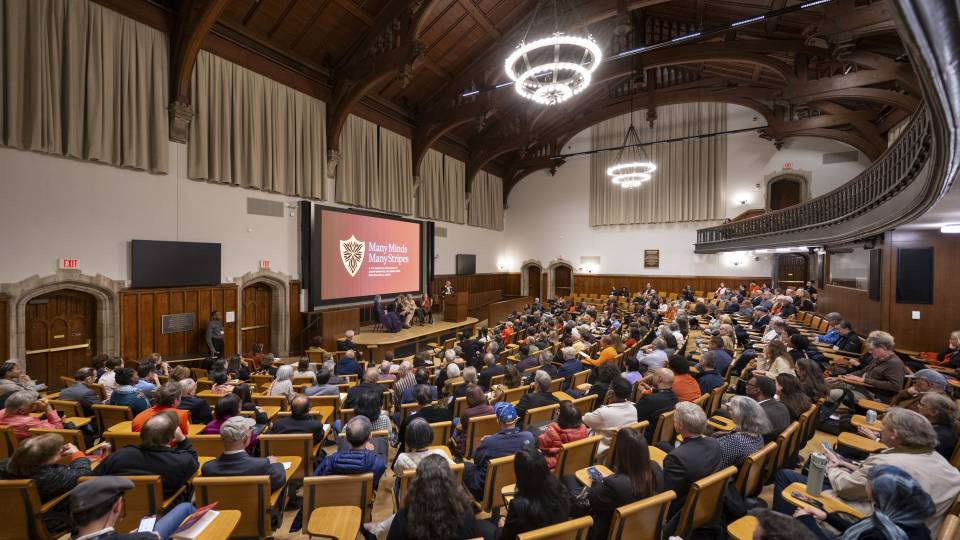
Hundreds of new graduate students filled Richardson Auditorium last week, where Princeton Graduate School Dean Rodney Priestley welcomed them to the Graduate School’s vibrant international community of scholars.
Announcing that the Graduate School’s theme for the academic year is “Thriving as a Global Community of Scholars,” Priestley said that belonging to such a community benefits domestic and international students alike. “This theme was set four years ago,” he said, and “the importance of this theme has only become more apparent.”
“We live in an era of complex societal challenges that require us to think beyond borders and to recognize what we can learn from one another,” Priestley told the scholars. “The challenges we face now demand that we engage with one another.”
The 670 new graduate students will study in advanced degree programs across engineering, the social sciences, natural sciences and the humanities, including in the new Materials Science and Engineering Ph.D. program.
Addressing the assembly, University President Christopher L. Eisgruber said the graduate students are “critical to every aspect of what this university does, from teaching to learning to research and to service. You bring tremendous creativity, diversity and talent from throughout the world, and I am so happy that you are here.”
Eisgruber assured the new graduate scholars the University “will continue to stand up strongly for the principles that define us. We're going to stand up for academic freedom. We're going to stand up for free speech. We will stand up for scholarly quality, and we will stand up for diversity and inclusivity, values that are essential to the success of this and other universities.”
When Eisgruber speaks with lawmakers in Washington, D.C., he emphasizes the importance of attracting and developing new talent from within the United States and from around the world, he said. “I will continue to make the case for the talent that all of you represent.”
“At the same time that we confront political challenges today, we are faced with enormous technological change,” Eisgruber said. “Indeed, I think that the technological turbulence confronting us will prove over the long term to be more profound and lasting than the other challenges that get so much attention. We have to simultaneously seize the opportunities that artificial intelligence affords us while also addressing the challenges that it creates.”
The assembly opened two days of Graduate School Orientation events on Wednesday and Thursday, including panel discussions, fairs of student organizations and University offices, and social activities. Graduate School staff cheered and waved orange-and-black pom-poms as the students filed into Alexander Hall.
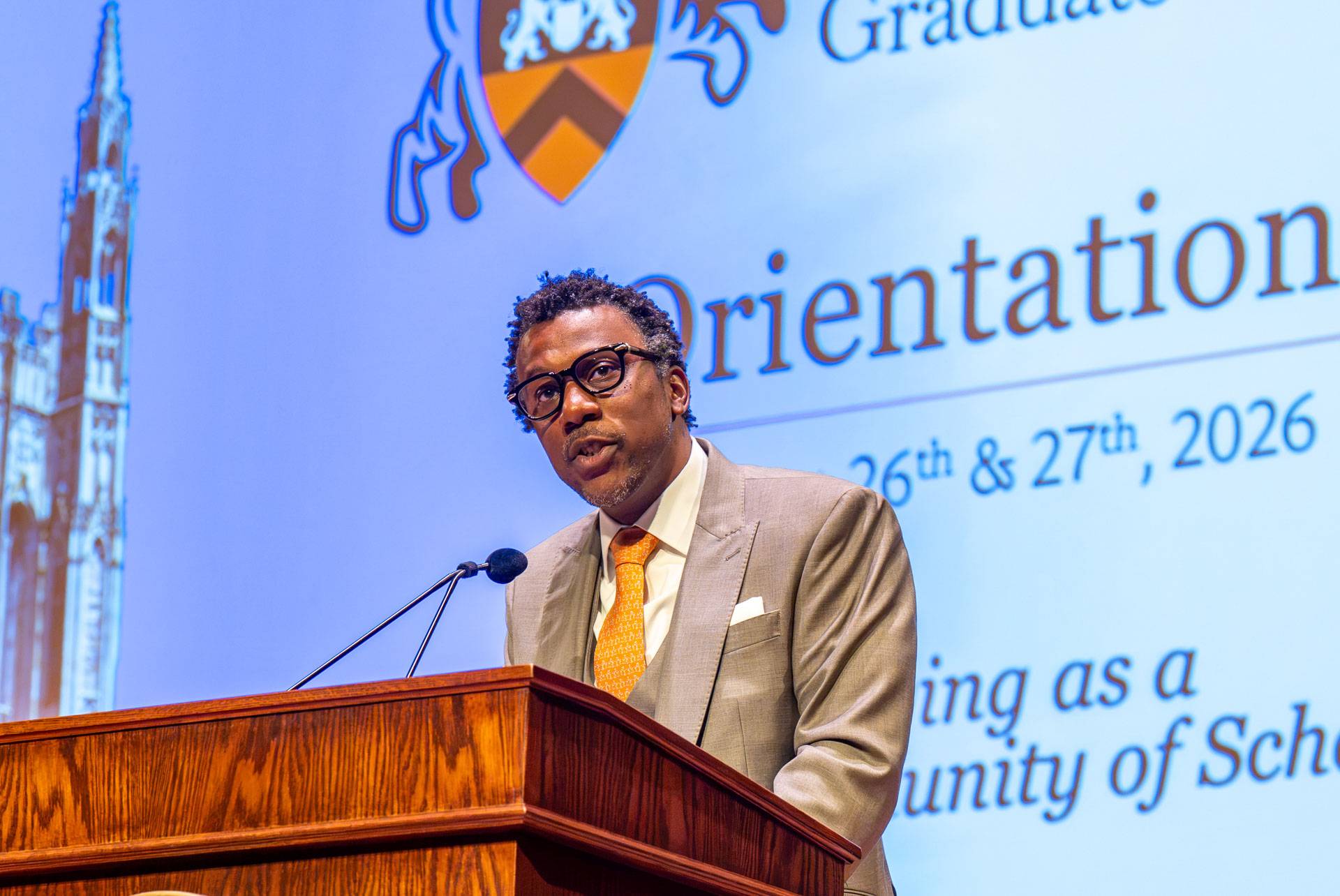
Graduate School Dean Rodney Priestley told incoming graduate students, “You have joined a community that spans disciplines, cultures and continents. Pursue your work boldly. And help us demonstrate what a thriving global community of scholars can achieve.”
‘One of the reasons that excellence is possible’
Priestley noted in his remarks that members of Princeton’s full graduate student body come from over 90 countries, bringing an “extraordinary range of experiences, perspectives and talents.”
He traced the University’s roots as a global research institution back to its 11th president, James McCosh, who began 150 years ago to recruit faculty internationally and saw the number of graduate students from Europe and Asia grow. McCosh “understood that knowledge does not live within borders and that the benefits of scholarship belong to all humanity,” said Priestley, Princeton’s Pomeroy and Betty Perry Smith Professor of Chemical and Biological Engineering.
“Fast forward to today and Princeton has become one of the world’s leading research universities,” Priestley said, “and the Graduate School sits at the very center of Princeton’s global identity.”
“Our ability to attract and educate outstanding graduate students from across the United States and around the world is not simply a reflection of our excellence,” he said. “It is one of the reasons that excellence is possible.”
“Ultimately, being a thriving global community of scholars is about impact,” Priestley concluded. “You have joined a community that spans disciplines, cultures, and continents. Pursue your work boldly. And help us demonstrate what a thriving global community of scholars can achieve.”
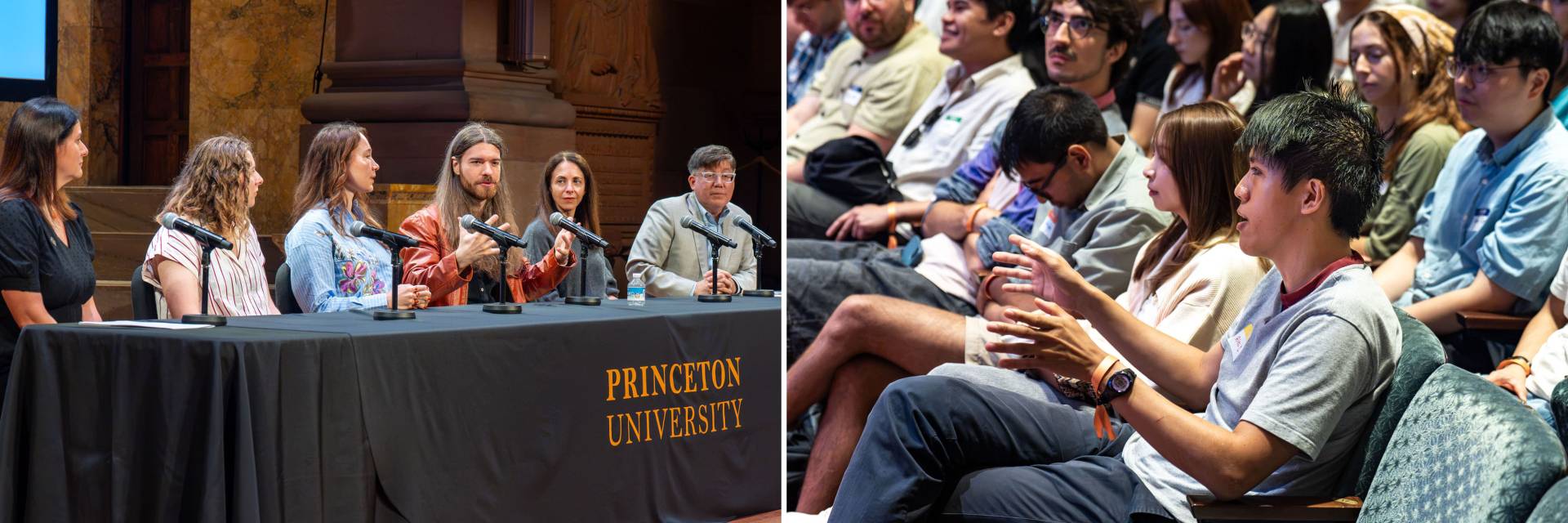
Incoming graduate students asked questions of faculty and graduate student panelists, who offered scholarly and practical advice on pursuing success in graduate school.
Candid advice and a warm welcome
The morning’s proceedings continued with a panel of Graduate School academic and administrative deans who encouraged students to take advantage of the many kinds of support available to them, including professional development through the Graduate School’s GradFUTURES program. Students were invited to join in-depth breakout sessions scheduled over the next two days.
The deans were followed by a panel of faculty and graduate students, who offered scholarly and practical thoughts on success in graduate school.
Erik Sorenson, the Arthur Allan Patchett Professor in Organic Chemistry, professor of chemistry, and the director of graduate studies for the Department of Chemistry, cited a book of speeches by 20th century Princeton president Robert F. Goheen. “As scholars, we only have one real obligation and that real obligation is to tell the truth,” Sorenson told the students. “So go and enjoy this splendid opportunity that you now have to go and find the unexposed truths in your fields — and enjoy the process.”
Elizabeth Margulis, professor of music and acting chair of the Department of Music, also celebrated “the role of joy in the work that we do as scholars.” Margulis’s practical advice to students included joining multiple communities, developing communication and time management skills — and still expecting the demands of everyday life to derail their work at times.
The three graduate students on the panel were candid about how difficult graduate school can be and offered wisdom and techniques for persevering through hard times.
Alumni leaders then took the podium, showing off their Princeton jackets and welcoming the new graduate students to the larger community they now belong to. “We have 158 alumni associations around the world,” said Ryan Ruskin ’90, president of the Princeton Alumni Association, pointing out that graduate alumni make up 30 percent of all Princeton alumni.
Natalie Berkman, who earned her Ph.D. in French and Italian in 2018 and is now president of the Association of Princeton Graduate Alumni, told the new students that APGA is here to help them make connections among the “extraordinary graduate alumni” in all walks of life: professors, scientists, physicians, entrepreneurs, engineers, artists, diplomats, nonprofit leaders, and public servants.
“While you're joining Princeton today as graduate students,” she said, “you're also building a lifelong relationship with a truly global community.”
Emma George, a graduate student in the Department of Slavic Languages and Literatures, concluded the morning by teaching the audience the University alma mater, “Old Nassau,” and leading them in song.
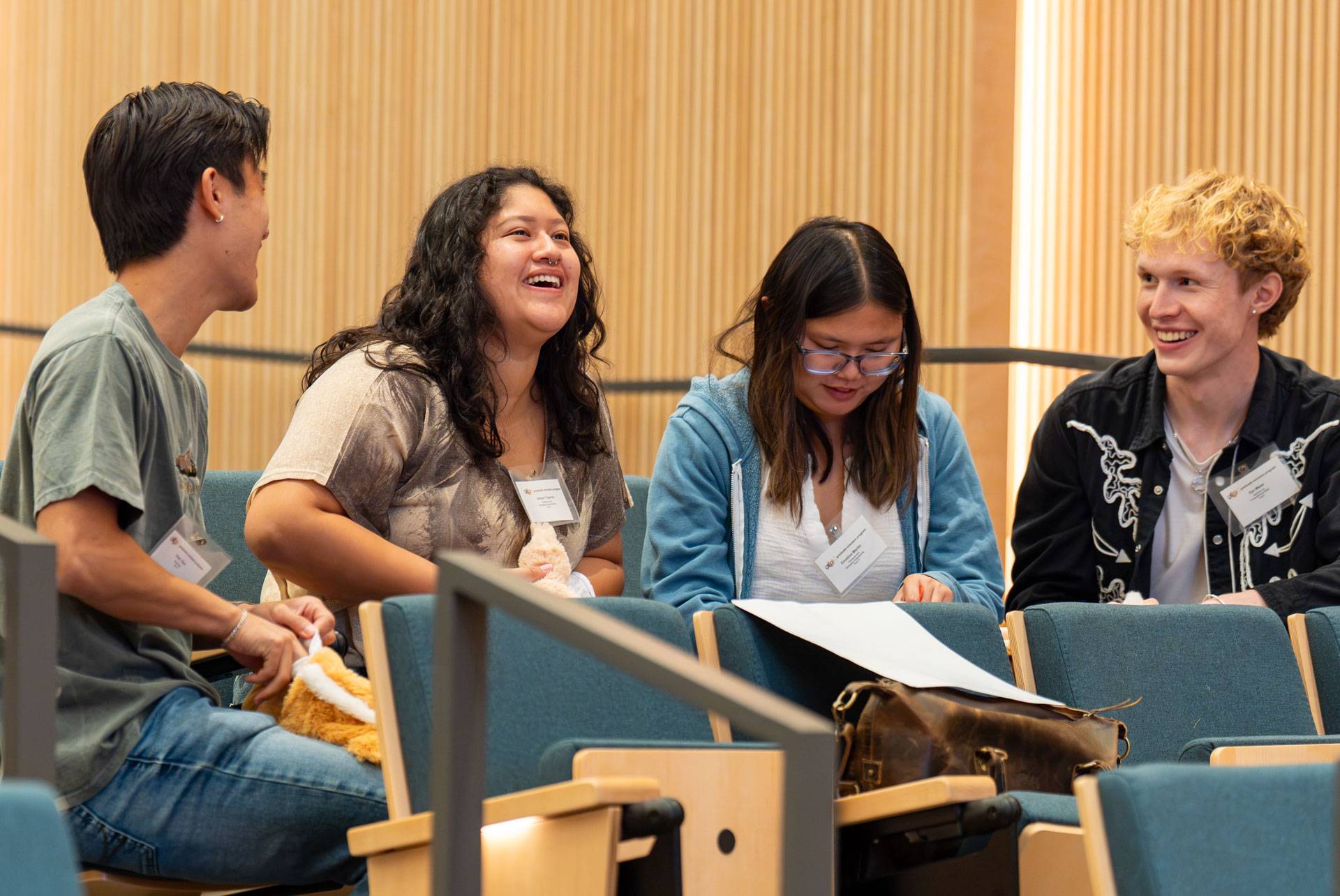
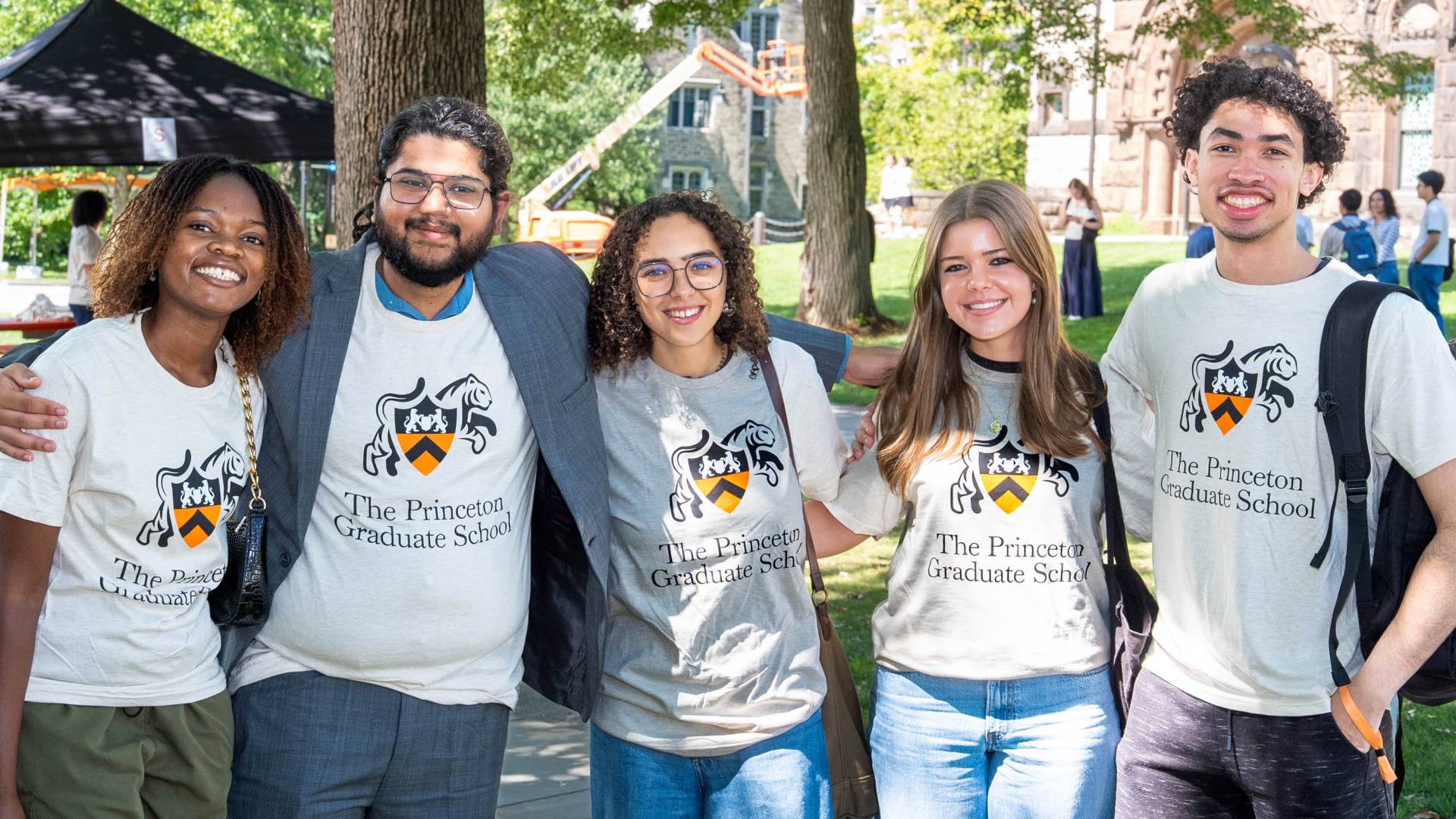
New graduate students connected with one another across disciplines during the Graduate Scholars Program Retreat.
Finding community
Prior to the two-day Orientation, 100 graduate students from three dozen departments attended the Graduate Scholars Program Retreat. The GSP is a peer-to-peer mentoring program hosted by the Graduate School’s Access, Diversity and Inclusion team. Graduate Scholars participate in social events and community-building activities throughout their first year. The day-long retreat on Tuesday gave students a chance to get to know one another and included a fireside chat with Raghuveer Vinukollu, who received his Ph.D. in civil and environmental engineering in 2011 and shared his reflections about graduate school and his career in industry.
Following Graduate School Orientation, on Friday, the Davis International Center held a half-day Graduate International Orientation. Students attended sessions on the nuts and bolts of maintaining their immigration status, payroll and banking in the U.S., and tax compliance.
The idea of “community” was threaded throughout the week’s activities and it resonated with the newly arrived students.
Narjes Al-Zahli, a Ph.D. student in neuroscience, found the sessions in Richardson Hall inspiring, saying “I felt like the speakers deeply cared about our success and about us as people.”
Alberto Ortega Trejo, a student in the history and theory track of the architecture Ph.D. program, said he looks forward to learning from people in his field whose work he “deeply admires.” At the GSP Retreat, he also connected with students beyond his discipline. “I’ve met interesting people in plasma physics and electrical engineering,” he said. “It is very intellectually stimulating.”
Maya Gambhir, who is pursuing her Ph.D. in computer science, had arrived at Princeton just two days before Orientation. Even on the first morning, “I felt that sense of community,” she said. “I think the student panelists were very vulnerable and very honest about their experience, and it made me feel more confident about my ability to succeed here.”
Rory Durso of the Graduate School Communications staff contributed to this reporting.
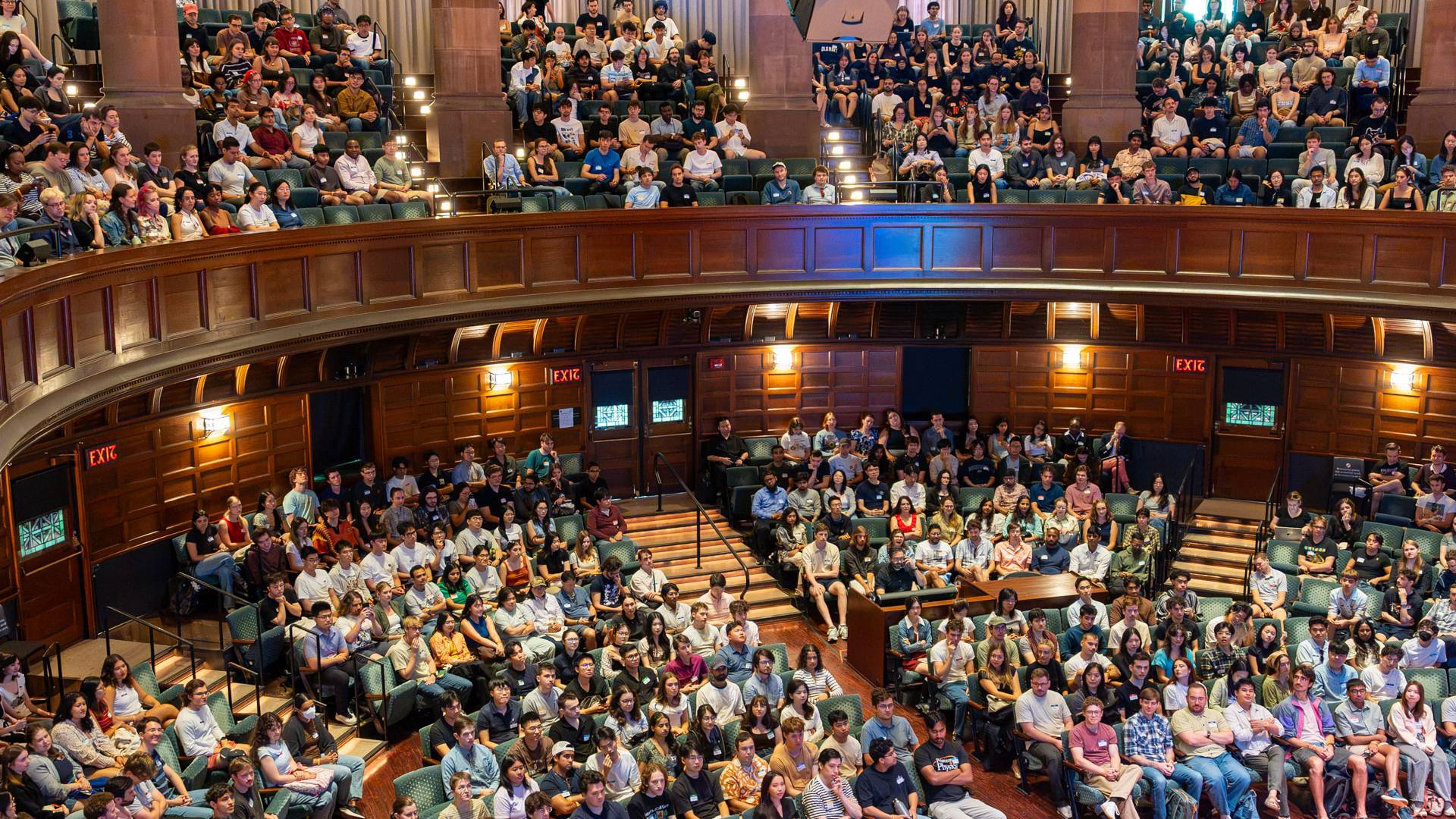
Hundreds of new graduate students filled Richardson Auditorium for the opening assembly of the Graduate School Orientation.
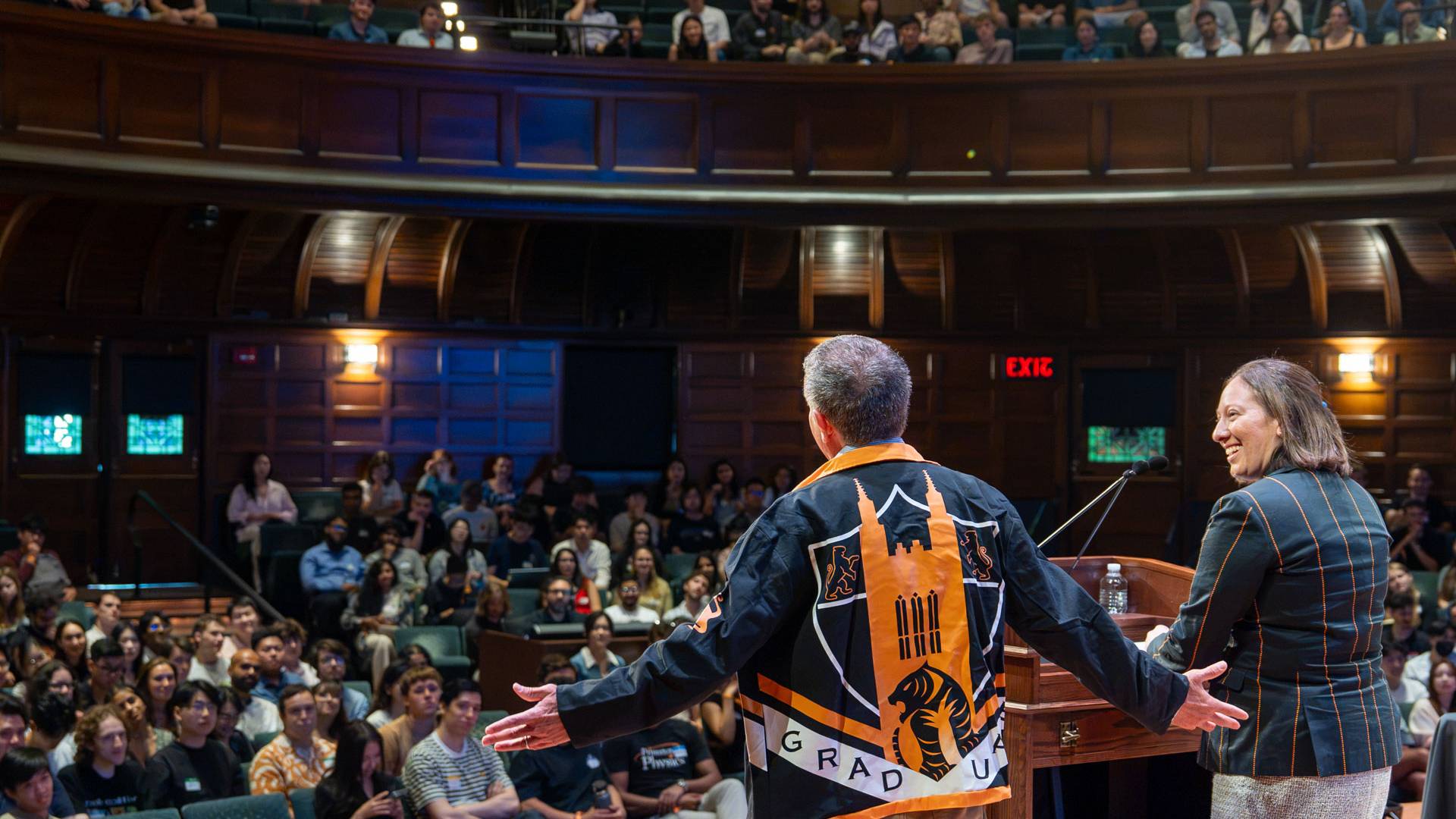
Ryan Ruskin ’90 (left), president of the Princeton Alumni Association, and Natalie Berkman *18, president of the Association of Princeton Graduate Alumni, welcomed new students to the Princeton community, noting that graduate alumni make up 30 percent of the alumni body.
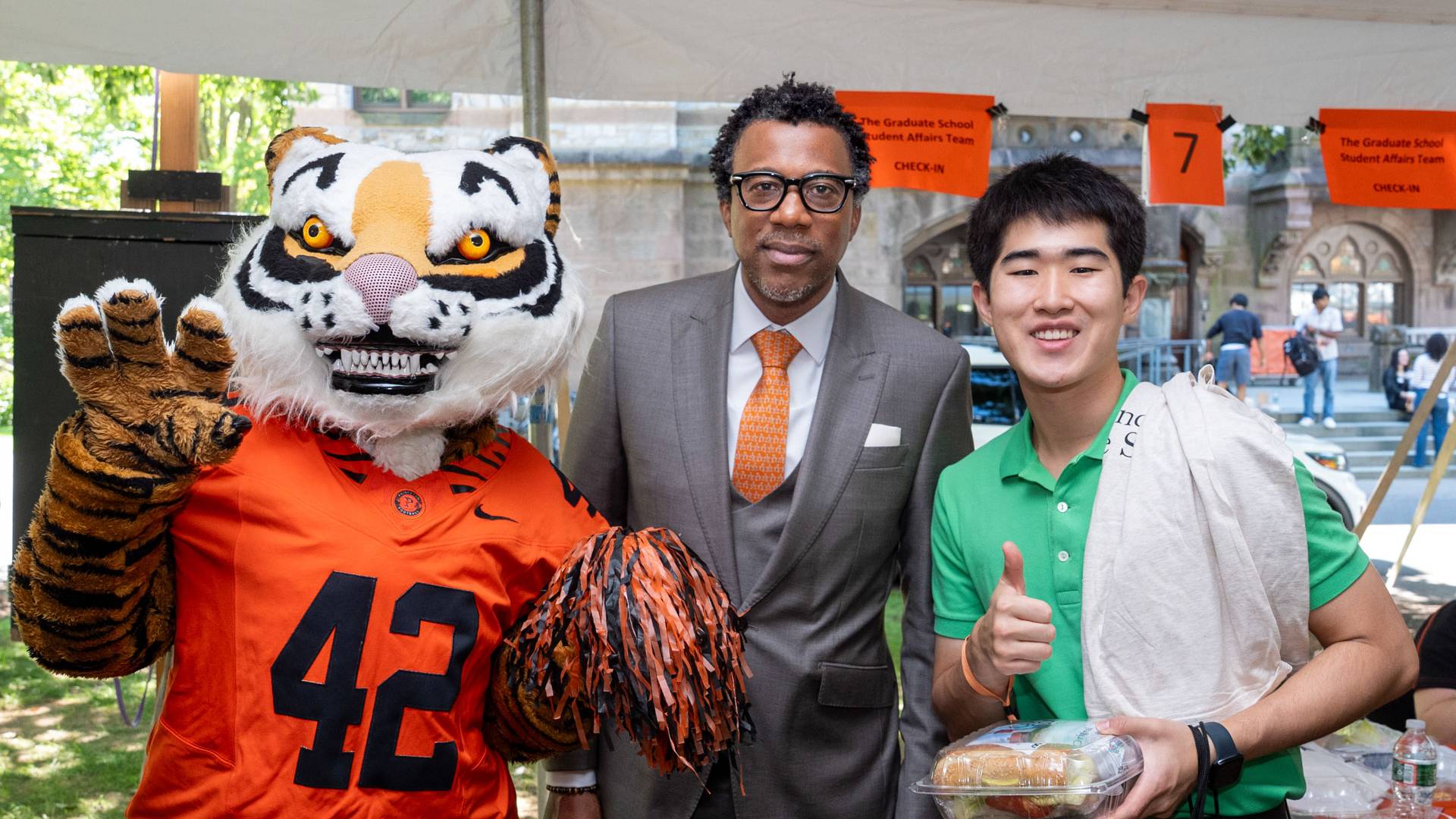
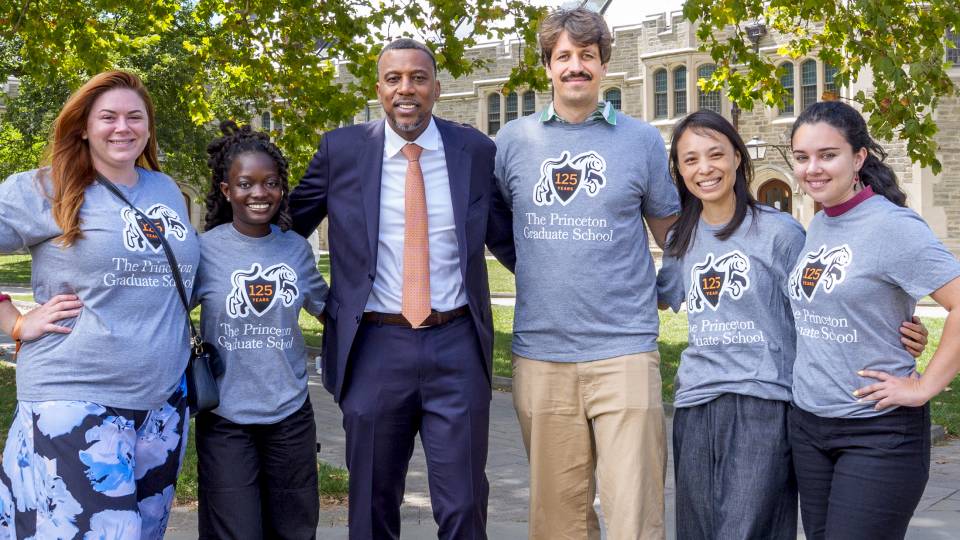
Graduate School Dean Rodney Priestley posed for a photo with a new graduate student and the Princeton Tiger mascot during Orientation activities that included picnics and fairs showcasing student organizations and University offices.
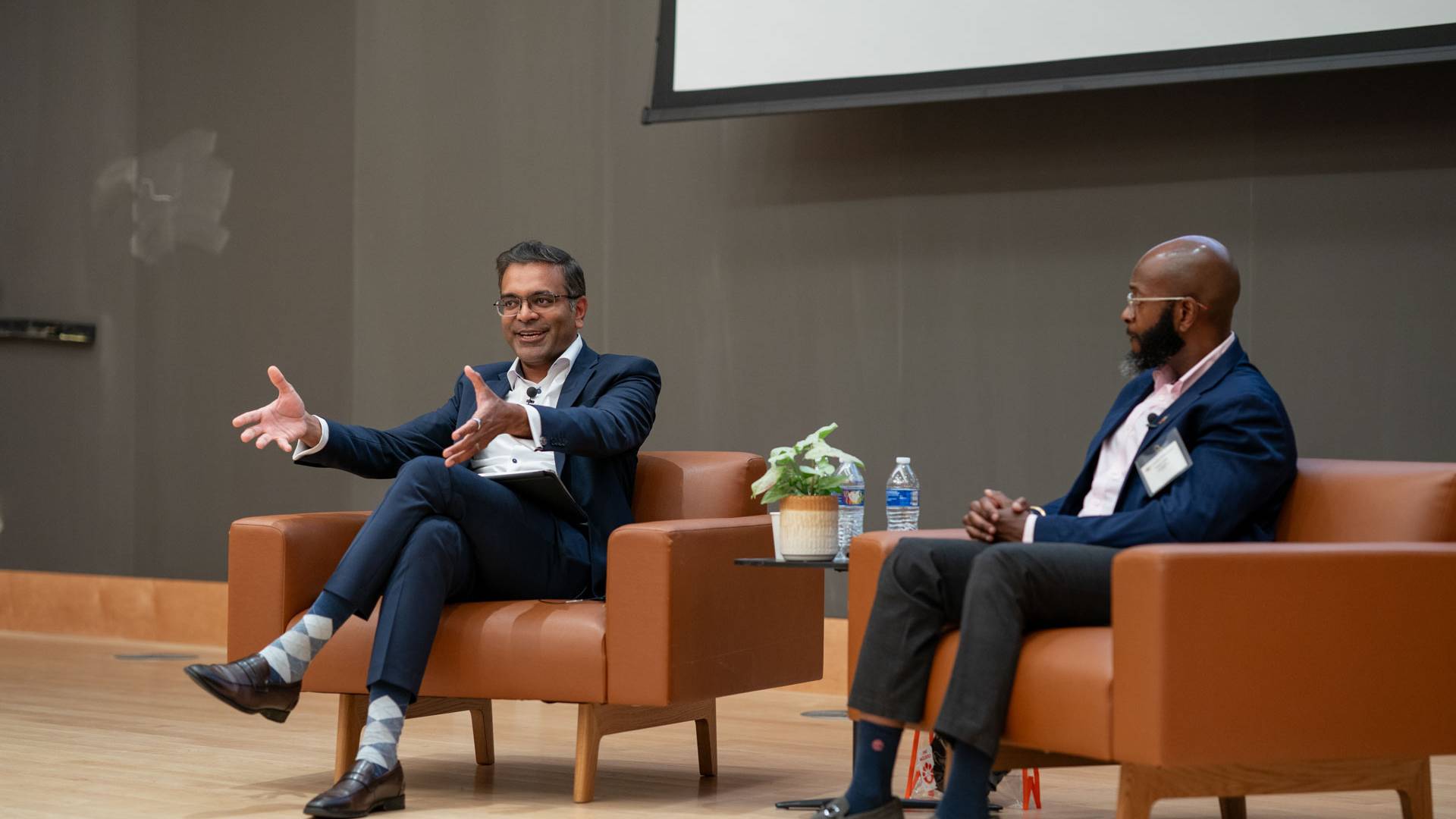
Raghuveer Vinukollu (left), who received his Ph.D. in civil and environmental engineering in 2011, shared reflections on graduate school and his industry career in a conversation with Joseph Lewis, the Graduate School’s associate dean for access, diversity and inclusion, during the Graduate Scholars Program Retreat.