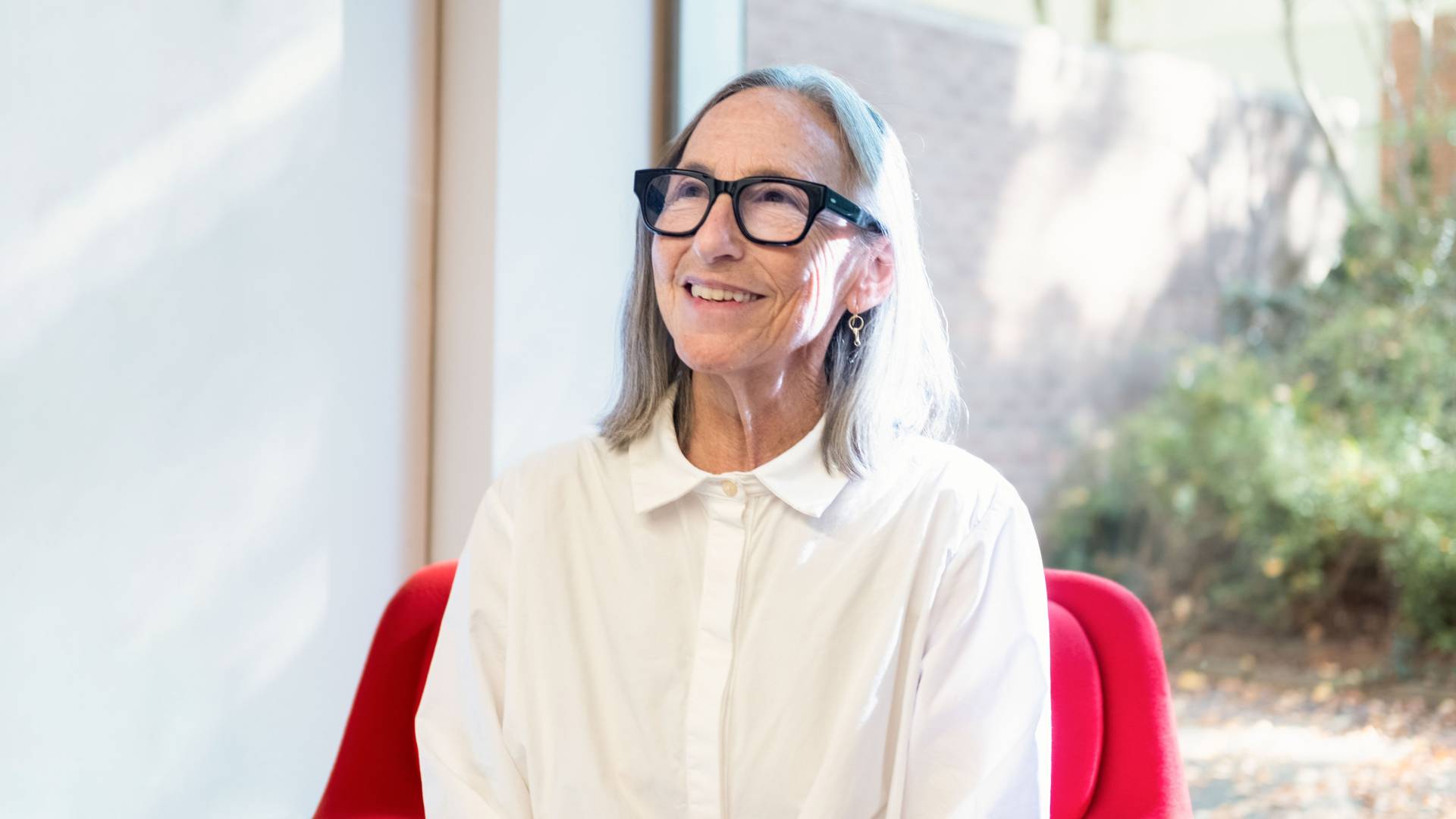
Sylvia Lavin named dean of Princeton’s School of Architecture
Sylvia Lavin
Sylvia Lavin, a historian of architecture and an accomplished curator, has been appointed dean of Princeton’s School of Architecture after leading the school in an interim role since January. Her appointment is effective Nov. 1.
Lavin is a distinguished scholar, author and curator whose work examines architecture history and design across a range of time periods and places. She has served as a Princeton professor of architecture since 2018 and is known for innovative research and curatorial projects that bring faculty and students together with leaders across the field, most recently a Princeton-led international collaboration for the 2025 Venice Architecture Biennale.
“Sylvia Lavin is a proven leader, a distinguished scholar, and an outstanding citizen of this University,” President Christopher L. Eisgruber said. “She cares deeply about the students, faculty, and staff of Princeton’s School of Architecture, and I am delighted that she has agreed to be its dean at this important time.”
Provost Jennifer Rexford said she is delighted that Lavin will serve as dean of the School of Architecture. “An internationally recognized scholar and accomplished academic leader, she has guided the school with care and conviction during her tenure as interim dean,” Rexford said. “I look forward to partnering with her to support the school’s vital mission.”
Princeton’s School of Architecture is a center for teaching and research in contemporary and emerging issues in architectural design, history and theory, technologies and urbanism. The school promotes innovative approaches to architectural practice and the profession and offers undergraduate, master’s and doctoral programs in which students and faculty benefit from interdisciplinary partnerships at Princeton and with scholars and professionals around the world.
Lavin said she is honored to lead the school, calling it “a special place to teach and work at the crossroads of ideas and ways of making.”
“Our faculty are working architects who also work across disciplines, our Ph.D. students and design students work together, our undergraduates contribute to graduate work, we are engaged in the University at large, and we have points of connection across the country and the world,” Lavin said. “We bring students together from diverse geographies and backgrounds and we do so in order to launch them back into the world with a map of all the potential directions they can take to make a difference.”
Lavin said she looks forward to continuing to collaborate with the school’s tight-knit community of faculty, students and staff.
“Working with our stellar faculty and for our outstanding students, my goals as dean are to renew the lively conversations among design, history and theory, and building technology that have long distinguished the School of Architecture, and to emphasize a broad global perspective with special attention to how architects can respond with vigor and invention to the urgencies of the contemporary world,” she said.
Lavin is a longtime advocate for the critical importance of architecture within culture and the built environment.
As dean, she said she hopes to deepen “the institutional and curricular foundation that supports the experimental work of faculty and enables students to devote their time and creativity to imagining what architecture should aim to be as they become leaders in a field that shapes the environment in which our lives unfold.”
An accomplished scholar whose work bridges architectural history and design
Lavin is widely recognized for her scholarship in architectural history and design, from 18th century architectural theory in France to mid-century modernism. She is currently completing a book titled “Arboreal Media and the Making of American Architecture,” a media-environmental history of American architecture, forthcoming as a Writing Architecture series published by MIT Press.
Her previous books include “Kissing Architecture,” published by Princeton University Press, as well as “Architecture Itself and Other Postmodernization Effects,” “Form Follows Libido: Architecture and Richard Neutra in a Psychoanalytic Culture,” and “Quatremère de Quincy and the Invention of a Modern Language of Architecture.”
Lavin is also known as a renowned curator. For the 2025 Venice Biennale, she brought together international architects, designers and scholars for the project “The Perimeter of Architecture: Amid the Elements,” which included works by Princeton architecture faculty and doctoral students.
“The Venice Biennale project was a high point of my time here thus far,” Lavin said. “It combined rigorous scholarly work by faculty and graduate students with the work I do bridging history and design, and brought the school together in a collaborative setting and for a large public-facing audience.”
She has curated numerous exhibits at international showcases, museums, galleries and colleges and universities, including “Everything Loose Will Land: 1970s Art and Architecture in Los Angeles,” which was part of the Pacific Standard Time series supported by the Getty Foundation; “Super Models,” which was shown at the 2018 Chicago Architecture Biennial; and “Architecture Itself and Other Postmodernist Myths,” held at the Canadian Centre for Architecture.
Lavin is the recipient of an Arts and Letters Award in Architecture from the American Academy of Arts and Letters and is a recipient of multiple grants from the Getty Scholars Program. Her other awards and recognitions include the American Institute of Architects Excellence in Education Award.
She is a member of the Museum of Modern Art’s architecture and design acquisition committee and the Canadian Centre for Architecture’s board of trustees.
Before coming to Princeton, Lavin was a professor in the Department of Architecture and Urban Design (AUD) at UCLA, where she served as chair from 1996 to 2006. She was recently recognized with the department’s inaugural Distinguished Faculty Award in honor of individuals “whose contributions have had a profound and lasting impact on UCLA AUD, architectural education, and the broader culture of architecture and urbanism.”
She has also taught at Harvard University, Columbia University, the University of Southern California and the Museum of Modern Art, among other institutions.
Lavin received her master’s and Ph.D. degrees from the Department of Art History and Archaeology at Columbia, and she holds a bachelor’s degree from Barnard College.