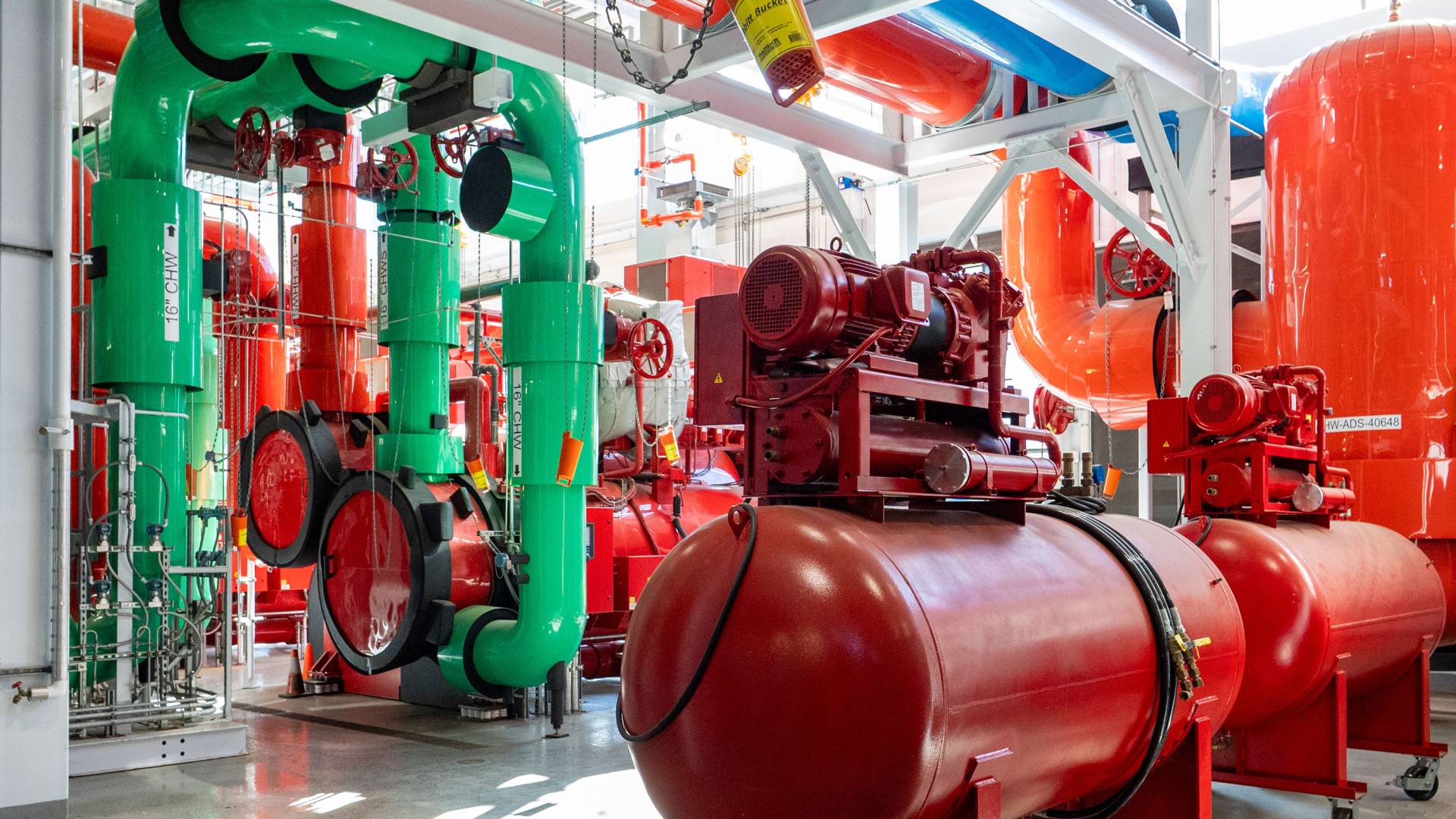
Princeton’s Campus Sustainability Framework builds on 20 years of action and progress
The University's transformative sustainability work over the last 20 years includes its pioneering geo-exchange energy system and TIGER and CUB energy plants. The new Campus Sustainability Framework reaffirms Princeton's commitment to achieve net-zero emissions across campus by 2046.
Princeton has launched a new Campus Sustainability Framework that highlights significant progress in reducing campus greenhouse gas emissions and builds on innovative operational, teaching and research initiatives that support a sustainable campus and future.
The 2026 Campus Sustainability Framework continues the University’s transformative sustainability work over the last 20 years, including Princeton’s pioneering geo-exchange energy system, and reaffirms the commitment to achieve net-zero emissions across campus by 2046.
“The framework reinforces the significance of sustainability efforts at Princeton University,” said Executive Vice President Katie Callow-Wright, who served as the executive sponsor for the framework initiative.
“Sustainability is not merely a nice-to-have part of our campus operations, but a must — an imperative for the health of our community, present and future,” Callow-Wright said. “I am grateful for the expertise and forward thinking that have shaped the framework and which position Princeton as a sustainability leader in higher education.”
The new framework builds on the most recent 2019 Sustainability Action Plan while providing the University more flexibility to adapt practices over time. The plan was developed with broad input from students, faculty, staff and experts over the last two years.
“This is an exciting opportunity to recognize Princeton’s significant sustainability achievements and to engage the campus community toward sustainability action in new ways,” said Executive Director of Sustainability Sarah Boll, who led the framework advisory committee with Professor of Civil and Environmental Engineering Peter Jaffé.
“The Campus Sustainability Framework was the result of a large collaborative effort with nine working groups addressing different aspects of sustainability,” said Jaffé, the William L. Knapp ’ 47 Professor of Civil Engineering. “Participants were extremely committed and enthusiastic in not only developing a sustainability framework for the University, but also one that could set an example for other communities and organizations.”
The 2026 framework is organized around eight focus areas: manage resources responsibly, engage and communicate, support sustainable transportation, activate Campus as Lab, reduce emissions, conserve and restore biodiversity, plan for climate disruptions and support healthy communities.
“Our new framework retains many of the focus areas of previous sustainability plans, such as reducing emissions and managing resources responsibly, and also introduces new topics like supporting healthy communities and planning for climate disruption that may impact our physical campus and the University’s teaching and research mission,” Boll said.
It will be presented at a launch event this evening in Briger Hall, with opening remarks by President Christopher L. Eisgruber followed by a panel discussion. Seating is limited, and registration is required.
Sustaining progress and moving toward the future
Princeton established the Office of Sustainability in 2006 and released its first University-wide Sustainability Plan in 2008. The new Campus Sustainability Framework highlights the University’s accomplishments over the last two decades and looks toward the next 20 years of progress.
“Princeton should be immensely proud of what it has achieved through the tremendous and innovative work of staff, faculty and students across campus,” Boll said. “The level of care and excitement from the University community in developing our new framework was inspiring and we hope students, faculty and staff will stay or get involved as we continue this important work together.”
The 2026 framework reiterates the University’s commitment to reducing greenhouse gas emissions on campus through innovative, evidence-based solutions. Achievements include the massive geo-exchange system and TIGER and CUB energy plants to efficiently heat and cool University buildings, the installation and expansion of solar energy arrays, energy conservation initiatives in buildings across campus, and the all-electric TigerTransit bus fleet. From 2008 to 2025, the University cut campus emissions by 14 percent while adding more than 30 percent of gross square feet of building space.
Going forward, the University will evaluate new strategies for achieving its net-zero goal by 2046 and will begin to assess reduction opportunities for indirect greenhouse gas emissions.
Over the last two decades, Princeton has also worked to reduce its waste to landfill and energy consumption at the same time the physical campus has grown. The University has introduced numerous programs to sustainably manage waste and encourage reuse, including the Sustainable Composting Research at Princeton (S.C.R.A.P.) Lab and the Greening Move Out dormitory recycling and reuse program.
During a period of tremendous growth, the University has implemented sustainable design and construction practices for all construction and renovation projects to reduce construction waste, make more efficient use of the land, and incorporate sustainable systems and features into buildings, athletic fields and landscapes.
The 2026 framework aims to continue this work and sets new resource management and waste reduction goals, including aiming to divert 90 percent of non-food waste from landfills and reduce total water consumption from campus operations.
The new framework also continues Princeton’s significant progress in managing stormwater, soil, landscapes and natural areas to support healthy habitats and to conserve and restore biodiversity on campus. More than 30 stormwater management projects so far have reduced rainwater runoff and restored streams, including porous pavement, green roofs and rain gardens as well as a network of underground water filtration systems to improve water quality and reduce the impacts of major storms on campus.
Having already converted its campus shuttle system to an all-electric fleet in 2023, Princeton will continue to invest in modes of transportation that lower emissions as well as support sustainable commuting options and biking and walking on campus.
The 2026 framework also builds on the Office of Sustainability’s support of students, faculty and staff to study and solve sustainability challenges. The office will enhance the Campus as Lab program, which supports student and faculty research, courses and internships that use the campus as a testbed to explore and evaluate sustainable innovations.
As part of the plan’s new areas of focus, the University will develop sustainability strategies and engage faculty-led research teams to model and prepare for climate disruptions, helping to strengthen operations and limit risks to the physical campus and the University’s teaching and research mission.
Beyond campus, the 2026 framework considers how Princeton can broadly support healthier and more sustainable environmental conditions, including assessing the impact of campus operations on surrounding communities.

