Celebrate Princeton Innovation showcases research discoveries with industry potential
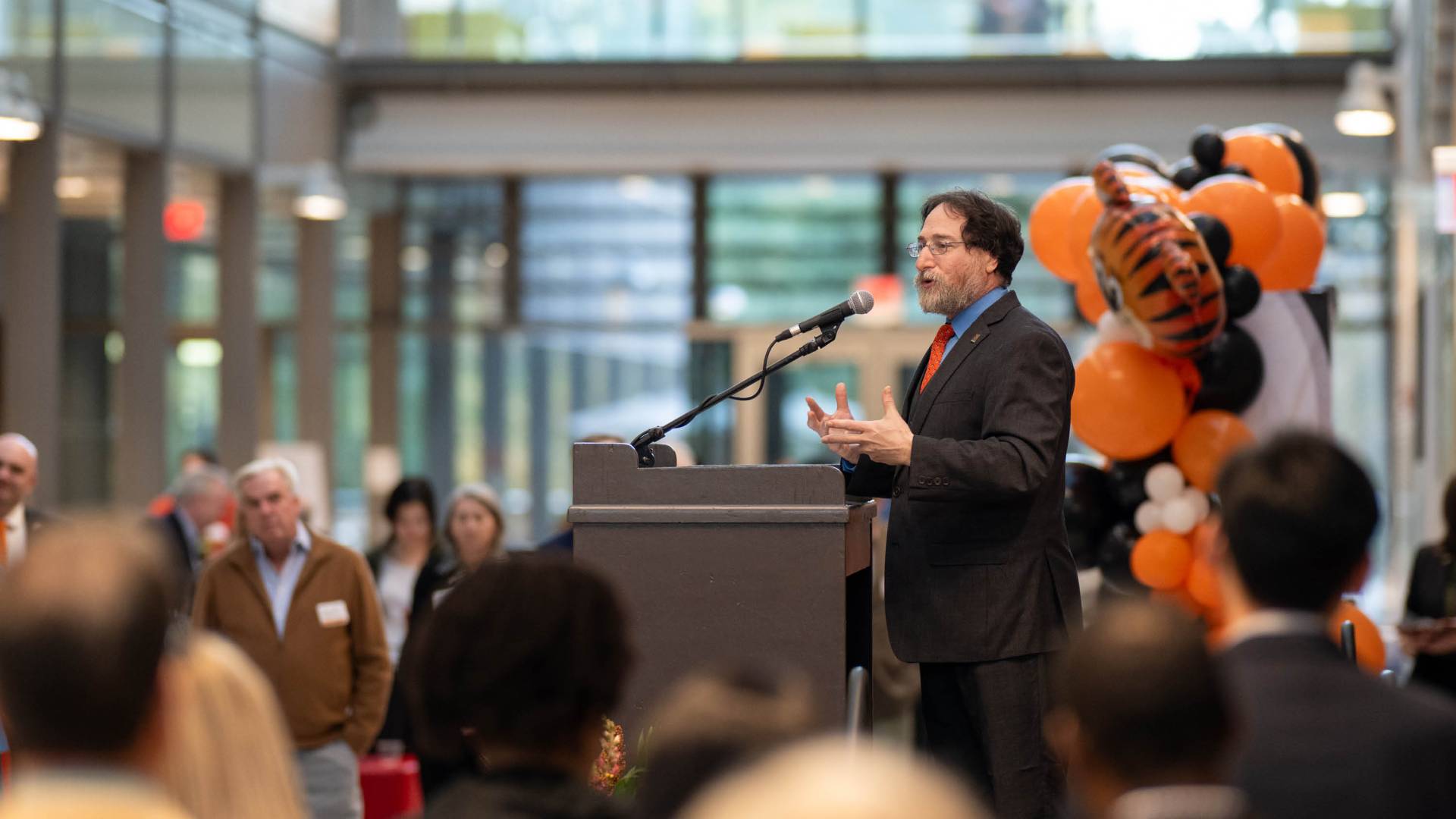
Craig B. Arnold, vice dean for innovation, addresses the crowd of more than 400 attendees at the annual Celebrate Princeton Innovation event.
More than 400 faculty members, researchers, students, inventors, entrepreneurs, investors and government leaders convened last week for Celebrate Princeton Innovation, an annual showcase of research discoveries that hold transformative potential.
Vice Dean for Innovation Craig B. Arnold welcomed the crowd to the Oct. 21 event at Frick Chemistry Lab, saying the activities in the room were “just the tip of the iceberg.”
“Innovation is not a one-day event,” Arnold said. “It's happening all year round.”
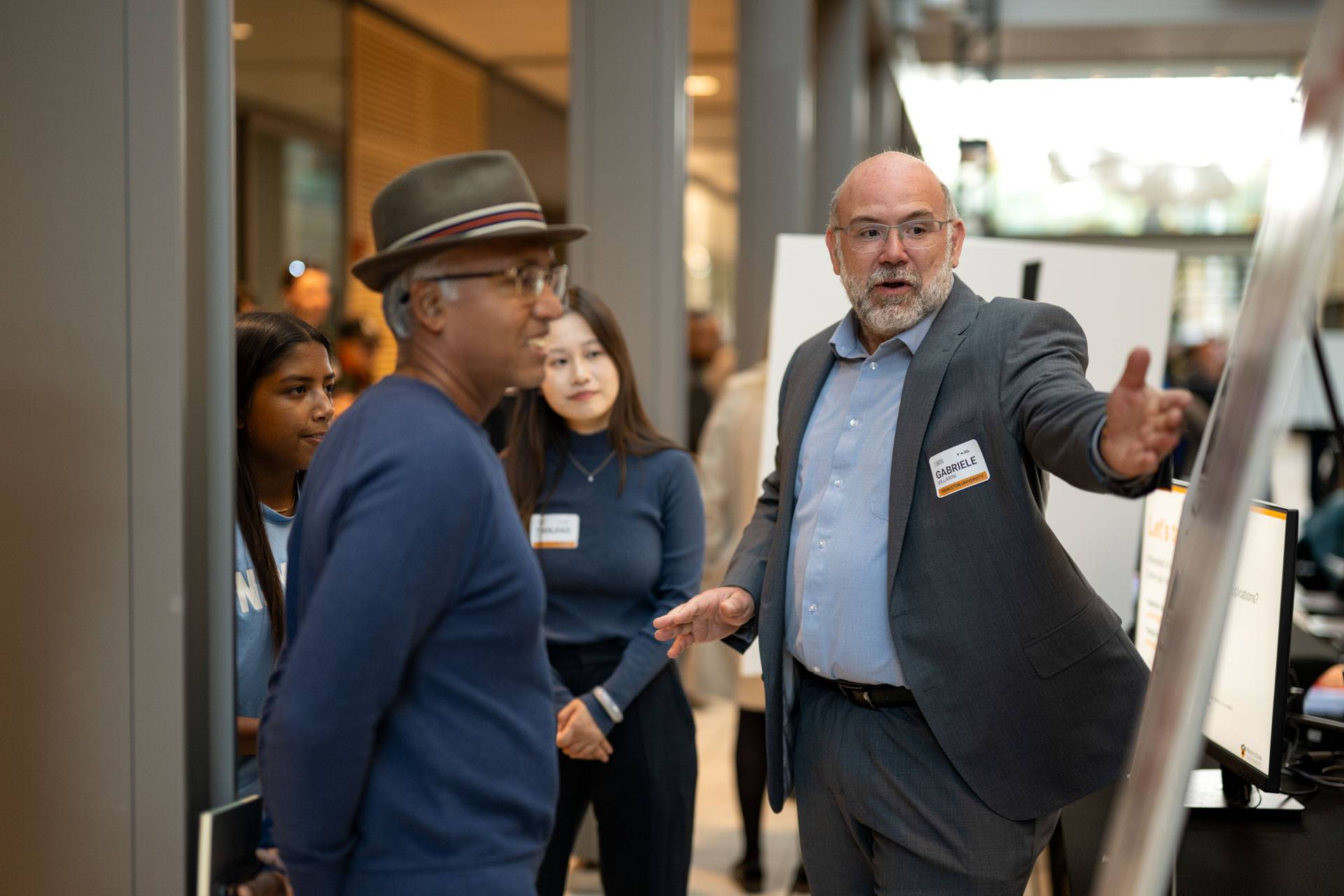
Gabriele Villarini (right), the Theodore Shelton Pitney Professor of Environmental Studies and a professor of civil and environmental engineering and the High Meadows Environmental Institute, presents his lab's latest findings on detecting hail from space.
The Office of Innovation is the University’s central resource for Princeton researchers to navigate opportunities and challenges in pursuing entrepreneurship, technology translation and industry engagement.
This year’s Celebrate Princeton Innovation welcomed 12 exhibitors from Architecture, Chemistry, Engineering, the Lewis Center for the Arts, Molecular Biology, Physics and the Princeton Neuroscience Institute. Attendees joined from across campus and beyond, illustrating the vast network of partnerships within Princeton’s innovation ecosystem.
In the 2026 fiscal year, Princeton researchers launched nine new startup companies, disclosed 143 new inventions, and received 66 U.S. patents, the Office of Innovation announced in its latest annual report.
The process of translating academic discoveries into real-world applications goes well beyond those numbers, Arnold said. “At Princeton, innovation is not just about startups and patents. We have scholars across the University from the humanities, natural sciences, social sciences and engineering, all who are working hard to transition their ideas to practice, and from practice to scale.”
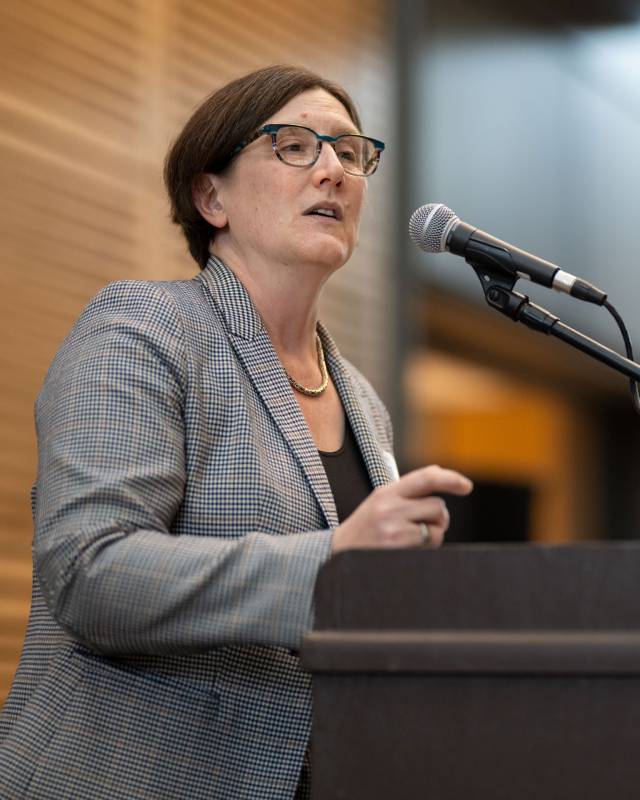
University Provost Jennifer Rexford notes that innovative approaches have long been part of the Princeton ethos. “Innovation and entrepreneurship rely on seeing things differently, seeing the possible rather than the probable.”
Princeton innovators embrace what lies ahead, as University Provost Jennifer Rexford reflected in her remarks. “Rather than extrapolate from the past or learn from examples, imagine the future and create the first example,” she urged attendees.
Noting that innovative approaches have long been part of the Princeton ethos, Rexford shared former president William Bowen’s observation that universities exist “at a slight angle to the world.”
“Innovation and entrepreneurship rely on seeing things differently, seeing the possible rather than the probable,” she said.
Underscoring the University’s support for startups and spinouts, the program included leaders from Princeton Critical Minerals, including co-founder and chief scientist Z. Jason Ren, Princeton’s Eugene Higgins Professor in the Department of Civil and Environmental Engineering and the Andlinger Center for Energy and the Environment.
Ren’s research group developed novel technology for boosting mineral production from evaporation ponds, which generate around 40% of the world’s lithium and most of its naturally occurring nitrate.
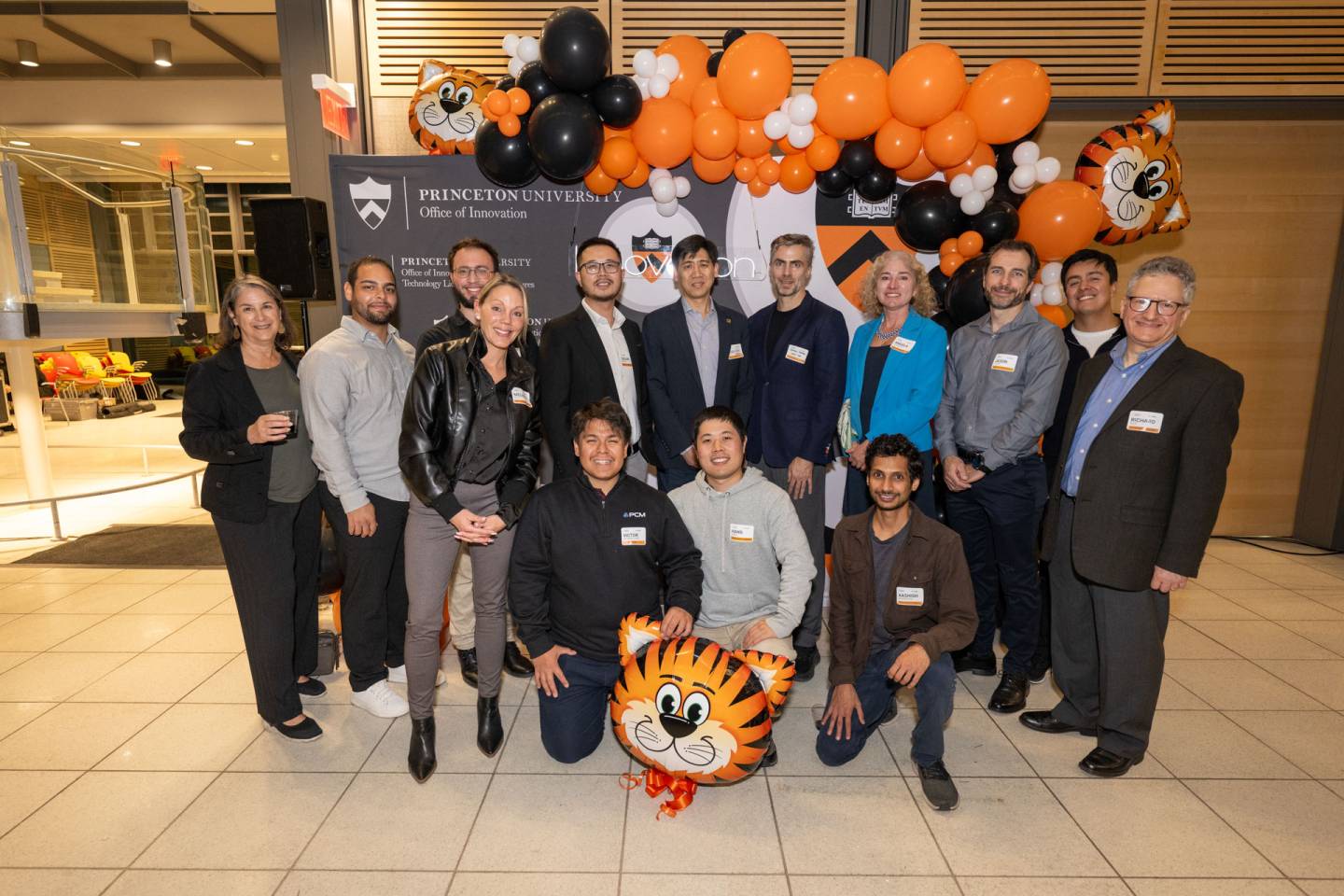
The program included leaders from Princeton Critical Minerals, including co-founder and chief scientist Z. Jason Ren, Princeton’s Eugene Higgins Professor in the Department of Civil and Environmental Engineering and the Andlinger Center for Energy and the Environment, who said the University’s sustained investment in innovation infrastructure has been key to the startup's success.
His path to entrepreneurship began when he and his team “felt we could have much more impact than publishing papers, we could really move this from lab work into the real world,” he said.
After four years, with support from the University, Princeton Critical Minerals has grown to a team of more than 20, raised $20 million from grants and private investment, and opened a field office in Chile to expand operations.
Ren said the University’s sustained investment in innovation infrastructure has been key to the company’s success, calling Princeton “a place that really inspires us to have big dreams and gives us the freedom to try.”
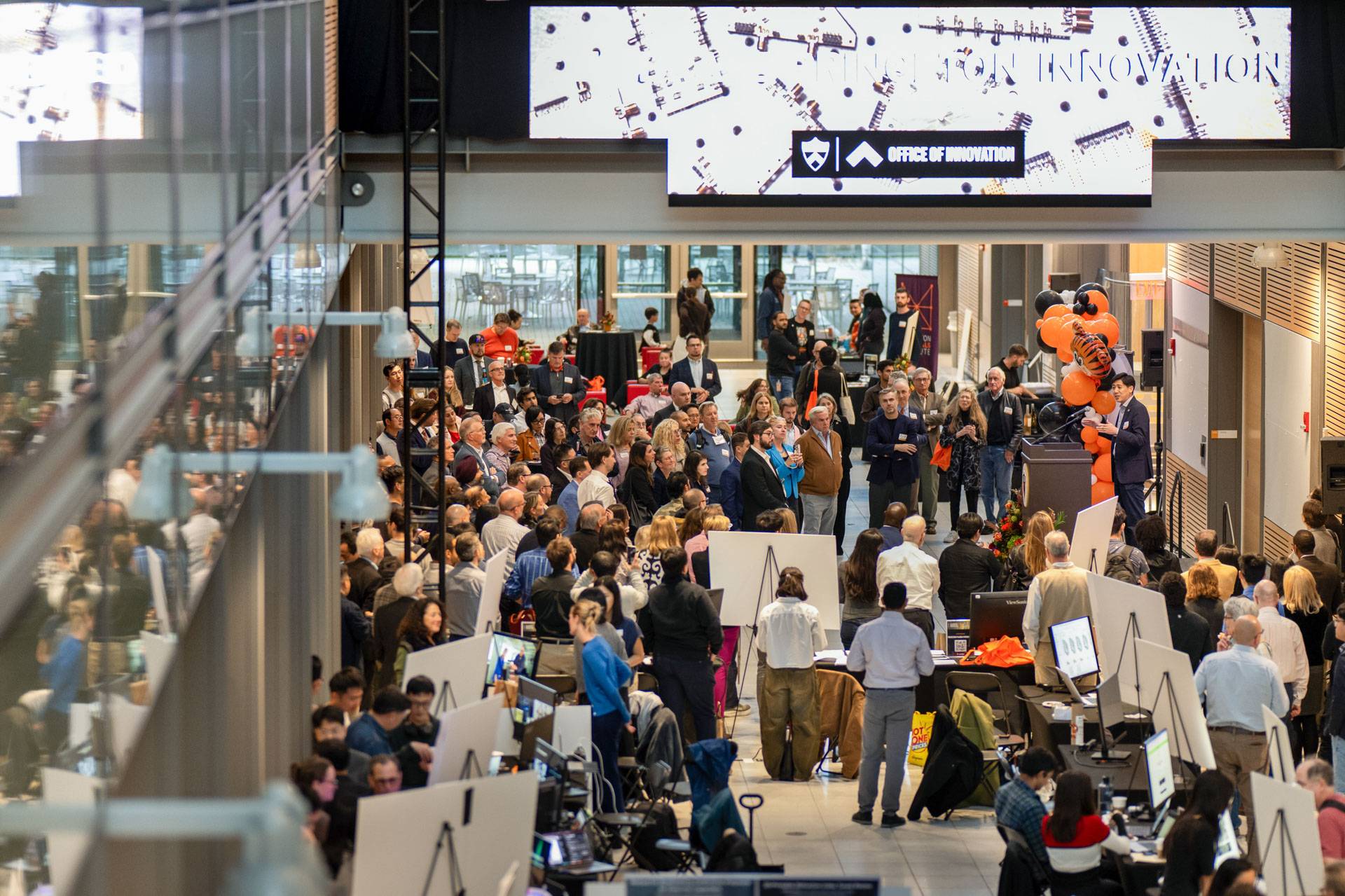
More than 400 faculty members, researchers, students, inventors, entrepreneurs, investors and government leaders convened for the Oct. 21 showcase at the Frick Chemistry Laboratory.
More than a dozen University partner programs and other organizations exhibited at tables, including the event’s two sponsors: SOSV HAX and Maynard Nexsen.
Featured collaborators were the NJ AI Hub, Princeton Intelligence, the Andlinger Center for Energy and the Environment, the Center for Digital Humanities at Princeton, the Keller Center, the New Jersey Economic Development Authority, the New Jersey Commission on Science, Innovation and Technology, the New Jersey Alliance for Clinical and Translational Science, the Omenn-Darling Bioengineering Institute, the Princeton Materials Institute, and the Princeton Innovation Center BioLabs.
Duncan Turner, general partner and managing director of SOSV HAX, and Steven Cowley, Laboratory Director of the Princeton Plasma Physics Lab (PPPL), gave a presentation together about the HAX Plasma Forge, a new facility in Princeton that brings together industry, government and academia.
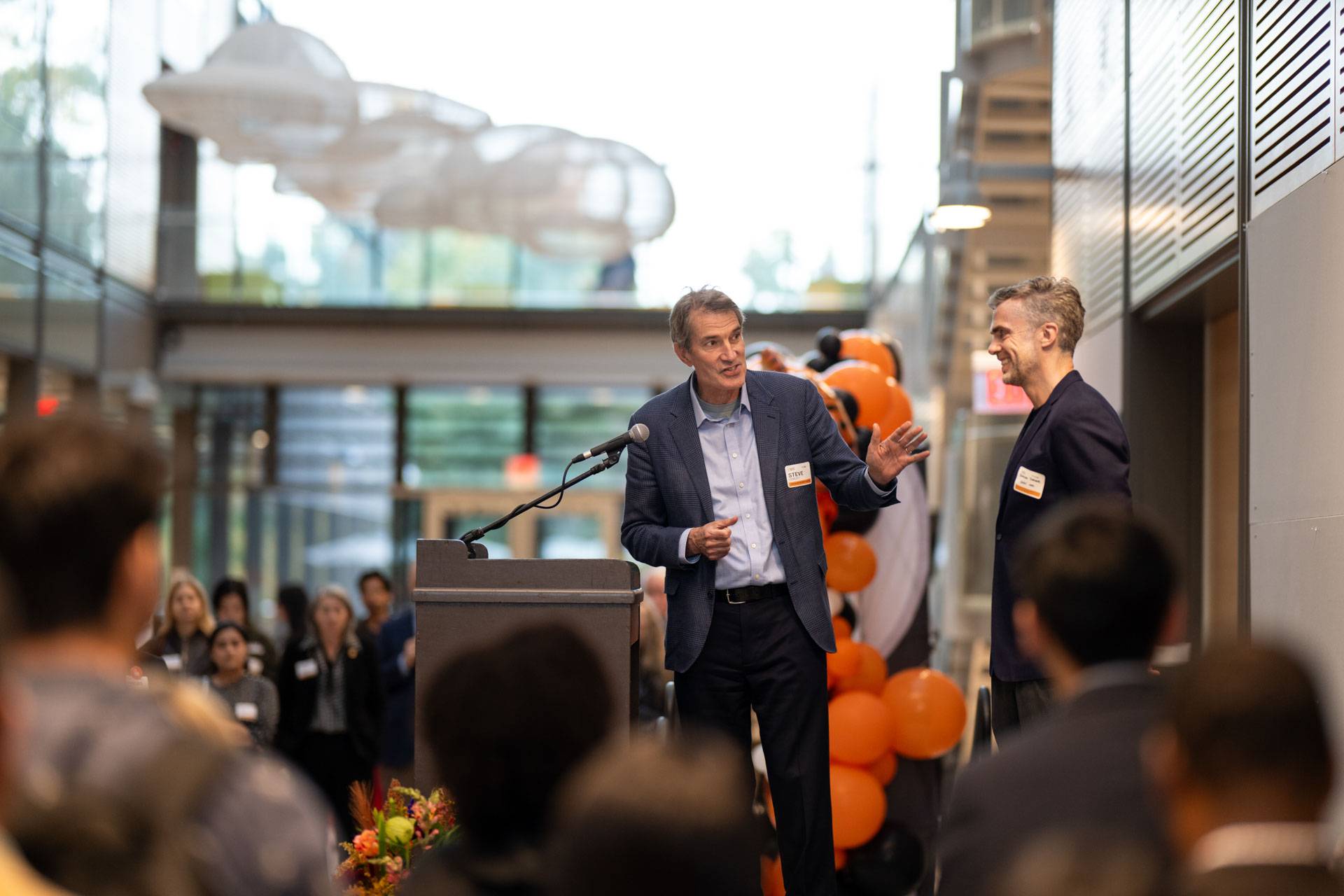
Duncan Turner (right), general partner and managing director of SOSV HAX, and Steven Cowley, director of the Princeton Plasma Physics Laboratory and a professor of astrophysical sciences at Princeton (center), gave a presentation together about the HAX Plasma Forge, a new facility in Princeton that brings together industry, government and academia.
A collaboration among SOSV, PPPL, and the New Jersey Economic Development Authority, the facility is a hub to commercialize plasma technology. Cowley said PPPL has diversified its mission to support industry with plasma technologies and has grown to involve more than 25 companies.
In his closing remarks, Arnold told the crowd, “I hope you'll come to see what I see, which is this incredible collection of really dedicated students, postdocs, faculty and staff who are all working together to make the world a better place through innovation.”


