‘Joyful moments in busy days’: How the new art museum is cultivating opportunities to reflect and recharge
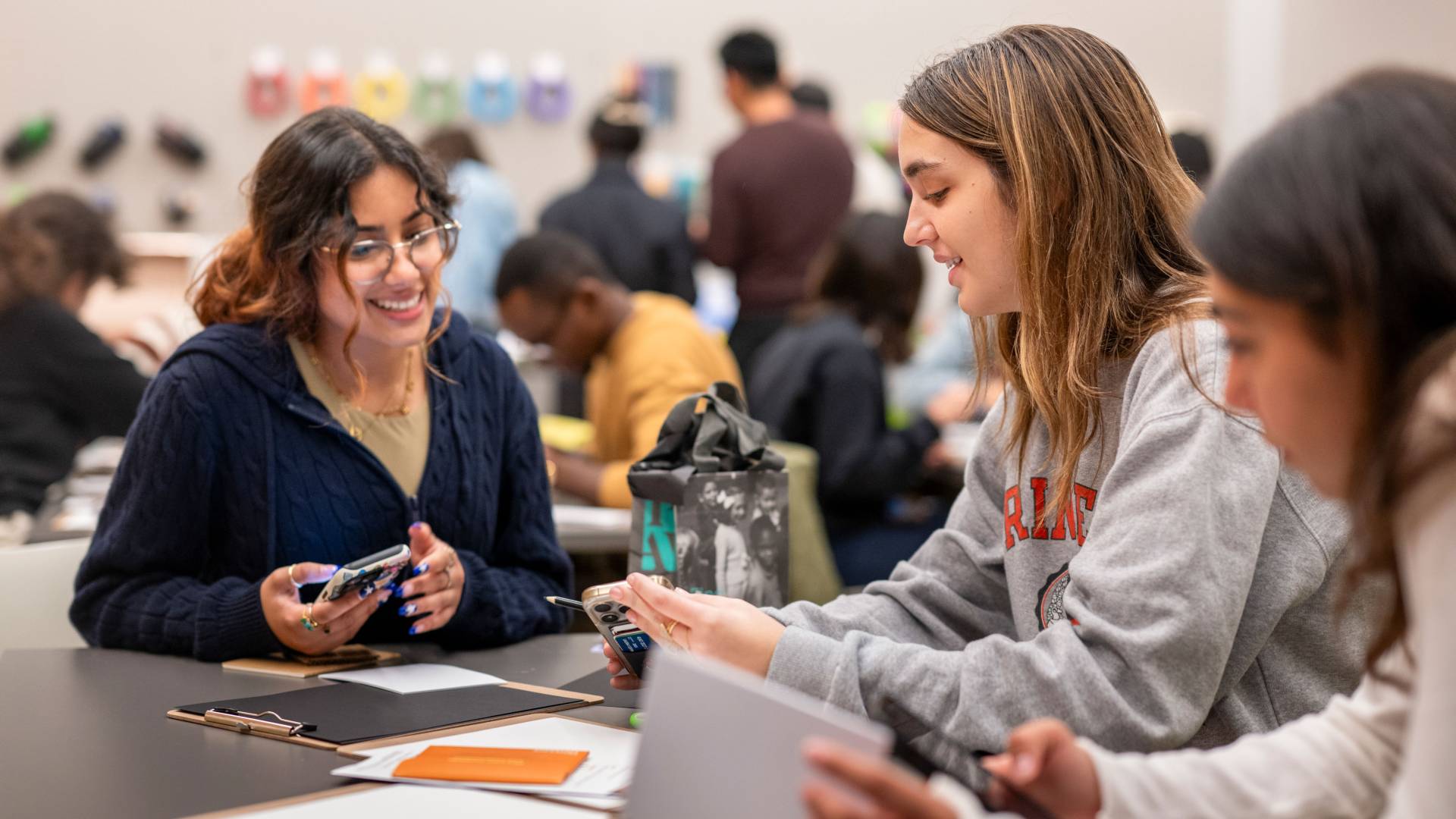
The Princeton University Art Museum offers daily opportunities for students and others to make art in a low-pressure, relaxed environment. Here, students work together in the Creativity Lab.
During a hectic week earlier this semester, Princeton senior Michelle Thurber took a break from working on her thesis to spend nearly an hour contemplating the rich landscapes of a Thomas Gainsborough painting on loan at the Princeton University Art Museum.
Thurber said the piece, “Landscape with a Ruined Abbey on a Hill” (ca. 1754-55), came alive to her in a way that no painting ever had. She noticed details like a donkey hiding in the shadows and was filled with gratitude by the beauty of its “dusky orange” sunset. “And I realized that was not because other paintings weren’t alive, but because I’d never looked at any one work of art for long enough,” she wrote in a recent essay, “Slow Down With Art.”
Thurber’s experience was part of a Visio Divina — a spiritual practice focused on closely examining a work of art — organized by the Office of Religious Life. The monthly event is one of many programs that are cultivating the new museum as a space that fosters well-being on campus, where students can go to reflect, recharge and find deeper meaning.
James Steward, the Nancy A. Nasher–David J. Haemisegger, Class of 1976, Director of the Princeton University Art Museum, said the museum continues to develop programs, as well as host events organized by other University departments and student groups, that focus on art and well-being. Programs include tai chi, guided meditations, hands-on workshops in the new Creativity Labs and curatorial tours highlighting health and caregiving in the museum’s collections.
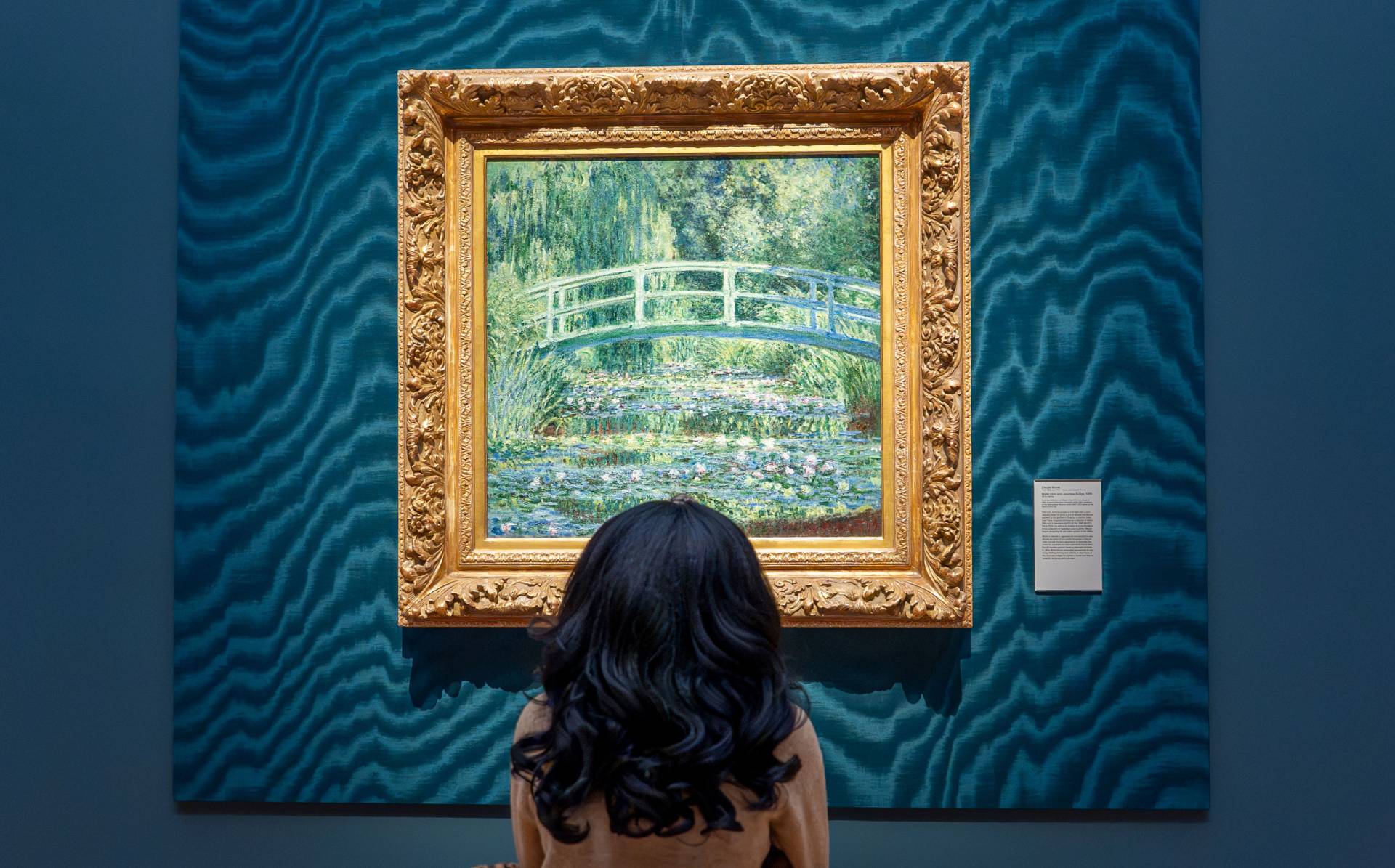
A moment with Claude Monet's "Water Lilies and Japanese Bridge" at the Princeton University Art Museum.
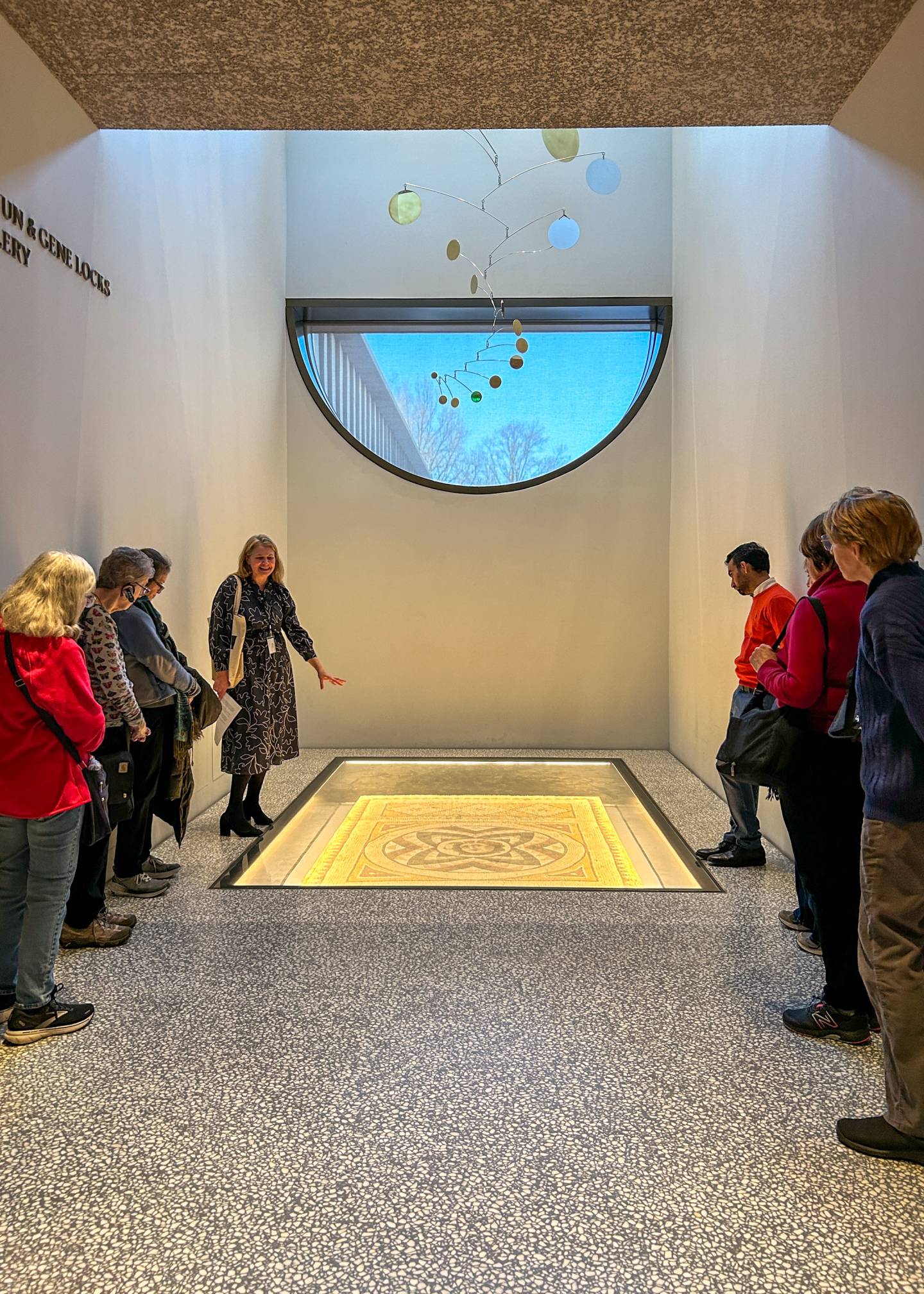
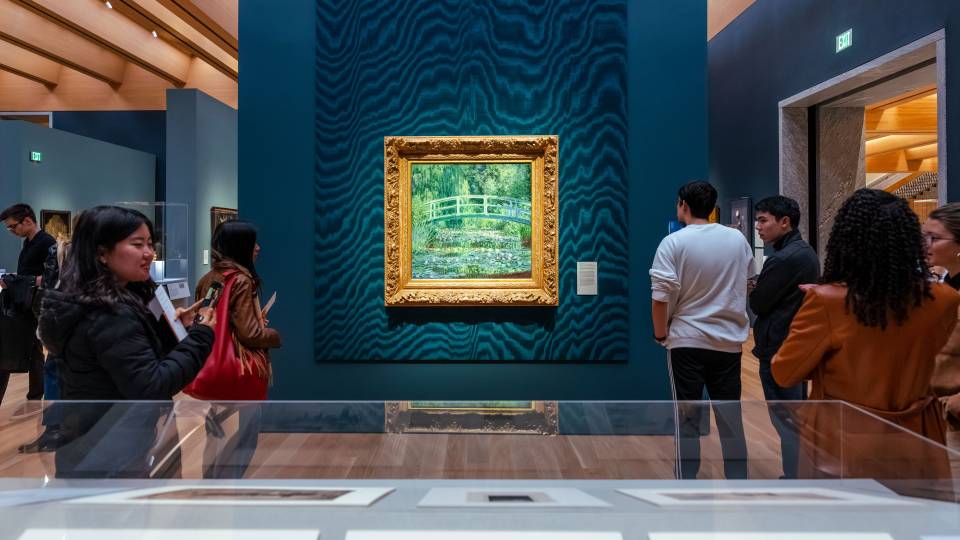
Veronica White (center left), curator of teaching and learning education, leads the tour Visualizing Illness and Healing Across the Museum’s Collections. The group stops at two works of art: Tuấn Andrew Nguyễn’s “Naga" and an ancient Roman mosaic floor excavated near Antioch.
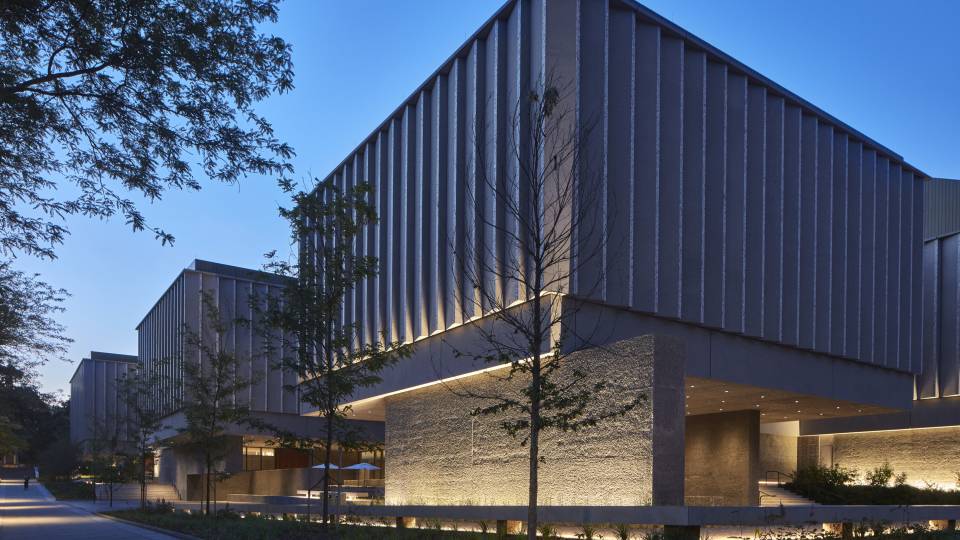
Steward said there is robust data that supports “the value of looking closely at works of art in the original as a source of well-being.” The new museum was designed in response to this, he said, “positioning it as a kind of town square for both campus and community, a place of safe gathering and learning. Many of our public programs likewise arise from the space of well-being, and we are excited to be developing a number of additional student and public-facing programs to foster it.”
Veronica White, curator of teaching and learning education, said museums have always been a place where you can feel connected to other people and cultures even when you are by yourself. White regularly leads the tour “Visualizing Illness and Healing Across the Museum’s Collections,” which highlights several works related to themes of health, empathy and caregiving, such as a Ming Dynasty figure of Guanyin (ca. 1500), the Buddhist deity known for compassion.
Talia Goldman, president of the museum’s student advisory board, said she’s heartened to see how the museum’s new building in the heart of campus has become a popular destination for undergraduates and graduate students in the six months since it opened.
"Whether observing the details of one work of art, making art with friends in the Creativity Labs, or taking a deep breath in one of the sunlit viewing rooms, students take time to reflect and unwind in the museum,” said Goldman, Class of 2027. “Being in the museum threads joyful moments into busy days, encouraging well-being by fostering community and mindfulness.”
Thurber agreed, saying she appreciates how convenient it is to pop into the museum on her way to and from classes and other activities.
“Reflecting on art helps my mind rest and recharge by taking me out of my busy Princeton routine. There’s less room to be thinking about what I have to do, and instead I can focus on what I notice in the painting,” Thurber said. “At Princeton, it’s easy to forget that there is more to life than academics and all the busy activities of our day-to-day patterns; when we take time to slow down, it helps us to remember what’s important and to take care of ourselves.”
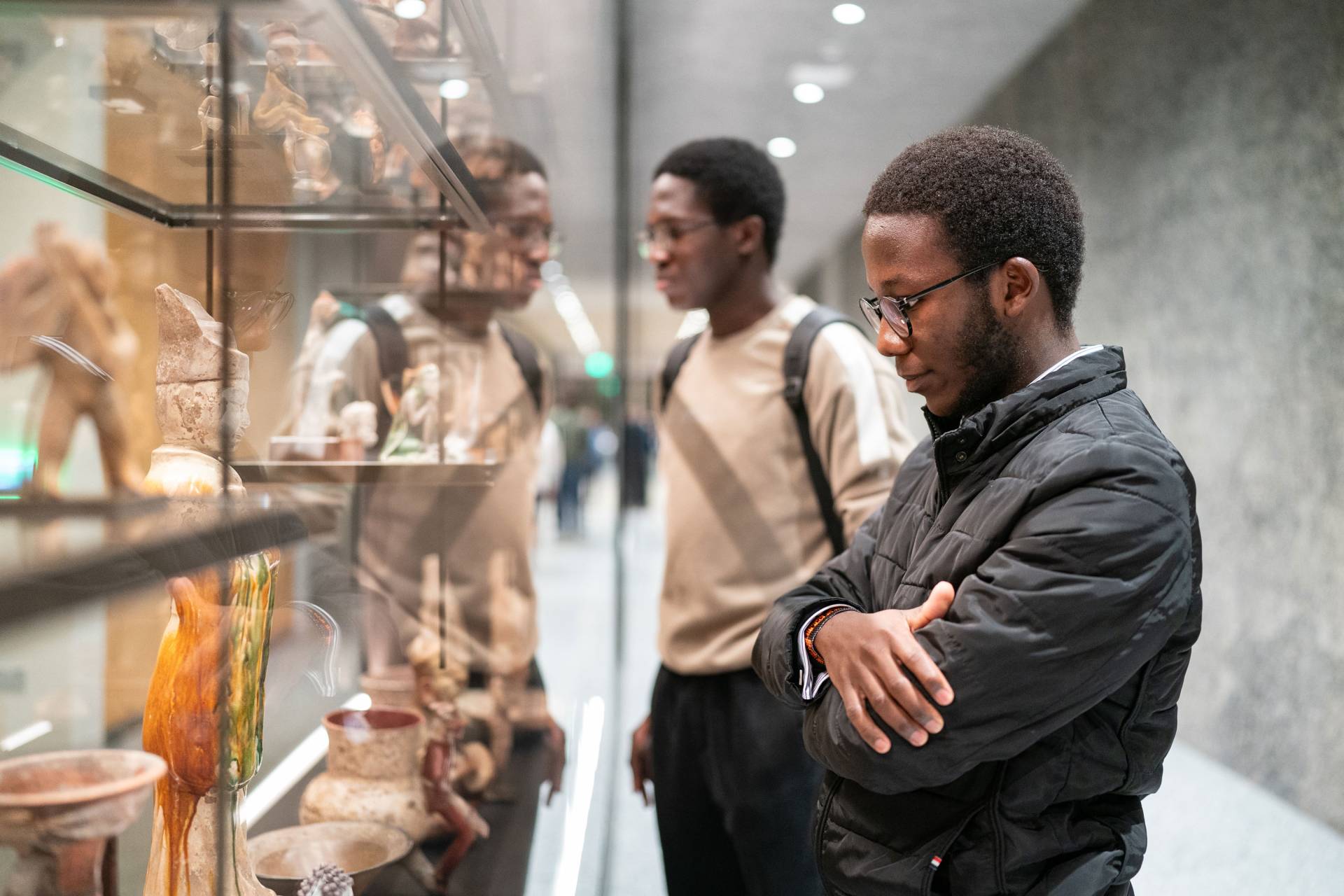
Princeton students view ceramics in the museum’s collection.
The museum also offers daily opportunities for students and others to make art in a low-pressure, relaxed environment.
Louise Barrett, manager of visitor experience at the museum, said it’s been “a joy to welcome campus and community members into the new Kathleen Compton Sherrerd and Laporte Family Creativity Labs.” The labs host drop-in studio hours open to all, and hands-on workshops like collage quilting and mixed media sculptures led by visiting artists, graduate students, staff and others.
“Students tell us how much they appreciate a space to relax, reflect and make art — both for themselves and their friends,” Barrett said. “We had a graduate assistant spend two hours with us one day creating while taking a break from grading papers. We love inviting visitors to explore their own creative voices, often leading to moments of calm and focus, growth and connection.”
Rev. Brittany Longsdorf, associate dean of religious life and the Chapel, leads the Visio Divina series at the museum and recently taught a watercolor workshop in the Creativity Labs as part of the Undergraduate Student Government’s gathering, “Thrive: A Day for Art and Well-being.”
During the watercolor studio, Longsdorf stressed “process over production” as the graduate students, staff and community members painted patterns inspired by a Buddhist mandala. She encouraged them to slow down and be mindful of how they felt as they brushed colors on paper instead of worrying how the finished product would look.
This approach was especially appreciated by Rachel Glodo, a Ph.D. student in musicology. “As a scholar, I face constant internal and external pressure to produce things: ideas, paragraphs, chapters, articles, conference papers, datasets, lectures or syllabi,” she said. “The lovely thing about the workshop was that we didn't do a ‘show and tell’ at the end. The product wasn't the point: instead, our purpose was to find discrete moments of creation.”
And that was precisely the goal, said Longsdorf.
“Doing art as a spiritual practice, or making art to connect to whatever you hold as sacred, gives us permission to be playful in a way that is deeply healing,” she said. “I love leading these workshops and accompanying people as they tap back into their inner artist, one that’s free of judgment and expectation, but who creates for the sheer joy of it.”
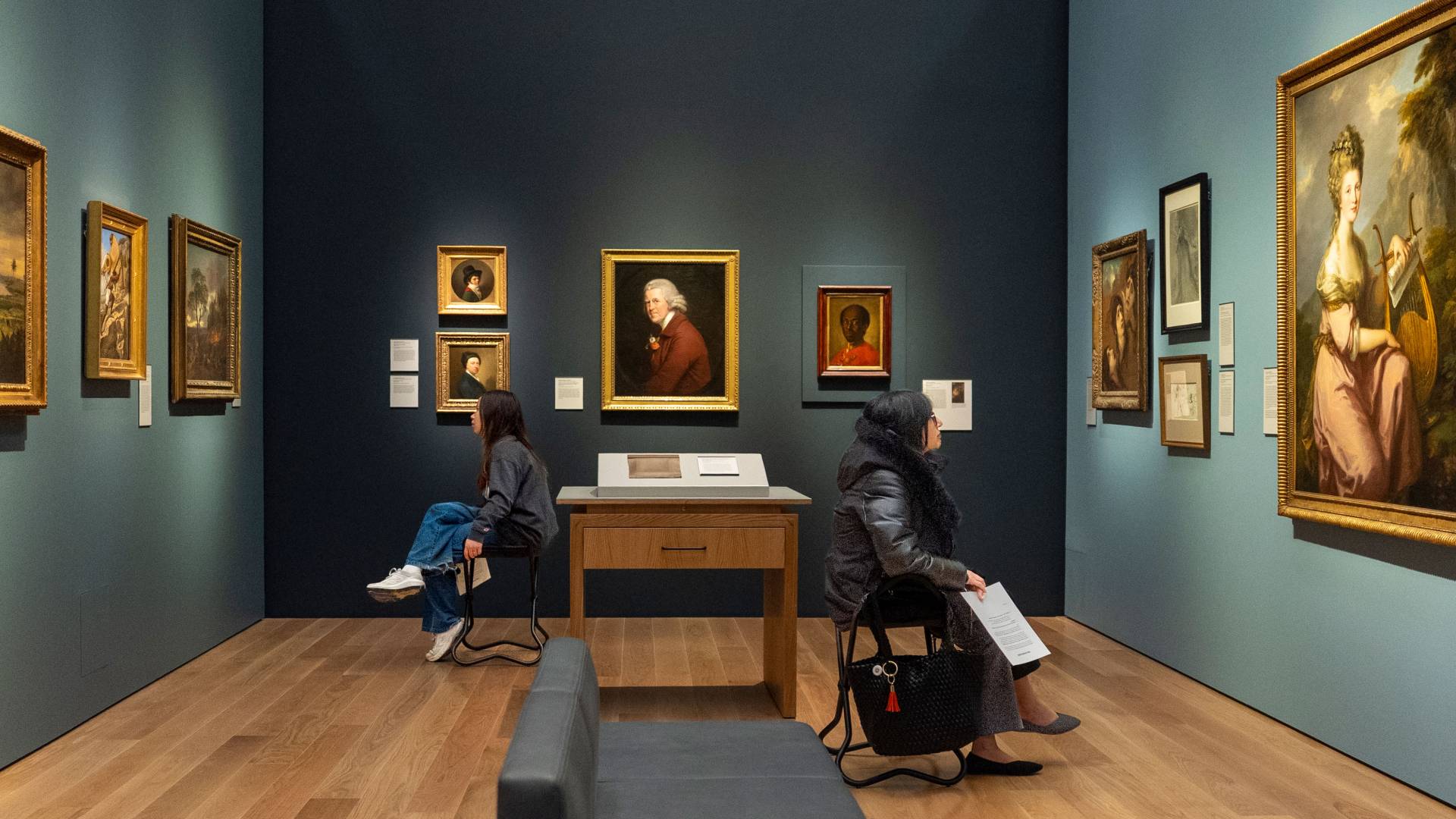
Students, faculty and staff are able to take a break from their busy schedules and closely consider a single piece of art as part of the Visio Divina program organized by the Office of Religious Life.