Senior thesis spotlight: This chemical and biological engineer is exploring a potential solution to stubborn plastic waste
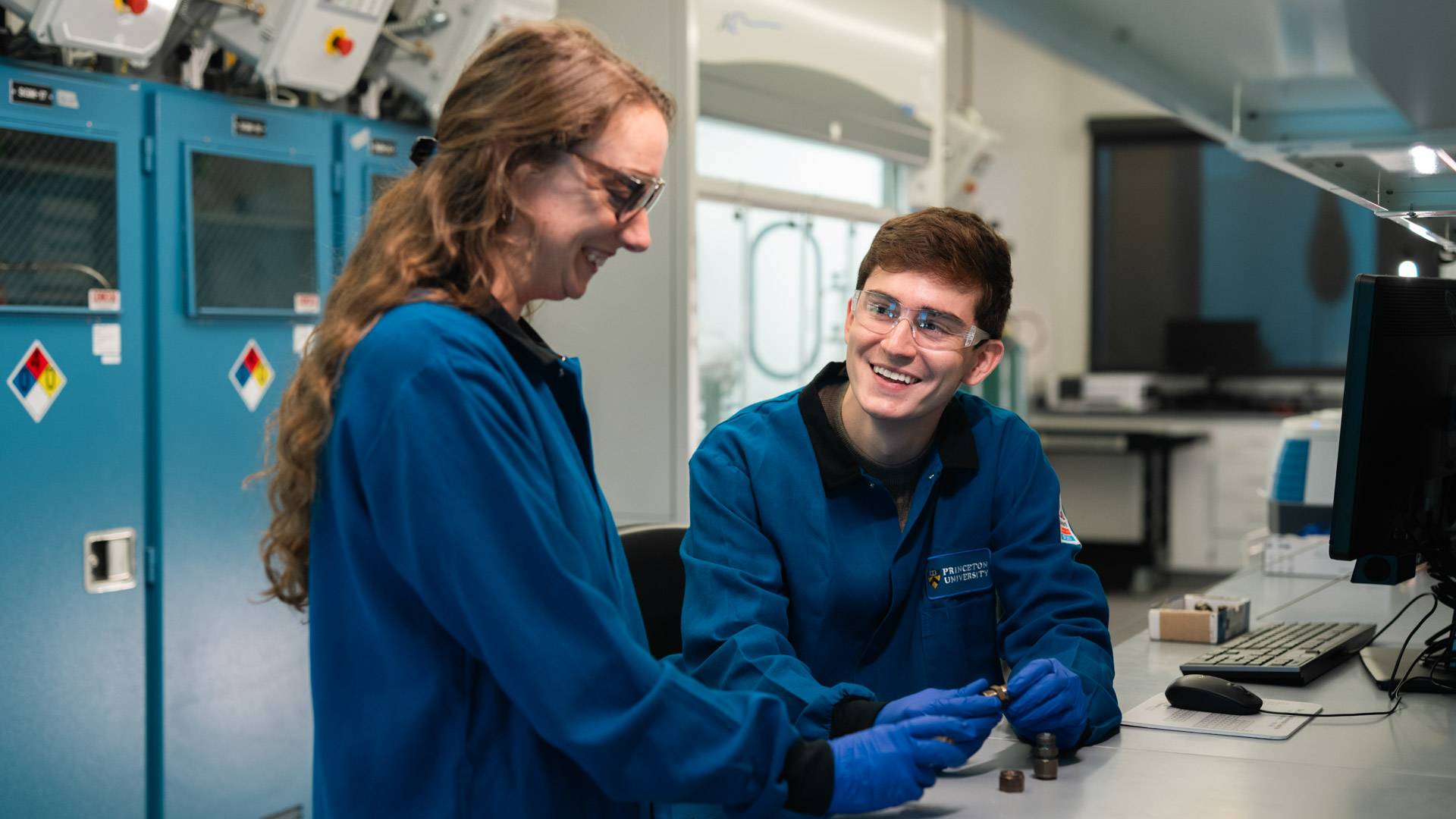
For his senior thesis, David Frankel (right), pictured here with his adviser Michele Sarazen, led research that may lead to a new solution for recycling polyolefins, plastics found in packaging, electronics and countless everyday items, which are notoriously hard to recycle.
On a Sunday morning, Princeton senior David Frankel arrived in the lab just after breakfast, set up a row of six mini chemical reactors and carefully distributed two grams of one of the world’s most ubiquitous plastics into each one.
Polyolefins, plastics found in packaging, electronics and countless everyday items, are notoriously hard to recycle; many will languish in landfills for centuries. But Frankel’s experiments could provide fundamental insights for a new solution to this plastic waste.
In each reactor — actually a repurposed connector for stainless steel pipes — Frankel mixed the polyolefin with a small amount of zeolite, a catalyst that, when heated to more than 400 °F (204 °C), would begin to break the long chemical chains that form polyolefins. Over the next five hours, his experiment would show how well the zeolite could turn polyolefins into molecules for fuels, lubricants and other valuable chemicals — a path to one day upcycling some of the millions of tons of plastic waste produced each year.
“When I was trying to select an adviser for my thesis, I wanted a project that in some way would combat an environmental problem,” said Frankel, a chemical and biological engineering major from Somerville, New Jersey. He connected with Michele Sarazen, an assistant professor in his department who had taught a junior-year course on reaction engineering.
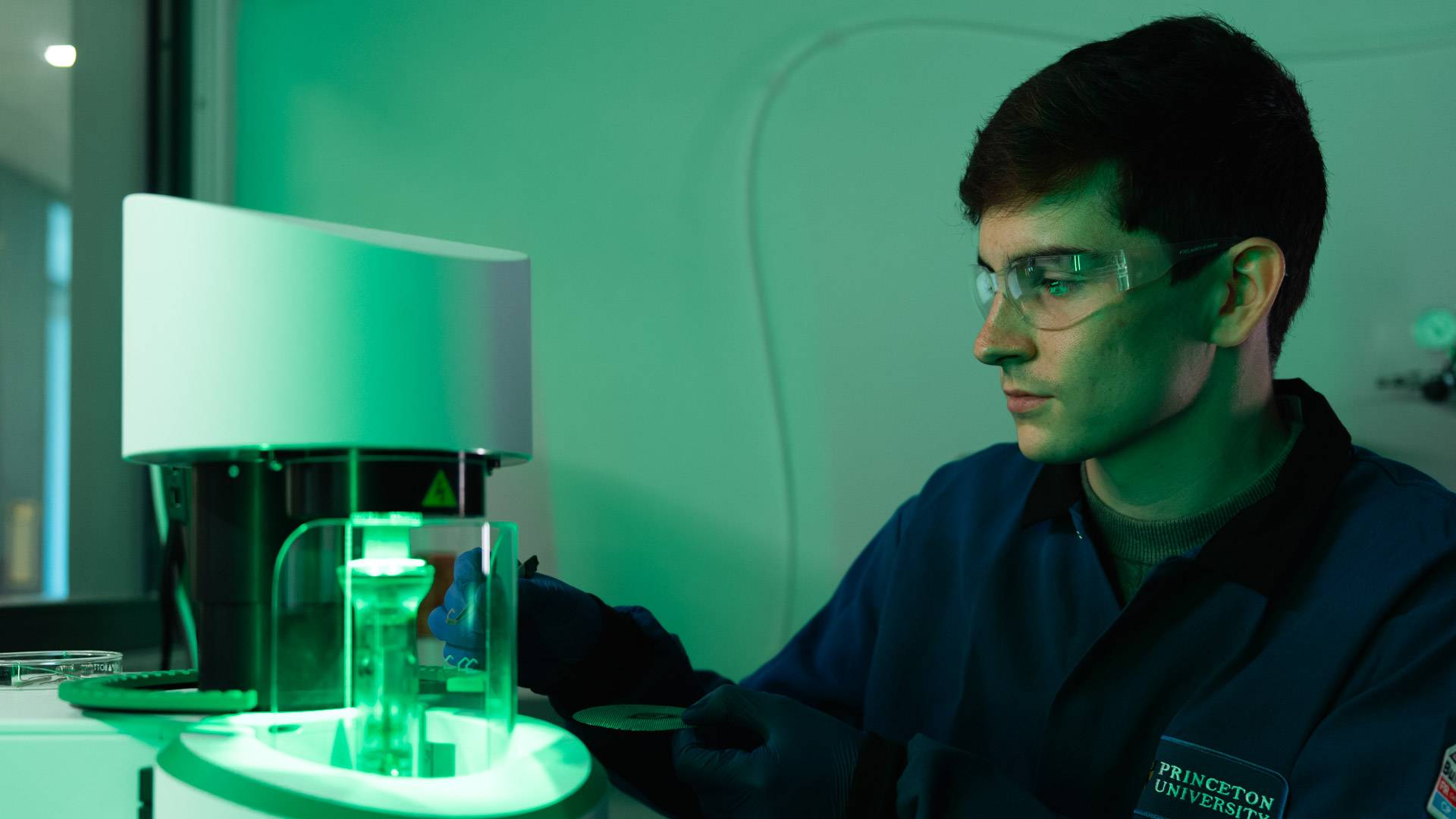
Frankel uses a machine called a thermogravimetric analyzer to measure how polyolefin samples are broken down over time when mixed with zeolite catalysts and heated to high temperatures.
Sarazen’s research focuses on catalysis, which aims to make chemical reactions faster, more selective, and more energy efficient. Her lab is developing catalysts and methods to use waste products, rather than virgin fossil fuels, as more sustainable sources to produce fuels and other materials made from hydrocarbons.
Even as society decarbonizes, “we still will need these types of molecules, whether to run airplanes or to have commodity goods and pharmaceuticals,” said Sarazen. “So, how can we address energy demand by using feedstocks other than crude oil?” Frankel’s work, though far from ready for commercial use, is a step toward that goal, she said.
A job for chemical upcycling
While some types of plastic polymers, like beverage and shampoo bottles, can be ground up, cleaned, and melted into new plastics, other types with more complex chemical compositions are more difficult to recycle. That’s where chemical upcycling comes in, and where zeolites are among the promising catalysts that could help make entirely new products at the molecular level.
Natural zeolites are volcanic minerals containing aluminum and silicon as oxides that form networks of small channels and voids, which are of molecular dimensions. They also can be made in the laboratory, allowing researchers to control desired properties such as the quantity of acid sites on the crystal’s surface that help to initially break the carbon backbone of polyolefin polymers. Once the polymers are small enough to pass through the zeolite’s pores, they break down further into fuels like liquified petroleum gases or larger molecules used in jet fuel or lubricants.
Frankel experimented with three different zeolites with varying pore sizes, three polyolefins of different polymer lengths, and varied reaction temperatures.
Previously, researchers have conducted these types of experiments in larger reactors, which make it difficult to stop reactions at different time points to gain fundamental understanding, or at smaller scales that allow precise analysis of mass and temperature but do not allow researchers to capture reaction products that diffuse into the air.
“What I employ in my thesis is taking the strengths of both of these [methods] to make something better that allows for different insights,” said Frankel. “We can see how the reaction evolves over time.”
Scratching a “math and chemistry itch”
Frankel chose to pursue chemical and biological engineering because of the department's structured curriculum and exciting research opportunities.
“You really get a holistic yet deep and rigorous understanding of chemical engineering through the curriculum,” said Frankel. His courses also “hit the math and chemistry itch that I’ve always had.”
During his time at Princeton, Frankel also delved deeply into other longstanding passions. He minored in bioengineering, linguistics, and cognitive science.
Frankel said he has always been “super wordy,” and started playing Scrabble with his family around age five. He took more linguistics courses than those required for the minor, and loved exploring “things that we still don’t really understand about language structures and formation, and how language influences how we see the world around us,” he said.
Sarazen called Frankel energetic and “very interested in learning, which is a requirement” for joining her lab — “because [we] ask a lot of questions” to garner understanding. She likes to let curiosity drive her research, “and when the students match that, it’s always fun,” she said.
Between setup and cleanup time and a five-hour reaction time, each of Frankel’s experiments was an entire day’s work. He took advantage of not having classes on Fridays during his senior year, and also spent many Sundays in the lab. His mentor, Ph.D. student John Piorkowski, provided training and guidance that enabled him to start working independently relatively quickly.
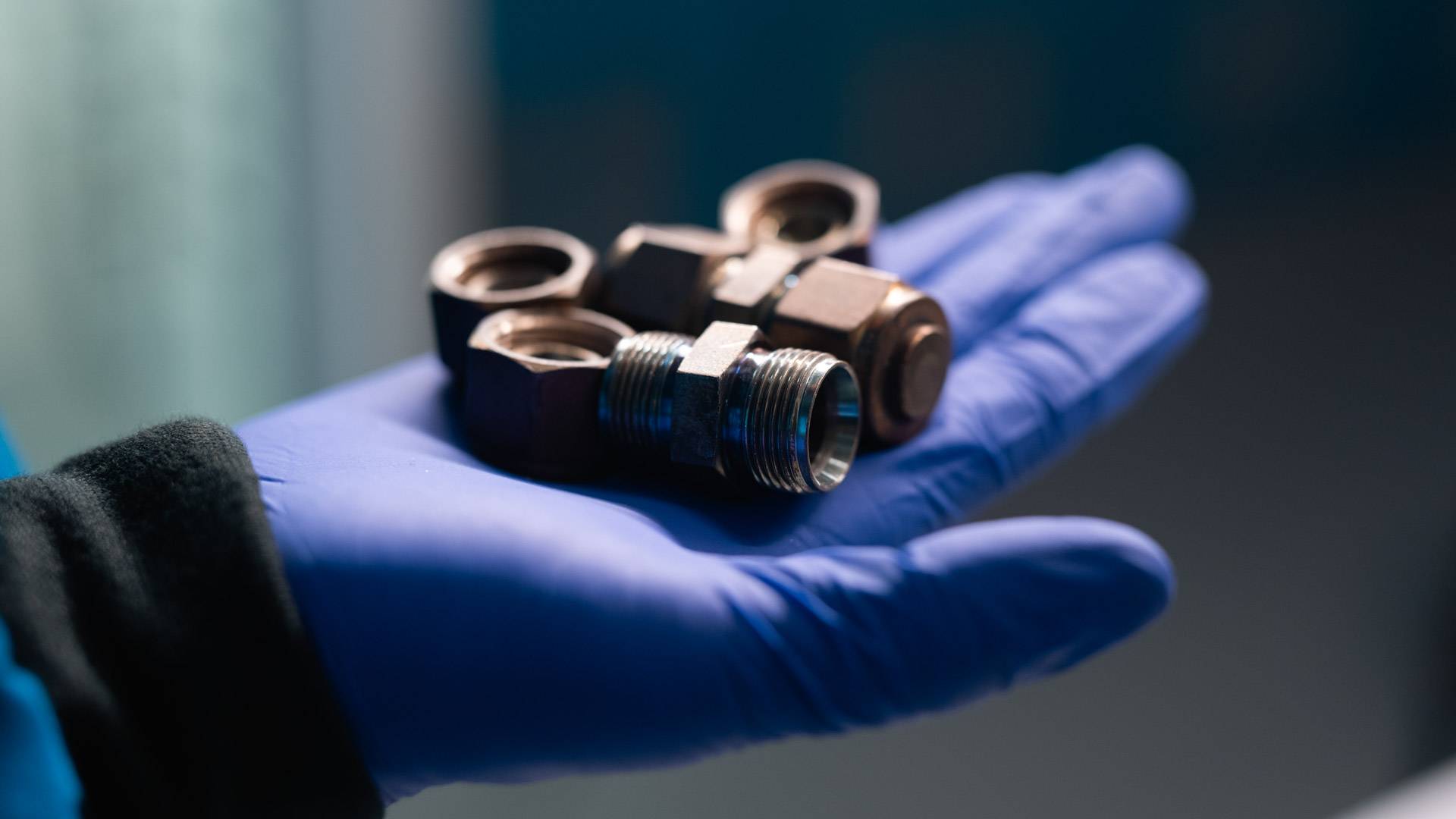
Frankel carried out experiments in mini chemical reactors made from repurposed stainless steel pipe connectors.
Frankel’s research revealed that one of the zeolites he tested converted about 75% of the polyolefin into smaller molecules, while another converted just 25%. While changing additional parameters in the experiments could reveal further ways to optimize the reactions, the strength of this type of work comes from tying these performance metrics to structural properties that differ across the zeolites tested. That can inform the design of better catalysts — a critical step toward the efficient upcycling of polyolefin plastics.
After graduation, Frankel will work as a consultant at McKinsey, where he plans to focus on pharmaceuticals or energy industries.
Reflecting on his thesis, Frankel said, “The biggest takeaway for me is that I was doing impactful work related to the environment every single time I set foot in the lab. That’s an experience I will carry with me for the rest of my life.”
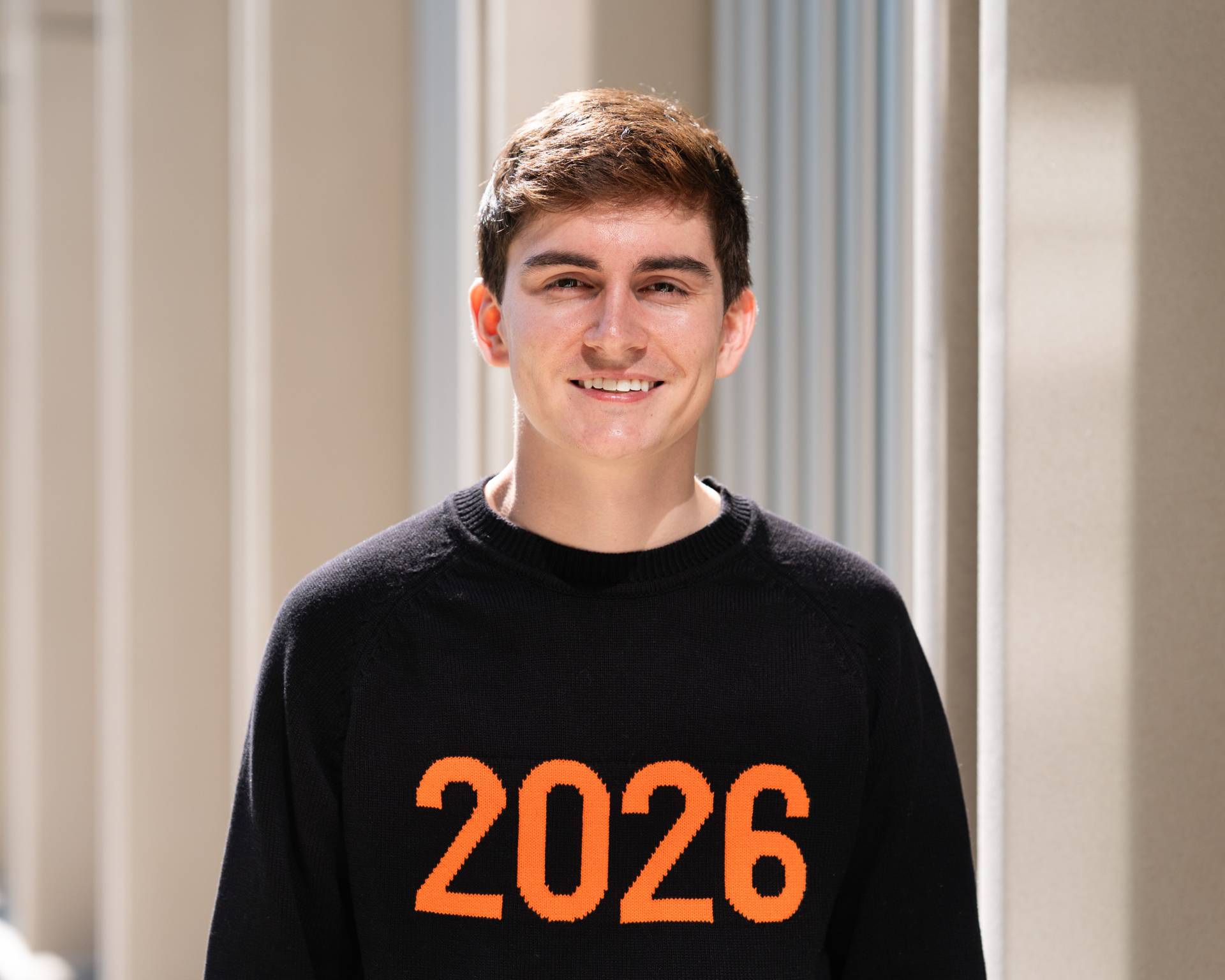
Reflecting on his thesis, Frankel said, “The biggest takeaway for me is that I was doing impactful work related to the environment every single time I set foot in the lab. That’s an experience I will carry with me for the rest of my life."