Vice President for Facilities KyuJung Whang, who has stewarded major campus expansion projects including new construction and innovative sustainability initiatives, will retire at the end of the 2026-27 academic year after a decade of service.
Since joining Princeton in January 2017, Whang has helped guide the planning and delivery of a broad portfolio of academic, research, residential, administrative and infrastructure projects that support the University's long-term strategic vision.
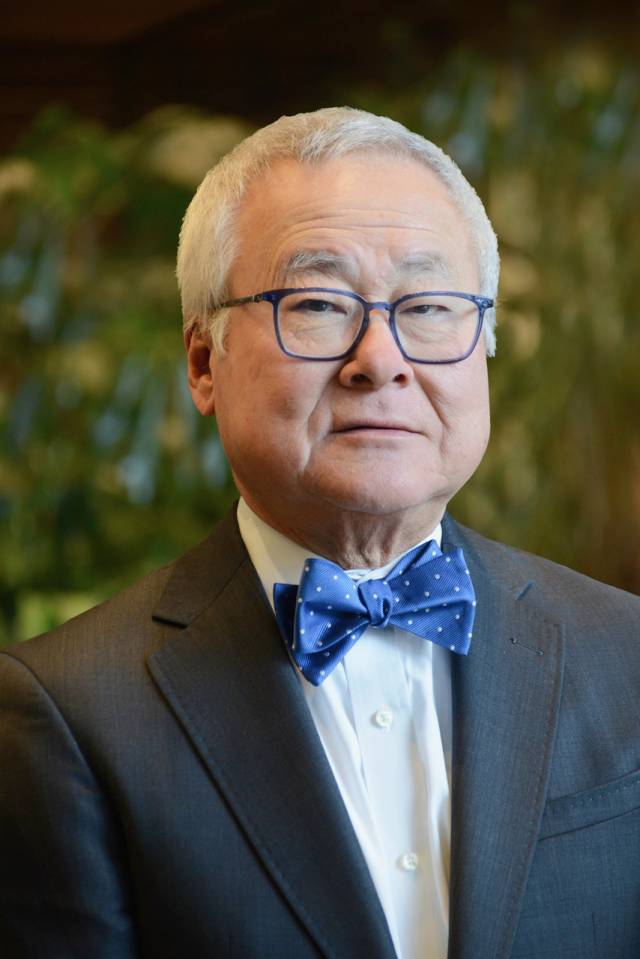
KyuJung Whang
“I am deeply grateful to Kyu Whang, who has skillfully guided Princeton Facilities during a pivotal period of historic investment and growth,” said President Christopher L. Eisgruber. “His leadership and good judgment have improved this University and its beloved campus tremendously, and his many achievements will enhance the experience of Princetonians long into the future.”
As vice president for Facilities, Whang leads a staff of more than 900 who are responsible for campus planning, architecture, engineering, construction, operations, maintenance and real estate.
He played a vital role in turning the University’s 2026 Campus Plan from a long-term vision into a reality, overseeing projects that supported the growth of the undergraduate student body and the University’s commitment to well-being, including the new Huo and Yeh residential colleges, the Racquet and Recreation Fieldhouse, the Class of 1986 Fitness and Wellness Center and Frist Health Center.
“Kyu’s leadership during Princeton’s significant growth has been nothing short of spectacular,” said Executive Vice President Katie Callow-Wright. “The impacts of his dedication and expertise on new academic and student life facilities, future-oriented energy infrastructure, stunning landscapes and more will be felt by generations of students to come.”
Other major new construction included the Princeton University Art Museum, Briger Hall and the School of Engineering and Applied Science complex, and the Meadows Neighborhood across Lake Carnegie, with graduate housing, the geothermal CUB facility, the fieldhouse, a new parking garage, Haaga House and playing fields.
Whang said his north star throughout his tenure has been the idea of stewardship. “We’re all here as caretakers of this University,” he said. “It was here before we got here and will be here many years after we leave. Our role is to take care of this place and do what we believe in our heart is the right thing to do,” he said.
Working toward a more welcoming and accessible campus has been a central focus, he said, with improvements including innovative digital accessibility guides that provide physical accessibility information for over 200 University buildings.
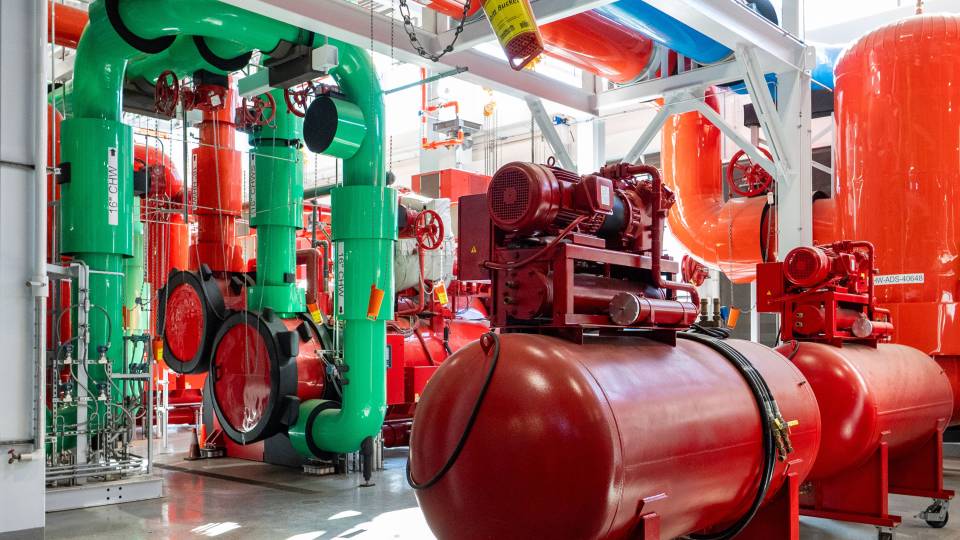
Working with other campus leaders, Whang also has overseen the transformation of the University’s energy infrastructure, replacing natural-gas-fired steam with an array of sustainable and renewable energy technologies, anchored by two new geo-exchange plants (TIGER in the Stadium Neighborhood and CUB in the Meadows Neighborhood). The work to re-envision how the campus is heated and cooled has positioned Princeton as a model for sustainable infrastructure.
“It’s not common for a campus to initiate a whole-cloth change to their heating and cooling systems,” Whang said. “The University had the foresight to steer our energy strategy in the right direction and help meet the University’s commitment to achieve net-zero emissions by 2046.”
Whang also helped integrate sustainability into capital-project decisions, starting with the design process and incorporating energy performance, life-cycle cost analysis and responsible land use.
Whang’s leadership also focused on strengthening the “One Facilities” organization, ensuring that its multiple departments function as an interconnected team and that employees understand how their work contributes to Princeton’s mission. “What I’ve loved about working here is the spirit, and by that I mean the people,” Whang said.
“The people who work at Princeton understand the mission of the University,” he said, which “makes it easy for us to work as a team. People have that drive to do the right thing and that’s what’s so special about this place.”
When he arrived at Princeton, Whang started a tradition of quarterly orientation sessions to welcome new hires. He said he always tells new employees: “To work at the University is an incredible honor and privilege, and to never forget that.”
Before Princeton, Whang had led Cornell University’s Division of Infrastructure, Properties and Planning as vice president beginning in 2006. He previously served as vice president for facilities and campus planning at Rutgers University.
Prior to his work in higher education, Whang was an architect at design, planning and engineering companies, including time as a senior project architect at CUH2A Architects and Engineers (now part of HDR Architects and Engineering) in Princeton.
Whang has served on the board of directors of the Association for the Advancement of Sustainability in Higher Education and was a founding member of the New Jersey Higher Education Partnership for Sustainability.