Jorge Sarmiento, the George J. Magee Professor of Geoscience and Geological Engineering, Emeritus, and a professor of geosciences, emeritus, died on May 5. His lifelong contributions to climate science were recognized with numerous awards and prizes, including a Nobel Peace Prize in 2007 that was collectively awarded to the Intergovernmental Panel on Climate Change.
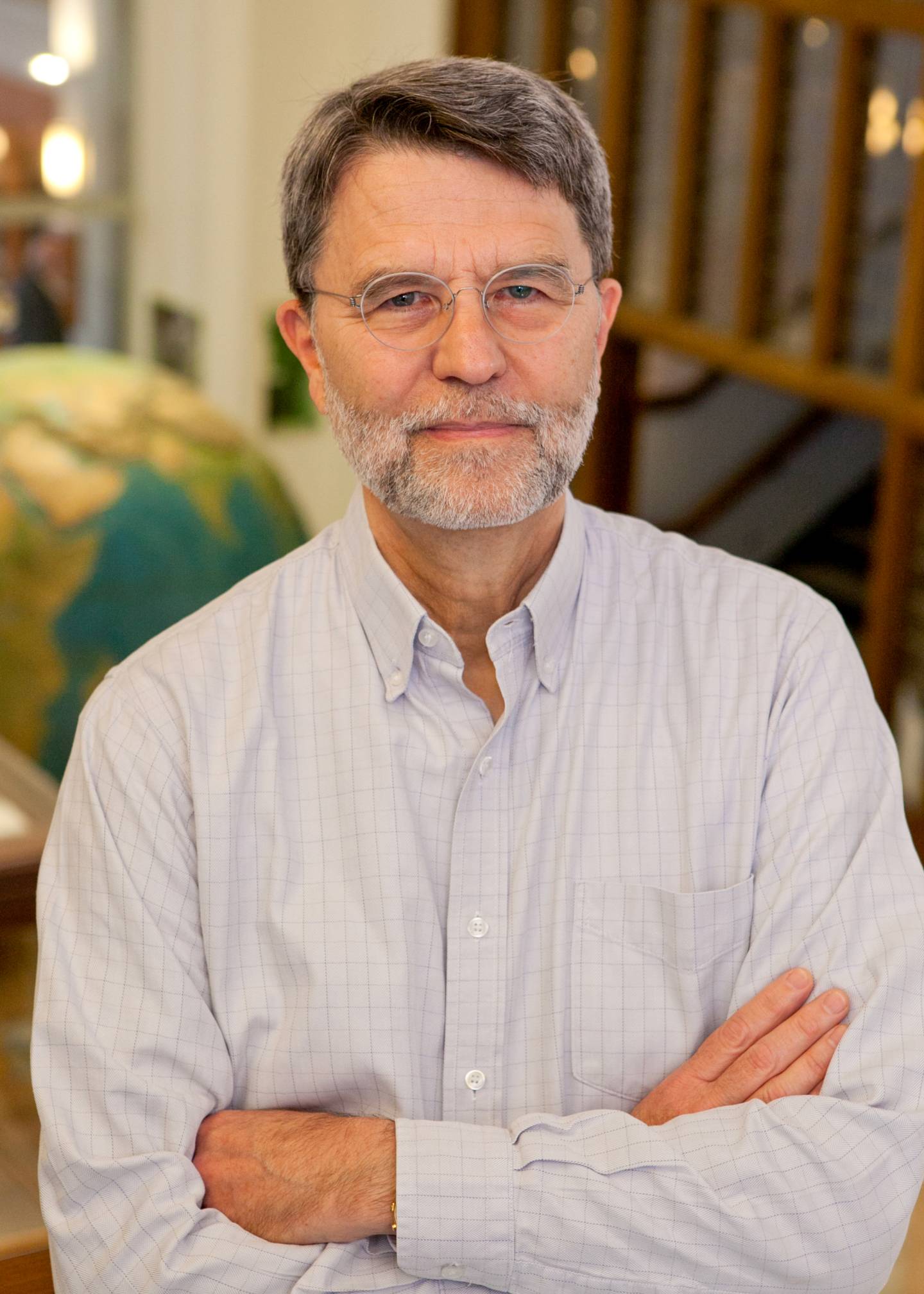
Jorge Sarmiento in 2011
"Jorge will be remembered for his great contributions to studying carbon flow and the importance of the oceans in the Earth system,” said Syukuro “Suki" Manabe, a 2021 Nobel Prize in Physics laureate and Sarmiento’s longtime colleague at Princeton. "He was always selfless and focused on promoting others. Jorge took great pride in mentorship, and he trained many talented students who are now leaders in the field. He was an important faculty member at Princeton, and throughout the years he was an ardent supporter of the long-term partnership with the NOAA Geophysical Fluid Dynamics Laboratory — a partnership critical to understanding the climate and the Earth system. He will truly be missed."
Sarmiento studied and modeled ocean circulation, biological processes in the ocean, and the impacts of circulation and metabolism on the oceanic distribution of carbon, oxygen, nitrogen and the other elements vital to ocean biology. He investigated rates of biological processes in the oceans, responses of ocean biology to global change, the dynamics of fisheries and more.
“He was a great scholar, mentor and leader,” said Gabriel A. Vecchi, Princeton’s Knox Taylor Professor of Geosciences and the director of the High Meadows Environmental Institute. “Jorge was a giant in the field, and he is and will be missed.”
“Over a career spanning more than 40 years, Jorge played a major role in advancing our understanding of the Earth’s global carbon cycle and unraveling the complex interactions between ocean chemistry, biology and climate,” said Tom Duffy, chair of the Geosciences Department.
Sarmiento was the longtime director of the Atmospheric and Ocean Sciences Program (AOS) at Princeton and the long-serving director and scientific leader of the Cooperative Institute for Climate Science (CICS), a collaboration with NOAA at Princeton.
“Sarmiento was a towering figure in the field of ocean biogeochemistry, and established AOS as a world leader in this area of research,” said Stephan Fueglistaler, a professor of geosciences at Princeton and director of AOS and the Cooperative Institute for Modeling the Earth System (CIMES, the successor to CICS). Sarmiento was director of AOS from 1980 to 1990, and then again from 2006 until 2015, when Fueglistaler took over.
A “deep imprint” across nearly 50 years
A native of Peru, Sarmiento earned his bachelor’s degree at Swarthmore College in 1968 and his Ph.D. at Columbia University in 1978. He then came to Princeton in 1978 as a research assistant in the Geophysical Fluid Dynamics Program, now the Atmospheric and Oceanic Sciences Program. He joined the Princeton faculty in 1980 as an assistant professor in geosciences and was then promoted to associate professor in 1986 and full professor in 1991. He transferred to emeritus status in 2019.
During his long tenure here, he was recognized as one of the world’s foremost climate researchers, and among the first to claim the title “biogeochemist,” emphasizing the tight interconnections between biology, geology and chemistry, particularly in the world’s oceans.
“Jorge left a deep imprint in our understanding of biogeochemical cycles through his research tackling some of the most important questions in the field, such as building understanding about the fate of carbon in the oceans — among so many other questions,” Vecchi said. “Jorge helped drive key elements of the climate science enterprise at Princeton through his leadership of the Atmospheric and Oceanic Sciences Program and his many years shepherding Princeton's collaboration with NOAA/GFDL.”
Sarmiento was a leader of the Joint Global Ocean Flux Studies program, which ran from 1990 to 2005. The initiative sought to understand how the carbon in the ocean varies over time, and to develop models of how the world’s oceanic biogeochemical processes responded to perturbations caused by humans, in particular those related to climate change.
“This program supported scores of principal investigators and hundreds of students and set the agenda for oceanographic research for decades,” said Duffy.
Subsequently he developed and led SOCCOM (Southern Ocean Carbon and Climate Observations and Modeling), a multi-institution program based at Princeton and funded by the National Science Foundation. That effort has deployed hundreds of autonomous floating data collectors to monitor how the Southern Ocean — the ocean encircling Antarctica — influences the world’s climate. In the 1980s, Sarmiento had been one of the first scientists in the world to discover the importance of the Southern Ocean in controlling the atmosphere’s carbon dioxide levels.
In addition to his scientific contributions, Duffy said, “Jorge also mentored an extraordinarily large number of young scientists, who thrived under his mentorship and are now carrying on his scientific legacy at institutions around the world.”
Sarmiento trained many generations of future oceanographers via his seminal chemical oceanography class for graduate students. He also attracted many students to the geosciences major by teaching his introductory general oceanography course.
One of his last graduate students, Kelly Kearney, is now a research scientist at the Joint Institute for the Study of the Atmosphere and Ocean at the University of Washington.
“My time in Jorge's lab shaped both my professional and personal life,” said Kearney. “He was of course a brilliant researcher, but to me his real superpower was his ability to foster brilliance and collaboration in others. He had a genuine enthusiasm for new ideas and a knack for finding students and postdocs from widely diverse backgrounds and guiding their pursuit of topics across the oceanographic spectrum. His impact on the field was immense.”
Sarmiento is survived by his wife, Lucia Acosta; their two children, Jonathan (Ommera Ahmed) and Sara; and his grandson, Isaac. Charitable contributions in Sarmiento’s name may be directed to The Parkinson’s Foundation.


