Princeton in the service of a new nation
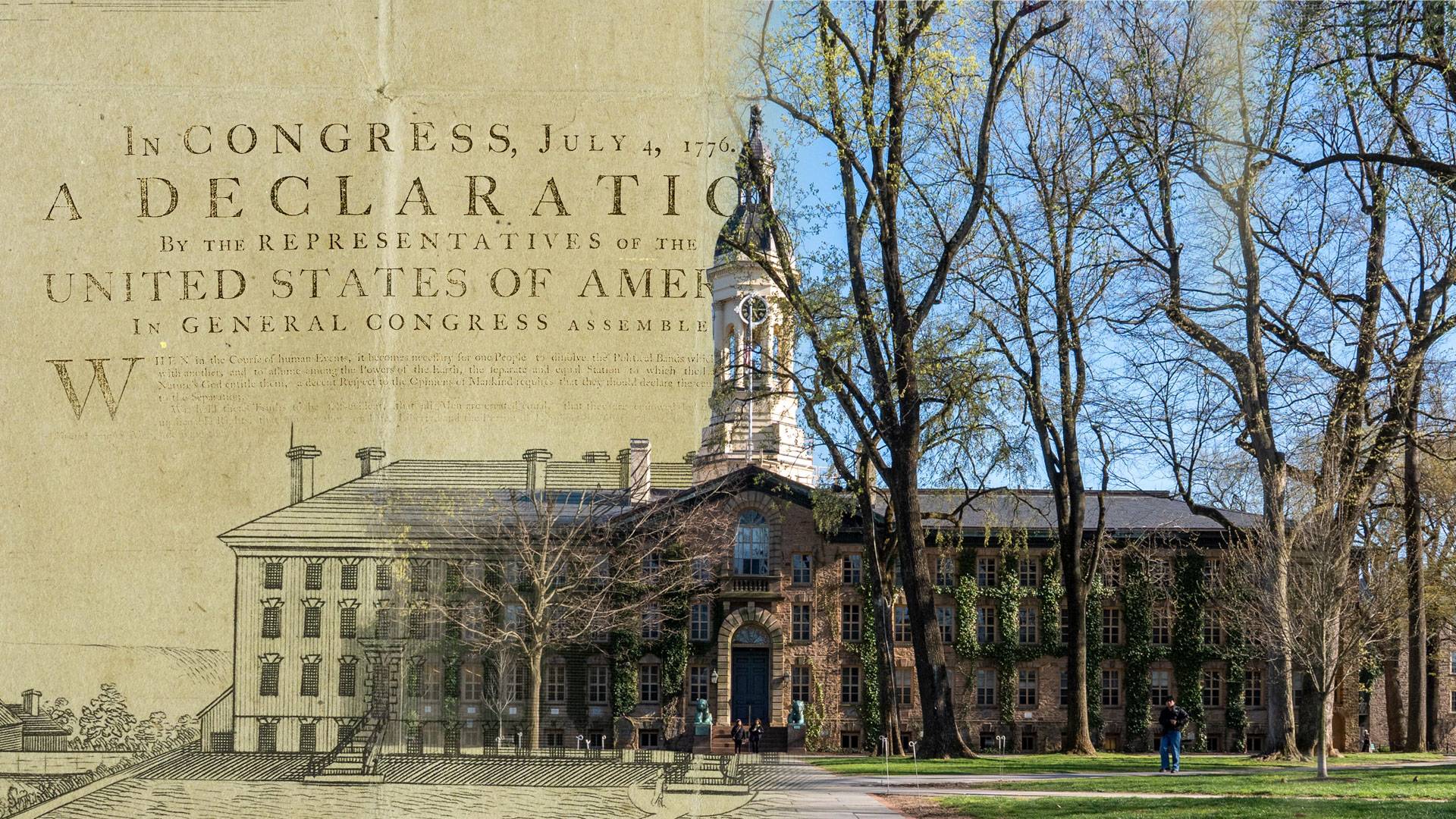
In the 1770s, Princeton was a sleepy crossroads a hard day’s ride up the King’s Highway from Philadelphia. But that didn’t stop the town and The College of New Jersey — today’s Princeton University — from playing an outsize role in the founding of our nation.
“Princeton witnessed a kaleidoscope of revolutionary experiences,” said Michael Blaakman, an associate professor of history at Princeton. “Students and professors were swept up in colonial resistance and seized by revolutionary fervor, becoming leading advocates for the patriot cause and theorists of republican government.
“The town and campus were occupied by the British, ravaged by battle, overrun by competing armies, and turned briefly into the fledgling nation’s makeshift capital,” he said. "The people of 18th-century Princeton — patriot and loyalist, free and enslaved — experienced these events in wildly different ways, but all saw their world transformed.”
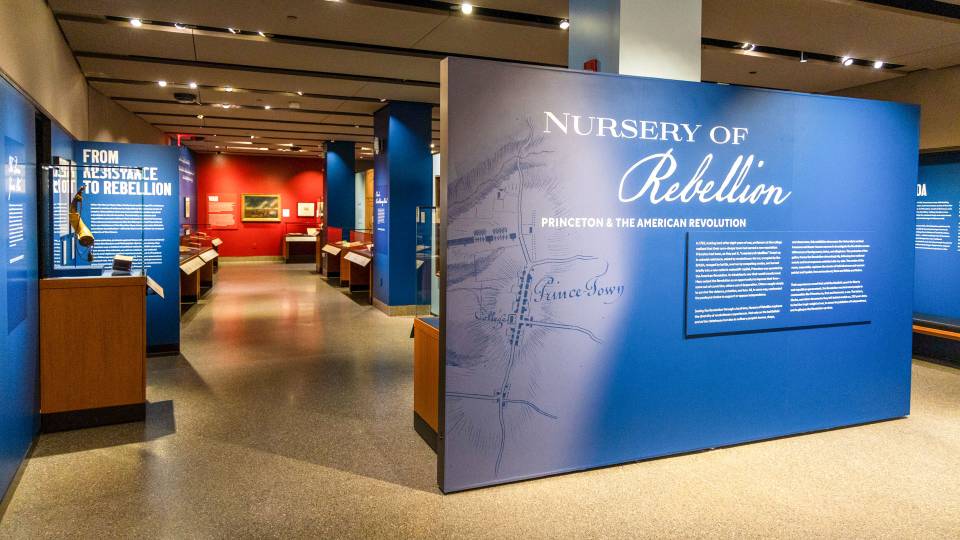
As the nation marks its semiquincentennial — the 250th anniversary of the Declaration of Independence on July 4, 1776 — we take a look back at the University’s remarkable Revolution-era history as told through historical records (many of which are housed at the Princeton University Library), in reference works, and by the library’s marquee “‘Nursery of Rebellion’: Princeton and the American Revolution” exhibition and its curators, Blaakman and Gabriel Swift.
Special programs focused on America’s 250th anniversary continue this summer and fall, including art and history exhibits, public conversations and more.
Princeton students had their own tea party.
Princeton students had a long-simmering resentment to taxation without representation. A decade before the Declaration of Independence, members of Princeton’s Class of 1765 protested the Stamp Act, a tax on nearly all paper goods in British America, by wearing American-made clothing at Commencement — and rejecting imported academic robes.
Eight years later, after New England colonists chucked chestfuls of tea into Boston Harbor in December 1773, Princeton students showed solidarity, throwing a tea party demonstration of their own. The Library’s “Nursery of Rebellion” exhibit includes a letter written in January 1774 by Charles Clinton Beatty with his account of the event:
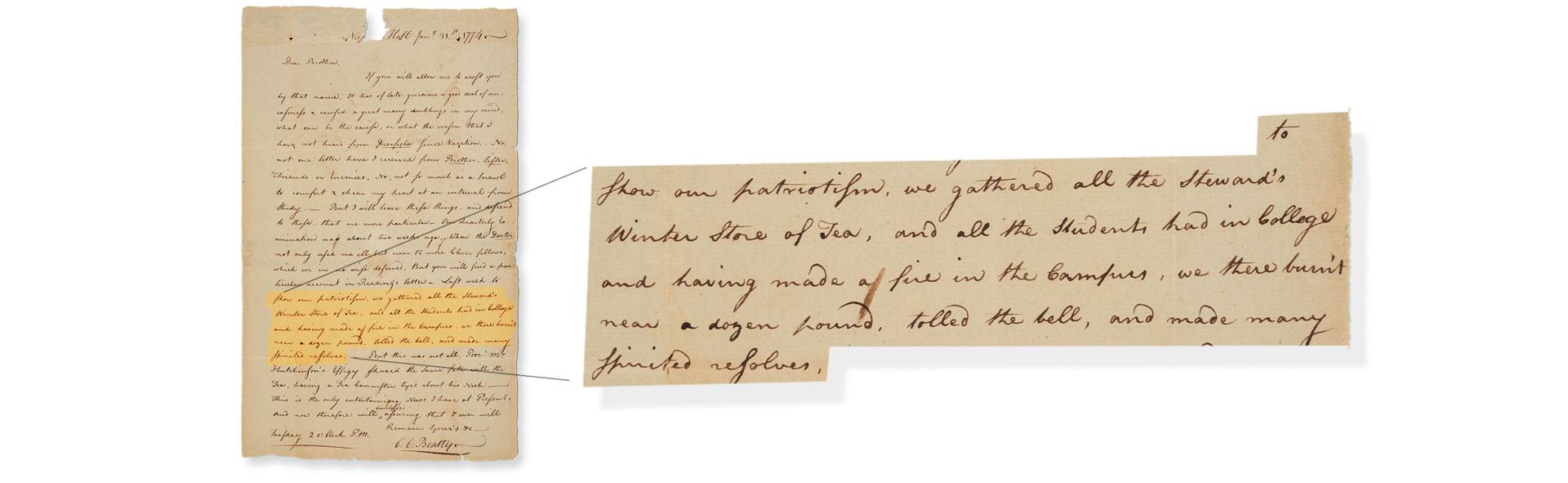
Student Charles Clinton Beatty of Princeton's Class of 1775 wrote a letter to Enoch Green, Class of 1760, on Jan. 31, 1774, detailing his firsthand account of the Princeton tea party, which described how students "gathered all the steward’s winter store of tea" and burned it.
“To show our patriotism, we gathered all the steward's winter store of tea,” he wrote, “and having made a fire in the campus,” or the grounds between Nassau Hall and Maclean House, “we there burnt near a dozen pounds, tolled the bell, and made many spirited resolves.”
The organizer of the “Princeton Tea Party,” Samuel Leake of the Class of 1774, had been named that year’s salutatorian by the faculty. But for his role in the “riotous proceedings,” the Board of Trustees rescinded Leake’s Latin honors.
In 1776, Princeton’s sixth president, John Witherspoon, helped tip the balance in the Continental Congress toward independence.
Witherspoon, a Scottish minister, led the University during the American Revolution. He was the only college president and clergyman to sign the Declaration of Independence.
As president of the University from 1768 to 1794, Witherspoon instilled a sense of civic duty on campus with a focus on the values of reason and rhetoric embraced by students and spread by alumni across the young nation, helping position Princeton as a font of revolutionary fervor.
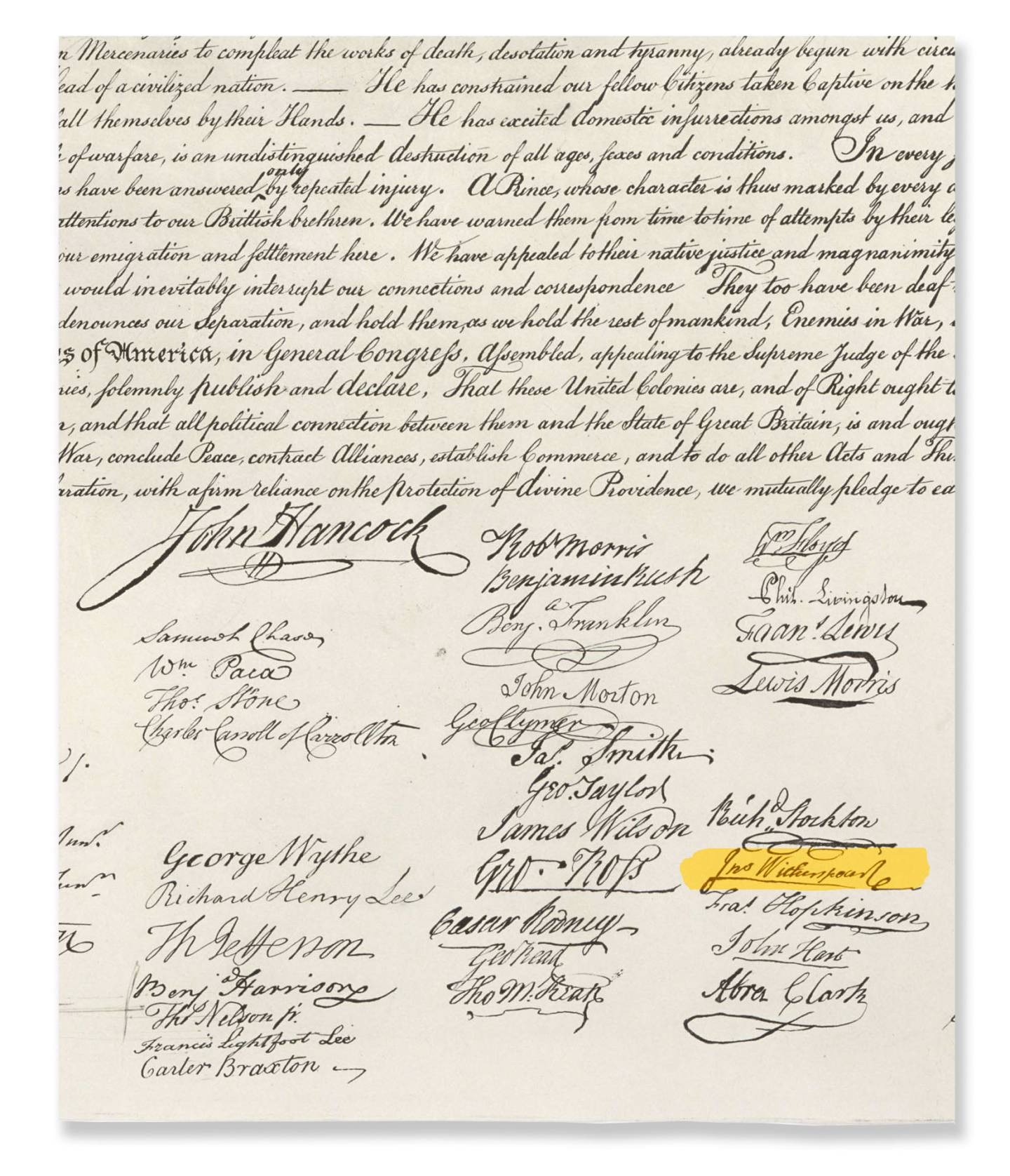
Princeton’s sixth president, John Witherspoon, was the only college president and clergyman to sign the Declaration of Independence (highlighted above).
Witherspoon taught students whose time at Princeton led to careers in public and government service, including U.S. President James Madison and Vice President Aaron Burr Jr., as well as nine cabinet officials, 21 senators, 39 Congress members, three Supreme Court justices, and 12 governors, according to a tally in “The New Princeton Companion” by Robert K. Durkee (Princeton University Press, 2022).
In a sermon a month before his election to the Continental Congress, Witherspoon famously said, “The cause in which America is now in arms, is the cause of justice, of liberty, and of human nature.” These words help illustrate Witherspoon’s complicated legacy, as documented most recently by the Council of the Princeton University Community (CPUC) Committee on Naming. He is among the Founding Fathers who championed liberty and also enslaved human beings.
“Witherspoon built his revolutionary politics around a belief in liberty, but he also chose to enslave people in his own household,” the committee wrote in its 2024 report to the Board of Trustees.
Tax records show that Witherspoon enslaved at least two people for at least seven years, according to the report. The committee also noted that Witherspoon voted against the abolition of slavery in New Jersey, though he supported the idea of gradual abolition, and that he tutored several free Black people in Scotland and Princeton, but “stopped short of enrolling these men in the University, or otherwise treating them as he would white students.”
During the Revolutionary War, Princeton remained a functioning college.
The oldest building on campus, Nassau Hall once housed all of the University’s classrooms, its dormitories and its chapel. Princeton stayed open as the war began, approached, and soon descended on campus.
Classes continued even as the state legislature held its inaugural meeting in Nassau Hall on Aug. 27, 1776, where its members elected New Jersey's first governor and convened through November.
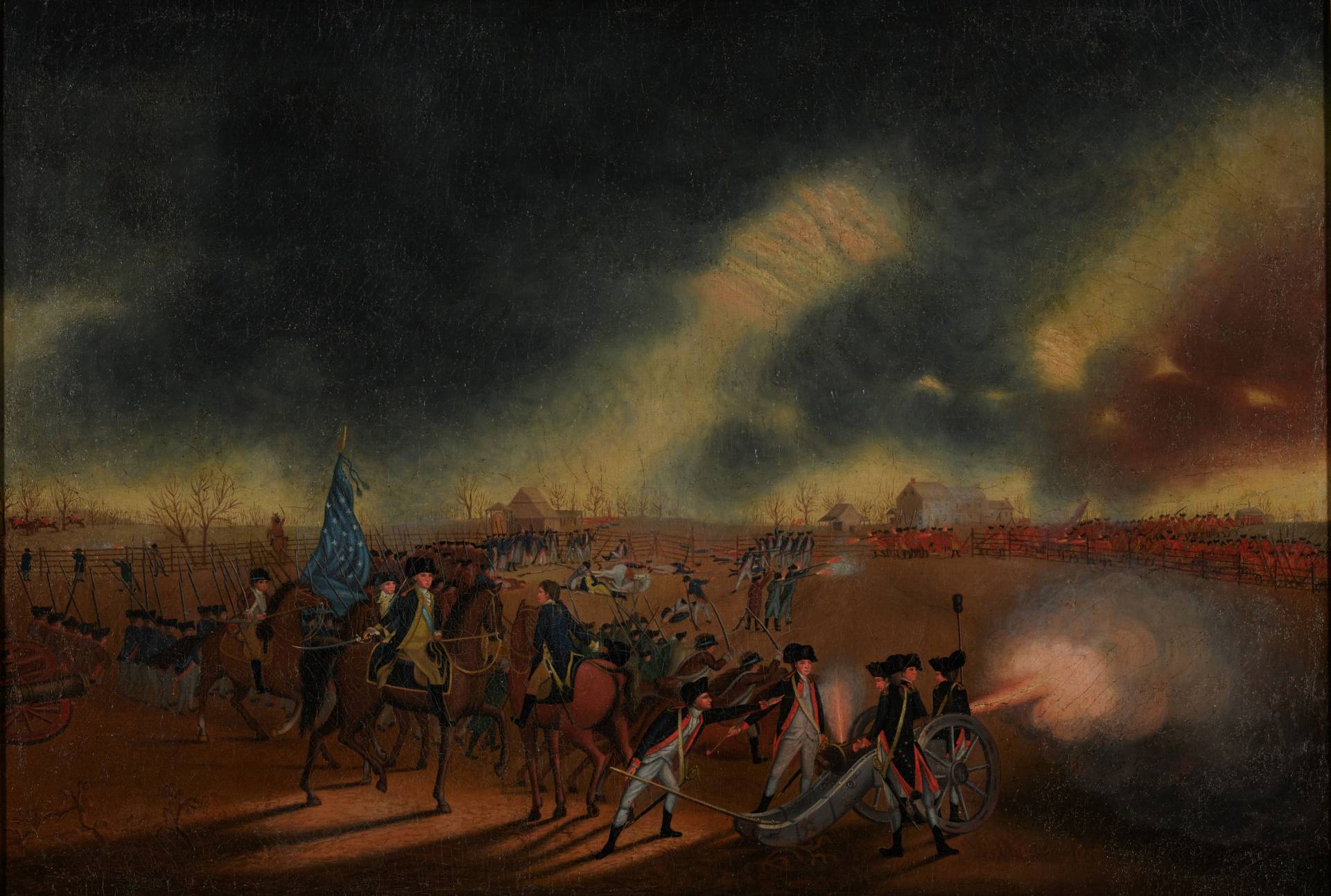
James Peale’s “The Battle of Princeton” (circa 1782) depicts George Washington as the centerpiece of the ongoing conflict. Nassau Hall is shown in the background.
President Witherspoon dismissed students only two months before the Battle of Princeton was fought on and near the campus on Jan. 3, 1777. Many students left with only what they could carry. Three books from the campus library have survived to this day and will be displayed one at a time at the “Real and Remembered: Princetonians Caught Between Study and Revolution” exhibit at Princeton's Mudd Manuscript Library.
Warfare wrecked Nassau Hall but did not deter students and professors from returning after the pivotal Battle of Princeton. In a June 26, 1777, newspaper advertisement that’s on display in “Nursery of Rebellion,” Witherspoon announced that students should come back to campus “without delay …”
“It is hoped, that all of them have been pursuing their studies separately as well as their circumstances would allow, and that they will now apply with extraordinary diligence, to recover the ground that has been necessarily lost,” he wrote.
The Battle of Princeton served as a turning point of the war.
Gen. George Washington and the Continental Army famously crossed the Delaware River on Christmas night 1776 for a surprise attack at the Battle of Trenton that secured a much-needed triumph for the beleaguered American cause.
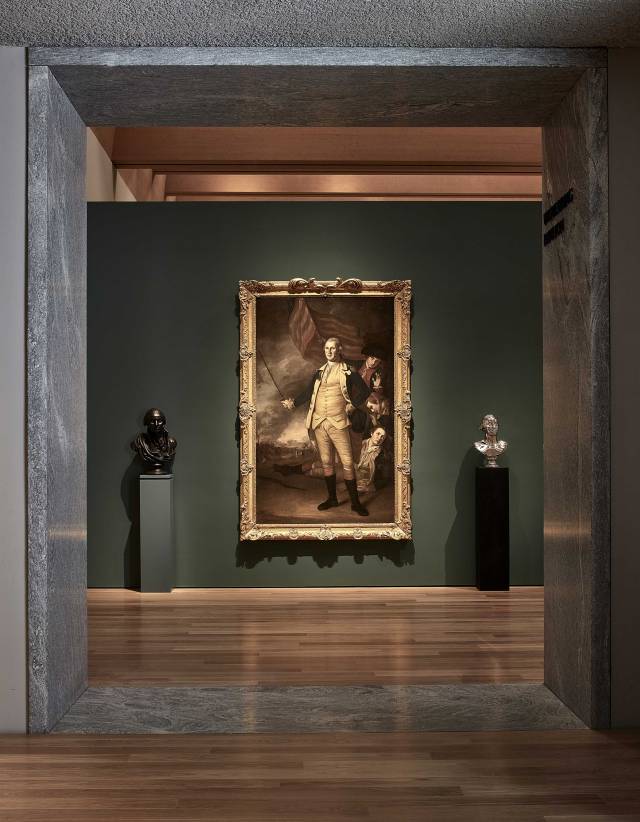
Charles Willson Peale’s famous “George Washington at the Battle of Princeton” (1784) on display at the Princeton University Art Museum.
Just eight days later, American forces continued their momentum at the Battle of Princeton, where they stormed Princeton’s campus and retook British-occupied Nassau Hall.
The impact of the conflict is still visible today. American artillery permanently scarred the building's back side. Cannon fire also famously destroyed a painting of King George II hanging in its Prayer Hall, now known as the Faculty Room.
University trustees later commissioned artist Charles Willson Peale for a portrait of Washington to hang in the same gilded frame. Peale’s “George Washington at the Battle of Princeton” (1784) hung in the Faculty Room for over two centuries and is now on view at the Princeton University Art Museum. Another version, “George Washington After the Battle of Princeton” (1779-82), has since taken its place.
Princeton served briefly as the nation’s capital for four months in 1783.
In the final months of the Revolution, Congress struggled to fund the Continental Army under the Articles of Confederation. When soldiers mutinied in Philadelphia, Continental Congress president Elias Boudinot IV adjourned Congress there and moved it to Princeton, where he was a University trustee.
Faculty invited the delegates to hold sessions in Nassau Hall — which still housed nearly the entire college — but apologized for its appearance in a letter that is part of the “Nursery of Rebellion” exhibit, on loan from the National Archives. The building had been a target of the British army’s “peculiar & marked resentment,” the letter said, on account of the college’s reputation as a “nursery of rebellion.”
During the four months from June to November 1783, delegates from the 13 states convened in the second-floor library and the Prayer Room of Nassau Hall, where they crossed paths and shared spaces with students and scholars.
Student Samuel Beach wrote that Congress and campus celebrated July 4 together that year “with speaking, firing of cannon, throwing rockets, fireworks, eating and drinking … The day terminated as usual, some were drunken and all were tired.” The letter is on display in “Nursery of Rebellion.”
Charles Thomson, secretary of the Continental Congress, wrote that the delegates grew so bored in the provincial town that at one point that they considered putting on a puppet show in Nassau Hall, which was quickly shut down.
Yet, as “The New Princeton Companion” notes, it was at Princeton that Congress “thanked George Washington for his leadership during the war, received news of the signing of the definitive treaty of peace with Great Britain, and welcomed the first foreign minister — from the Netherlands — accredited to the United States.”
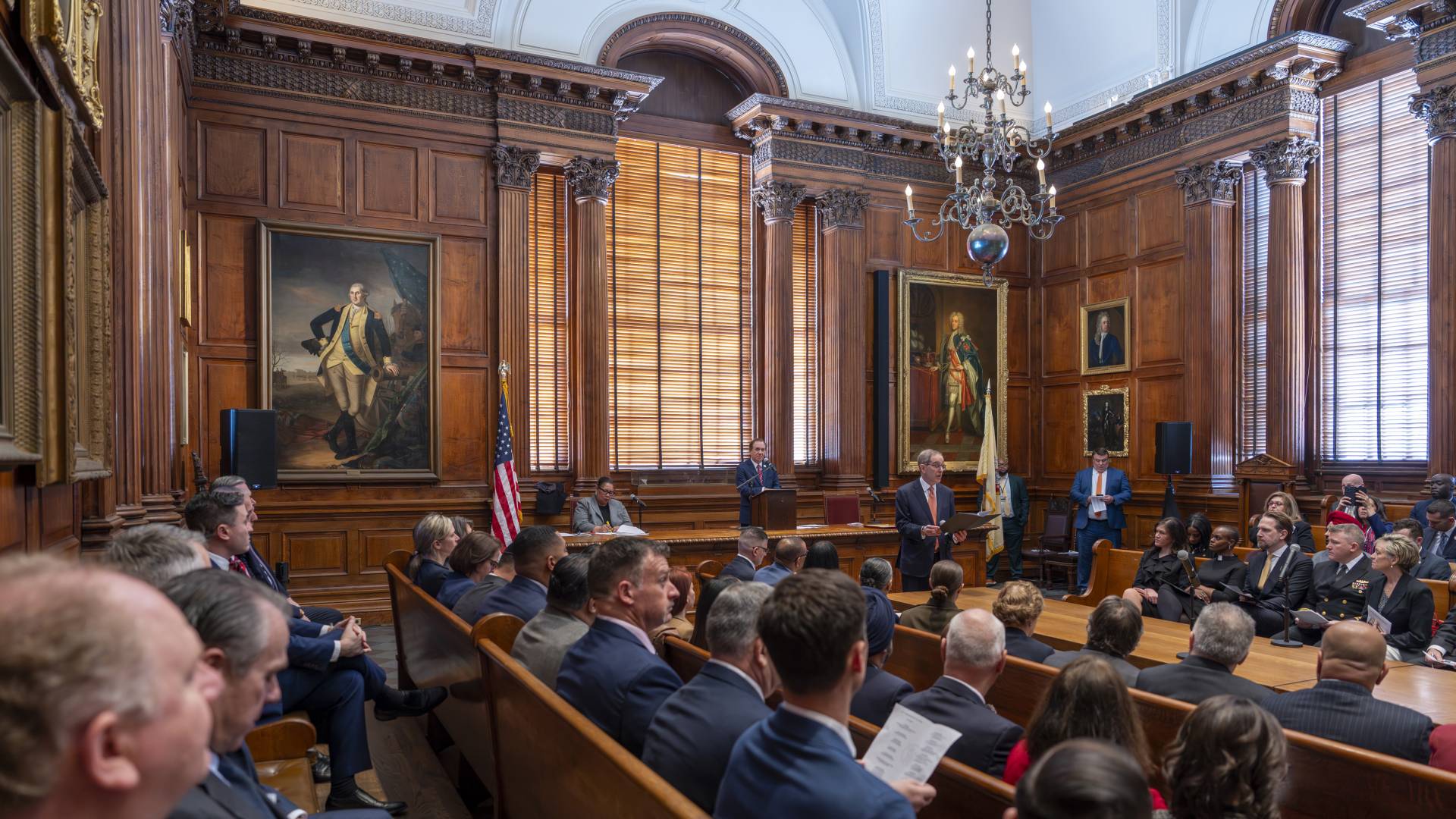
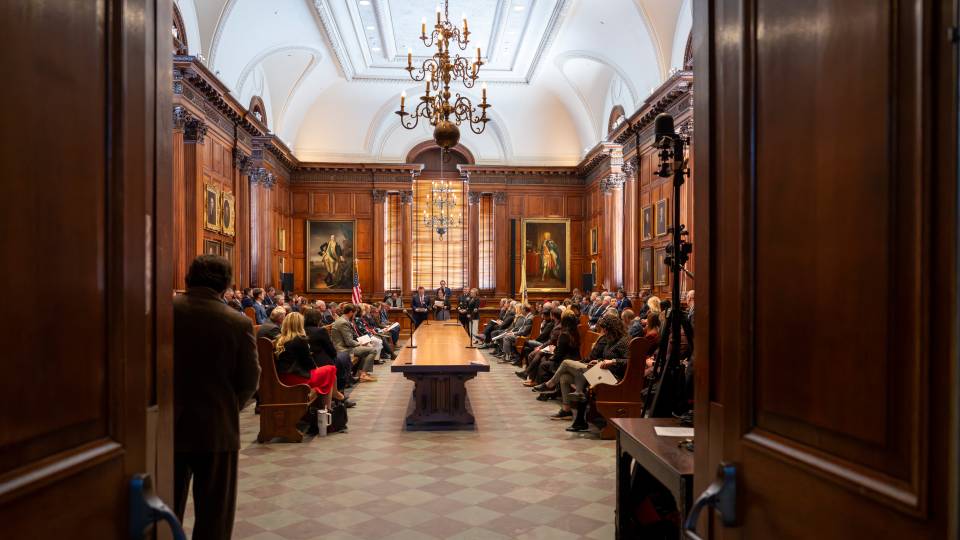
In February, Princeton President Christopher L. Eisgruber welcomed members of the New Jersey General Assembly and Senate to campus for a ceremonial session recognizing the 250th anniversary of the first official meeting of the New Jersey Legislature in the Faculty Room at Nassau Hall.
George Washington had an enduring respect for Princeton.
He visited the institution at least twice, first at Nassau Hall during the Battle of Princeton and again to hold an audience with the Continental Congress.
On Sept. 24, 1783, Washington and the delegates attended Commencement, after which the University’s trustees commissioned Peale’s “George Washington at the Battle of Princeton” as “testimony of their high respect for the character” of the future president. Washington is said to have financed the painting himself with the donation of 50 guineas, documented in a ledger in the University Archives.
After he became the first president of the United States, Washington wrote in a letter to his adopted son, alum George Washington Parke Custis, “No college has turned out better scholars or more estimable characters than Nassau.”
Princeton students celebrated Washington’s birthday on Feb. 22, 1794, beginning a campus tradition that continued into the late 19th and early 20th centuries, according to a history of the tradition written for the University Archives. The February celebrations were a precursor to Alumni Day, which was observed on Feb. 22 from 1916 to 1955 and has been held on the closest Saturday every year since.
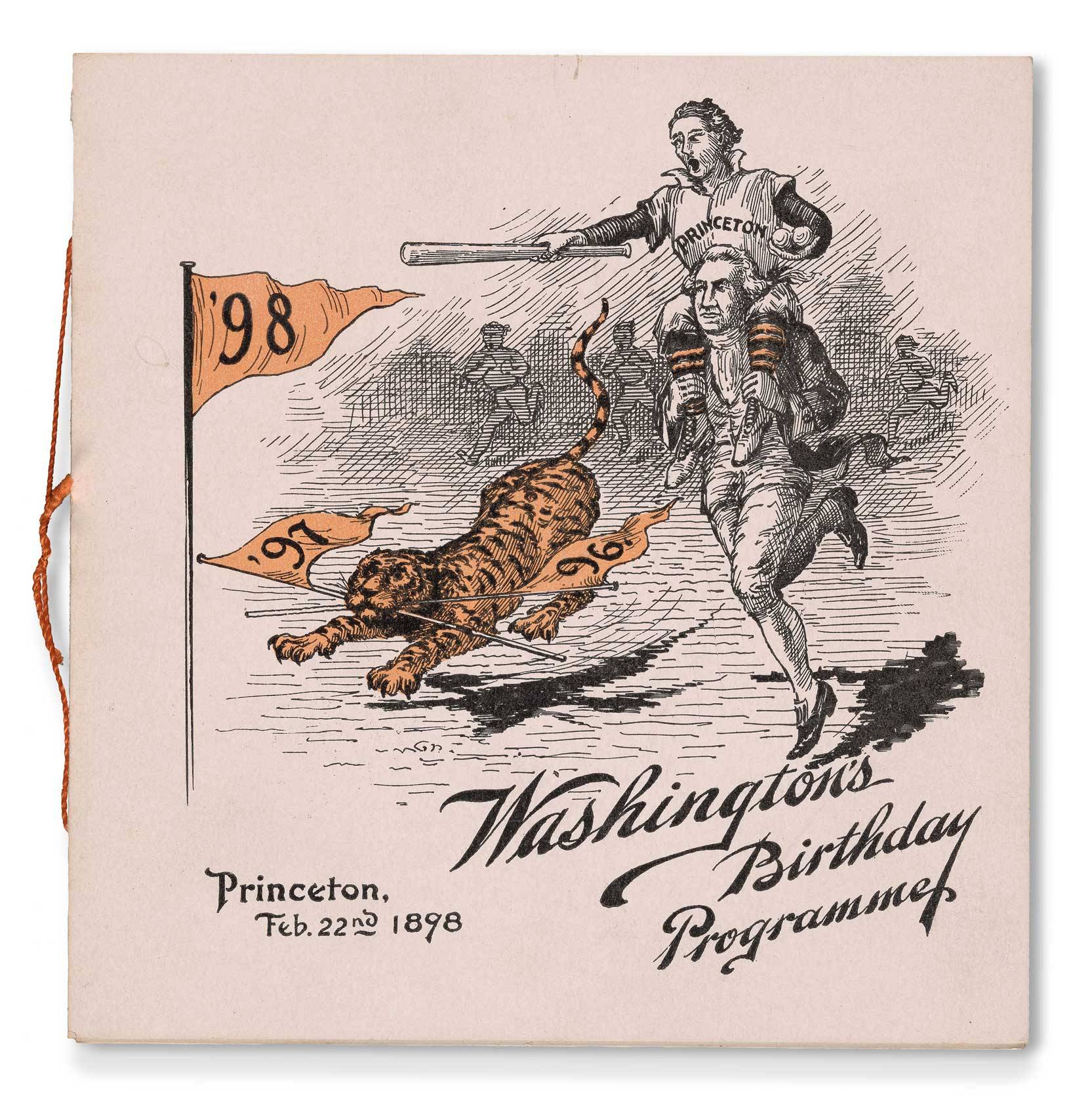
A program from 1898 celebrating Washington's birthday on Feb. 22, the precursor to Alumni Day.
James Madison, fourth U.S. president and the “father of the Constitution,” is considered Princeton’s first graduate student.
Madison graduated with the Class of 1771 and continued his studies under Witherspoon for another year before pursuing his lengthy career in public service.
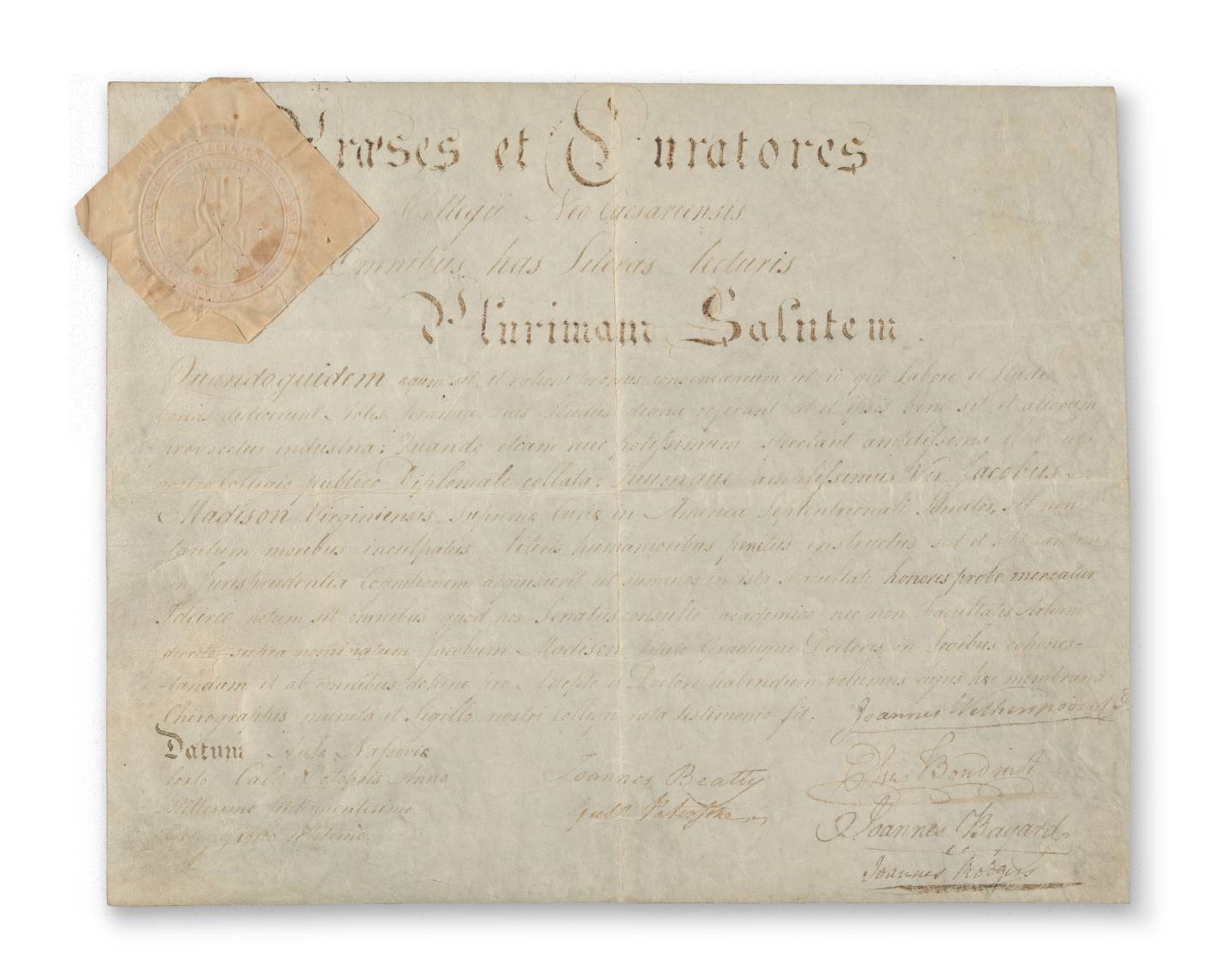
James Madison's honorary Doctor of Laws degree from Princeton in 1787.
As a student, Madison was a member of the American Whig Society, while Class of 1772 member Aaron Burr Jr., the future vice president infamous for his duel with Alexander Hamilton, was affiliated with the rival Cliosophic Society.
At these literary and debating clubs, Madison and other Founding Fathers “honed their skills of disputation and persuasion,” according to “The New Princeton Companion” — abilities that would later inspire others to the Revolutionary cause and help shape American political thought. The two societies later merged to form what’s now known as Whig-Clio, considered the nation’s oldest college debating club.
Madison received an honorary Doctor of Laws degree from Princeton in 1787 and became the Alumni Association’s first president on Sept. 27, 1826, according to a timeline prepared this year for the association's 200th anniversary.
The Constitutional Convention of 1787 was attended by nine Princeton alumni from six states.
In the summer of 1787, 55 delegates met in Philadelphia to revise the Articles of Confederation and draft the U.S. Constitution. Nine were Princeton alumni, from Connecticut, Delaware, Maryland, New Jersey, North Carolina and Virginia — the most from any college, according to “The New Princeton Companion.”
Beyond Nassau Hall, Princeton’s Revolutionary era left its mark around campus in ways still visible today, including:
Built alongside Nassau Hall in 1756, Maclean House was originally known as the “President’s House,” serving as the primary residence for early University presidents and deans of the faculty. Gen. Washington allegedly occupied the house after the Battle of Princeton in January 1777 and again in 1783 while Congress met in Nassau Hall. The house is also where at least 16 men, women and children were enslaved before, during and after the Revolutionary War, as documented by the Princeton & Slavery Project. At least five Princeton presidents enslaved people in the house, while three others, including Witherspoon, were known to enslave people during their lifetimes. Maclean House was renamed in 1968 for John Maclean Jr., Princeton's 10th president, and now serves as offices for the Alumni Association.
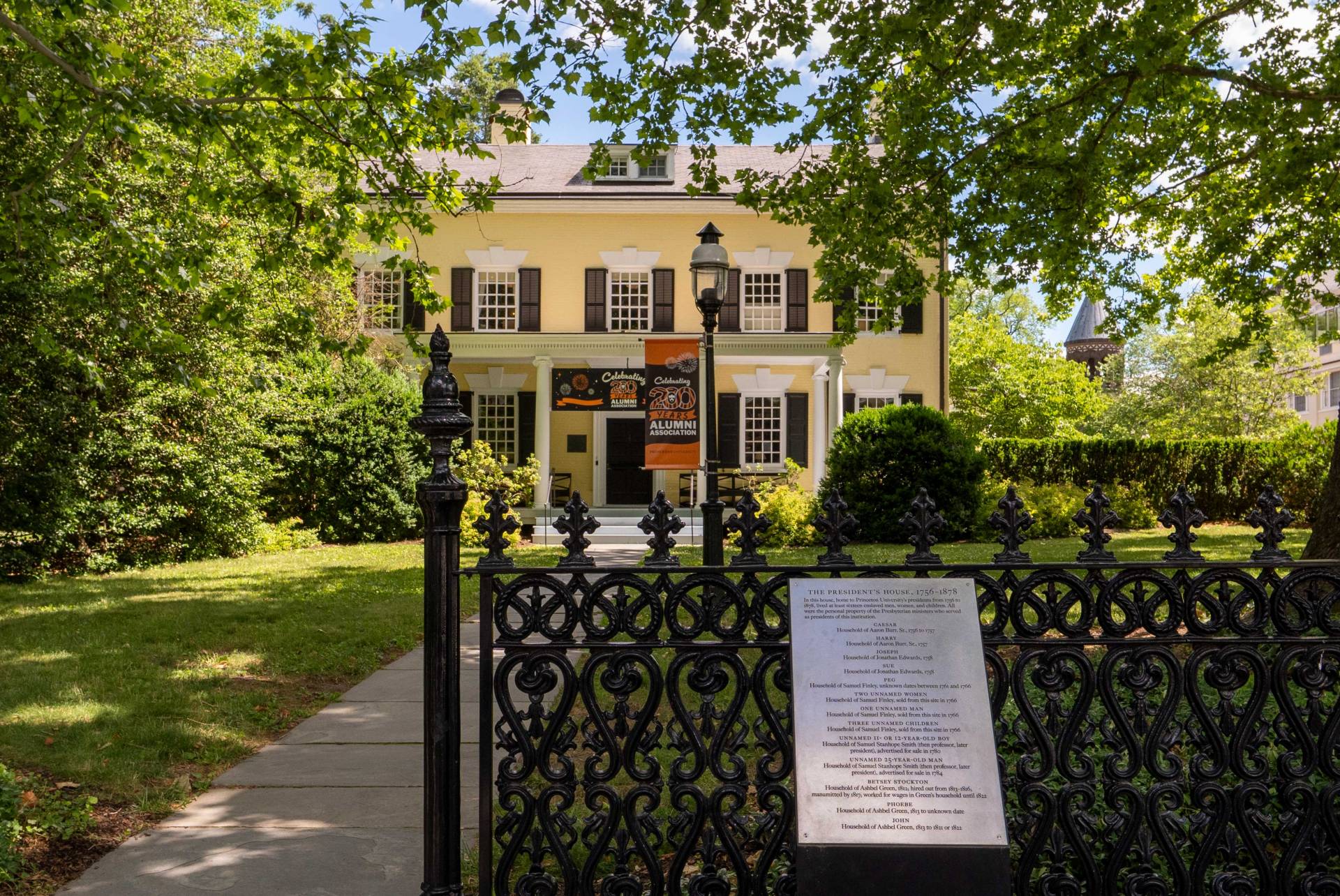
Maclean House served as the primary residence for early University presidents and deans of the faculty and now houses the offices of Princeton's Alumni Association. A memorial plaque commemorates that at least 16 men, women and children were enslaved in the house before, during and after the Revolutionary War.
Cannon Green is the field behind Nassau Hall where British soldiers abandoned several cannons during the Battle of Princeton. The "Big Cannon" at its center returned to campus in 1836 after traveling to New Brunswick for the War of 1812, after which it became the central hub of campus life and served as Princeton's first mascot, according to an essay on its history produced by the University Archives. Even as it has sunk deeper into the ground over time, the "Big Cannon" remains a campus landmark.
Now home to the Art@Bainbridge gallery of the Princeton University Art Museum, the Bainbridge House at 158 Nassau St. was used as lodgings for members of Congress who came to Princeton in 1783, according to the Historical Society of Princeton. The loyalist Bainbridge family fled the house and town after the Battle of Princeton. In 1778, Prime, a man enslaved by the Bainbridge family, ran away and returned to Princeton, as documented by the Princeton & Slavery Project. He joined the Continental Army as a wagon driver, hoping that military service would earn him legal freedom. Despite his patriotic service, Prime still had to petition the state of New Jersey for his freedom after the war ended.
Princeton University Library is home to an abundance of archival treasures from the Revolutionary War era, including:
- Paul Revere’s 1770 engraving of the Boston Massacre
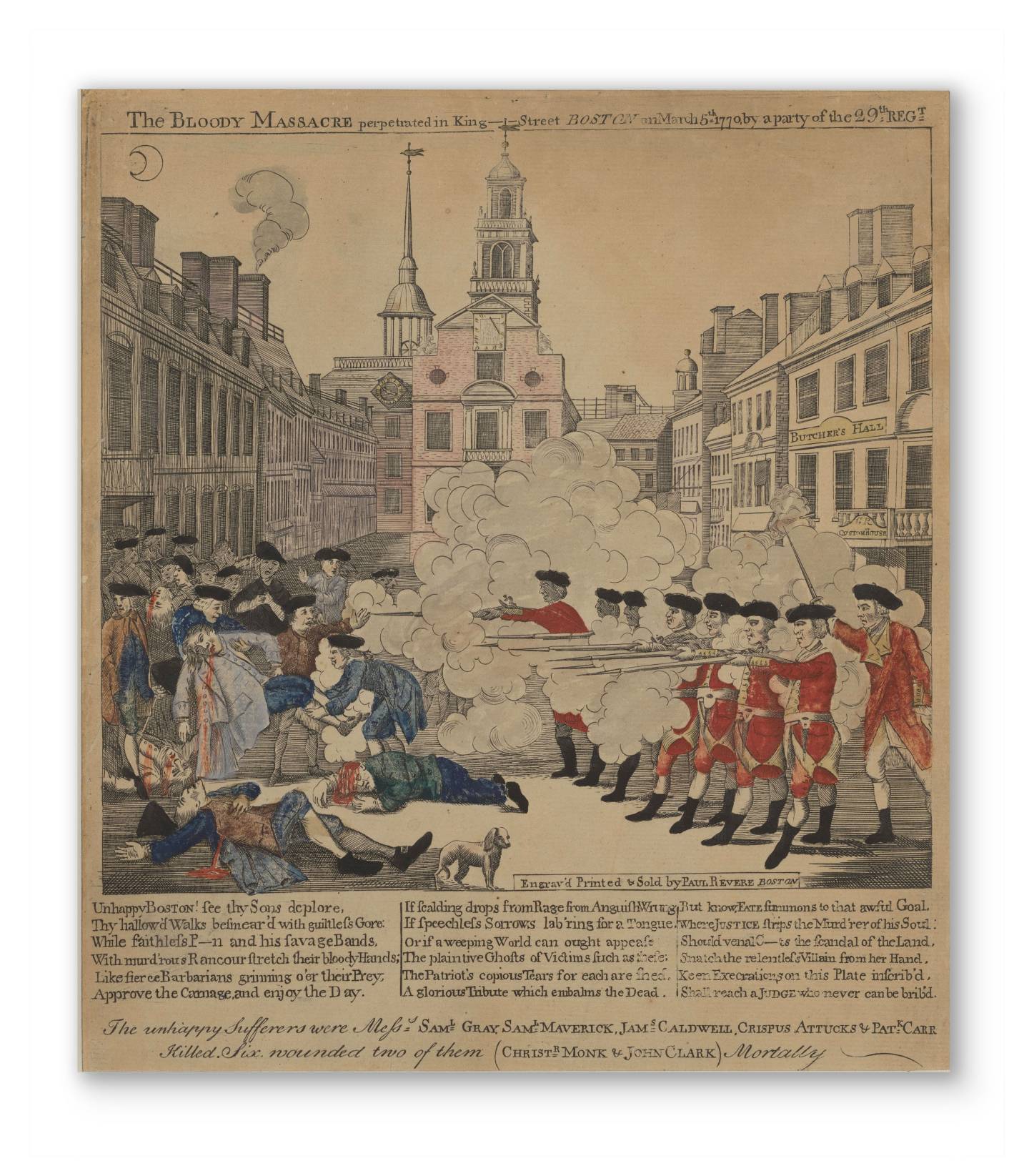
Paul Revere's hand-painted engraving of “The Bloody Massacre Perpetrated in King Street Boston on March 5th, 1770 by a Party of the 29th Regt.” (1770).
- Early sketches of John Trumbull's famous oil painting “The Death of General Mercer at the Battle of Princeton, January 3, 1777”
- Rare original printings of the Declaration of Independence and one of 14 surviving copies of the U.S. Constitution from the 1787 Constitutional Convention
- A first edition of Thomas Paine’s bestselling pamphlet “Common Sense”
- A signed copy of enslaved poet Phillis Wheatley’s book “Poems on Various Subjects, Religious and Moral,” the first book published by an African American
- A cannonball found near the Princeton battlefield
- A ledger of Revolutionary War weapons receipts from Massachusetts in 1775, dated less than a month after Lexington and Concord and recording the receipt of guns by 11 militiamen, including at least five of African American or Native American ancestry
Signed letters from Thomas Jefferson and George Washington
The Firestone Library building is also home to The Papers of Thomas Jefferson editorial project, which is preparing the definitive scholarly edition of Jefferson’s correspondence and papers based on original documents housed in hundreds of archives and private collections.
The project has received continued support from the National Endowment for the Humanities and recently launched a digital exhibit on the creation of the Declaration of Independence.
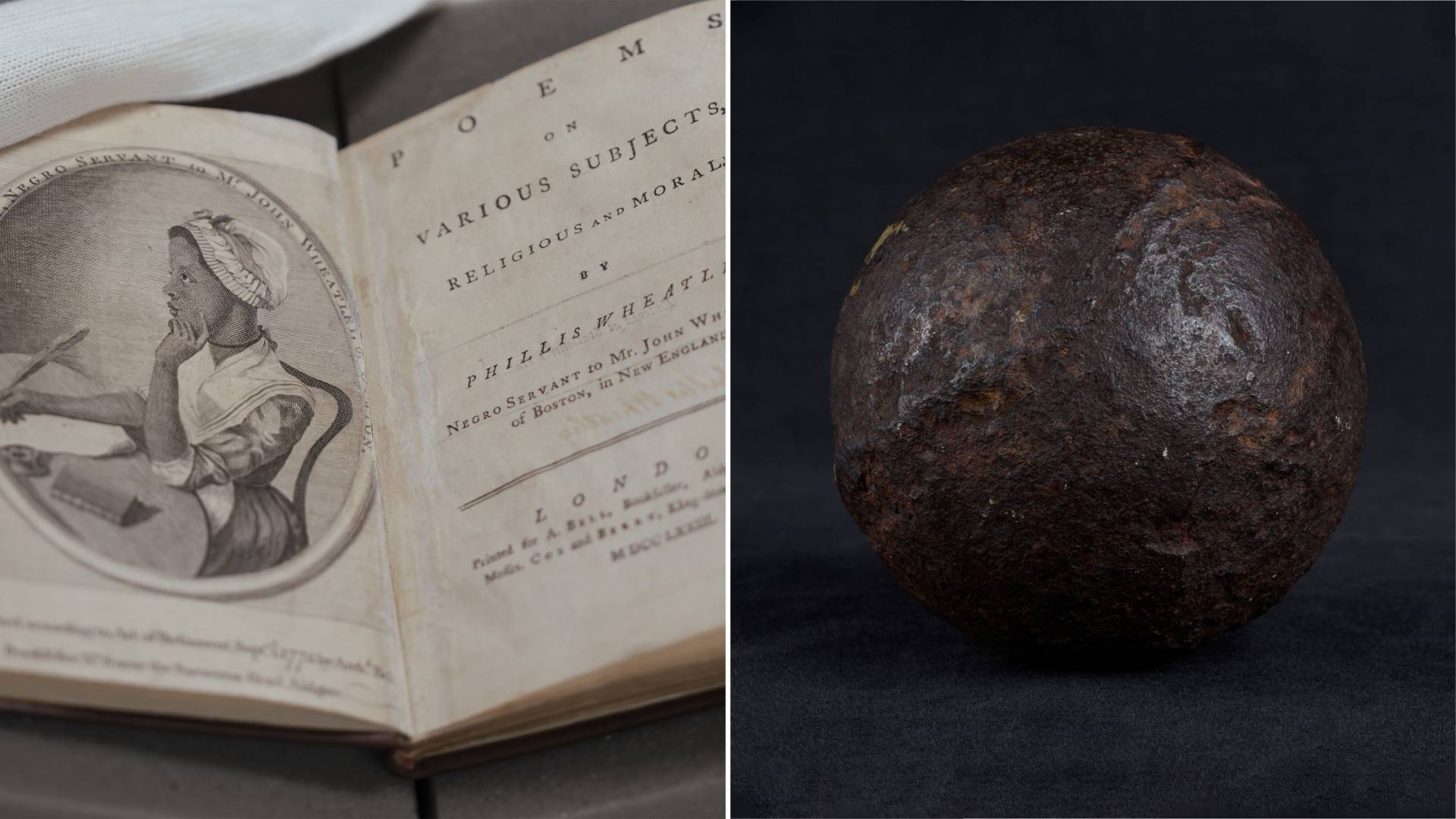
Princeton’s signed copy of enslaved poet Phillis Wheatley’s “Poems on Various Subjects, Religious and Moral” (left), and a cannonball found near the Princeton battlefield (right). They are among the items on display at the Princeton University Library's "Nursery of Rebellion" exhibit through July 12.
Reading the Revolution
These recent books are a small sample of the many by Princeton authors, or with contributions from them, that offer scholarly insight into the nation’s founding, the Revolutionary War and Princeton’s place in history, as well as contemporary thoughts on what it means to be an American today.
The Princeton University Library also has extensive holdings and online resources related to the American Revolution (1775 to 1783) and librarians to help curious readers find material that suits their interests.
- “The American Revolution Considered as a Social Movement: 100th anniversary edition” by J. Franklin Jameson, with a new foreword by Michael A. Blaakman, associate professor of history at Princeton, and Sarah Barringer Gordon, the Arlin M. Adams Professor of Constitutional Law and professor of history, emerita, at the University of Pennsylvania (Princeton University Press, 2025).
- “The New Princeton Companion” by Robert K. Durkee, former Princeton vice president for public affairs and University vice president and secretary (Princeton University Press, 2022).
- “America, U.S.A.: How Race Shadows the Nation’s Anniversaries” by Eddie S. Glaude Jr., the James S. McDonnell Distinguished University Professor (Crown, 2026).
- “Active and Passive Citizens: A Defense of Majoritarian Democracy” by Richard Tuck, the Frank G. Thomson Professor of Government at Harvard University, and edited and introduced by Stephen Macedo, the Laurance S. Rockefeller Professor of Politics and the University Center for Human Values (Princeton University Press, 2024).
- “Language as Liberation: Reflections on the American Canon” by Toni Morrison, the Robert F. Goheen Professor in the Humanities, Emeritus, with an introduction and notes by Claudia Brodsky, professor of comparative literature (Knopf, 2026).
- “As a City on a Hill: The Story of America's Most Famous Lay Sermon,” by Daniel T. Rodgers, the Henry Charles Lea Professor of History, Emeritus (Princeton University Press, 2018).
- “No Property in Man: Slavery and Antislavery at the Nation’s Founding,” by Sean Wilentz, the George Henry Davis 1886 Professor of American History (Harvard University Press, 2018). Wilentz is also the author of “The Rise of American Democracy: Jefferson to Lincoln” (W.W. Norton, 2005), acclaimed as a definitive study of the period.
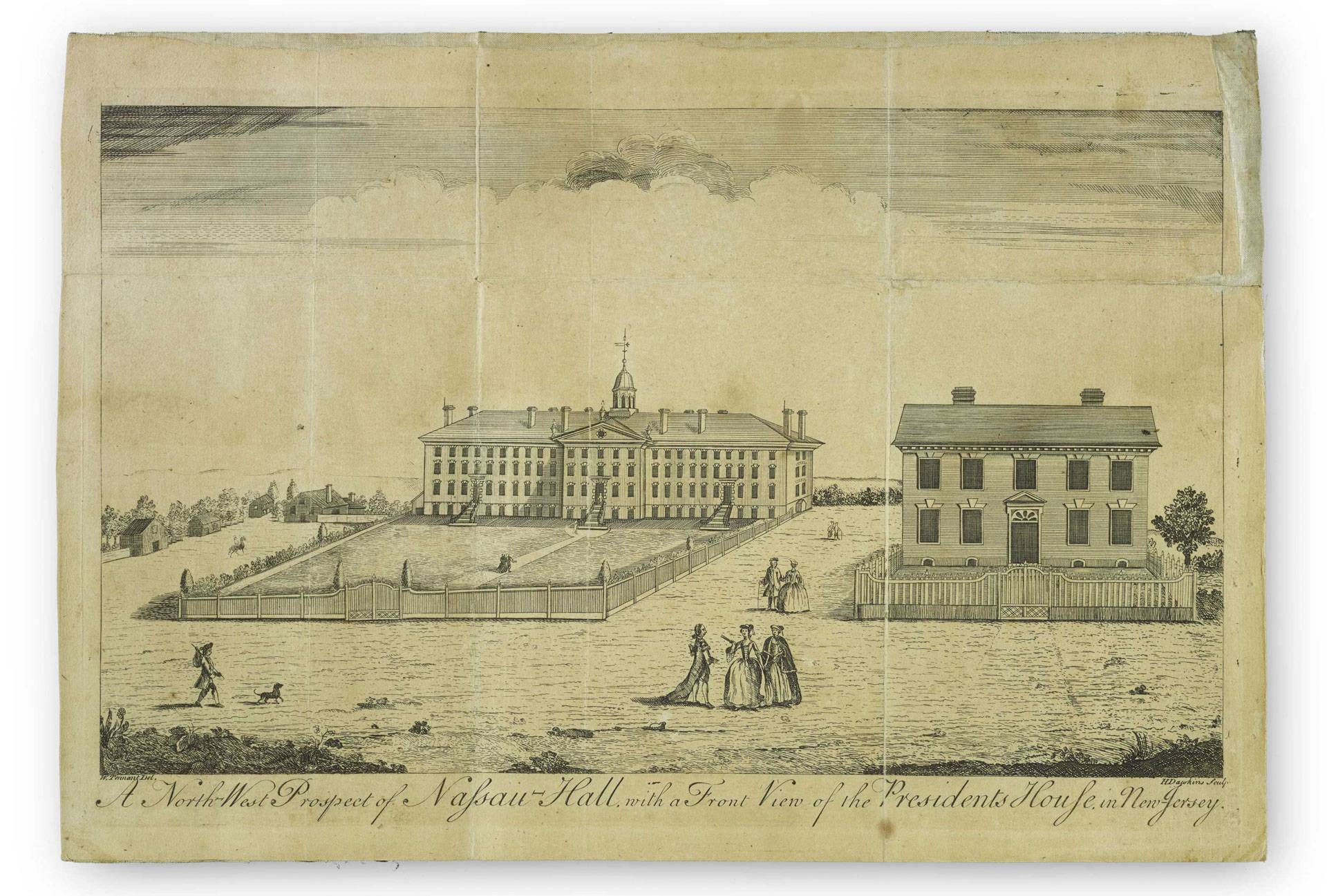
William Tennent's “A North-West Prospect of Nassau-Hall, with a Front View of the Presidents House, in New-Jersey” (1764) depicts Nassau Hall, left, and what is now Maclean House, right.