Princeton honors Smithsonian executive Kevin Gover, Fields Medalist mathematician Terence Tao at Alumni Day
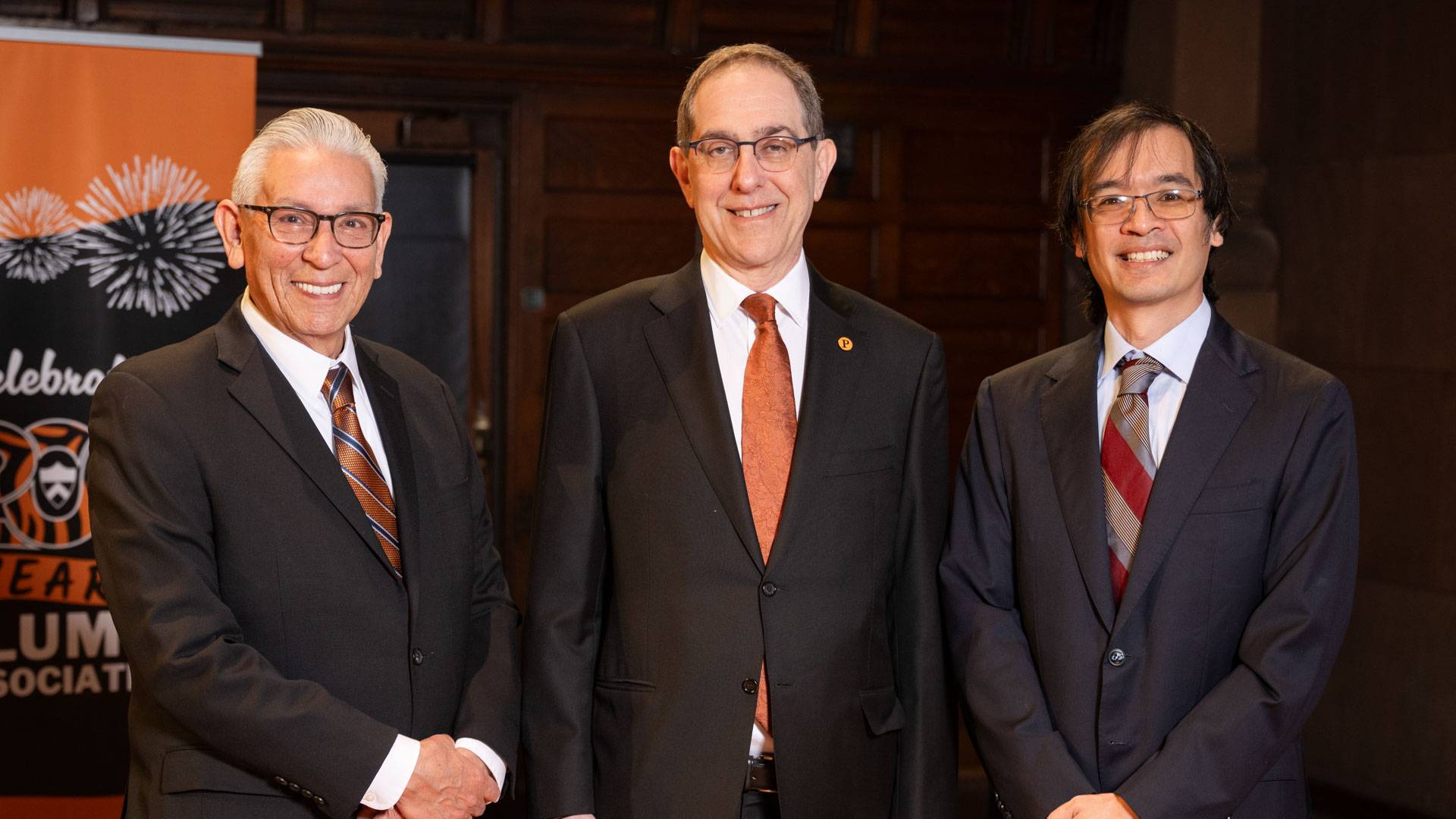
Princeton Alumni Day honorees Kevin Gover (left) and Terence Tao (right) with President Christopher L. Eisgruber at the 2026 ceremony.
Princeton gave top alumni honors to Smithsonian executive Kevin Gover and pathbreaking mathematician Terence Tao on Feb. 21, during an Alumni Day program that showcased how Princetonians are fulfilling the University’s commitment to service and standing up for higher education.
At the awards ceremony in Richardson Auditorium, Gover, a Class of 1978 alumnus who has been widely recognized for his work with Native American communities and educational institutions, received the Woodrow Wilson Award for undergraduate alumni. Tao, a Fields Medalist and UCLA professor of mathematics who earned his Ph.D. in 1996, received the James Madison Medal for graduate alumni.
Nearly 1,100 alumni, faculty, staff, students and guests attended the annual mid-winter gathering. The 111th Alumni Day also kicked off the 200th anniversary of the Princeton Alumni Association, a celebration of Tigers online and in person that will run for 200-plus days through Oct. 22, Orange & Black Day, when the University will mark its 280th anniversary.
Saturday’s Alumni Day also included the awarding of top prizes for undergraduate and graduate students, the annual Service of Remembrance memorial ceremony in the University Chapel and a luncheon in Jadwin Gymnasium.
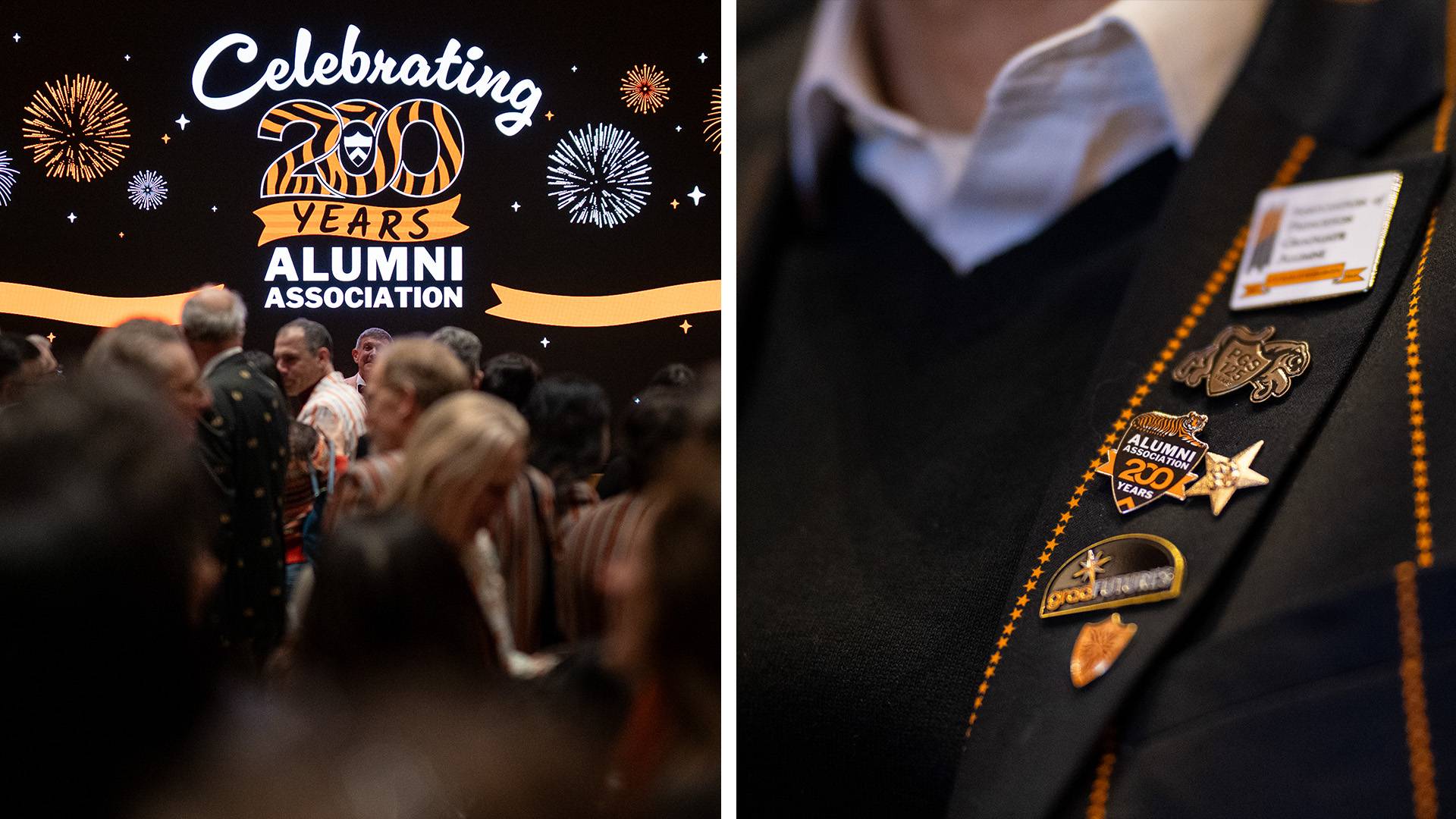
The 111th Alumni Day also kicked off the 200th anniversary of the Princeton Alumni Association.
Gover receives Woodrow Wilson Award
Gover, who earned his bachelor’s degree from the Princeton School of Public and International Affairs (SPIA) and was awarded an honorary doctorate of laws in 2001, has been undersecretary for museums and culture at the Smithsonian Institution since 2021. A member of the Pawnee tribe of Oklahoma, he previously served as director of the Smithsonian’s National Museum of the American Indian and as assistant secretary for Indian Affairs in the U.S. Department of the Interior.
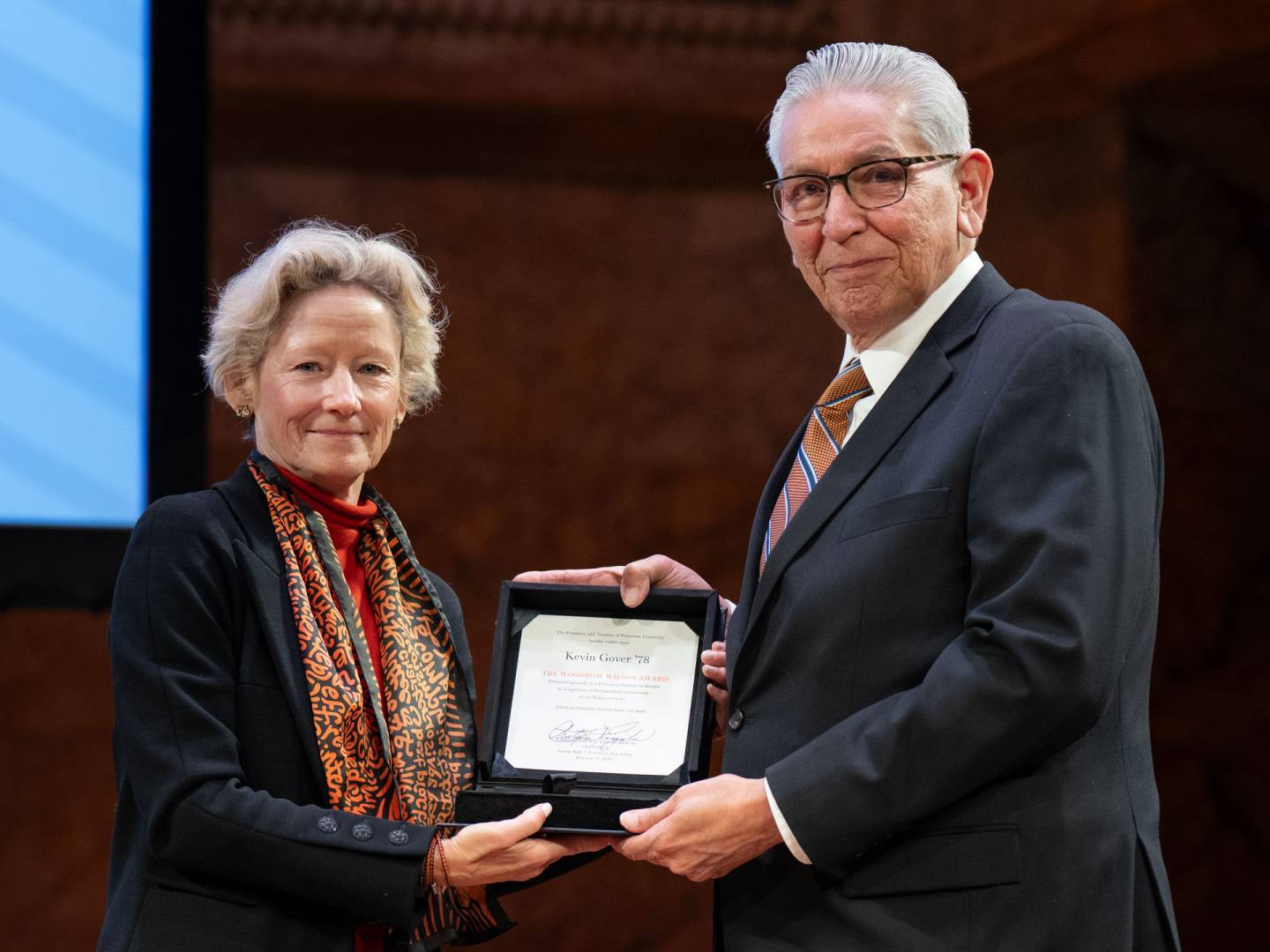
Louise “Weezie” Sams (left), Class of 1979 and chair of the Board of Trustees, presents Kevin Gover, Class of 1978, with the Woodrow Wilson Award. The award recognizes contributions to service and humanity.
“A lawyer, scholar, leader and advocate, he has demonstrated great integrity and courage throughout his career,” Dean of the College Michael Gordin said in his introduction. “Through his service and leadership and his many contributions to public policy and tribal advocacy, his life’s work truly epitomizes the motto ‘In the nation’s service and the service of humanity.’”
“Public service is about responsibility and not power,” Gover said in his Alumni Day speech, “Fifty Years of Native Agency,” reflecting on his career. “I always felt keenly aware that I was exercising the massive power of the federal government in the decisions I was making.”
Prior to his government service, Gover worked for decades as a lawyer representing Native American tribes and tribal agencies, becoming an authority in tribal governance and law.
Through his federal leadership roles, he developed policies that helped empower Native Americans to lead their communities and schools. Among other accomplishments, he designed programs that promoted cultural understanding and acknowledged historical complexities, and he led the creation of the National Native American Veterans Memorial.
Gover discovered his life’s passion while at Princeton, and he credited a 1976 summer internship at the American Indian Policy Review Commission for igniting the spark.
“This experience set my mind on fire in a very good way and I knew what I wanted to do,” Gover said. “I returned to Princeton that fall with a renewed sense of purpose and a much clearer understanding of why I was here. And in the 50 years since, progress has been steady for these communities I serve.”
Gover said his undergraduate training at SPIA taught him how to be a public servant, how to build a coalition and how to respect those with whom he disagrees. His classes showed him there are “no perfect outcomes” in complex or controversial matters and that “confidence is good but humility is better when you are in government.”
Looking back on the last five decades of work on behalf of Native American communities, Gover credited the “resolve of tribal leadership” as well as support from bipartisan leaders in government and the private sector.
Looking ahead, Gover acknowledged that "There still is much to be done to ensure that every tribal community and every tribal person has the opportunity to thrive.”
He also recognized the other Native American alumni who have had an “outsized impact.”
“Their careers may have been less visible than my own, but their contributions in their communities and beyond are no less important. And in this way, Princeton has been in the service of the Native nations,” Gover said, adding that he is also heartened by today’s students as well as the faculty and programs dedicated to Native American subjects.
Tao receives James Madison Medal
Tao is considered one of the leading mathematicians of this century, having earned the Fields Medal, the MacArthur Fellowship and the Breakthrough Prize. His academic career has been at UCLA, where he is the James and Carol Collins Chair in the Colleges of Letters and Sciences.
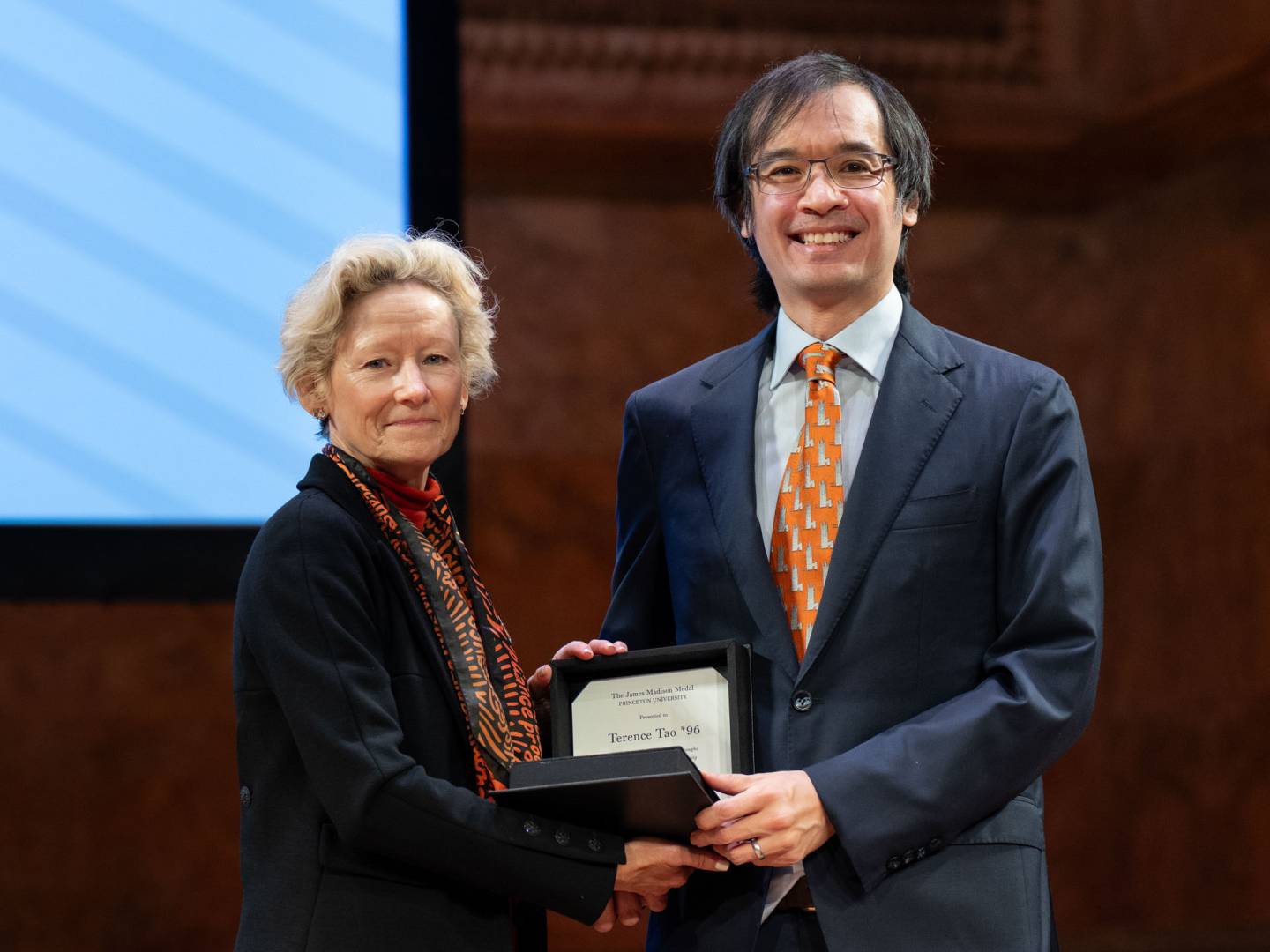
Sams (left) presents Terence Tao, who earned his Ph.D. in 1996, with the James Madison Medal, the highest distinction for graduate alumni.
“His technical brilliance, exceptional creativity, wide-ranging curiosity and collaborative spirit have led to multiple pathbreaking discoveries,” Dean of the Graduate School Rodney Priestley said in his introduction, noting that Tao has helped improved lives in “tangible ways,” such as developing algorithms that speed up MRI scans.
Throughout his career, Tao has worked to make math more accessible. He has also recently spoken out against federal cuts to scientific research and educational funding.
“Terry, thank you for standing up for life-changing research and for our institutions of higher education. Princeton is standing up with you,” Priestley said.
In his speech, “Math in the Age of AI,” Tao shared his love for math, going back to his childhood in Australia. Tao earned his Ph.D. in math from Princeton at age 20, learning from some of the best minds in the world.
Tao credited his adviser, the late Elias Stein, the Albert Baldwin Dod Professor of Mathematics, Emeritus, with teaching him much more than math.
“One thing that Eli impressed upon me is that you are not just here in math to prove your theorems … but that service is also important and is a core value here at Princeton,” Tao recalled. “You should always look for ways to serve the broader community and not just live in your ivory tower, or in this case Fine Hall,” he added with a laugh, referring to the home of Princeton’s math department.
Tao said he was proud to live up to Princeton’s ethos of service as a member of President Joe Biden’s Council of Advisors on Science and Technology.
“It was really fulfilling. I got to see the broader scientific ecosystem and how precious it is and how we have to fight to keep it,” he said.
The experience also showed him how math and science will be transformed in the coming years through AI and other breakthroughs, Tao said. As director of special projects at UCLA’s Institute for Pure and Applied Mathematics, he is working to anticipate where “math in the 21st century will go.”
Thanks to new technologies, new ways of doing math have emerged, Tao said, with new workflows. “AI has developed quite a lot, especially in last year or so, and it has enabled a new way to do mathematics at unprecedented scales of speed,” he said.
These developments have also led to wider participation in math.
“We are finally getting to see broader participation in mathematics,” Tao said. “There are now large math projects where you get contributions from undergraduates, high school students, people in industry, just regular people.”
Tao emphasized that AI must be used responsibly. “I think it’s important for scientists to step up. Science is one place where AI can really do a lot of good,” he said. “We really have to take ownership and experiment with how to use it properly and create best practices. In the right hands, it can be really powerful.”
Other events and awards
Following the presentation of the Wilson Award and Madison Medal, the winners of the Pyne Prize and Jacobus Fellowship were recognized on the stage of Richardson Auditorium.
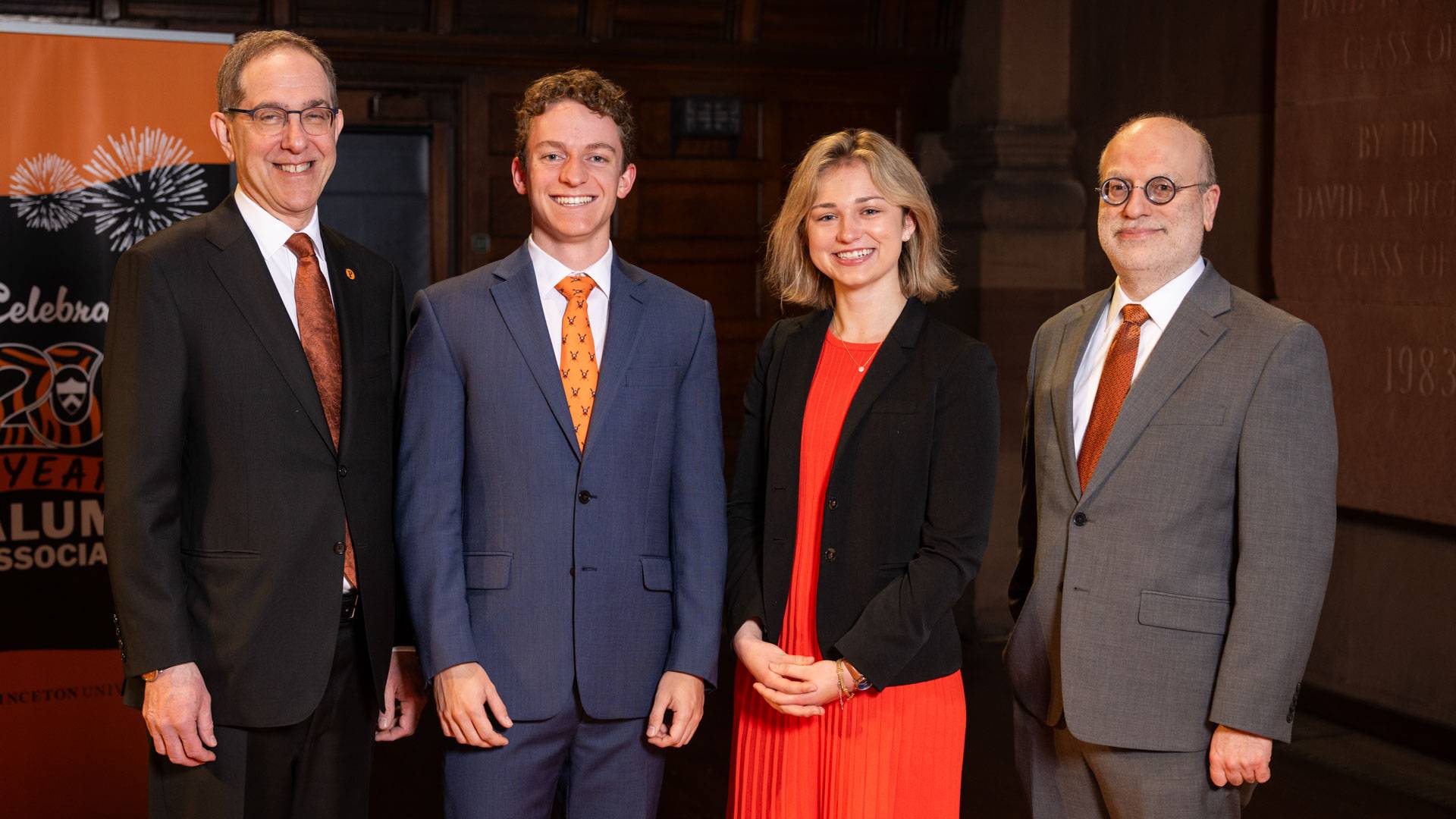
President Eisgruber (left) and Dean of the College Michael Gordin (right) with Pyne Prize winners Braeden Carroll (second from left) and Katie Daniels (second from right).
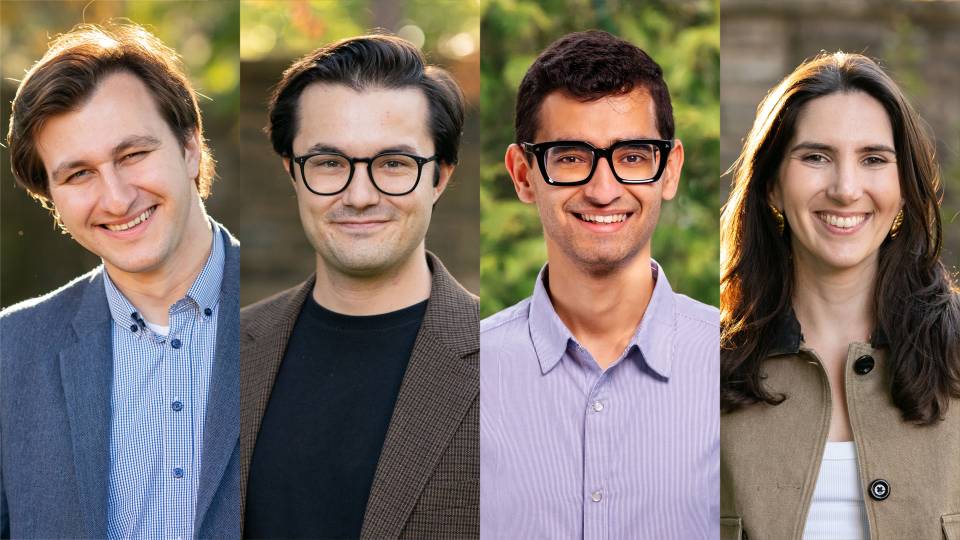
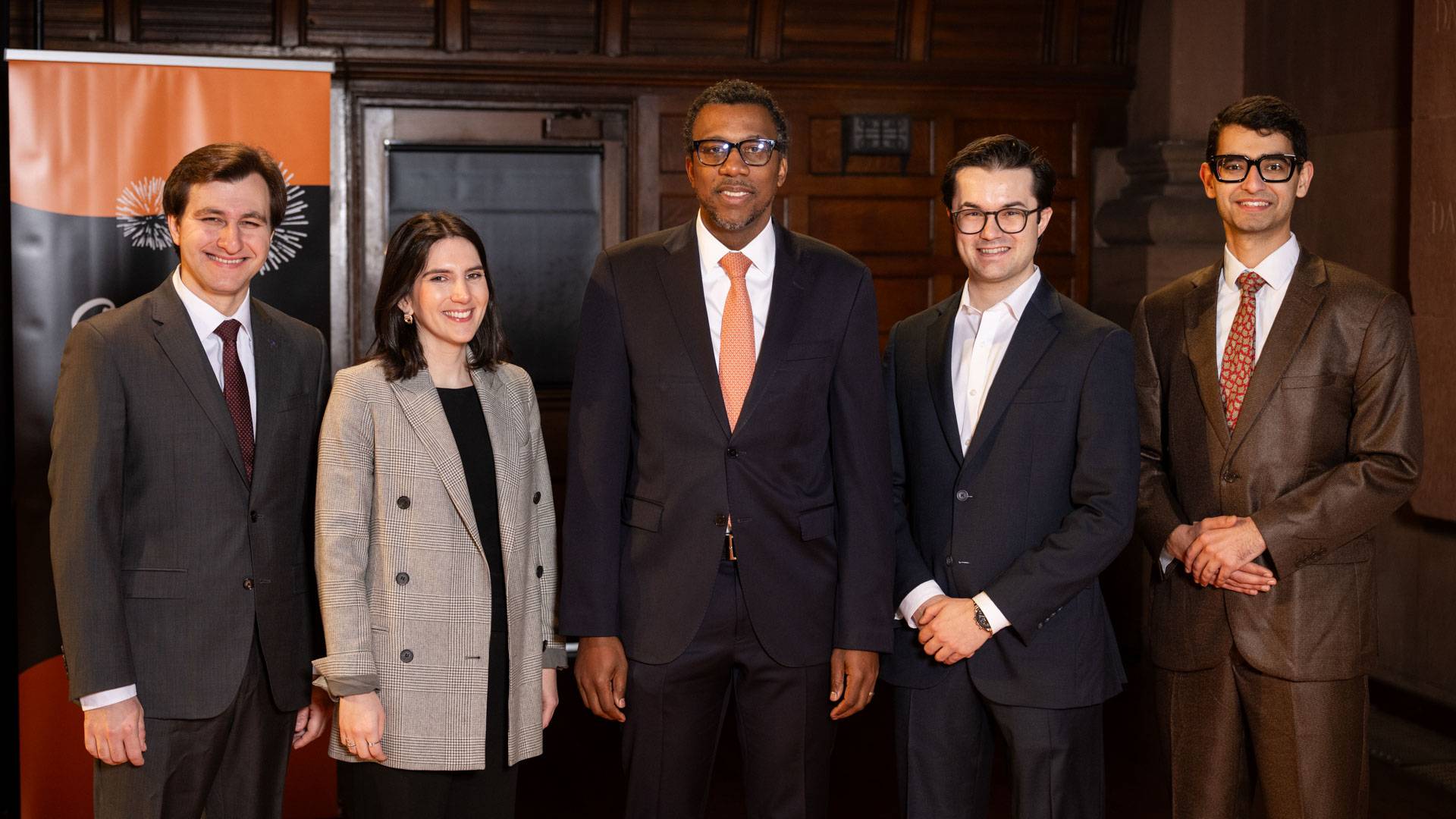
Dean of the Graduate School Rodney Priestley (center) stands with Jacobus Fellows (from left to right) Philip Decker, Eliana Rozinov, Victor Geadah and Sayash Kapoor.
“Today I have the honor of recognizing several students who — with their creativity, hard work and sheer brilliance — embody the world-class excellence to which this University aspires,” President Christopher L. Eisgruber said. “This year’s honorees have demonstrated remarkable talent, tremendous dedication and exceptional promise.”
Historian Philip Decker, mathematician Victor Geadah, computer scientist Sayash Kapoor and literary scholar Eliana Rozinov were honored as this year’s Porter Ogden Jacobus Fellows, Princeton’s top distinction for graduate students.
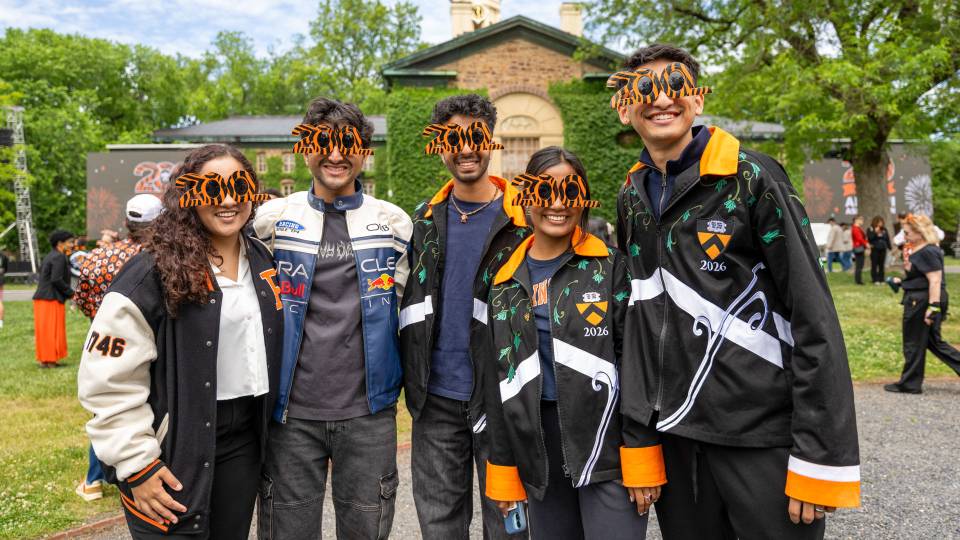
Class of 2026 members Braeden Carroll and Katie Daniels were awarded the Moses Taylor Pyne Honor Prize, the highest general distinction conferred on an undergraduate.
Alumni Day also included graduate student and alumni mixers as the Princeton Graduate School celebrates 125 years, alumni affinity group gatherings open to all alumni regardless of identity, a mixer for current students and the alumni who graduated 25 and 50 years before them, opportunities to learn how all alumni can participate in the Stand Up for Princeton and Higher Education initiative, and visits to the new Princeton University Art Museum, student art exhibits and varsity athletic events.
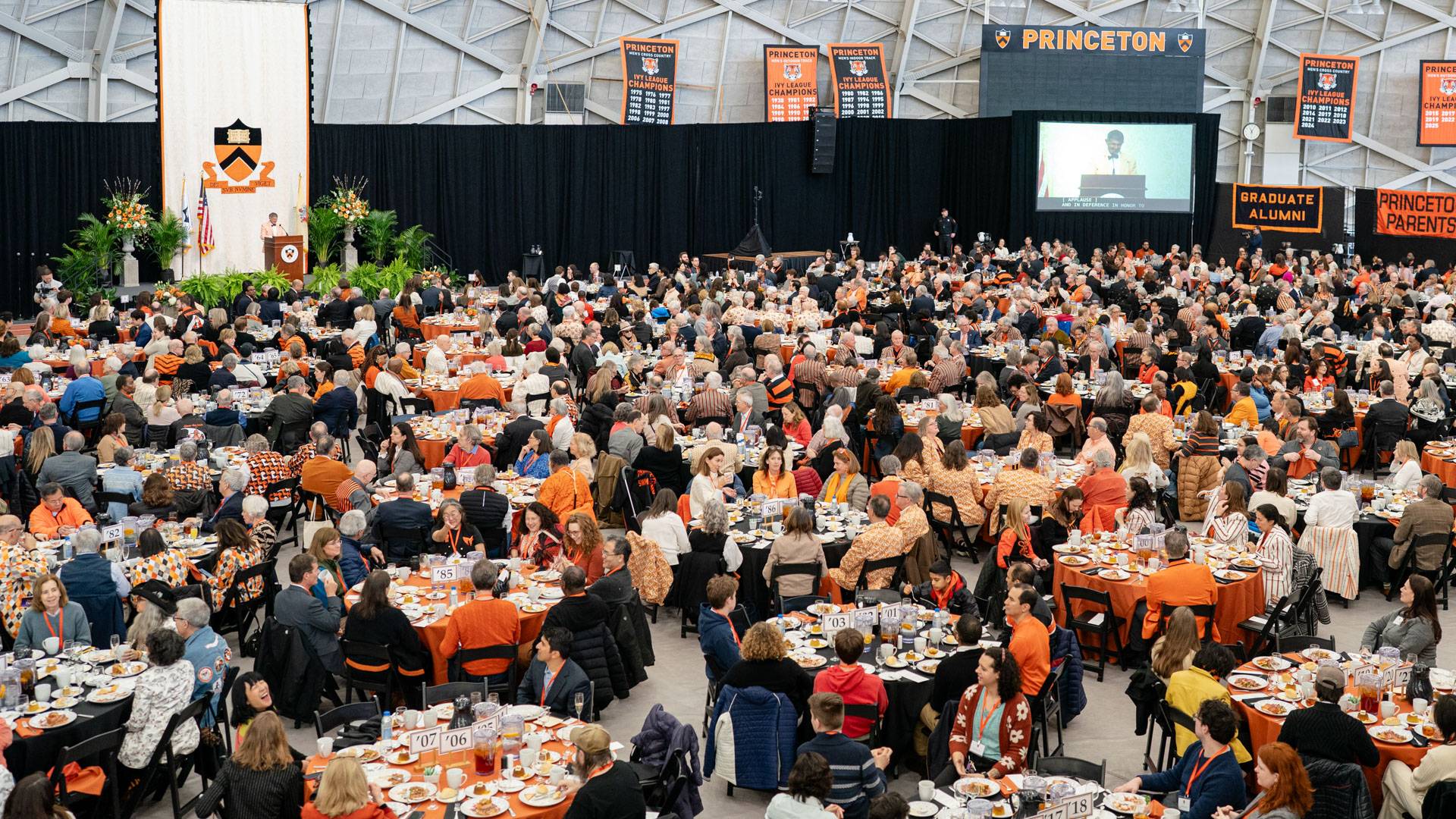
Nearly 1,100 alumni faculty, staff, students and guests attended the annual mid-winter gathering, which included a luncheon in Jadwin Gymnasium.
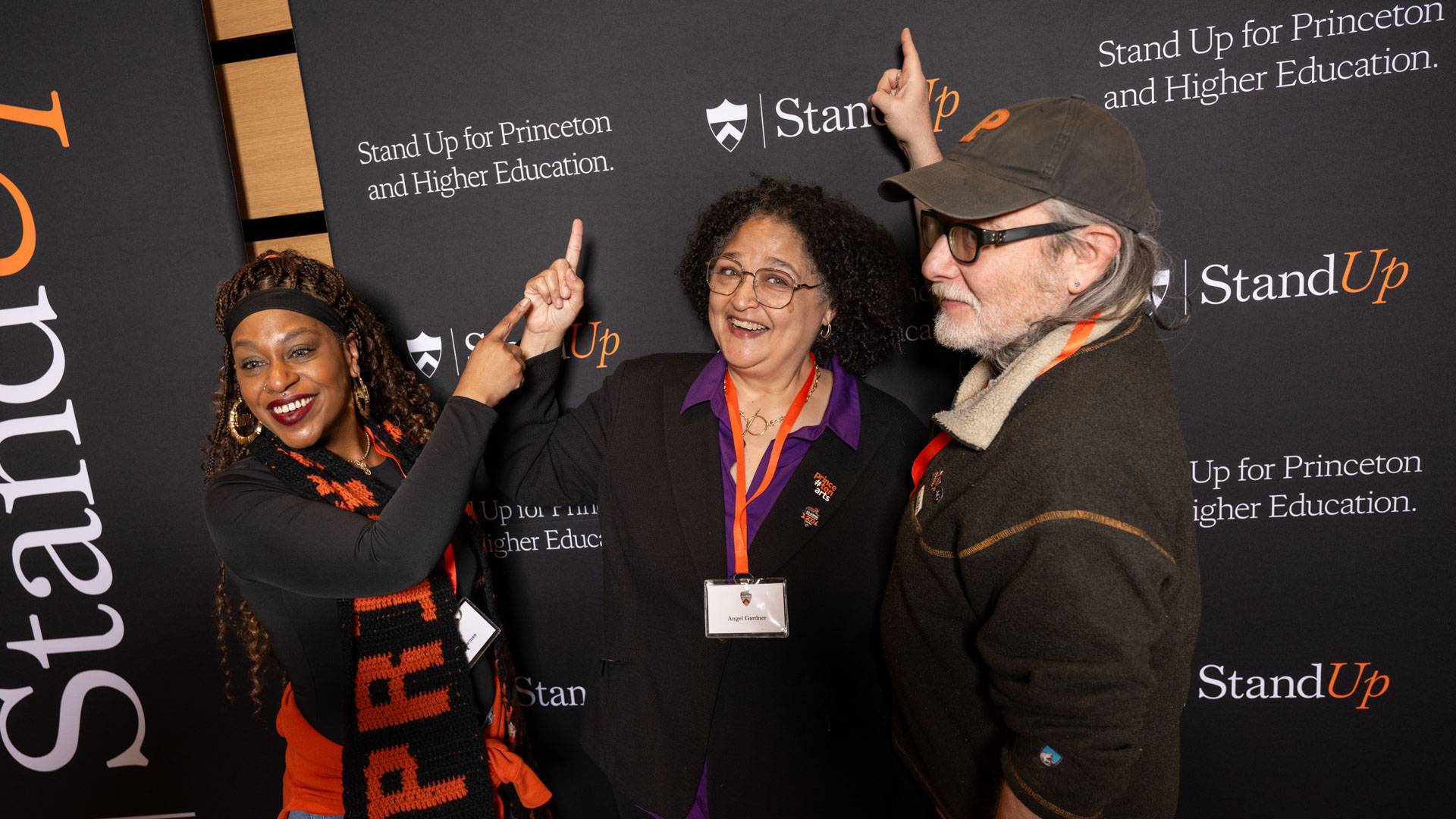
Princetonians are rallying in support of the University's new Stand Up for Princeton and Higher Education initiative.
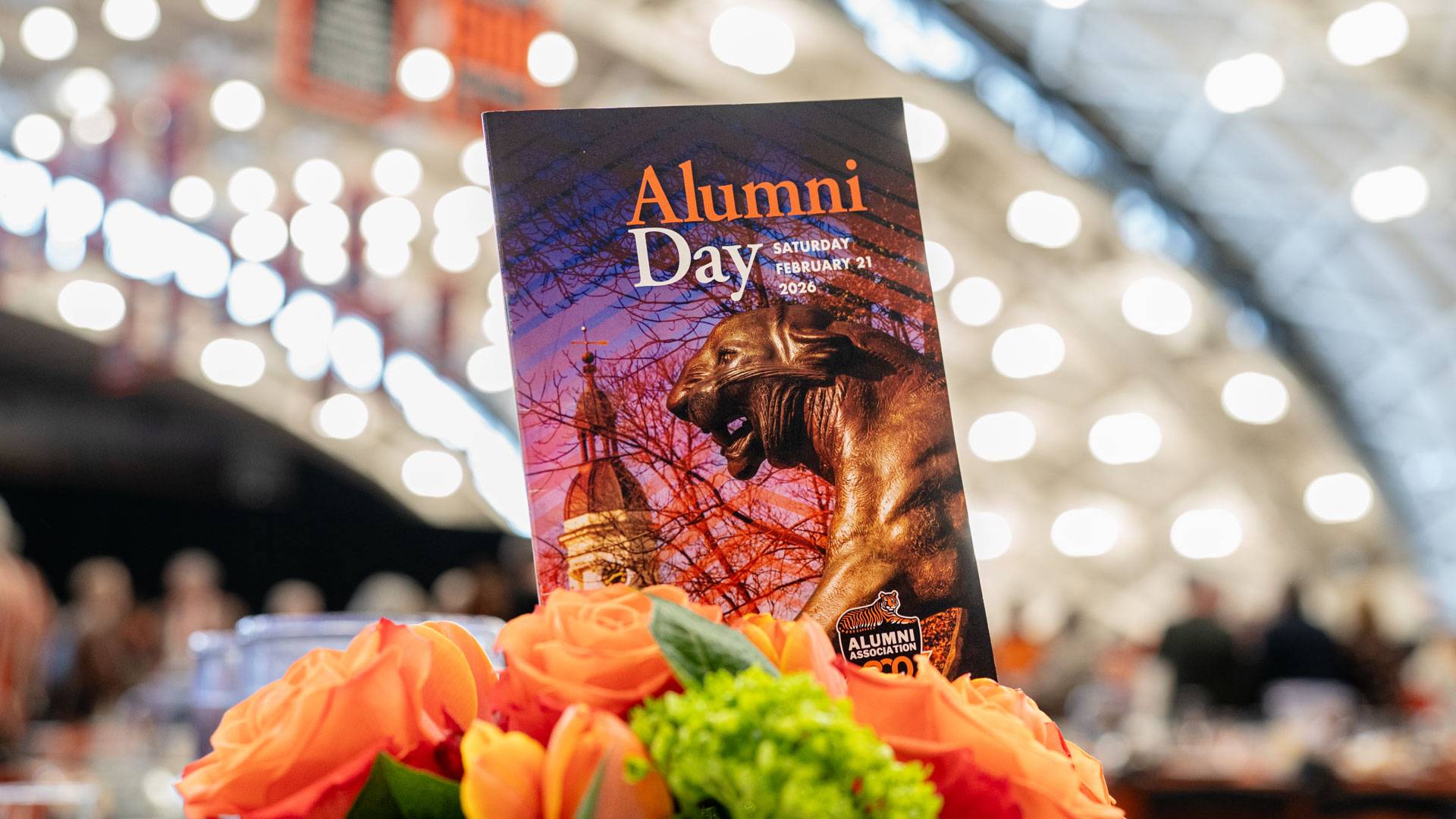
Princeton's 111th Alumni Day was celebrated on Feb. 21, 2026.