Baccalaureate 2026: Remarks by Craig Robinson
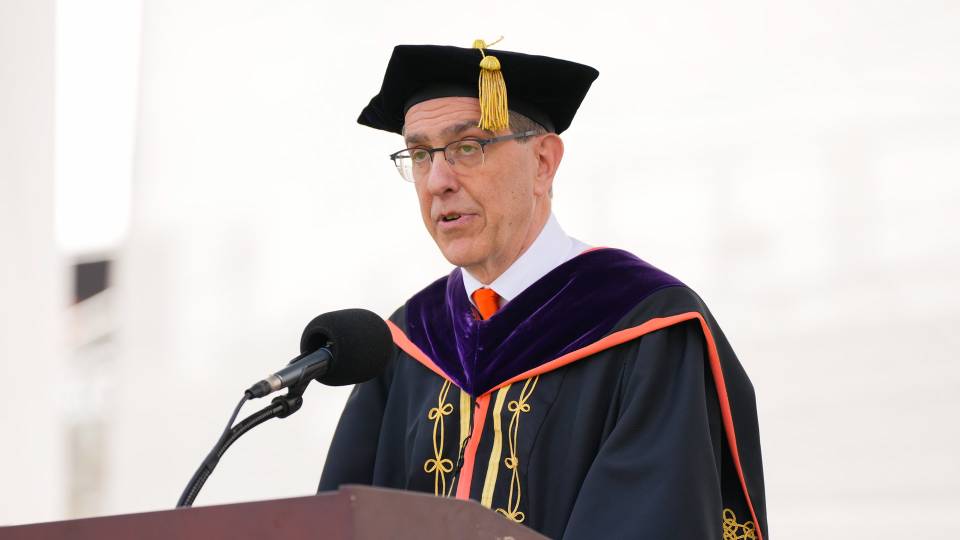
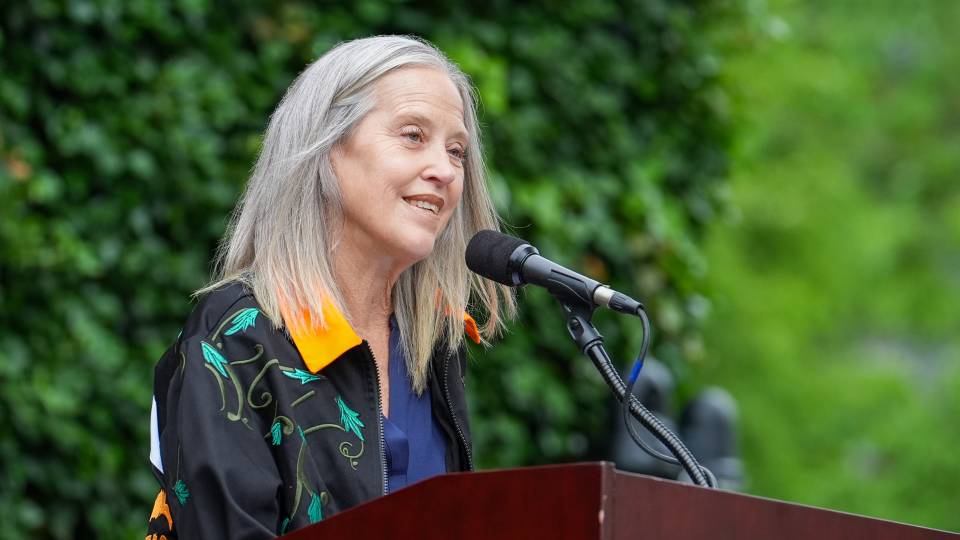
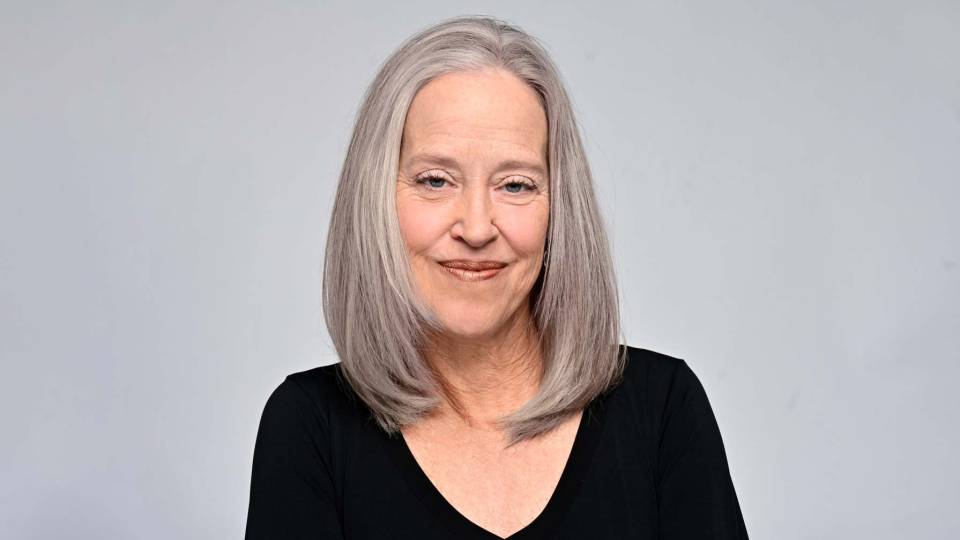
Craig Robinson ‘83, executive director of the National Association of Basketball Coaches and former Princeton University Trustee, delivers the 2026 Baccalaureate address.
— Remarks as prepared —
Thank you, Chris, for the kind words. I’d also like to thank members of the Board of Trustees. (I know firsthand how hard it is to decide who gets to stand up here; I always enjoyed those conversations.) I’d like to thank the faculty, and especially parents. (As a parent of four myself, I realize the sacrifices you’ve all made to get your graduates to this point.) I’m extraordinarily humbled to have been asked to address you.
Good afternoon to the Class of 2026. Boy, I know how good that sounds to all of you.
Standing here today, looking at you, I’m reminded of a version of myself that sat where you are years ago. But to understand that guy, we have to go back to my first semester. I arrived on this campus as a hopeful engineering major. I had the plan, the gumption and the ambition to accomplish my dream of being both a successful basketball player and an aerospace engineer.
Then, reality hit. By midterms, I was looking at the coursework and my grades and thought, I can’t cut it here. I felt like the “Princeton Mystique” was winning, and I was losing. I felt like a fraud in a suit of orange and black.
And the strange thing about places like this is that everyone around you often looks so confident. You assume they’ve figured it all out while you’re secretly struggling just to keep up. What I eventually learned is that almost everyone here has moments of doubt. Everyone has a class that humbles them, a test that shakes them, or a moment where they wondered if they truly belonged.
The difference between the people who succeed and the people who don’t usually isn’t talent. It’s the willingness to stay in the room long enough to grow into the challenge.
The Phone Call
So, I did what many of us do when we hit a wall: I called home. I talked to the one person I knew would be disappointed if I couldn't make this work, my dad. For those of you who don’t know, my dad was disabled. Diagnosed with MS as a young adult. He walked with a limp that got progressively worse as time went by. Eventually using those crutches that wrap around your biceps. Yet he went to work every day. Rarely missing. I remember him being sick twice. Once he had the flu, the second was when he passed away. So you can imagine how hard it was to make that call.
I told him I was drowning, that I didn’t belong here. He listened patiently and then quietly, almost in a whisper, gave me the best advice I’ve ever received. He said: “Craig, you aren’t going to be number one in the class, and you aren’t going to be number 1,001 in the class. But no matter where you land, you will always have a Princeton degree. So relax, and do your best.”
That permission to not be “perfect” was the first time I felt at ease in my time on campus up to that point. I realized that my dad, a man who faced the physical erosion of MS every single day, and who didn’t have the benefit of a college degree, wasn’t measuring my success by my GPA. He was measuring it by my persistence. He knew that the “mystique" of this place is just a shadow; the substance is the person you become while you’re under the pressure. I promptly walked over to the registrar’s office and changed my major to sociology.
At the time, changing my major felt like admitting defeat. Looking back now, it was actually one of the healthiest decisions I ever made. Sometimes maturity is realizing that forcing yourself down the wrong path simply because you’re afraid to disappoint people is not strength — it’s fear. I realized I wasn't failing at engineering; I was just succeeding at something I wasn't meant to do.
Some of you already know exactly what you want to do. Others may completely change directions five times over the next 20 years. Both are okay. Life is rarely a straight line, no matter how carefully you plan it.
The “Swerve”
My sister — who some of you might know, has a way with words — she calls this “The Swerve.” It’s that moment when you realize the road you’re on isn't the road you’re meant for, so you yank the steering wheel and go in another direction.
My life, fortunately, has been a series of swerves.
After graduation, I didn't go into social work. I played basketball overseas for a couple of years. Then I went into investment banking. I was chasing what I thought “success” looked like. But then, life happened. I went through a divorce and started questioning the “why” behind the “what.” I realized I was successful by every metric except the one that mattered: I wasn’t doing something I loved.
And I think that happens to more people than we admit. We spend years climbing ladders only to discover the ladder was leaning against the wrong wall. The paycheck may look good. The title may impress people at reunions. But if you wake up every day disconnected from your purpose, eventually success starts to feel surprisingly empty.
That realization forced me to redefine success for myself — not based on status, but based on fulfillment, growth, relationships and impact.
The Coaching Pivot
I eventually found my way to the sidelines. When I decided to coach, Coach Pete Carril — a legend who coached here for many years, and who never minced words — looked at me and asked why I was “wasting” my degree on coaching. He used way more colorful words than that. If we weren’t here in such a sacred place, I would share them.
My mother felt the same way. She’d say, “Craig, you went to Princeton and the University of Chicago Business School … just so you could be a coach?!”
But here is what I learned: You don't “use” a degree by matching your job title to your major. You use it by applying the critical thinking, the resilience and the character you build here and through all of your experiences, to whatever room you’re in — whether that’s a boardroom or a locker room.
Choosing What You Love
The swerves continued. From my assistant coaching position at Northwestern to my head coaching positions at Brown University and Oregon State, to my role with two NBA teams, to where I am today with the National Association of Basketball Coaches, each move was a calculation and culmination of passion and timing. When COVID hit, I looked at my kids' ages and realized I needed to be home. I shifted again because I wasn't afraid to learn something new.
Every job I’ve had — from banking to pro sports — has been a building block in my progression. I realized that if you are afraid to change, you are afraid to grow.
Your life does not move at the same pace as anyone else’s. Some of your classmates will seem to have everything figured out immediately. Others will take longer to find their footing. Don’t confuse someone else’s timeline with your own destiny.
The world will constantly tempt you to compare yourself to other people’s highlight reels. Resist that urge. Comparison steals joy, perspective and confidence. Stay focused on becoming the best version of yourself — not a copy of someone else.
Before I conclude, I would be remiss if I didn’t talk to you about giving back. As philanthropy has become a big part of who I am. You know, back when I was in school here, Princeton’s motto was “Princeton in the Nation’s service.” Later they added, “and in the service of humanity.”
… and in the service of humanity.
I never really thought about that motto until I was older and away from Princeton. I bring it up because it reminds me of something else Coach Carril would say when a player was in a slump of some sort.
Whether it was poor shooting, bad defending or maybe you had a dark cloud over you — yes, he used that exact term on us. (Imagine having a tough stretch and while you’re trying to figure things out, some guy reminds you that you have a dark cloud over your head. Motivating, right?)
He’d say, “When things aren’t going your way, do something for someone else.” In a world that is increasingly loud and self-focused, being the person who “sets the screen” is a superpower. It’s easy to be the person with the ball; it’s much harder, and much more rewarding, to be the person who creates the space for someone else to score. Whether you end up in the halls of government, a high-tech lab, or a neighborhood nonprofit, remember that your degree isn’t a crown to be worn — it’s a tool to be used in the service of others.
Make a pass. Set a screen. Lift someone up with words or deeds. I have found that that advice works in life. Whether you are searching for a job, a partner, or simply truth or peace of mind, when you’re feeling down, or you have a black cloud over you, do something in the service of humanity. (It doesn’t always have to be monetary. You can give your time, your effort, your words of encouragement). If nothing else, it will make you feel a little bit better.
Conclusion
To the Class of 2026: People will ask you, in the near future, what you’re going to “be.” Looking for a label like doctor, lawyer or engineer. Don't give them a specific answer. Give them a dynamic life. Remember, the “Swerve” isn’t a failure of the plan; the Swerve is the plan. You’ve earned this degree, and with it, a proverbial safety net.
If you find yourself drifting away from the “prestigious” path toward something you actually love, trust that instinct. You have the credentials in your hand; now give yourself the permission to be a work in progress. Go out there and be brave enough to evolve, have the courage to change your mind and the heart to change your life. Your future isn’t a set play drawn up on a whiteboard, it’s a breakaway transition where you get to decide the finish.
Congratulations and good luck!