Daniel Yu selected as Princeton valedictorian, Madeleine Murnick as salutatorian
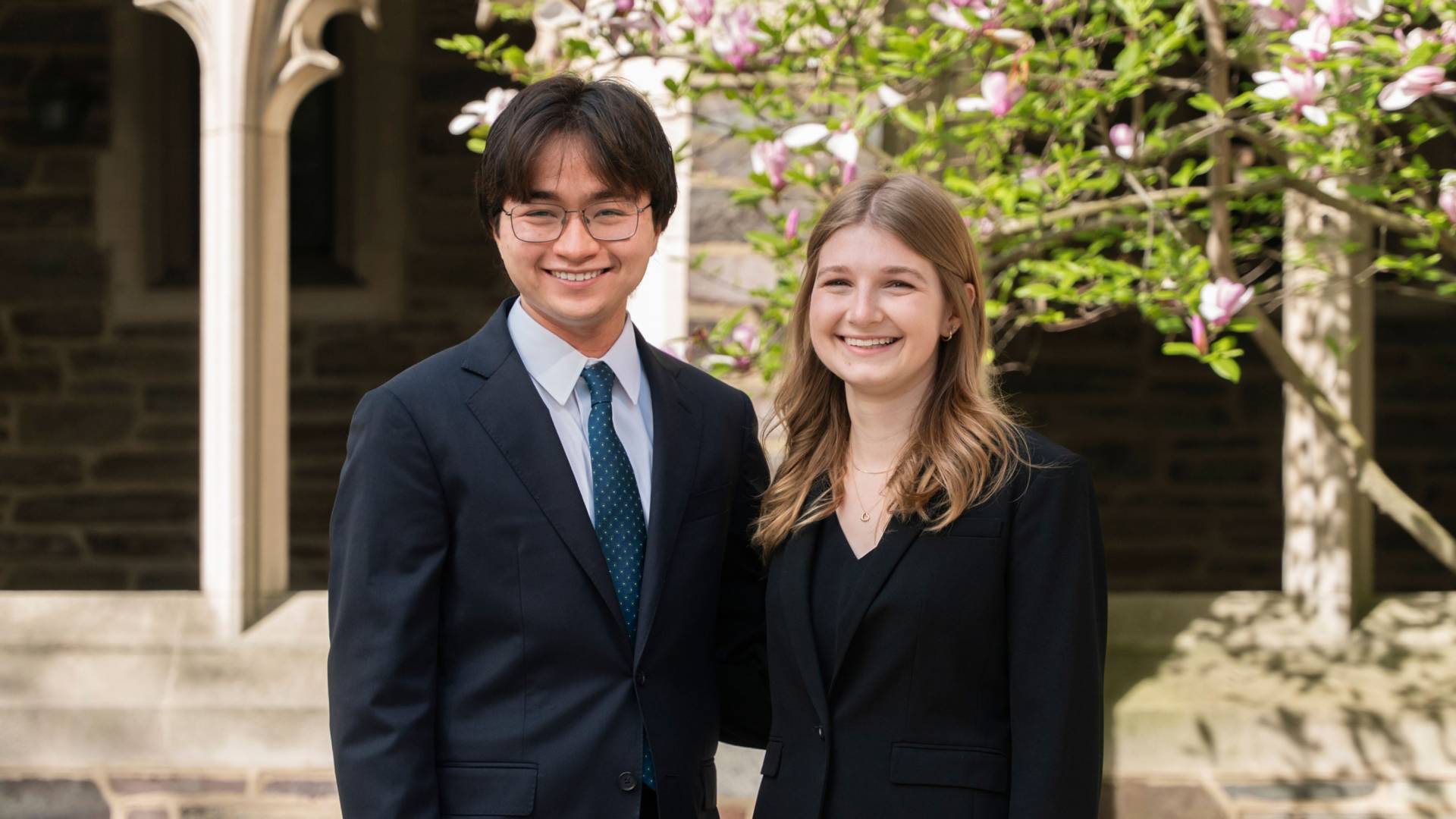
Daniel Yu and Madeleine Murnick
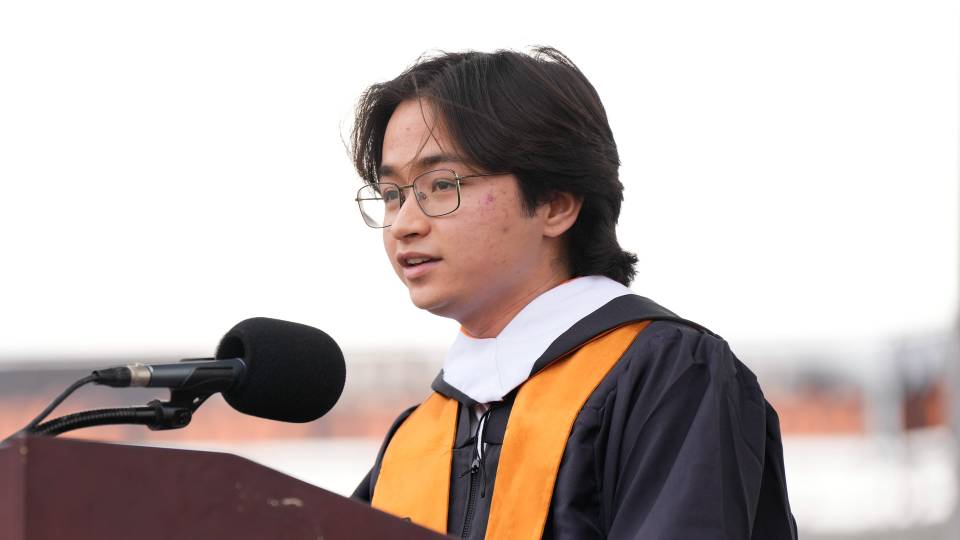
Daniel Yu, an African American studies major from New York, has been selected as the Princeton Class of 2026 valedictorian. Madeleine Murnick, a classics major from Washington, D.C., has been named the salutatorian. The Princeton faculty accepted the nominations of the Faculty Committee on Examinations and Standing at its April 20 meeting.
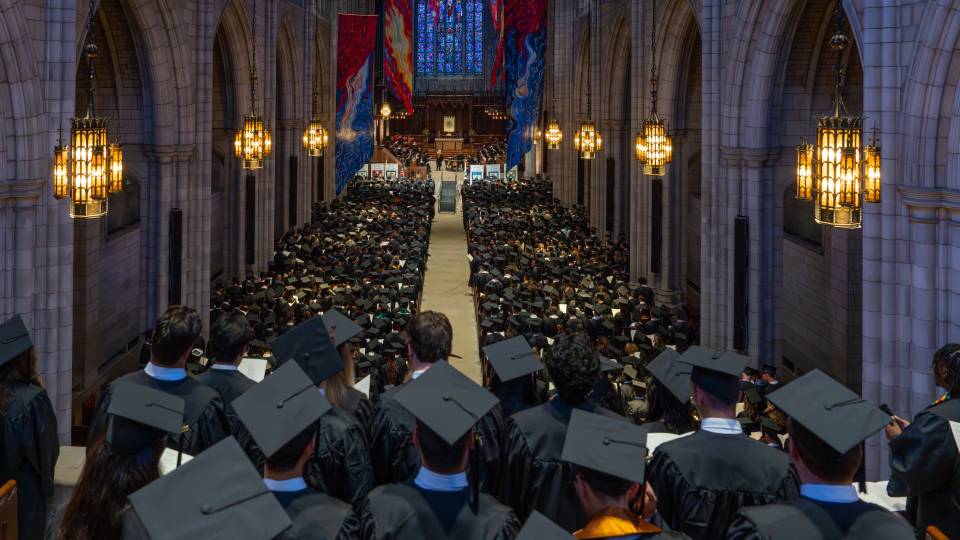
Commencement for the Class of 2026 will take place at Princeton Stadium on Tuesday, May 26. Yu and Murnick are expected to give remarks at the ceremony.
Daniel Yu
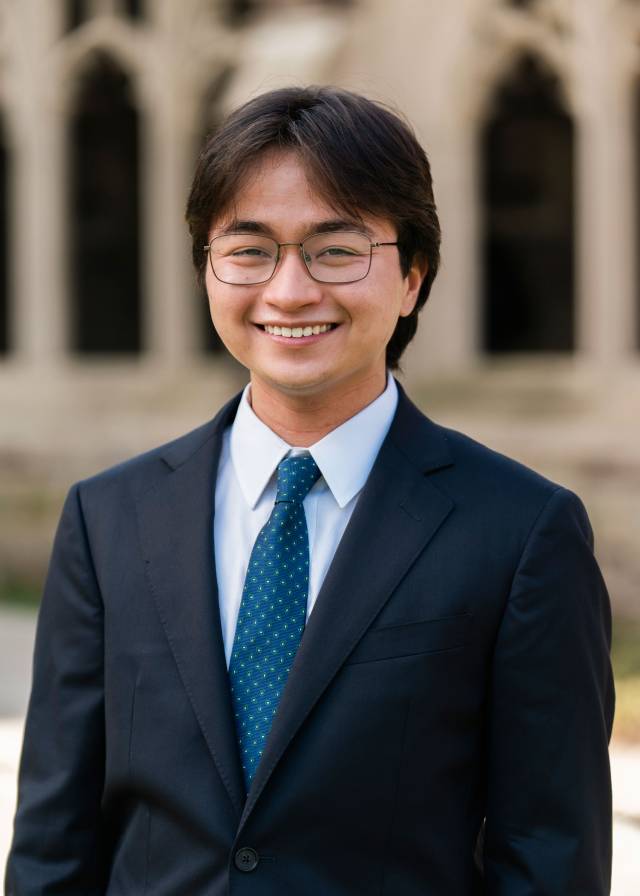
Daniel Yu, Princeton’s 2026 valedictorian
In addition to his major, Yu is pursuing minors in English and in gender and sexuality studies. He is a member of the Phi Beta Kappa Society and previously won the University’s Freshman First Honor Prize and Shapiro Prize for Academic Excellence.
After Princeton, Yu plans to earn master’s degrees in the United Kingdom as a Marshall Scholar. He said he is interested in working on scholarship related to race, gender and the law, combining research with political and social advocacy work.
Yu thanked his family for their support and expressed gratitude for his faculty mentors and classmates, particularly in the Department of African American Studies (AAS).
When Yu received word of his selection as valedictorian, he said, “I called my parents immediately, and they were amazed and overjoyed. My family, and the generation before them, sacrificed enormously for me to get here. I’m glad I could begin to pay that effort back in some small way.”
“I’ve tried to spend my time at Princeton doing what feels meaningful to me,” Yu said, noting the “necessity” of the type of scholarship he has undertaken in today’s world.
“I feel very lucky that this work has been recognized in such a significant way, but I would be remiss if I didn’t acknowledge all the people on campus who made it possible,” he continued. “I wouldn’t be the scholar or person I am today without the ceaseless genius of my peers; the patience and intellectual generosity of my professors; and the tireless work of department staff, who make Morrison Hall, the home of AAS, what it is today.”
Marcus Lee, assistant professor of African American studies, called Yu a “truly exceptional” young scholar.
“Daniel represents the very best of Princeton. He is an exceptionally talented, enterprising student who takes the value of human creativity and everyday worldmaking seriously,” Lee said.
Yu credited his AAS classes with teaching him how to engage critically and deeply with theoretical inquiry while also staying grounded in real-world experiences.
“AAS has given me a truly interdisciplinary toolkit, training me in both the techniques of social science and of the humanities to meet the multidisciplinary challenges of the present moment,” Yu said. His senior thesis, advised by Lee, is titled “Purity Politics: Race, Racism and (Anti-) Blackness in an era of Anti-Trans Violence.”
Soo-Young Kim, a lecturer in the Princeton Writing Program, said she has been privileged to “witness Daniel’s brilliance as a student and a teacher.”
Yu took two classes with Kim and he also served as a course fellow for her “Ways of Knowing” section during the summer Freshman Scholars Institute. Kim recalled how masterfully Yu — only a junior at the time — led a discussion about contemporary poetry with incoming first-years.
“It was stunning to see how eagerly every single student in that classroom — many of them who happened to be prospective engineers — took up Daniel’s invitation to step out of their comfort zones, engage with something difficult and place their trust in a fellow student to take them somewhere new,” Kim said.
She added: “It was evident that his ability to pull this off wasn’t just due to his gifts as a thinker and communicator in the classroom, but it was also the outcome of the subtle yet deliberate work that he’d been doing throughout the term to cultivate an environment in which everyone could feel comfortable being themselves and be invested in working together to benefit everyone.”
Yu said he also has particularly enjoyed classes offered through the Humanities Council and the School of Public and International Affairs, including the experiential learning course “The Criminal Legal System: Advocacy and Freedom,” organized with the Program for Community-Engaged Scholarship (ProCES).
Beyond the classroom, Yu is an intern for the National Political Advocacy Department of the American Civil Liberties Union. He previously served as a fellow with the national student-led organization OutVote and as an intern at Lambda Legal and the Hetrick-Martin Institute.
“What makes Daniel unique is his insistence on actualizing the ideals that animate his scholarship; he is attentive to the practical meaning of academic research, not just its conceptual import or cultural resonance,” Lee said.
A member of Forbes College, Yu also serves on the Department of African American Studies’ undergraduate board of advisers and is a head fellow at the Princeton Writing Center. In addition, he is a peer educator and leadership fellow at the Gender and Sexuality Resource Center and is a co-founder of the student publication Positions Magazine, which celebrates Asian diasporic writing and the arts.
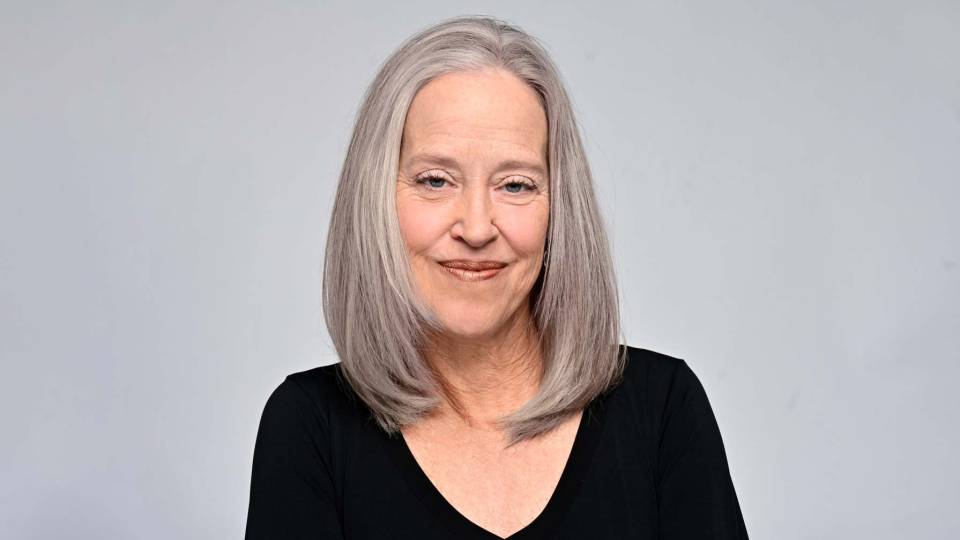
Madeleine Murnick
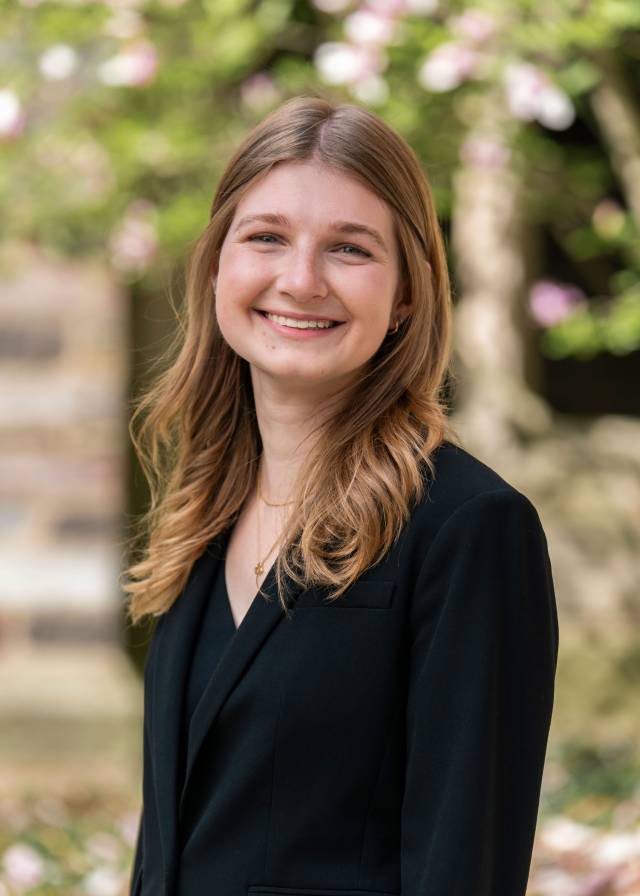
Madeleine Murnick, Princeton’s 2026 salutatorian
In addition to her classics major, Murnick is minoring in humanistic studies and music performance.
She said that when she heard she would be this year’s salutatorian, she was “surprised and then very, very honored,” and that she immediately began thinking about expressing gratitude for her classmates in the Salutatio, the annual Latin address to the graduating class delivered during Commencement.
“Not everyone gets to tell the rest of the class how much they meant to us,” Murnick said. “I want everyone to leave knowing that not only did they get a strong education, they helped their friends along the way.”
Ilaria Marchesi, director of Princeton’s Classical Languages Program and Murnick’s thesis adviser, said Murnick is a devoted student who inspires others to appreciate Latin.
“I am truly happy that her love of Latin, and the hard work that she has done over many years, is being recognized with this honor, giving her the joyful opportunity of speaking Latin in front of the graduating class,” Marchesi said.
Murnick’s thesis, “Latin in the Literary Imagination,” examines how people have learned Latin over the past 2,000 years, with an eye toward how best to teach Latin today.
“Her thesis is born of her love for the language and aims to dispel a common misconception; namely, that Latin is a particularly difficult language and that learning it is supposed to be a taxing experience — a misguided notion that Madeleine’s thesis argues was introduced only in the 19th century,” Marchesi said.
Murnick first discovered Latin at National Cathedral School in Washington, D.C., and then Princeton introduced her to medieval Latin texts and a broad range of Roman poets.
“I was drawn to the supportive and tight-knit community among students, professors, and staff in Princeton’s classics department,” she said. After she completed the yearlong Humanities Sequence during her first year at Princeton, she spent years serving as a Humanities Sequence peer mentor, helping to build community among students in the interdisciplinary class.
Murnick praised Princeton’s commitment to bringing the ancient world to life through hands-on access to ancient manuscripts and in-person experiences. When she took “Historical Structures,” a course cross-listed between humanistic studies, civil engineering, and art and archaeology, she said, the students didn’t just look at images of ancient architecture, they actually visited the Acropolis in Athens during fall break.
“Our professor had arranged with his colleagues in Greece for a behind-the-scenes tour of the Parthenon restoration,” she recalled. “We not only got to see the Temple of Nike up close, but they also opened a trap door in the floor, and we went down into the foundations of the temple. It was crazy. It was such a quintessential Princeton experience.”
Another of her core Princeton memories came from traveling with the Princeton Glee Club in Europe. “We were in a town in Austria, around a big bonfire. There’s 100 people in the Glee Club, and we were all gathered around this one fire, singing. It was really, really special. The closeness, the unity that comes from traveling together really does create a better sound, better concerts.”
Murnick has performed with many of Princeton’s musical groups, including Glee Club, Chamber Choir, Vocal Consort and the student-run Decem.
“Maddy is a beautiful singer, a true sensitive artist who loves music, but she’s also the ultimate team player,” said Gabriel Crouch, a professor of the practice in music and the associate director of Princeton’s Program in Musical Performance. “Here she is in her final semester, right in the throes of submitting her senior thesis, and I can’t remember the last time she missed a rehearsal. It’s amazing. She’s never late. She’s never less than perfectly prepared. She’s never without a smile. She’s never less than 100% engaged in her work. She’s a constant example and inspiration to the students around her.”
Murnick's other co-curricular activities include service in the Charter Club, where she was the 2025 president, and working as a leader trainer for Outdoor Action. She is also a member of New College West. Her immediate plan after graduation is to work this summer as a writing and interpretive intern at Baxter State Park in Maine, where she will help the park update its guidebook.
“Singing, Charter, OA — they’re all connected in that they’re all people-forward activities,” Murnick said. “For me, personal scholarship has to be paired with community activities where you get out of the library and spend time with people, because that, equally, is what college is all about.”
Crouch said he has seen how much of an impact Princeton has had on Murnick.
“I have felt this year like she has wanted to wring every possible drop of experience from Princeton,” Crouch said. “I think she has a sense that most students don’t get until they leave, that the experiences which are available to a student at Princeton are really exceptional, and we may or may not get those opportunities once we leave, and it would be a really good idea to exist with 100% presence and contact in every single moment of one’s daily life here.”