Graduate Hooding 2026: 'Your bold scholarship and leadership will help the world flourish'
Princeton’s newest Ph.D. and master’s degree recipients gathered with their mentors and loved ones for the annual Hooding and Recognition Ceremony
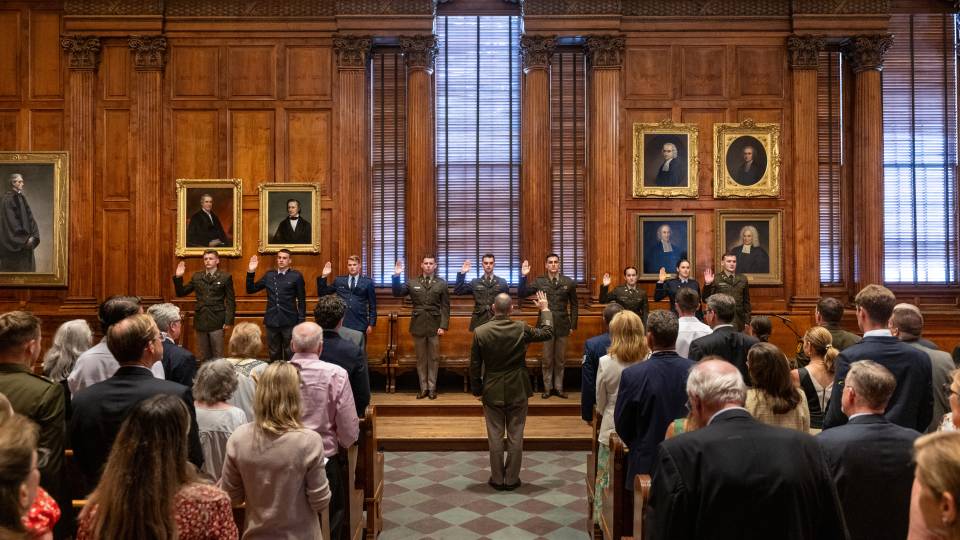
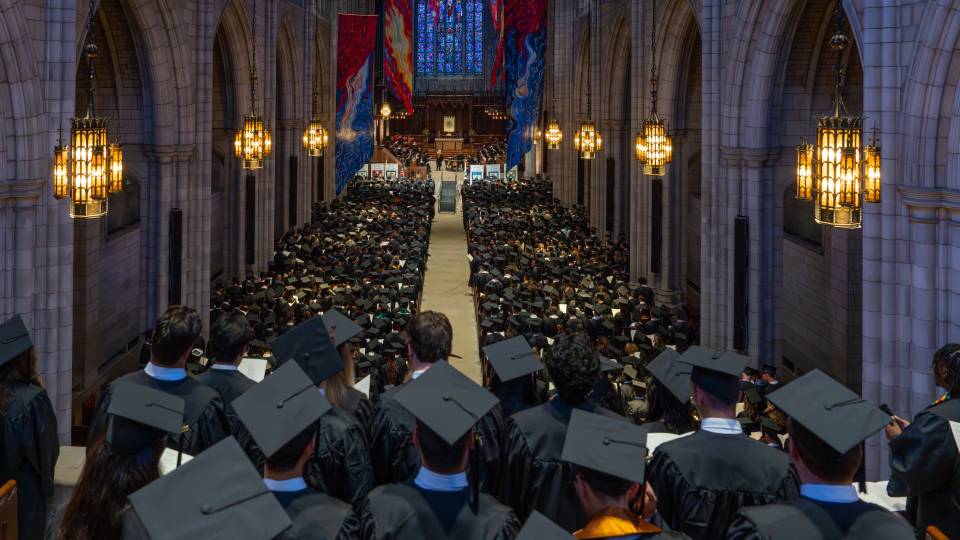
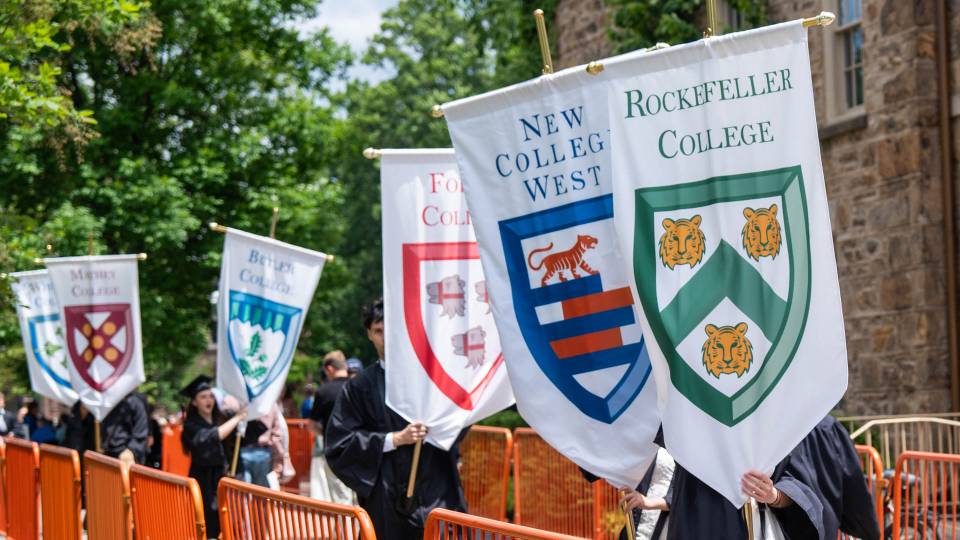
Princeton’s newest Ph.D. and master’s degree recipients were honored Monday, May 25, at the 2026 Hooding and Recognition Ceremony for completing their advanced degrees during this past academic year.
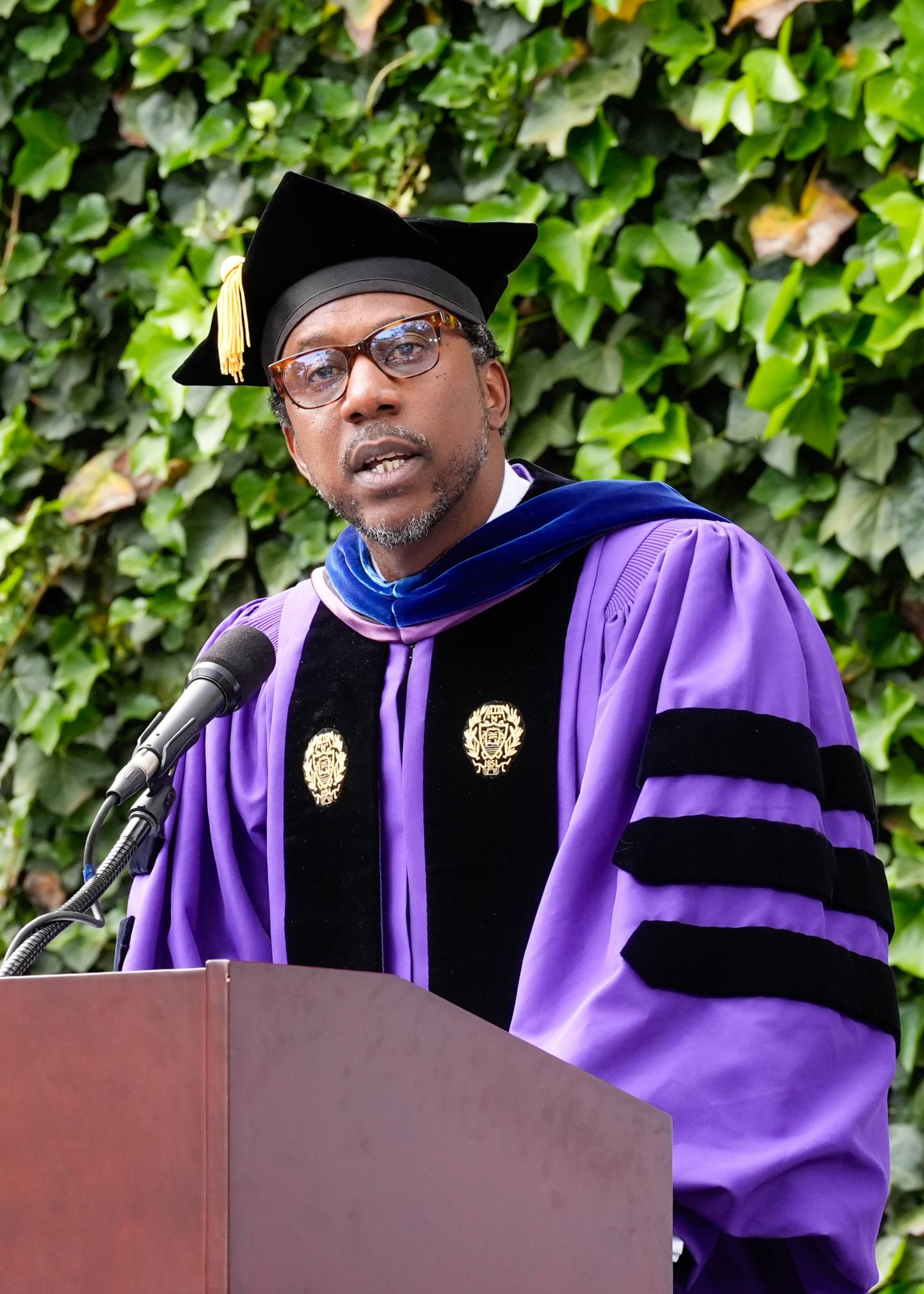
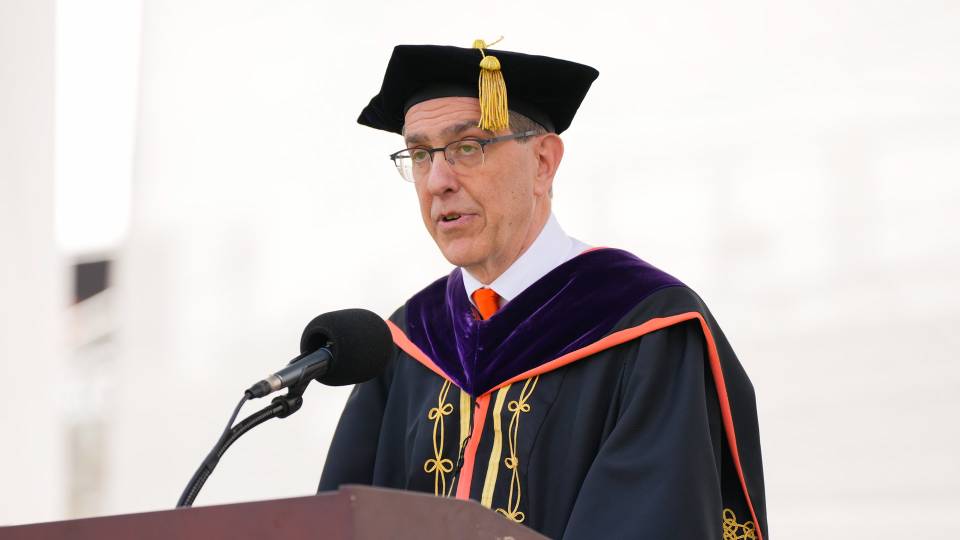
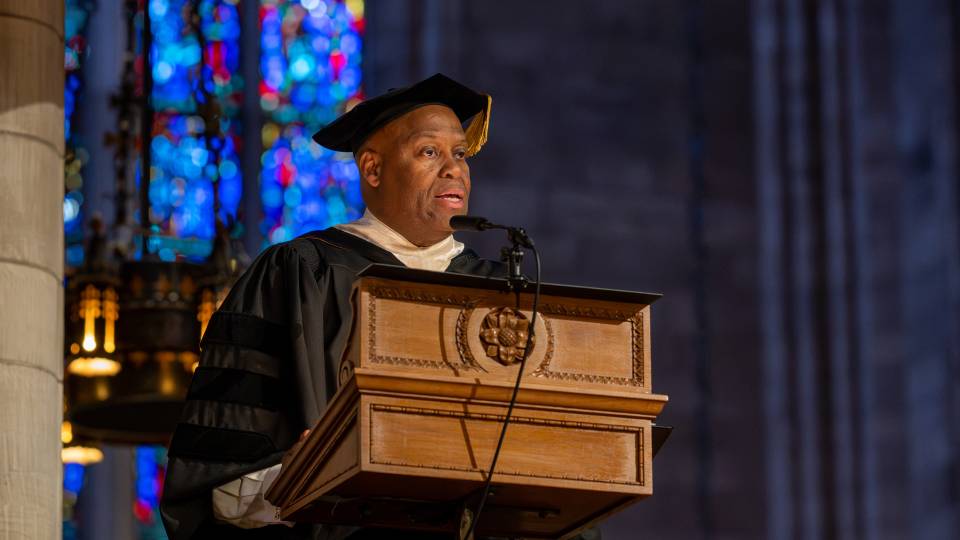
Dean of the Graduate School Rodney Priestley
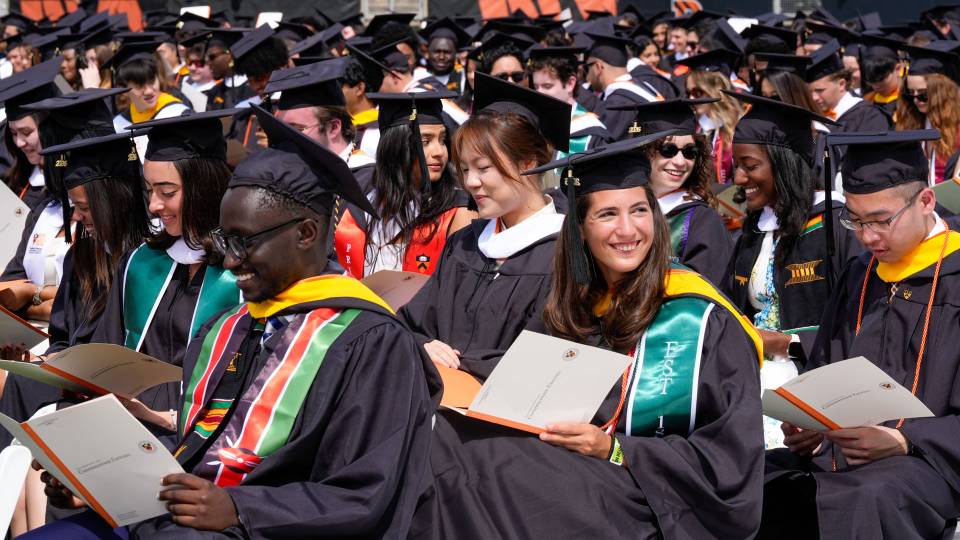
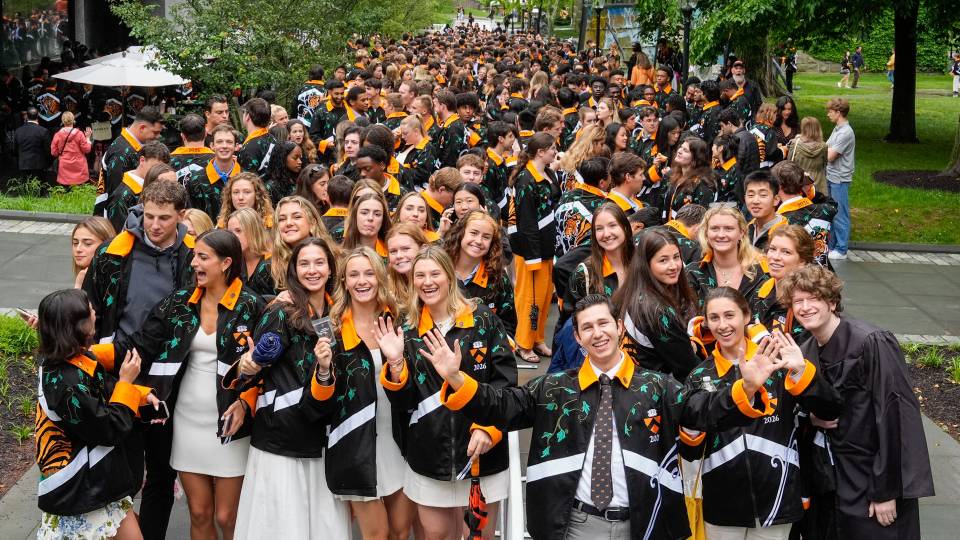
The Graduate School’s Class of 2026 gathered on Cannon Green, surrounded by family, friends and the many supporters of their years of effort.
“This afternoon, we gather to mark something truly rare: the completion of advanced scholarship at one of the world’s great research universities — in a moment when that work has never mattered more,” said Graduate School Dean Rodney Priestley, Princeton’s Pomeroy and Betty Perry Smith Professor of Chemical and Biological Engineering.
“Princeton’s Graduate School has been a place of transformational impact since 1900 — and that legacy now belongs to you,” he told the students. “We look with confidence to the next 125 years, knowing your bold scholarship and leadership will help the world flourish in ways we are only beginning to imagine.”
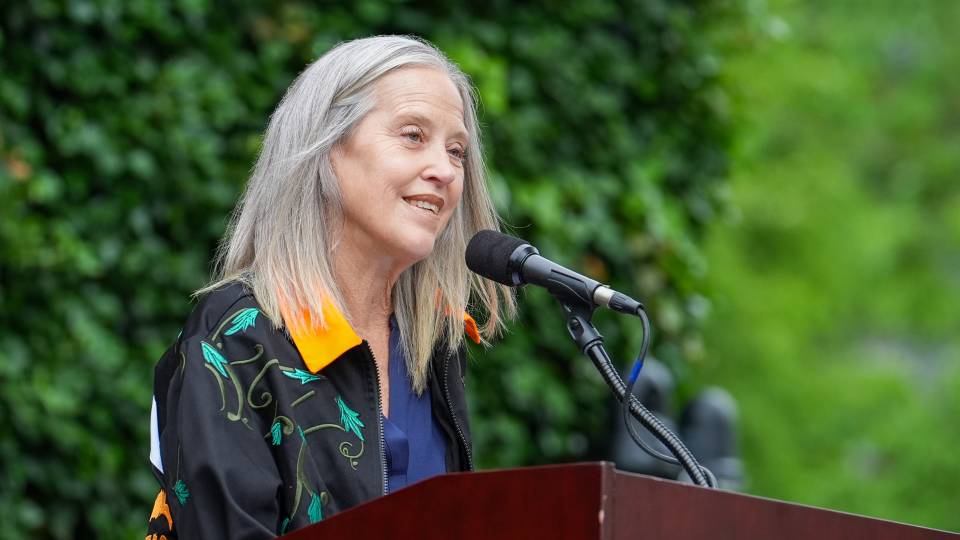
Priestley then welcomed Princeton University Provost Jennifer Rexford, the Gordon Y.S. Wu Professor in Engineering. In her remarks, Rexford urged the graduates to draw on what they have gained from Princeton in their lives and careers.

Master of Architecture students line up at the edge of the podium.
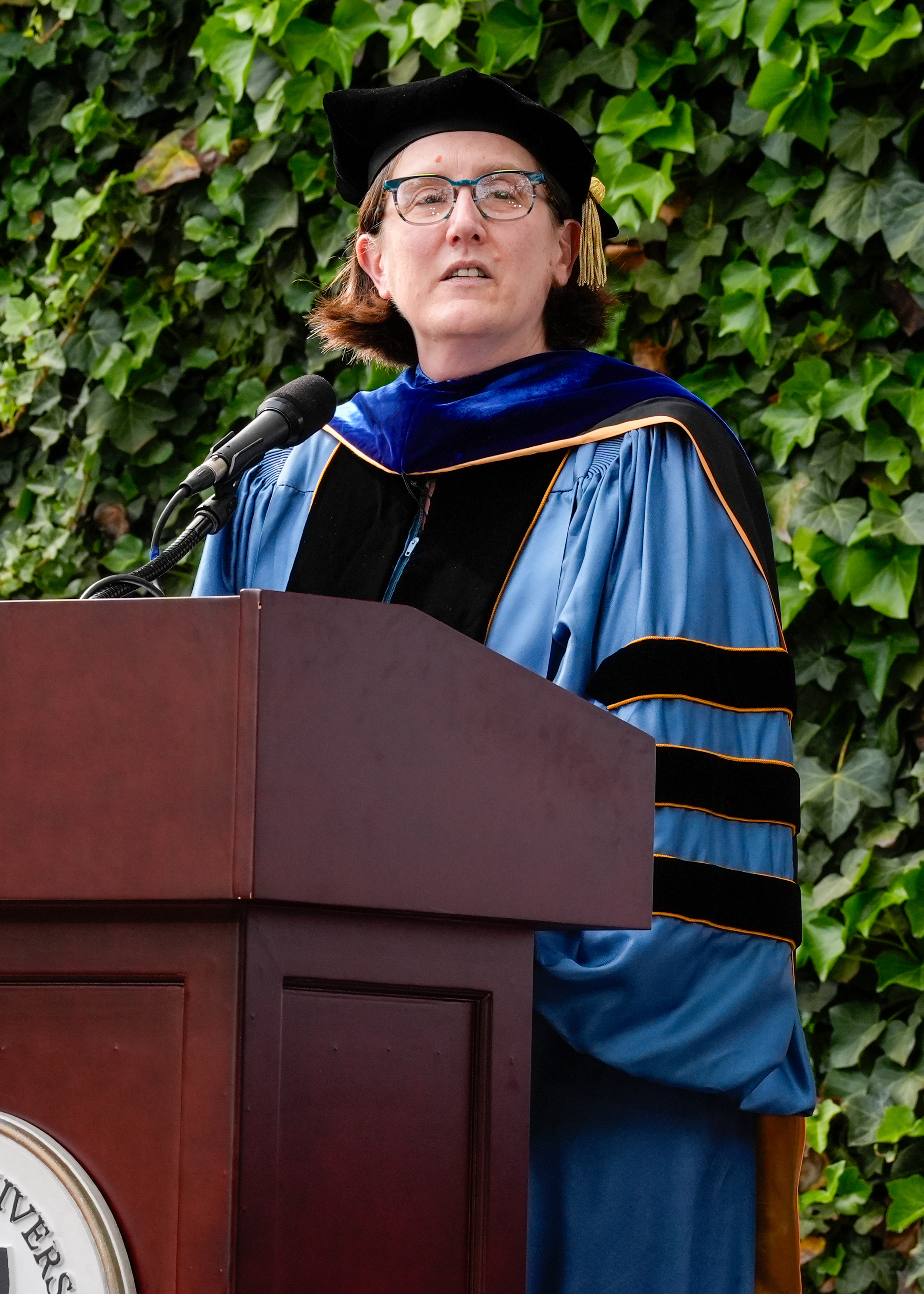
Princeton University Provost Jennifer Rexford
“As you leave Princeton, you'll work in many settings: universities, industry, government, nonprofits, here in the U.S. and around the world,” Rexford said. “Some of you will shape new fields of inquiry; others will apply knowledge in ways that touch millions of people. Leave here knowing that you carry forward more than just your depth of expertise in your field. You carry important norms: what it means to learn deeply, to weigh evidence and evaluate ideas, to have meaningful dialogue across difference, to pursue truth and understanding — even when it is contested or incomplete.
“You also carry stories — authentic, personal stories — about the transformative impact of higher education and of pursuing advanced degrees,” Rexford continued. “I hope you share these stories with your families, your friends, your co-workers and beyond. Sharing your stories is what changes people’s minds, and counters misunderstandings about what universities do and why it matters.”
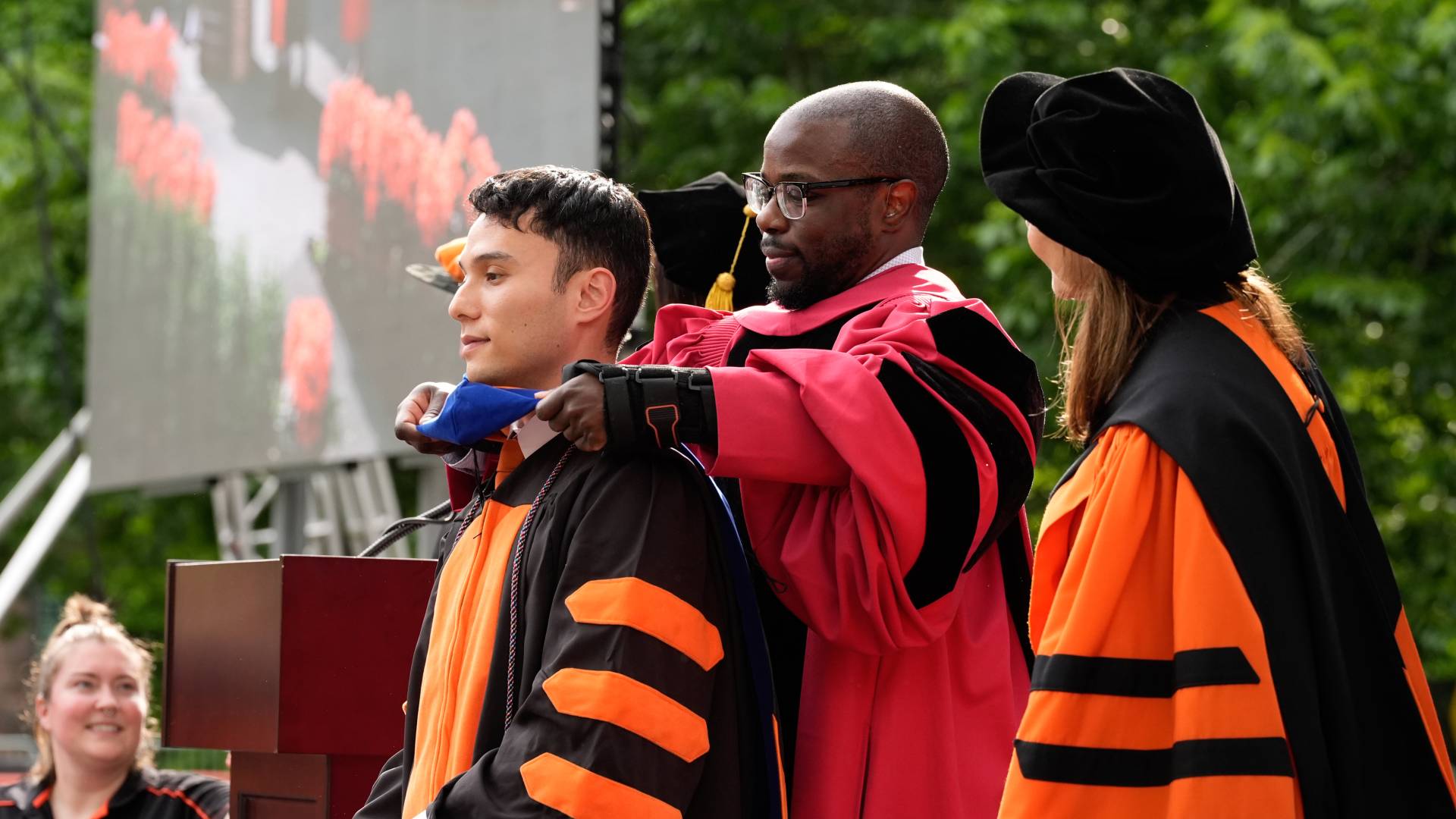
Jay Cephas, an assistant professor of architecture, places the hood signifying the Ph.D. degree onto the shoulders of Jeremy Wolin.
At the ceremony, master’s degree recipients and Ph.D. honorees were recognized by name as they walked across the stage. As the University deans looked on, each Ph.D. recipient was hooded either by their faculty adviser or by Sandra Bermann, chief marshal for University Convocations and the Cotsen Professor in the Humanities and professor of comparative literature.
The University awarded degrees to 668 graduate students:
- 448 Doctor of Philosophy
- 32 Master of Architecture
- 32 Master of Engineering
- 40 Master in Finance
- 27 Master of Science in Engineering
- 69 Master in Public Affairs
- 20 Master in Public Policy
The colorful gowns and hoods of their academic regalia trace their history to medieval Europe, where heavy woolen robes were necessary in the cold stone halls of universities. Modern hoods distinguish the wearer both by rank and academic discipline. The silk lining inside the hood shows the colors of the university granting the Ph.D. — at Princeton, orange with a black chevron. The velvet band indicates the discipline.
At Princeton, every Ph.D. candidate is generally hooded by one or more faculty members who have served as their advisers and been central to their degree program.
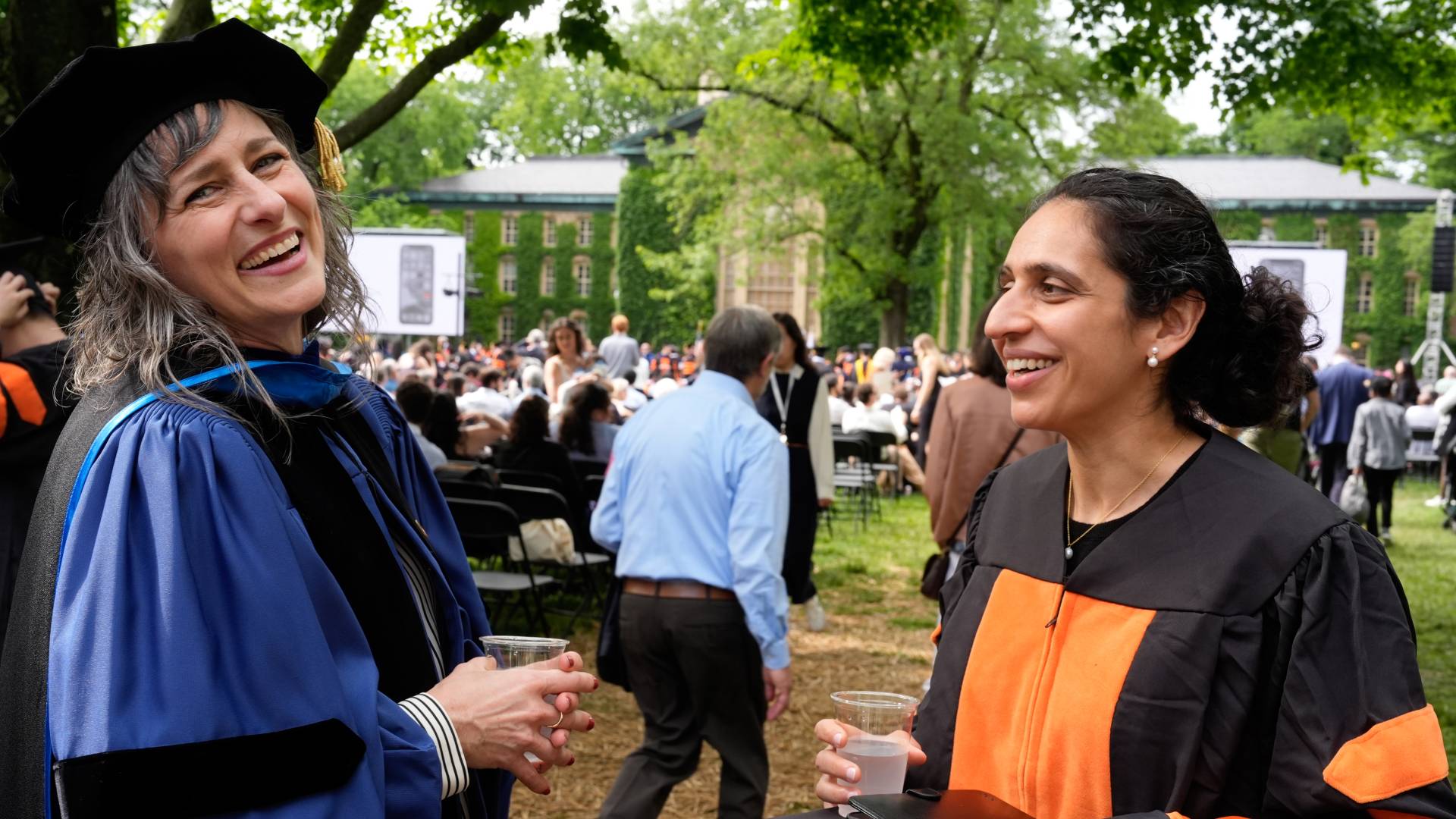
Sana Adnan Khan and her faculty adviser Betsy Levy Paluck laugh together before Hooding begins.
Quantum engineer Shashwat Kumar was hooded by Andrew Houck, dean of the School of Engineering and Applied Science and Princeton's Anthony H.P. Lee ’79 P11 P14 Professor of Electrical and Computer Engineering. “For me, the Hooding ceremony marks the culmination of years of research and hard work," said Kumar. "Being hooded by the adviser who guided me through that journey is a real honor, and it makes the moment feel both meaningful and like a formal transition into the next phase of life.”
Betsy Levy Paluck, Princeton's Eugene Higgins Professor of Psychology and Public Affairs, hooded Sana Adnan Khan. “The Ph.D. is a very long road,” said Paluck. “Sana has already accomplished so much, and it's really important to gather and celebrate her with the whole university and with her family.”
“For me, it was very important to mark the ending of the Ph.D.,” said Khan. “That's one thing that I've learned from Betsy, that we should take the opportunity to celebrate every occasion, even the small ones — and this is quite a significant one.”
After being honored at Hooding, the Graduate School Class of 2026 formally receive their degrees at Princeton’s 279th Commencement on Tuesday, May 26.
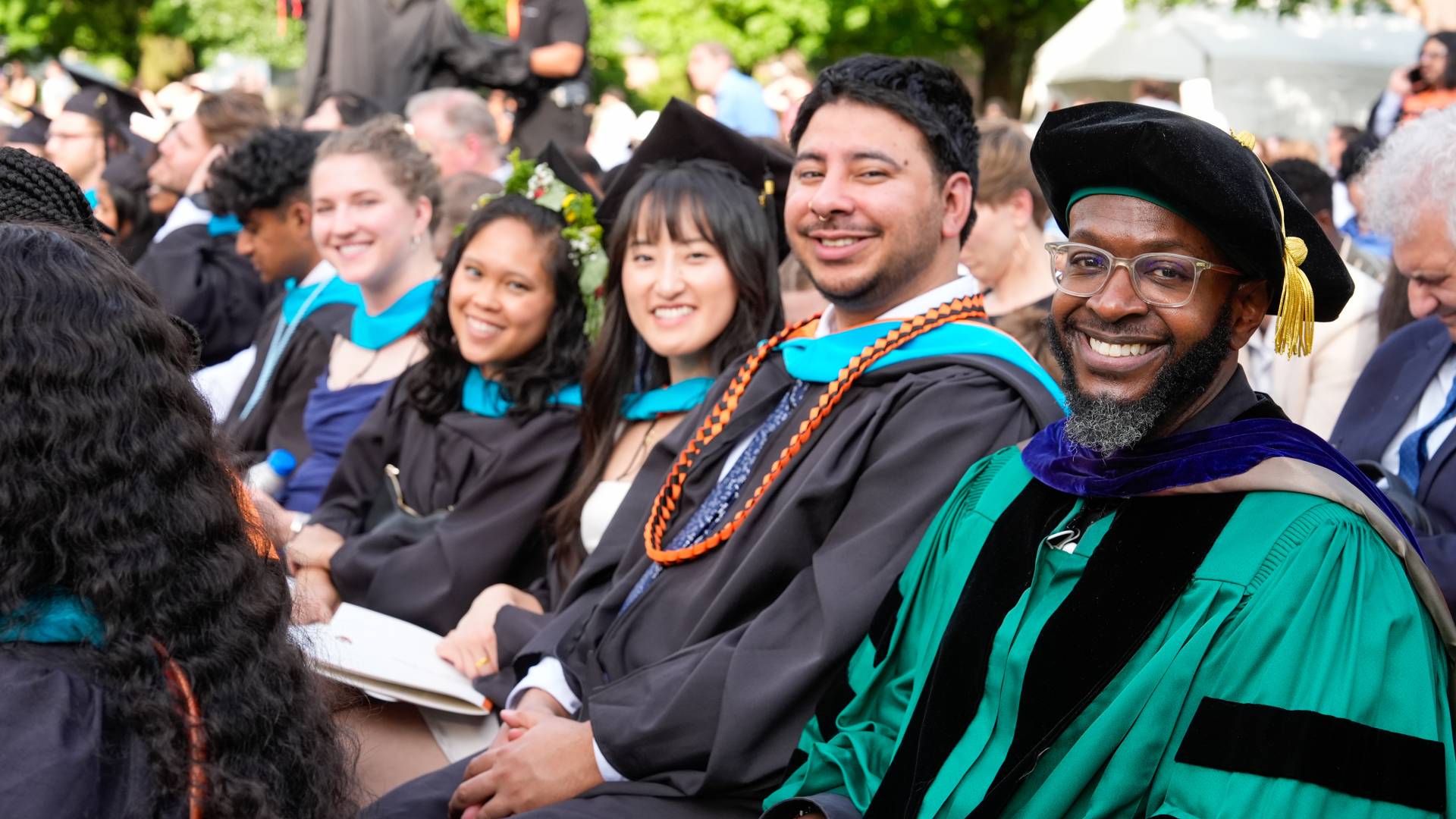
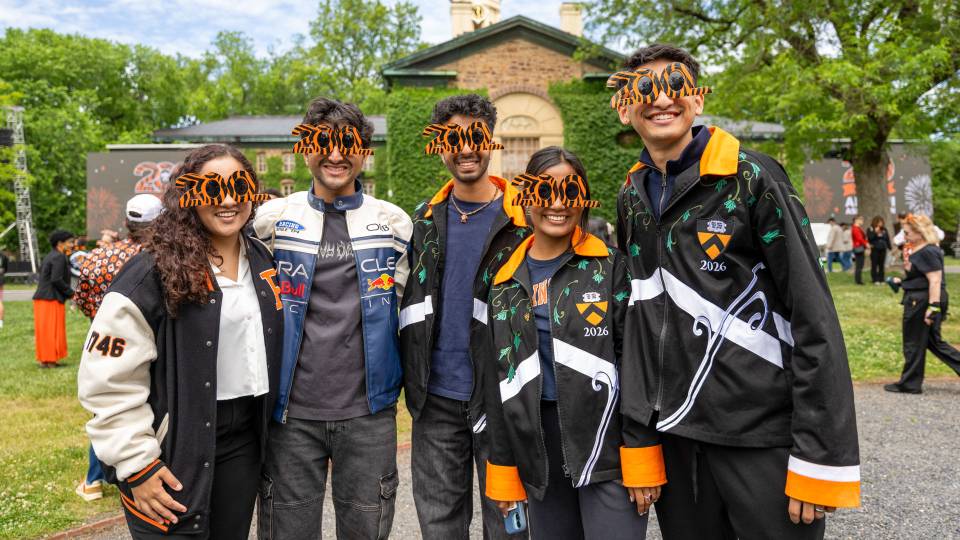
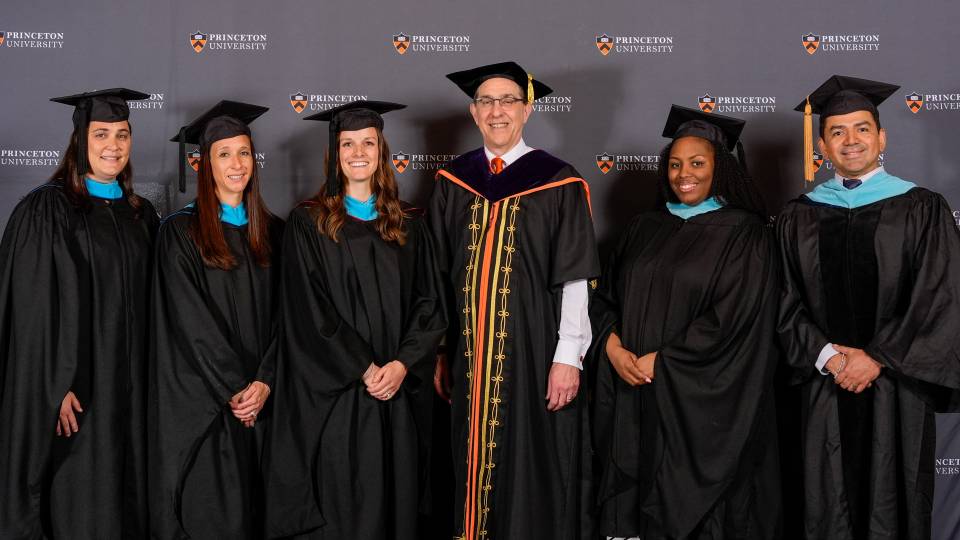
From left: Master in Public Affairs degree recipients Shamik Bhat, Julia Heinzel, Isabelle Belleza, Ashley Yu Wang and Matteo Trevino from the Princeton School of Public and International Affairs
At right: Joseph Lewis, associate dean of the Graduate School for access, diversity and inclusion
The Hooding and Recognition Ceremony also recognized the 2026 recipients of the Graduate Mentoring Awards, presented by Dean of the Faculty Gene Jarrett and Hendrik Lorenz, professor of philosophy and vice dean of the Graduate School. These awards annually recognize faculty members for their exceptional guidance of Princeton graduate students.
The award winners are:
- Edward Baring, professor of history and human values
- Tom Griffiths, the Henry R. Luce Professor of Information Technology, Consciousness, and Culture of Psychology and Computer Science, and the director of the Princeton Lab for Artificial Intelligence
- Jerelle Joseph, assistant professor of chemical and biological engineering and bioengineering
- Jamie Rankin, University lecturer in German and director of the Princeton Center for Language Study
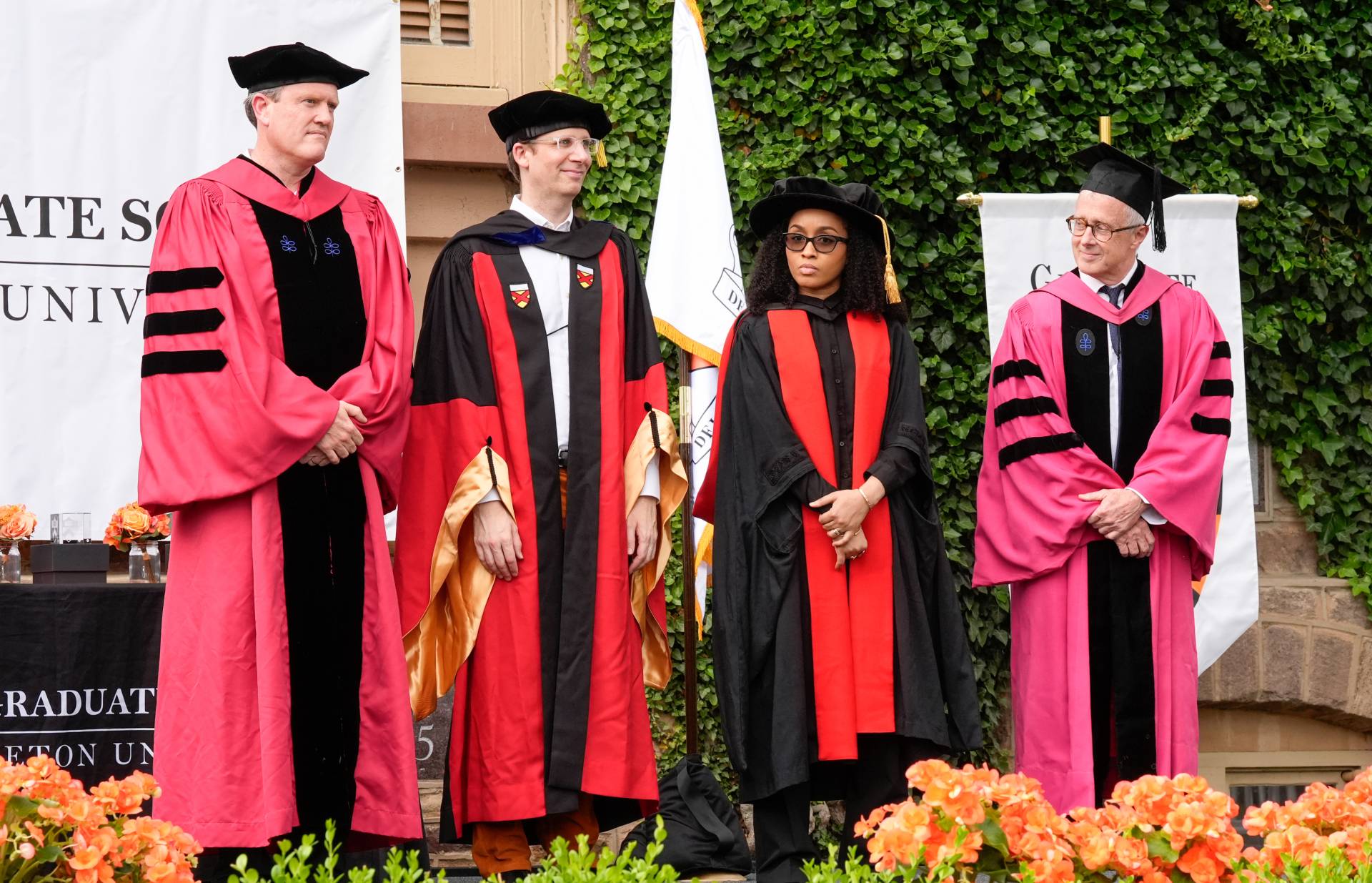
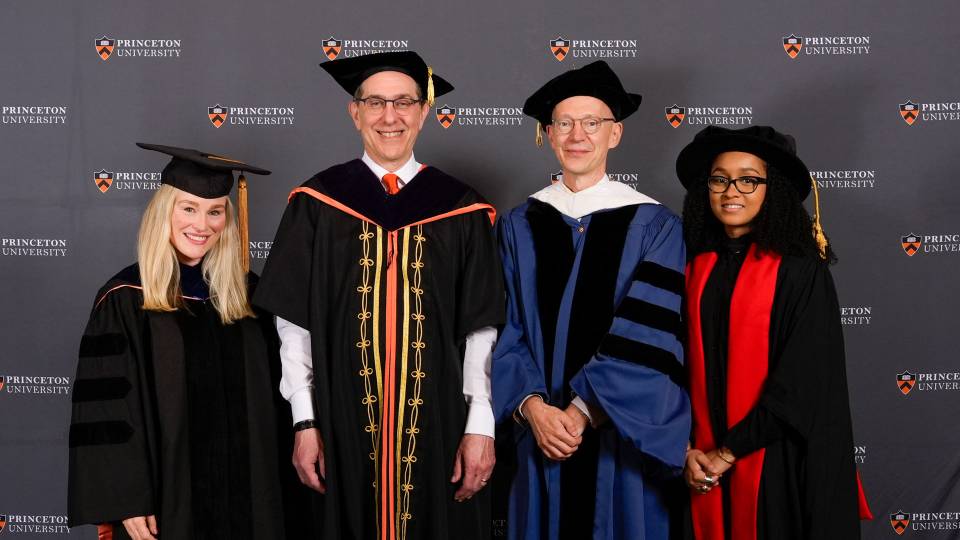
Graduate Mentoring Award winners (from left) Edward Baring, Tom Griffiths, Jerelle Joseph and Jamie Rankin
Speaking to the graduates, Rexford said: “You represent exceptional global talent — scholars who brought your curiosity, perspectives, and creativity to Princeton from across the country and around the world. I know that firsthand, as today I'll be hooding three fantastic Ph.D. students from my own research group, hailing as they do from China, from India and from the U.S. And you worked side by side with remarkable faculty, postdocs and other graduate students — mentors who challenged you, supported you, and helped you grow from students into the independent creators of knowledge that we celebrate today.
“Through that partnership, you mastered demanding disciplines. You pushed the boundaries of what we know. You honed your ability to communicate complex ideas, whether to students, or to peers, or to policymakers, or to the leading researchers in your own fields. And as you prepared yourself for the next phase of your professional lives — as researchers, teachers, innovators, leaders and citizens — we are immensely proud of what you have accomplished here. And we are excited — not just hopeful, but confident — about what you will contribute next.”
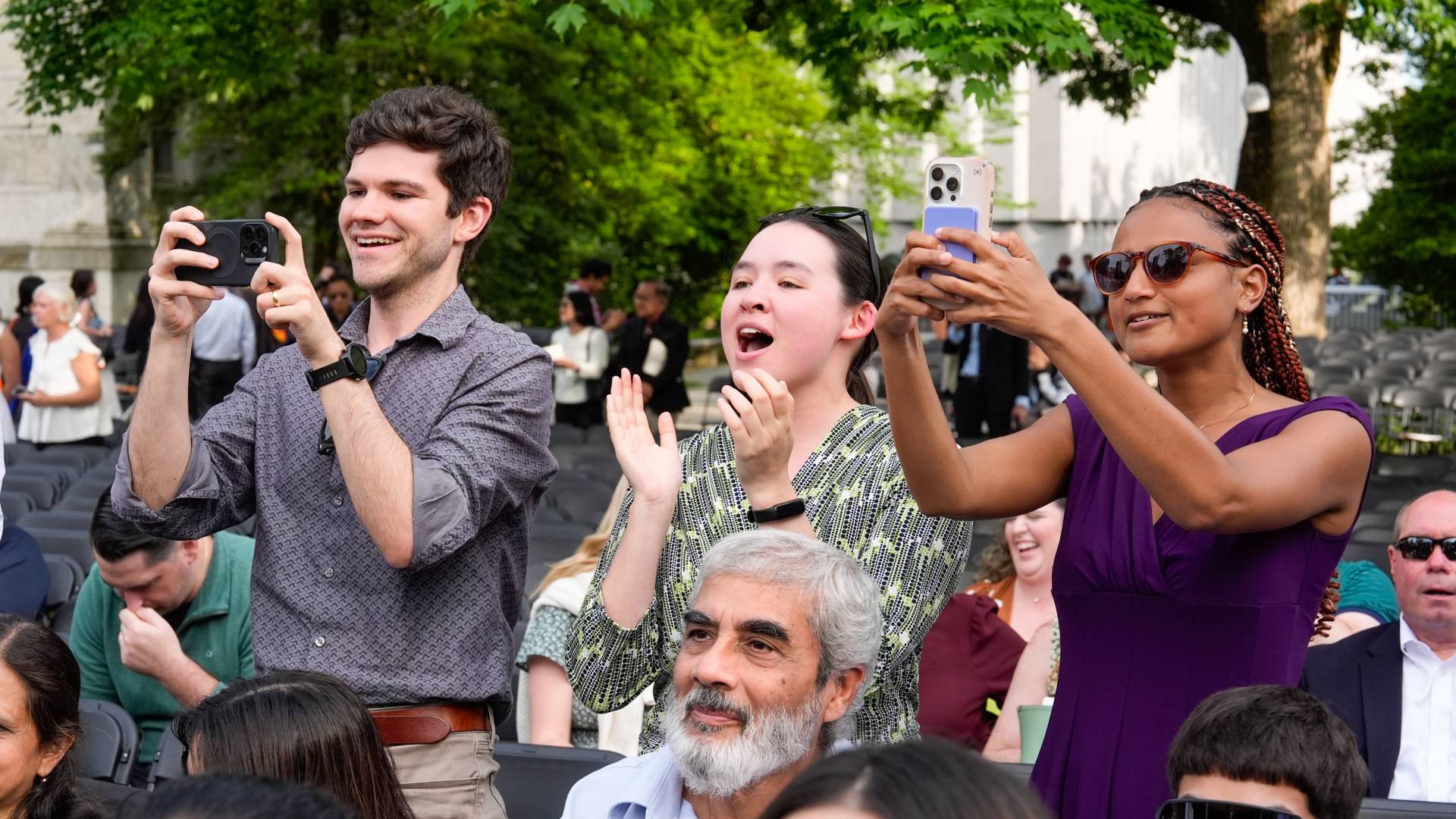
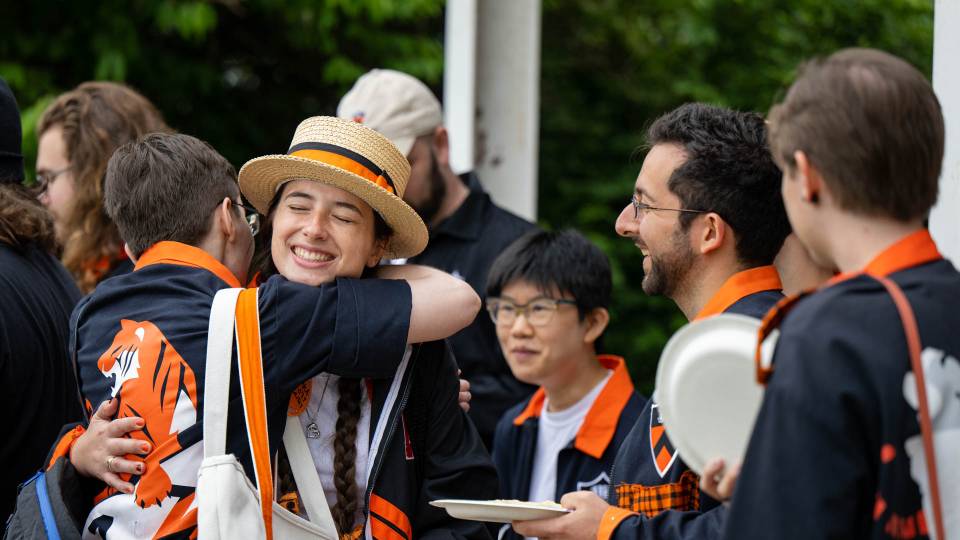
Friends and family celebrate as the student they came to see crosses the stage to receive their hood.