At Baccalaureate, Craig Robinson '83 urges seniors: 'Be a work in progress'
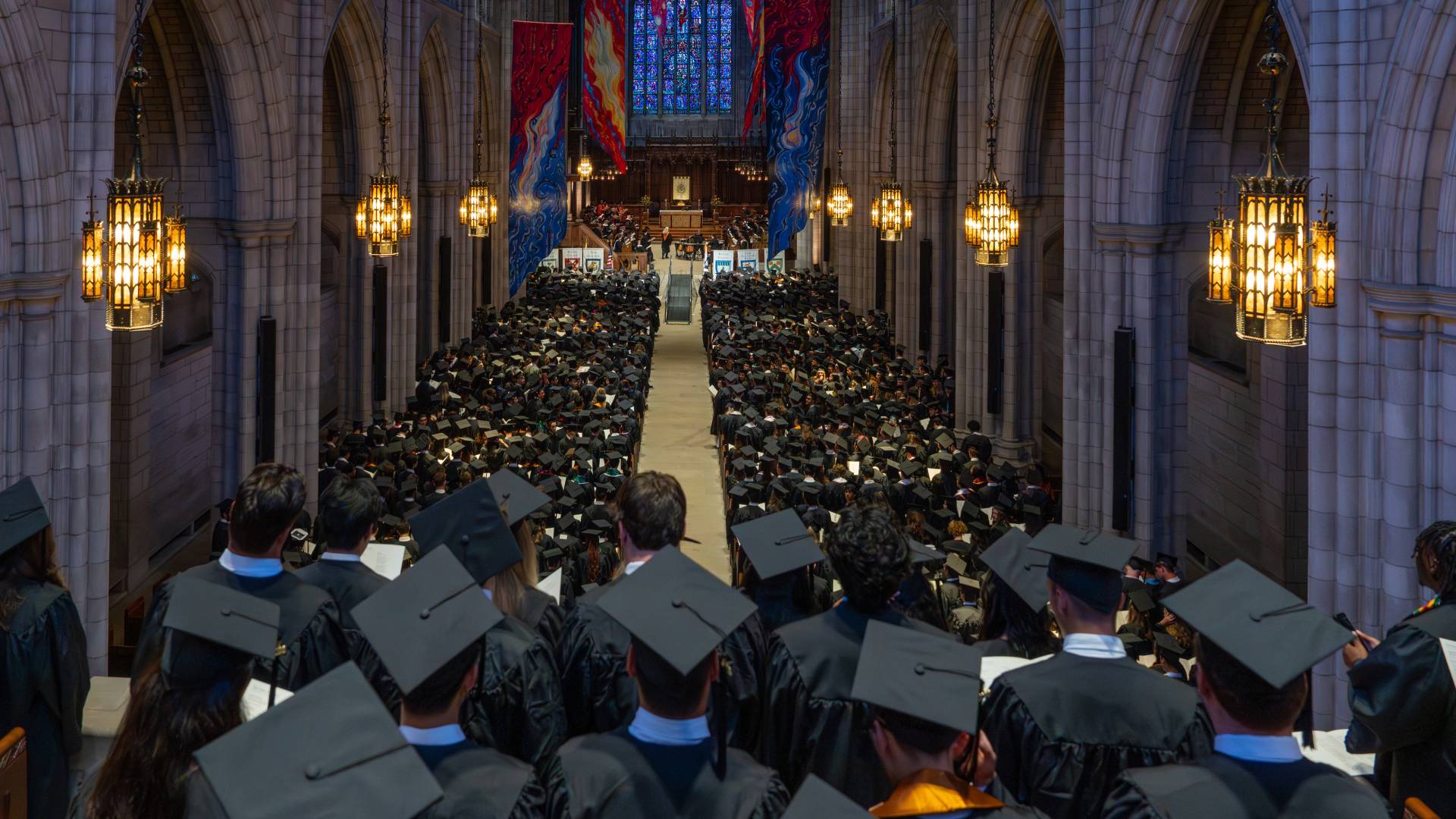
The vibrant interfaith Baccalaureate service, one of the University’s oldest traditions, includes music, blessings and readings from a range of faith traditions in the University Chapel.
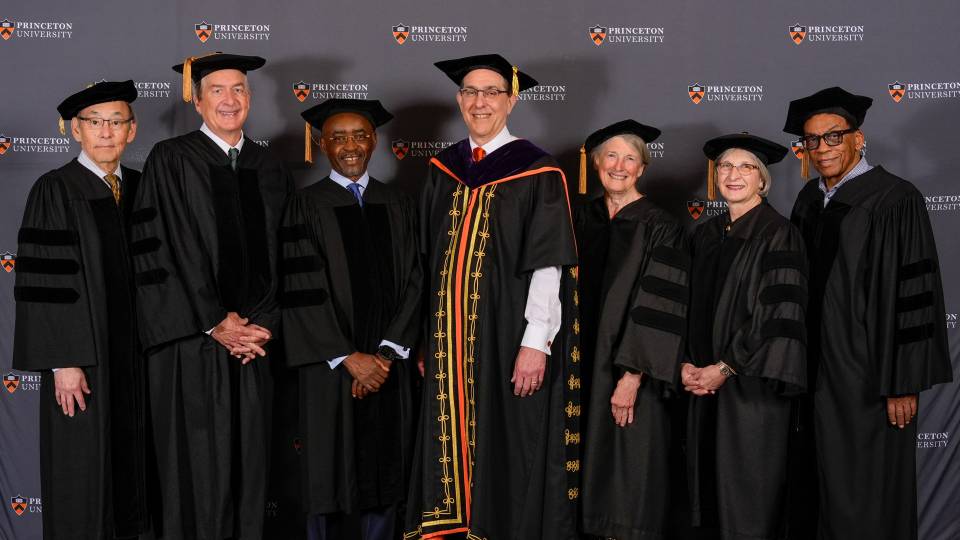
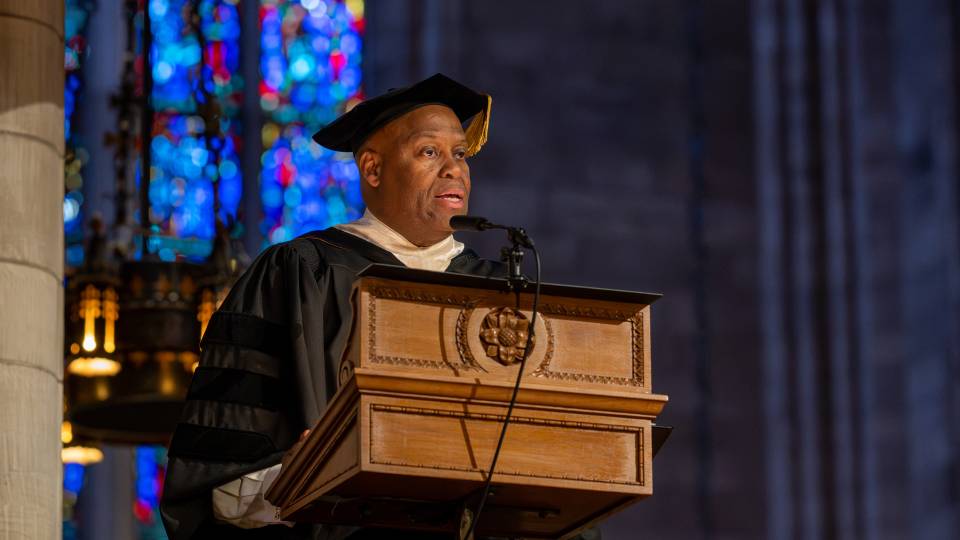
Princeton’s Class of 2026 began three days of graduation events on Sunday, May 24, with the University’s 279th Baccalaureate, an interfaith service in the University Chapel that offers seniors a chance to reflect on their time on campus and think ahead to life after graduation. The Baccalaureate speaker was Craig Robinson, executive director of the National Association of Basketball Coaches and former Princeton University trustee, who earned his bachelor’s degree from Princeton in 1983.
In his remarks, Robinson emphasized the virtue of living life as “a work in progress,” keeping your mind open to changes in direction that lead to a better path.
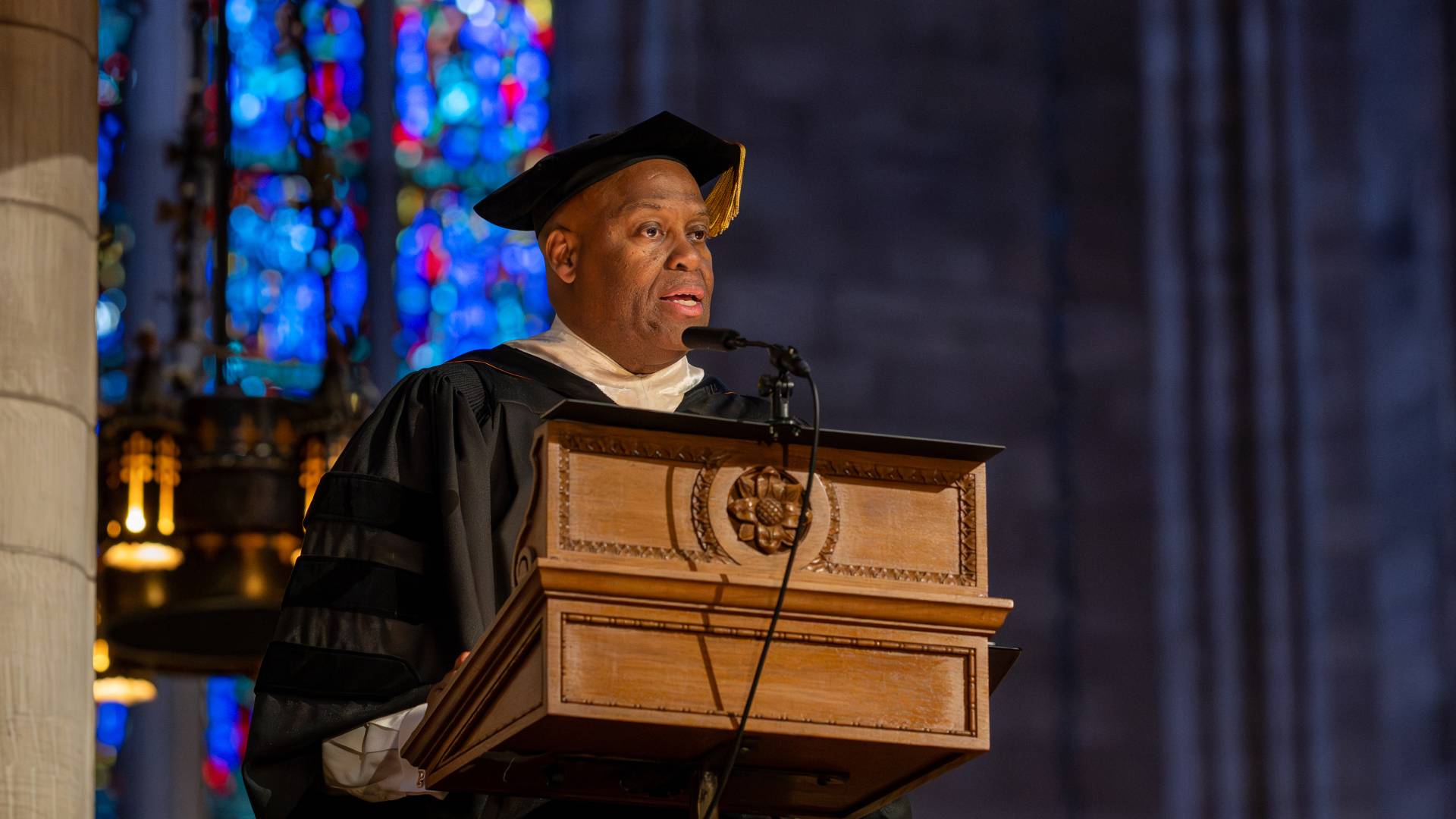
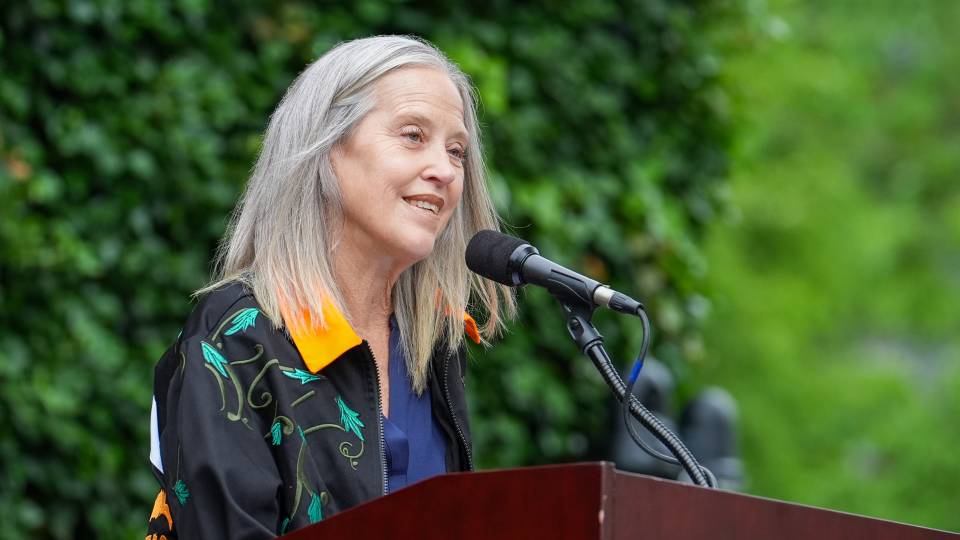
Craig Robinson ‘83, executive director of the National Association of Basketball Coaches and former Princeton University Trustee, delivers the 2026 Baccalaureate address.
He shared a story of calling home during his first year at Princeton to confess to his father that he felt overwhelmed. His dad reassured him, “Craig, you're not going to be No. 1 in the class. But you're also not going to be No. 1,001. No matter where you land, you will always have a Princeton degree. So relax, and do your best.”
Robinson continued: “That permission to not be ‘perfect’ was the first time I felt at ease on campus up to that point. I realized that my dad, a man who faced the physical erosion of MS [multiple sclerosis] every single day, and who didn’t have the benefit of a college degree, wasn’t measuring my success by my GPA. He was measuring it by my persistence. He knew that the ‘mystique’ of this place was just a shadow; the substance is the person you become while you’re under the pressure.”
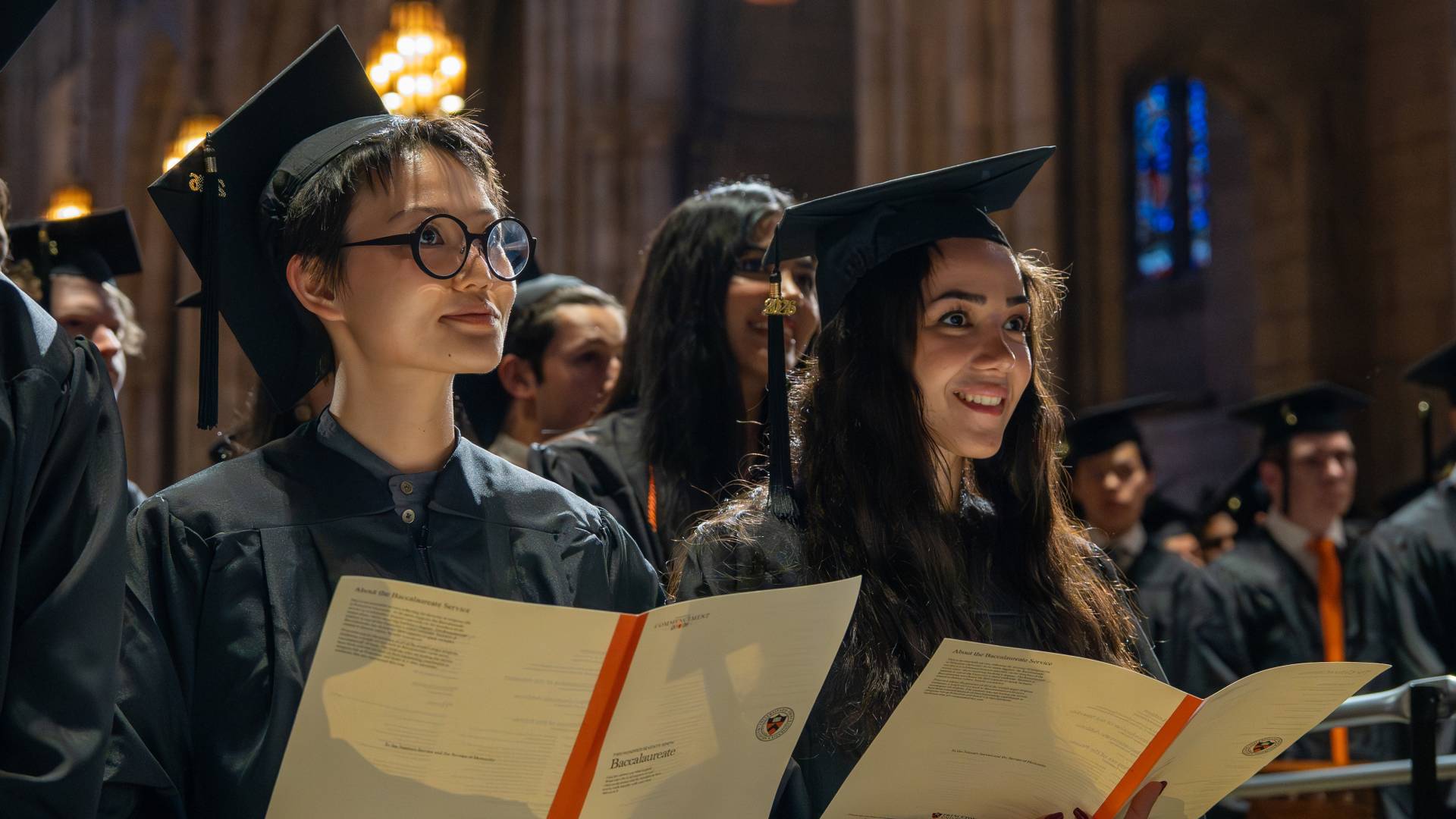
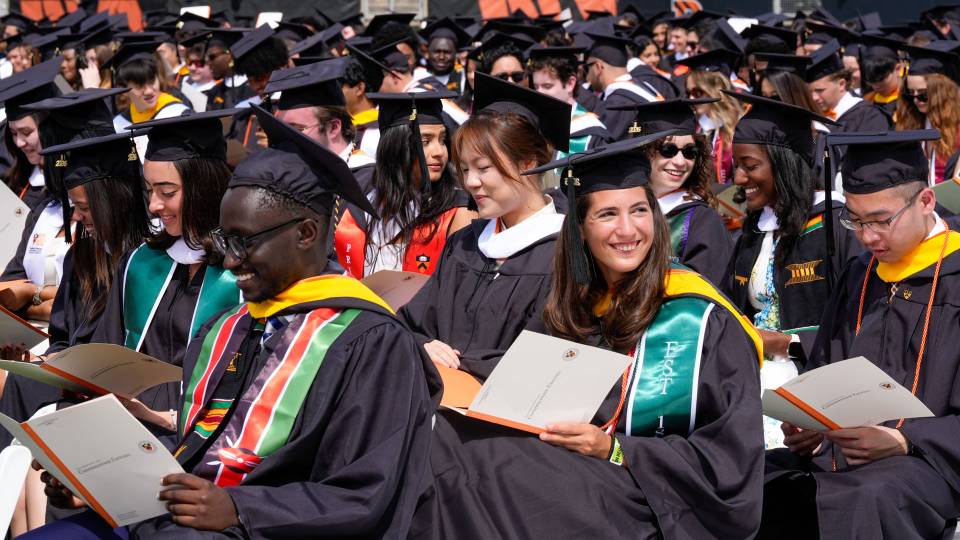
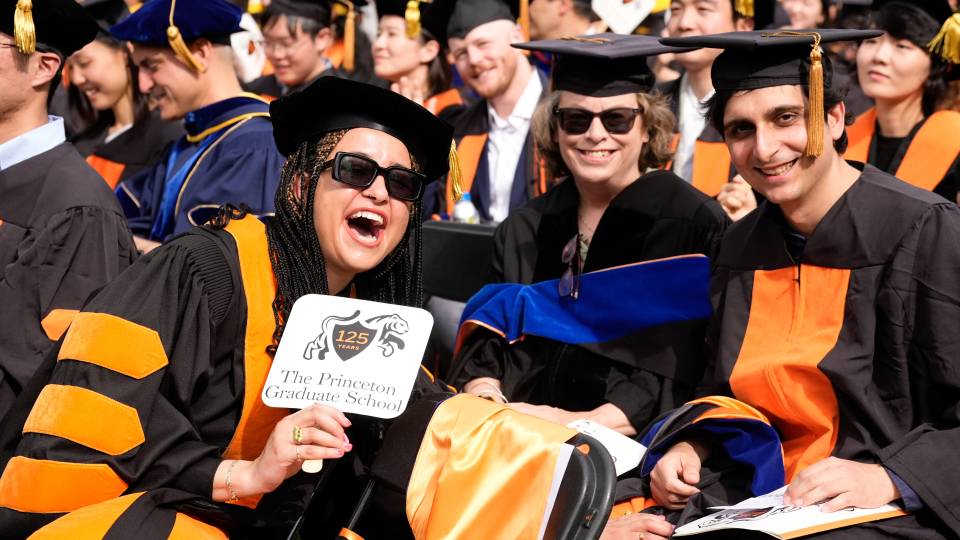
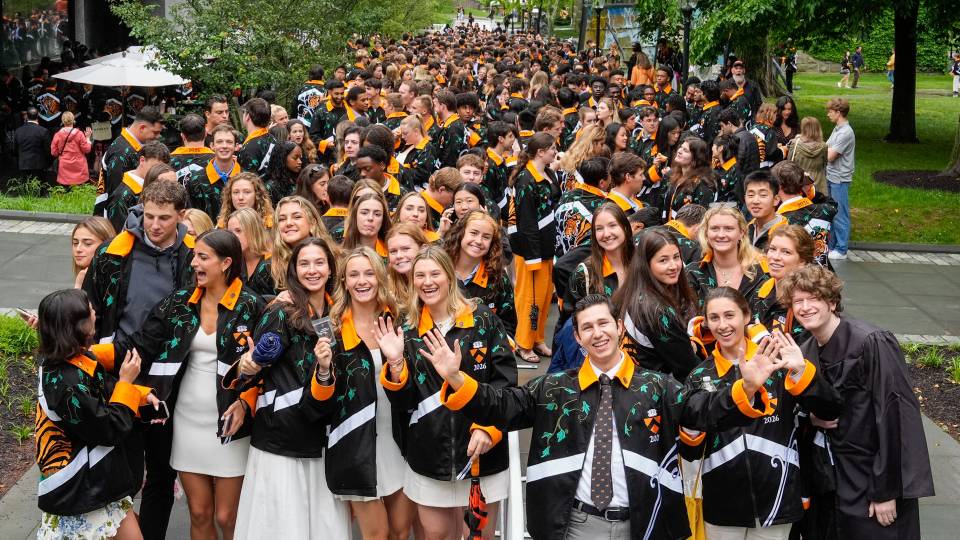
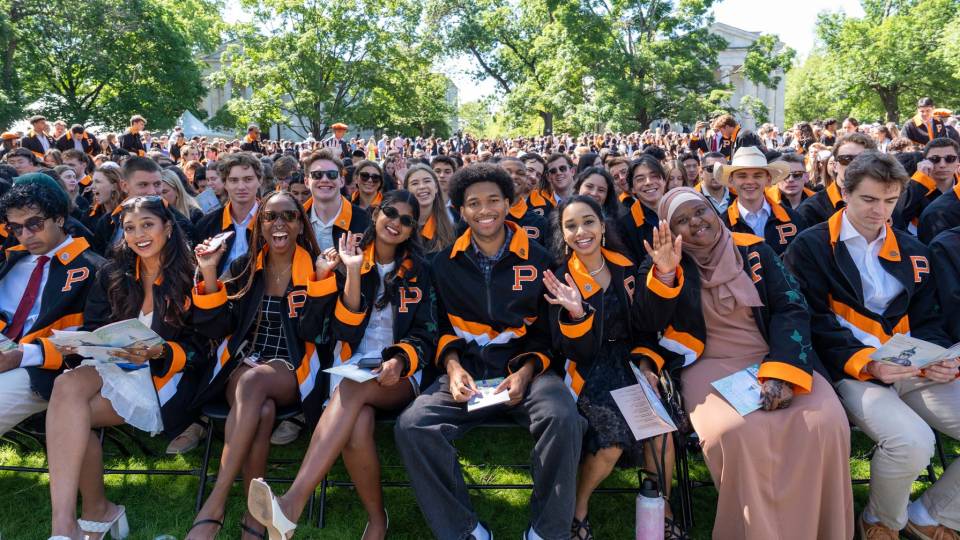
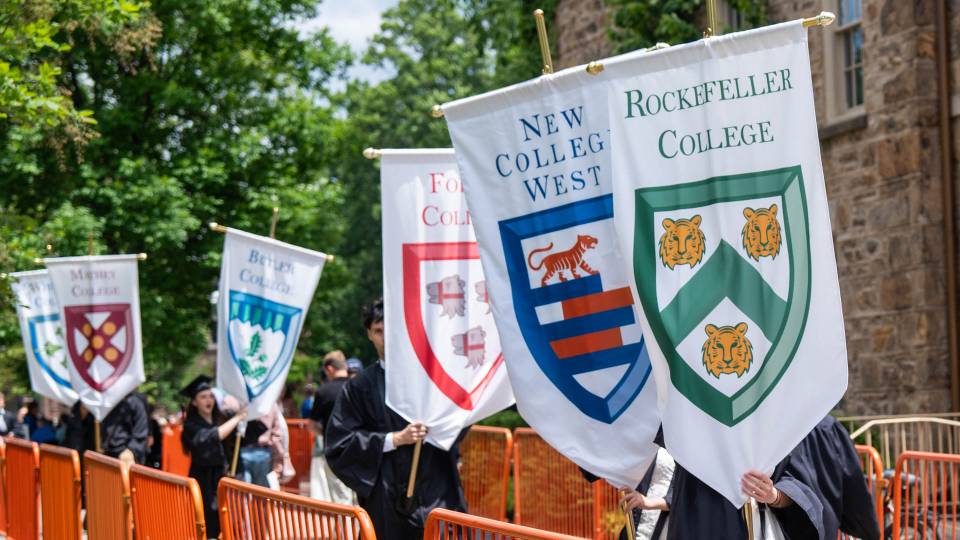
The Baccalaureate service is the graduating seniors' first time to wear their graduation regalia.
A commitment to service
The vibrant interfaith Baccalaureate service, one of the University’s oldest traditions, includes music, blessings and readings from a range of faith and philosophical traditions. Graduating seniors, who were wearing their caps and gowns for the first time, gathered inside the University Chapel for the service, while friends and families watched the service simulcast from Alexander Hall, McCosh Hall and Frist Campus Center.
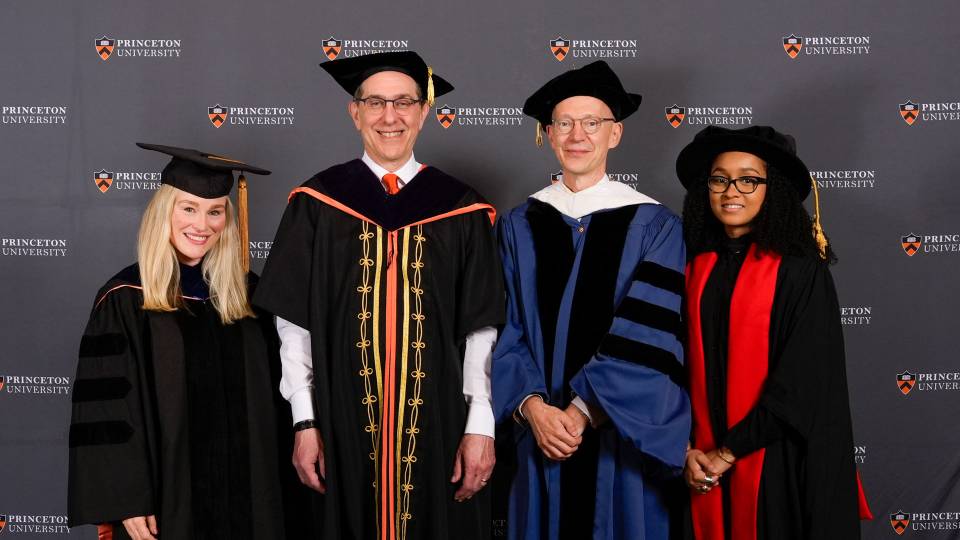
After an invocation from Dean of Religious Life and of the Chapel Theresa Thames, Princeton University President Christopher L. Eisgruber greeted the seniors.
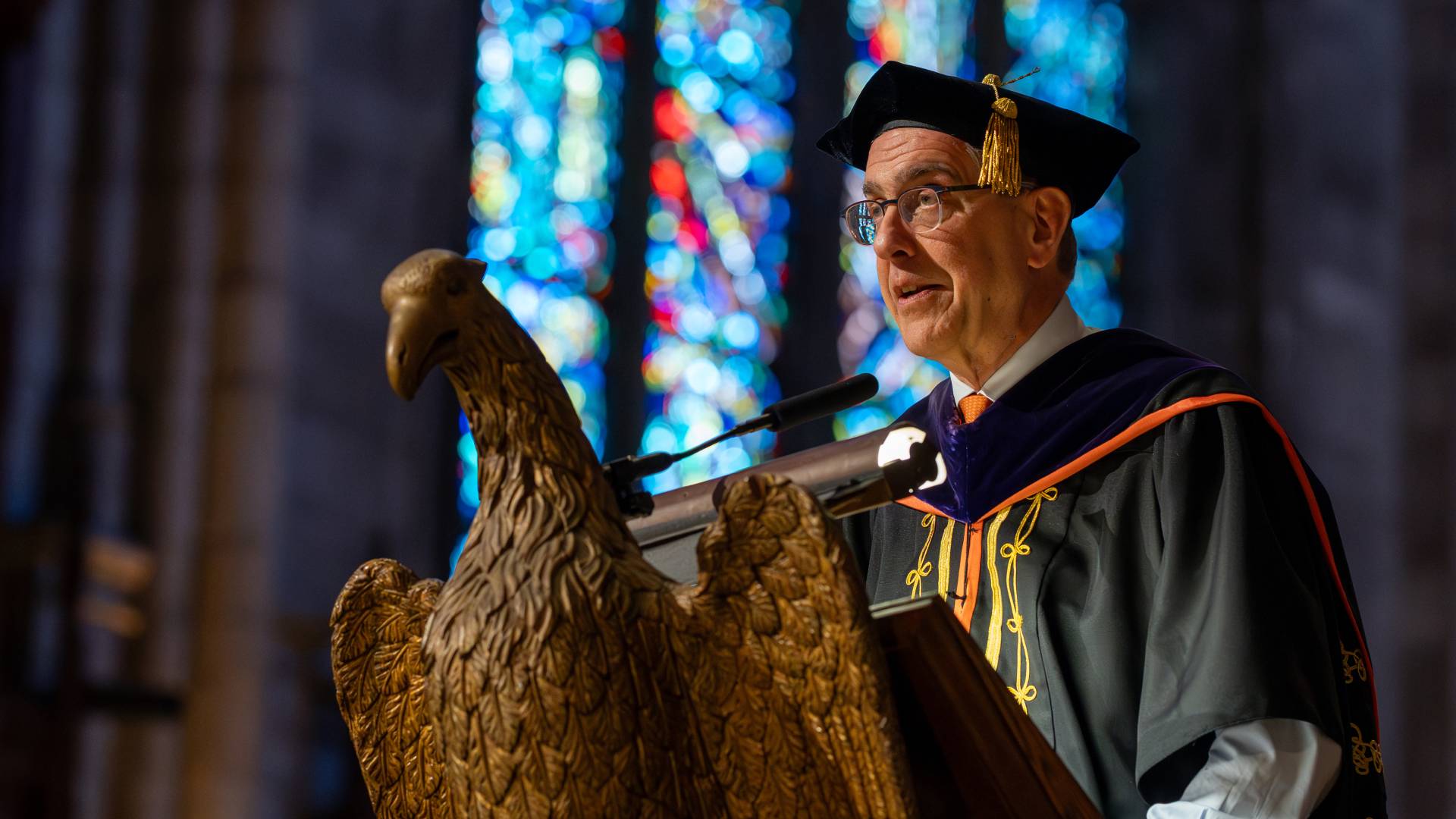
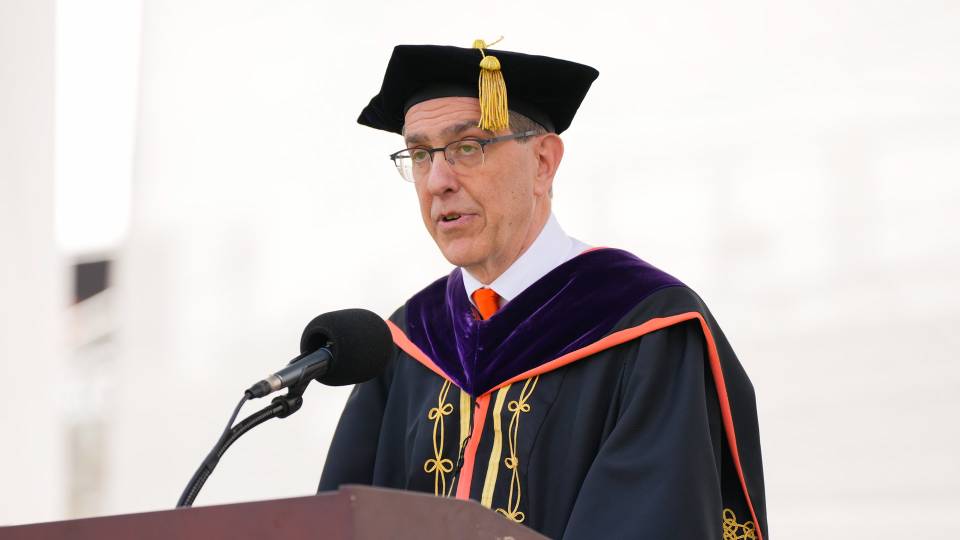
Princeton University President Christopher L. Eisgruber
For almost 300 years, “the concept of making service central to one’s life has been tightly woven into the ethos of this University,” Eisgruber said. “Our first informal motto, ‘Princeton in the Nation’s Service,’ originated in a speech given by Professor Woodrow Wilson to celebrate Princeton’s 150th birthday in 1896. On Princeton’s 250th birthday, we expanded the motto to 'Princeton in the Nation’s Service and in the Service of All Nations.’
“When we honored Supreme Court Justice Sonia Sotomayor on Alumni Day in 2014, she called for a broader definition. In her remarks, she suggested Princeton’s informal motto be expanded to ‘Princeton in the nation’s service, and in the service of all nations, and in the service of humanity, one person and one act at a time.’ Heeding her advice, we revised our informal motto to ‘Princeton in the Nation’s Service and the Service of Humanity’ two years later.”
Eisgruber concluded: “I hope that you will embrace our motto and make it your own, interpreting it in ways that are meaningful to you and the communities you serve. As you proceed through today’s ceremony and those that follow, please know that you have my good wishes, my respect and my gratitude for the contributions you have made to this University.”
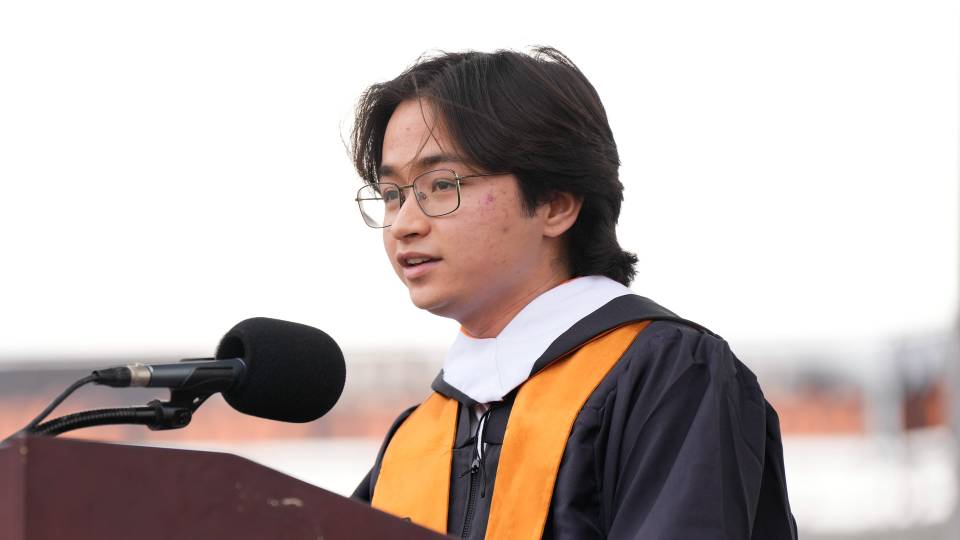
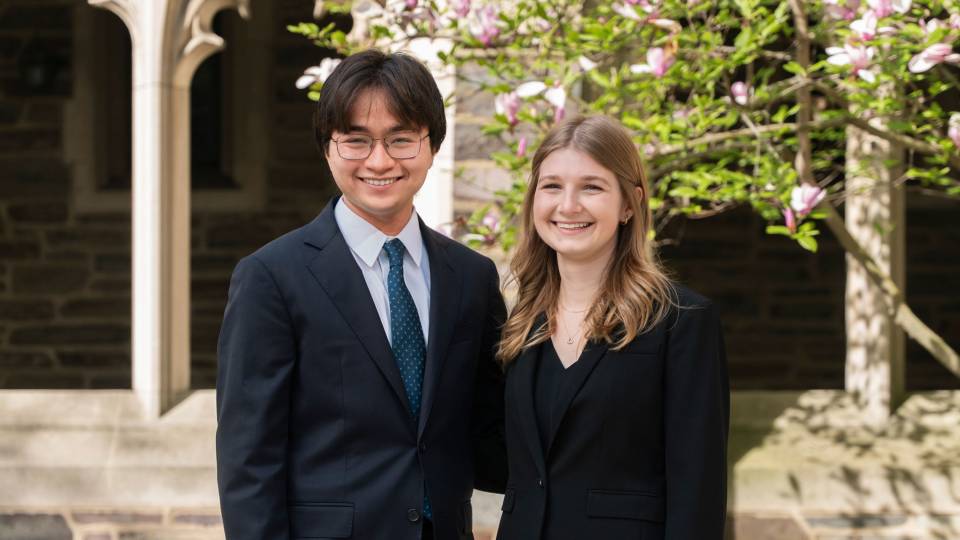
After the president's remarks, three seniors selected for their outstanding contributions to religious life at Princeton — Sanjana Venkatesh, Yahya Habib and Amelia Brown — read in turn from their sacred texts.
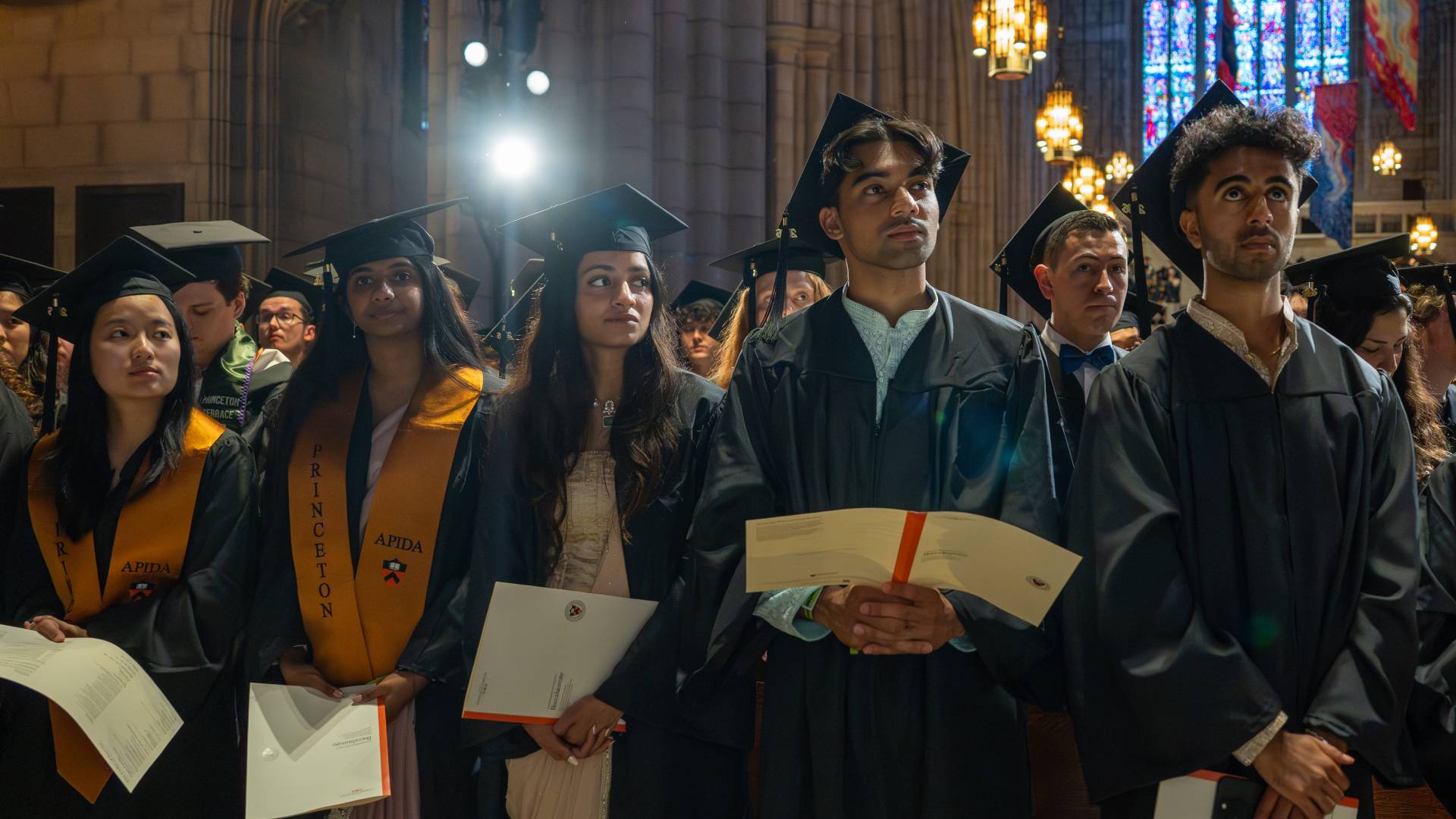
Graduating seniors listen to the final blessings and benediction.
Following the readings and a performance by the Princeton University Chapel Choir, Eisgruber introduced Robinson by noting that they were both members of the Great Class of 1983.
“While we did not know each other as students, I cheered for him from the stands in Jadwin Gym as he played basketball for the legendary coach Pete Carril. Cheering for Craig was easy; he was a two-time Ivy League Player of the Year, and the Tigers won three Ivy League titles during his tenure,” Eisgruber said.
“In the classroom, Craig embraced the liberal arts, studying philosophy and religion, and earning a bachelor's degree in sociology with a certificate in African American studies. After graduating, Craig played basketball in the European League before pursuing a finance career and earning his M.B.A. from the University of Chicago School of Business,” Eisgruber continued.
After beginning his career at Morgan Stanley and Loop Capital Markets, Robinson pivoted to coaching basketball, with "an exceptional eye for talent, typically seeing potential in players they might not have immediately seen in themselves,” Eisgruber said. “Craig served as the head coach at Brown University and Oregon State University before moving to leadership roles in the NBA and to his current position as executive director of the National Association of Basketball Coaches. A proud father of four children — including his daughter Leslie Robinson of the Great Class of 2018, who starred for Princeton’s women’s basketball team — Craig remains committed to his family and living the values he learned at a young age."
In his speech, Robinson described his life as a series of existential pivots that he labeled “The Swerve,” crediting the term to his sister, former First Lady of the United States Michelle Obama of the Class of 1985.
He described how he changed his major from engineering to sociology while at Princeton, played basketball overseas briefly after graduation instead of putting his degree to work, and later pursued his career in investment banking. And then, he said, “I realized I was successful by every metric except the one that mattered: I wasn’t doing something I loved.”
He continued: “I think that happens to more people than we admit. We spend years climbing ladders only to discover the ladder was leaning against the wrong wall. The paycheck may look good. The title may impress folks at reunions. But if you wake up every day disconnected from your purpose, eventually success starts to feel surprisingly empty. That realization forced me to redefine success for myself — not based on status, but based on fulfillment, growth, relationships and impact.”
He urged students to follow their own paths, swerves and all.
“Your life does not move at the same pace as anyone else’s,” he said. "Some of your classmates will seem to have everything figured out. Others will take longer to find their footing. Don’t confuse someone else’s timeline with your own destiny.
“The world will constantly tempt you to compare yourself to other people’s highlight reels or Instagram posts. Resist that urge,” Robinson said. “Comparison steals joy, perspective and confidence. Stay focused on becoming the best version of yourself — not a copy of someone else.”
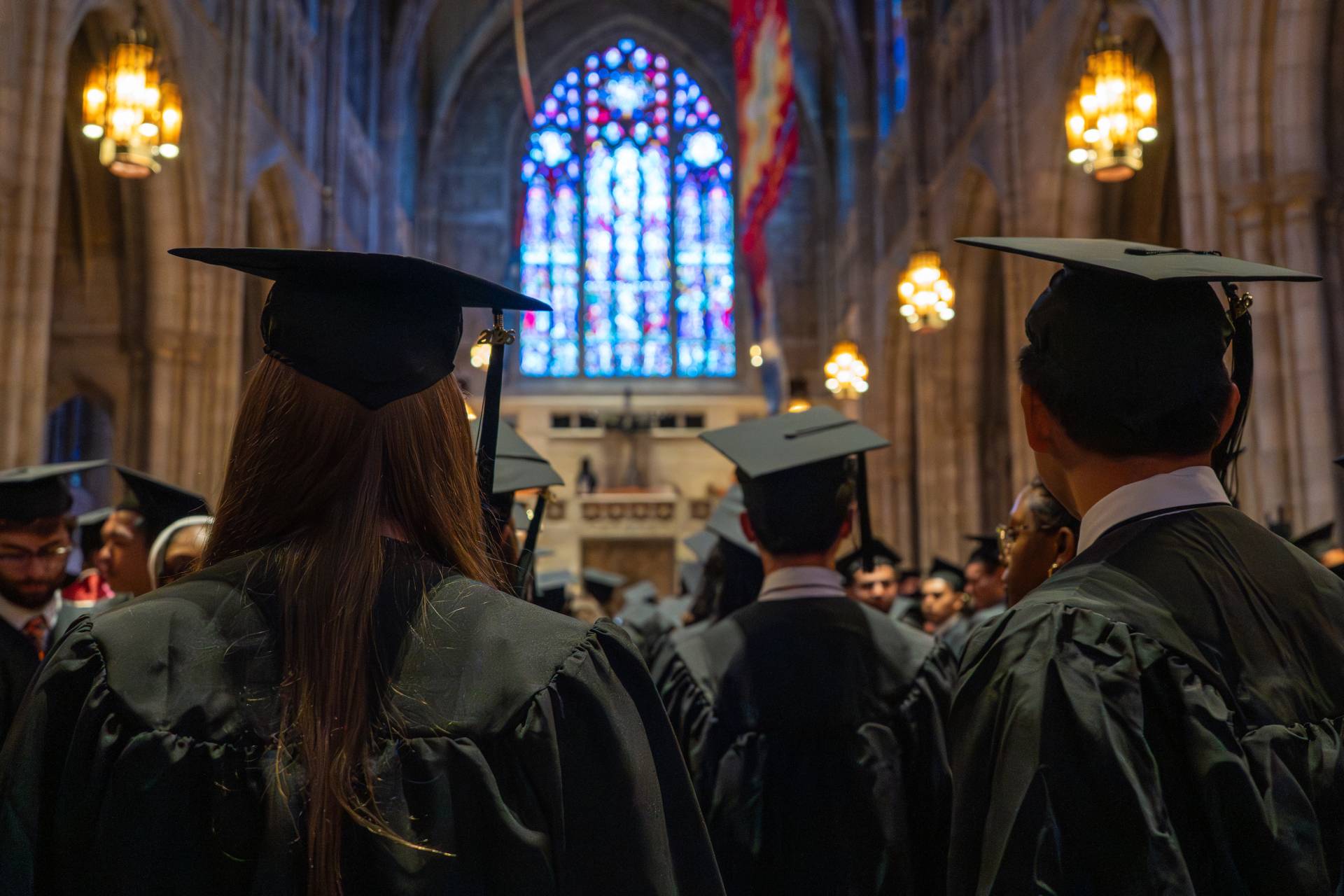
Students recess down the nave of the University Chapel.
Robinson quoted the University’s informal motto and urged the students toward a life of service. "It’s easy to be the person with the ball,” he said. "it’s much harder, and much more rewarding, to be the person who creates the space for someone else to score.”
He concluded with an echo of his father's advice to him.
“People will ask you in the near future, ‘What are you going to be?’” he told the assembled seniors. “They’re looking for answers like doctor, lawyer, engineer, podcaster. Don't give them a specific answer. Give them a dynamic life.
“Remember, ‘The Swerve’ isn’t a failure of the plan; The Swerve is the plan,” he said. “If you find yourself drifting away from the ‘prestigious’ path toward something you actually love, trust that instinct. You have the credentials in your hand; give yourself the permission to be a work in progress.
“Go out there and be brave enough to evolve,” he continued. “Have the courage to change your mind and the heart to change your life. Your future isn’t a set play drawn up on some whiteboard, it’s a breakaway in transition where you get to decide the finish. Best of luck, and congratulations to you all!”
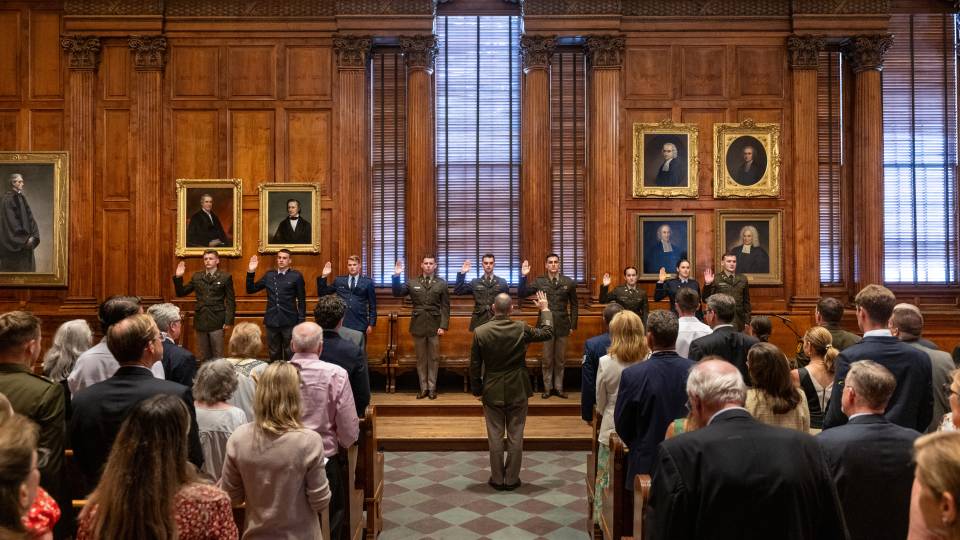
After Robinson spoke, Associate Dean of Religious Life and of the Chapel Matthew Weiner concluded the interfaith service with a benediction for the students, and the recessional was performed by Eric Plutz, University organist.
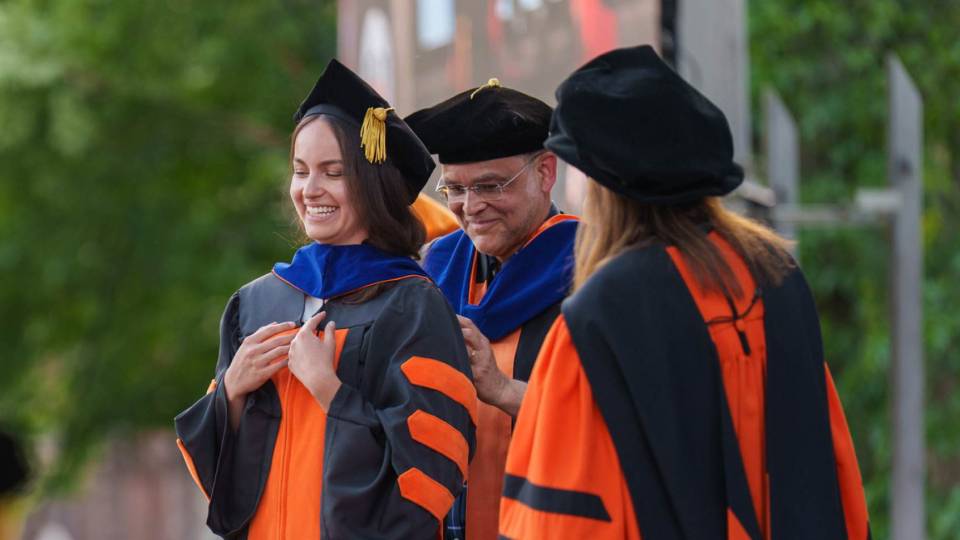
The Baccalaureate service is available for viewing online, as is the full text of Robinson's address. End-of-year activities will continue with Class Day for seniors and the Hooding ceremony for advanced-degree candidates on Monday, May 25, followed by Commencement on Tuesday, May 26, and the commissioning for graduating seniors in the Reserve Officer Training Corps on Tuesday afternoon.